Technical Guide to Golden Earrings: Alloys, Karats, and Durability
Explore the metallurgy of golden earrings. Compare 14k, 18k, and 24k gold alloys, gauge sizing, and hypoallergenic properties for sensitive piercings.

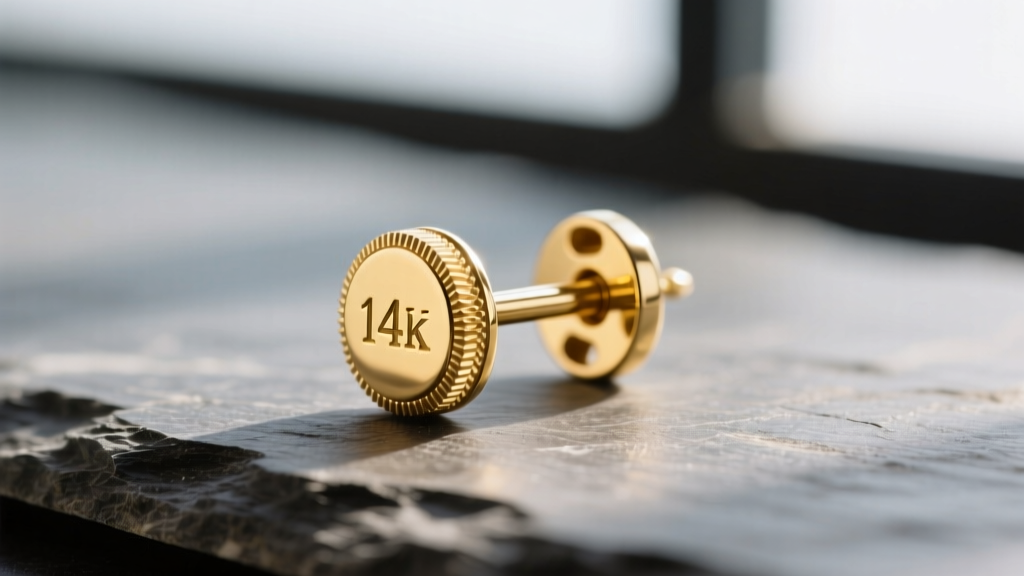
When consumers and collectors search for premium golden earrings, the conversation often stalls at karat purity and color. However, from a metallurgical and anatomical perspective, gold is a complex alloy system. The journey from raw elemental gold to a durable, biocompatible earring post involves precise interstitial alloying, work hardening, and strict adherence to contact dermatitis standards. Whether you are selecting jewelry for a fresh cartilage piercing or a heavy drop earring for a healed lobe, understanding the material science behind your jewelry is critical for both longevity and tissue health.
The Pure Gold Problem: Why 24k Fails in Piercings
Elemental gold (24k) is prized for its rich, saturated yellow hue and its absolute resistance to tarnish and oxidation. However, its mechanical properties make it entirely unsuitable for functional earring components, particularly posts and clasps. On the Vickers Hardness (HV) scale, pure annealed gold registers a mere 25 HV. To put this in perspective, pure lead is roughly 5 HV, while structural steel is over 200 HV.
Because 24k gold is so malleable, a pure gold earring post will easily bend under the minor lateral stresses of daily wear, sleeping, or brushing hair. Furthermore, pure gold lacks the tensile strength required to hold gemstone prongs securely. A 24k gold setting will experience 'prong creep,' where the metal slowly deforms away from the stone's girdle, leading to catastrophic gem loss. For these reasons, the Gemological Institute of America (GIA) and master jewelers universally recommend alloyed gold for any structural jewelry components.
Decoding the Alloys: 14k vs. 18k Golden Earrings
To transform gold into a viable material for earrings, metallurgists introduce specific alloying metals. These additions alter the crystal lattice structure of the gold, increasing hardness, modifying the melting point, and shifting the optical reflectance (color). Below is a technical comparison of the most common gold alloys used in fine earrings.
| Karat | Gold % | Primary Alloying Metals | Vickers Hardness (HV) | Tensile Strength (MPa) | Best Use Case |
|---|---|---|---|---|---|
| 24k | 99.9% | None (Pure) | ~25 HV | ~120 MPa | Decorative inlays only |
| 18k Yellow | 75.0% | 12.5% Cu, 12.5% Ag | ~125 HV | ~350 MPa | Premium hoops, huggies, stud settings |
| 14k Yellow | 58.3% | ~20% Cu, ~20% Ag, Zn | ~150 HV | ~450 MPa | Earring posts, friction backs, clasps |
| 18k Rose | 75.0% | 22.5% Cu, 2.5% Ag | ~135 HV | ~380 MPa | Aesthetic drops, cartilage clickers |
The addition of copper provides the red/pink hues seen in rose gold, while silver and zinc balance the color to create yellow gold. Zinc also acts as a deoxidizer during the casting process, preventing gas porosity. For earring posts that must endure repeated friction from push-backs or screw-backs, 14k gold is often preferred by manufacturers due to its superior yield strength, which prevents the post from bending when forced through a tight piercing fistula.
The Nickel Threat and Hypoallergenic Standards
One of the most critical technical considerations in white golden earrings is the presence of nickel. Historically, nickel was the primary bleaching agent used to strip the yellow hue from gold alloys. However, nickel is a potent sensitizer. Prolonged exposure to nickel salts (which form when sweat interacts with the metal) can trigger allergic contact dermatitis, leading to weeping, itching, and eventual rejection of the piercing.
According to the Association of Professional Piercers (APP), gold used for initial piercings must be 14k or 18k, nickel-free, and alloyed for biocompatibility. The term 'hypoallergenic' is largely unregulated and should be ignored in favor of verified 'nickel-free' or 'palladium-alloyed' certifications.
To comply with the EU Nickel Directive (EN 1811:2011), which restricts nickel migration to less than 0.5 micrograms per square centimeter per week, premium jewelers now use palladium as a bleaching agent. Palladium white gold is denser, more expensive, and inherently hypoallergenic, though it retains a slightly warmer, 'greige' undertone compared to the stark white of rhodium-plated nickel alloys.
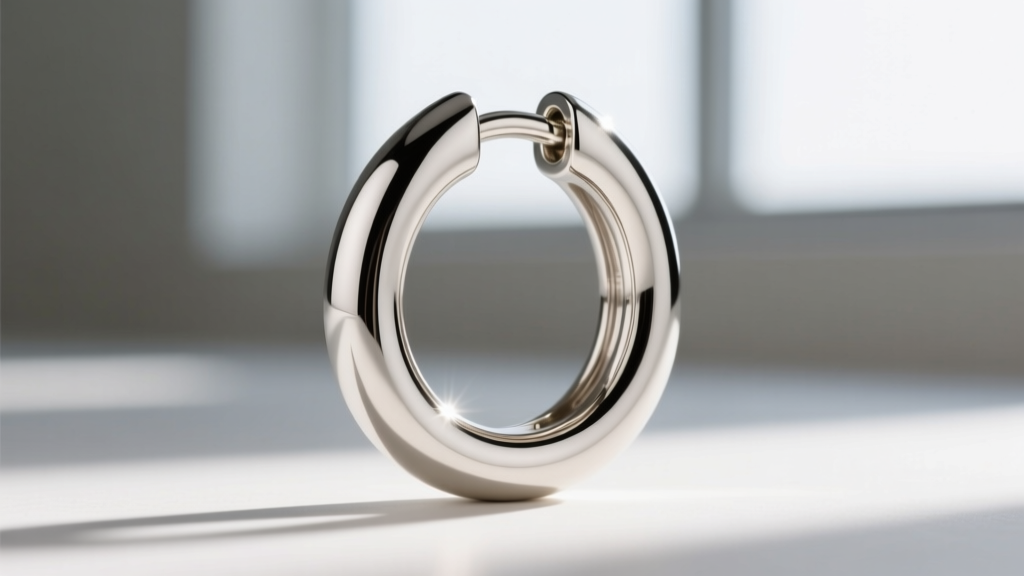
Manufacturing: Cast vs. Die-Struck Posts
The method used to form the earring post drastically affects its structural integrity and surface finish. Most mass-produced golden earrings utilize lost-wax casting. While excellent for complex, organic shapes, casting can introduce microscopic porosity—tiny air pockets trapped within the metal as it cools. If a cast earring post is porous, it can harbor bacteria and sebum, making it a risk for healing piercings.
Conversely, high-end earring manufacturers utilize die-striking. In this process, a sheet of gold alloy is stamped under immense pressure (often exceeding 50 tons) using hardened steel dies. This extreme pressure compresses the metal's grain structure, eliminating porosity and increasing the metal's density and tensile strength through work hardening. A die-struck 14k gold post will have a mirror-like, non-porous surface finish that glides through tissue with minimal friction and resists bacterial adhesion.
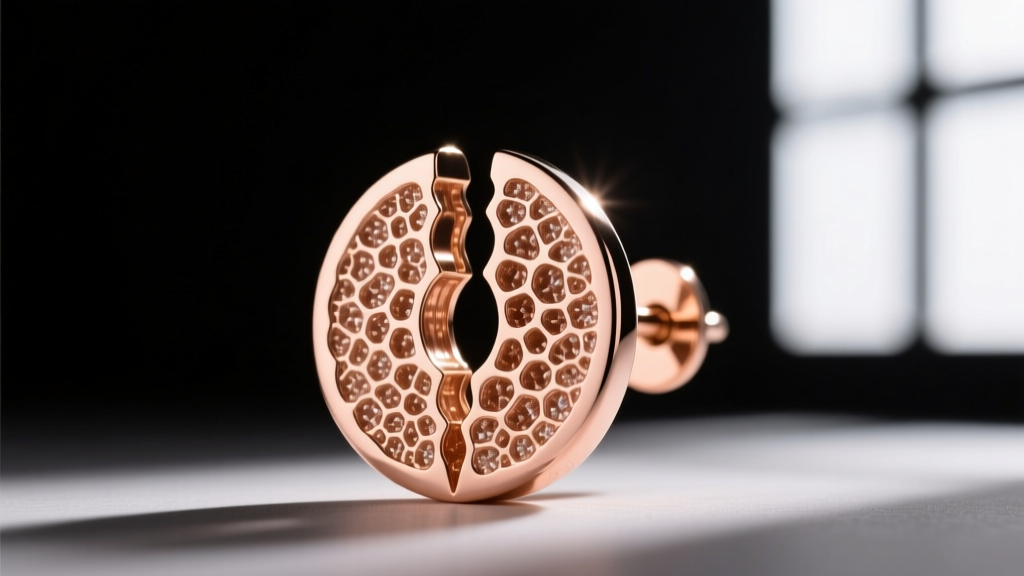
Biomechanics and Gauge Sizing: Avoiding the Cheese Cutter Effect
The structural viability of golden earrings is not just about the metal; it is about the intersection of material thickness and tissue biomechanics. The 'cheese cutter effect' occurs when a heavy earring is suspended on a wire that is too thin. The high pressure (Force divided by Area) causes the wire to slowly migrate through the earlobe tissue, resulting in a torn lobe.
- 22-Gauge (0.64mm): Acceptable only for ultra-lightweight, hollow, or small solid studs in fully healed lobes. Never use for drops.
- 20-Gauge (0.81mm): The industry standard for standard stud earrings and lightweight huggies. Suitable for most healed lobe piercings.
- 18-Gauge (1.02mm): Recommended for medium-weight drop earrings and standard cartilage piercings (helix, tragus). Provides adequate shear strength to resist bending.
- 16-Gauge (1.29mm) & 14-Gauge (1.63mm): Mandatory for heavy statement drops, large diameter hoops, and daith or conch piercings. The increased cross-sectional area distributes the gravitational load across a wider tissue footprint, preventing migration.
Expert Verdict: Selecting the Right Karat for Your Anatomy
Choosing the right golden earrings requires balancing aesthetic desires with anatomical realities. If you are purchasing jewelry for a fresh piercing, 14k or 18k nickel-free, die-struck gold is the only acceptable standard to minimize galvanic reactions and tissue trauma. For healed lobes wearing heavy vintage drops, prioritize 14k gold in an 18-gauge or 16-gauge thickness to ensure the post does not yield under the pendant's weight. By looking past the karat stamp and evaluating the alloy composition, manufacturing method, and gauge thickness, you can curate a collection of earrings that are as structurally enduring as they are visually stunning.


