Gothic Cross Earrings Material Guide: Silver, Steel and Titanium
Compare the best metals for gothic cross earrings. We analyze oxidized silver, black titanium, and surgical steel for durability, weight, and skin safety.


The Biomechanics of Heavy Gothic Dangles
When selecting gothic cross earrings, the visual impact of the design is only half the equation. The structural reality of wearing heavy, ornate metal on a delicate earlobe dictates which materials will survive daily wear without causing physical damage to your piercings. Gothic crosses are inherently dense, often featuring intricate filigree, layered plates, and inlaid gemstones like black onyx or garnet. This density creates a pendulum effect, placing continuous downward stress on the earlobe.
If a heavy gothic dangle is paired with a thin 22-gauge or 20-gauge ear wire, it will inevitably trigger the "cheese wire" effect. Over time, the thin metal slices through the earlobe tissue, leading to migration, tearing, and permanent lobe distortion. For any gothic cross earring weighing more than 8 grams, you must insist on an 18-gauge (1.0mm) or 16-gauge (1.2mm) ear wire. Furthermore, the style of the wire matters: a secure leverback or a locking French hook is mandatory to prevent the heavy pendant from catching on clothing and ripping out of the ear entirely.
Oxidized 925 Sterling Silver vs. Black Rhodium Plating
The quintessential aesthetic of gothic jewelry relies on deep, shadowy contrasts. Jewelers achieve this dark finish through two entirely different metallurgical processes: chemical oxidation and electroplating. Understanding the difference is critical for long-term maintenance.
Chemical Oxidation (Liver of Sulfur)
Authentic oxidized sterling silver (925) is treated with potassium sulfide (commonly known as liver of sulfur) to force a layer of silver sulfide to form on the surface. The jeweler then polishes the high points of the cross, leaving the blackened patina trapped in the intricate crevices. According to the Gemological Institute of America (GIA), this oxidation is a surface-level chemical reaction that does not compromise the structural integrity of the silver. The primary advantage is that if the earring gets scratched, the dark color remains consistent throughout the metal. However, 925 silver is relatively soft (Mohs hardness of 2.5 to 3), meaning large, heavy crosses can bend if dropped on hard surfaces.
Black Rhodium Electroplating
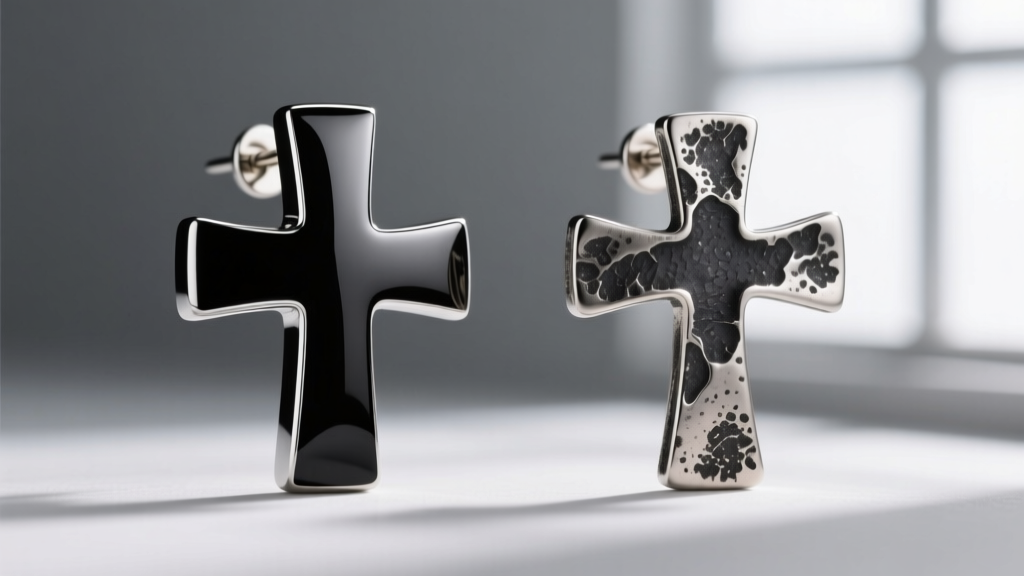
Black rhodium is achieved by electroplating a layer of rhodium alloyed with ruthenium or indium over a base of sterling silver or brass. This creates a mirror-like, gunmetal-black finish that is highly resistant to tarnish. The fatal flaw of black rhodium on gothic cross earrings is wear-and-tear. Because rhodium is merely a microscopic plating (usually less than 0.1 microns thick), the friction from daily wear, hair snagging, and accidental bumps will eventually cause the black layer to flake and wear away, revealing the bright silver or yellow brass underneath. Re-plating black rhodium is expensive and requires sending the earrings back to a specialized jeweler.
316L Surgical Steel vs. ASTM F136 Titanium
For wearers with metal sensitivities or those who prefer a more industrial, modern-gothic aesthetic, steel and titanium are the premier choices. However, the terminology used in jewelry marketing is often misleading.
316L Surgical Steel: The Budget Workhorse
316L stainless steel is an alloy containing iron, chromium, molybdenum, and roughly 10-14% nickel. The addition of molybdenum makes it highly resistant to corrosion from sweat and humidity, which is why it is marketed as "surgical." However, the Mayo Clinic notes that prolonged skin contact with nickel-containing alloys can trigger allergic contact dermatitis in sensitized individuals. If you have a known nickel allergy, 316L steel gothic crosses will cause redness, itching, and weeping of the earlobe. Furthermore, steel is incredibly dense; a large steel cross will be significantly heavier than the exact same design cast in silver or titanium, exacerbating the cheese wire effect.
ASTM F136 Implant-Grade Titanium: The Hypoallergenic Standard
If you are commissioning or buying high-end gothic cross earrings, demand ASTM F136 (Ti-6Al-4V ELI) implant-grade titanium. The Association of Professional Piercers (APP) strictly recommends this specific alloy because it is entirely nickel-free and biocompatible. Titanium is roughly 45% lighter than steel, making it the ultimate material for oversized, dramatic gothic dangles that won't stretch your lobes. Additionally, titanium can be anodized using electricity to create permanent, non-toxic surface colors—including deep purples, midnight blues, and dark gunmetal greys—that will never flake or peel like rhodium plating.
Material Matrix: Density, Cost, and Biocompatibility
| Material Grade | Density (g/cm³) | Nickel Content | Tarnish Resistance | Avg. Price Range (Pair) |
|---|---|---|---|---|
| 925 Oxidized Silver | 10.36 | 0% (Usually) | Low (Requires care) | $60 - $250 |
| Black Rhodium over Silver | 10.36 | 0% | Medium (Plating wears) | $80 - $300 |
| 316L Stainless Steel | 8.00 | 10% - 14% | High | $15 - $45 |
| ASTM F136 Titanium | 4.43 | 0% | Extremely High | $40 - $120 |
| Cast Pewter / Brass | 7.30 - 8.73 | Variable / High | Very Low (Turns green) | $10 - $30 |
The Hidden Failure Points: Solder Joints and Bails
The most common point of catastrophic failure in gothic cross earrings is not the metal itself, but the solder joint connecting the cross to the bail (the loop that holds the ear wire). Heavy gothic pendants generate high kinetic energy when the wearer turns their head quickly. If the jeweler used traditional silver solder with a low melting point, the joint can snap under sudden stress.
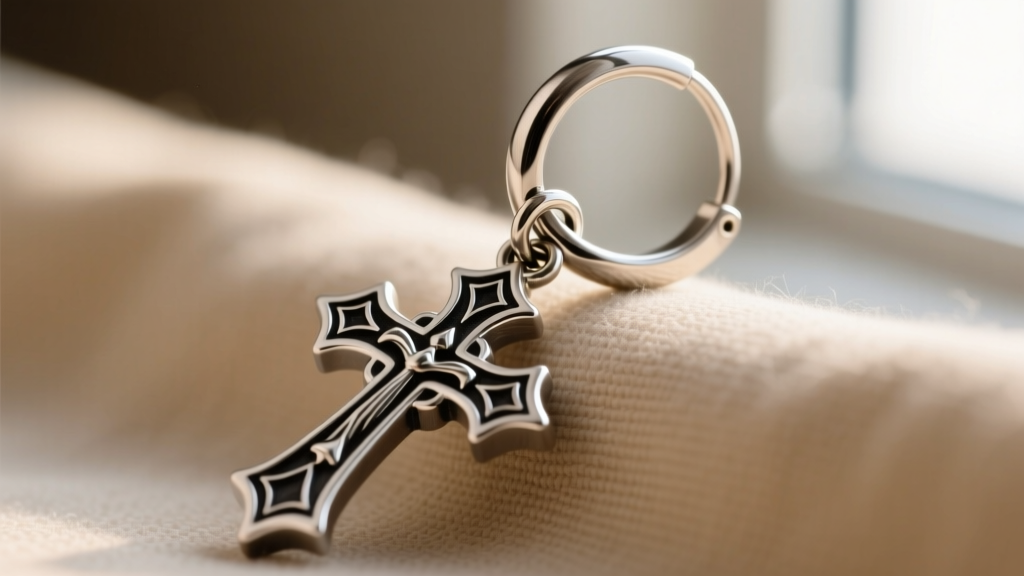
When evaluating high-ticket gothic earrings, inspect the connection point. Premium manufacturers use laser welding to fuse the jump ring to the cross. Laser welding creates a localized, ultra-strong bond without requiring flux or heat that could damage heat-sensitive gemstones like opals or black onyx often inlaid in gothic designs. If you see a thick, globular bead of solder at the joint, it was likely done by hand with a torch, which is more prone to micro-fractures over time.
Base Metal Traps: Why Pewter and Brass Fail
The fast-fashion and mall-kiosk markets are flooded with gothic cross earrings made from white metal alloys, pewter, or brass. While these materials are cheap to cast and easy to paint black, they are metallurgical disasters for body jewelry. Brass (an alloy of copper and zinc) reacts rapidly with the oxygen and fatty acids in human sebum. This reaction produces copper chelates, which stain the skin a sickly, irreversible green and degrade the metal structurally. Pewter, while historically accurate to medieval aesthetics, is too soft for modern ear wires; the ear wire loop will slowly bend open under the weight of the cross, eventually dropping the earring into the abyss of your daily commute.
Maintenance Protocols for Darkened Metals
Preserving the moody aesthetic of your gothic jewelry requires specific cleaning protocols. Never use commercial "silver dip" solutions or ultrasonic cleaners on oxidized sterling silver. These harsh chemical baths and high-frequency vibrations will strip the intentional liver-of-sulfur patina from the crevices, leaving you with a bright, shiny cross that completely ruins the gothic aesthetic. Instead, clean oxidized silver using a soft microfiber cloth and a drop of mild, phosphate-free dish soap. For anodized titanium or black rhodium, simply wipe with a damp cloth to remove skin oils and environmental dust, ensuring the dark finish remains intact for years to come.


