Green Amethyst Earrings: Troubleshooting Fading & Fractures
Is your green amethyst jewelry losing its color or chipping? Learn expert troubleshooting for fading, fractures, and setting failures.

The Gemological Reality: Prasiolite vs. Amethyst
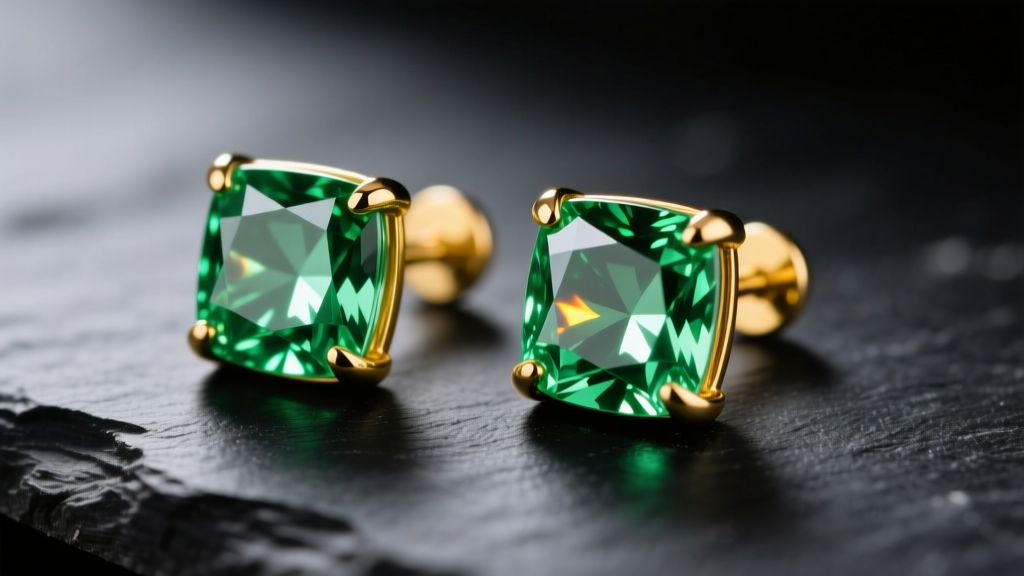
Before troubleshooting your green amethyst earrings, we must address a fundamental gemological misnomer. In strict mineralogical terms, "green amethyst" does not exist. Amethyst is, by definition, purple quartz colored by iron impurities and natural irradiation. The green variety of quartz is correctly known as prasiolite. According to the Federal Trade Commission (FTC) Jewelry Guides, it is deceptive to market a stone simply as "green amethyst" without qualification, though the trade name persists in retail. Most prasiolite on the market is created by heat-treating specific amethyst deposits (typically from Brazil) to temperatures between 470°C and 550°C, which alters the oxidation state of the iron impurities, shifting the color from purple to a soft, leek-green or olive hue.
Understanding that your earrings are likely heat-treated green quartz is the first step in diagnosing why they may be failing, fading, or fracturing. Because of this thermal history, prasiolite requires a highly specific care regimen that differs significantly from untreated gemstones like sapphire or spinel.
Troubleshooting Problem 1: Color Fading and UV Bleaching
The most frequent complaint from owners of green amethyst earrings is a gradual loss of saturation, with the stones shifting toward a dull, yellowish-grey tone. This is not a defect in the metal setting; it is a photochemical reaction within the quartz crystal lattice.
The Science of Fading
The color centers responsible for prasiolite's green hue are relatively unstable when exposed to prolonged ultraviolet (UV) radiation. If you frequently wear your earrings outdoors, sunbathe, or store them on a sunlit vanity, the UV photons can disrupt the electron configuration of the iron ions, effectively "bleaching" the stone. Unlike the fading of organic gems like pearls or coral, quartz fading is a structural color-center collapse.
Can Faded Green Quartz Be Restored?
Unfortunately, once a heat-treated prasiolite stone has been bleached by UV exposure, the color cannot be chemically restored at home. A lapidary could theoretically attempt to re-irradiate and heat-treat the stone, but the cost of this specialized gemological service ($200–$400) far exceeds the replacement value of the average commercial-grade prasiolite earring ($40–$120). The only actionable solution is preventative storage: keep your earrings in a UV-blocking, opaque jewelry box lined with anti-tarnish cloth when not in use.
Troubleshooting Problem 2: Conchoidal Fractures and Chipping
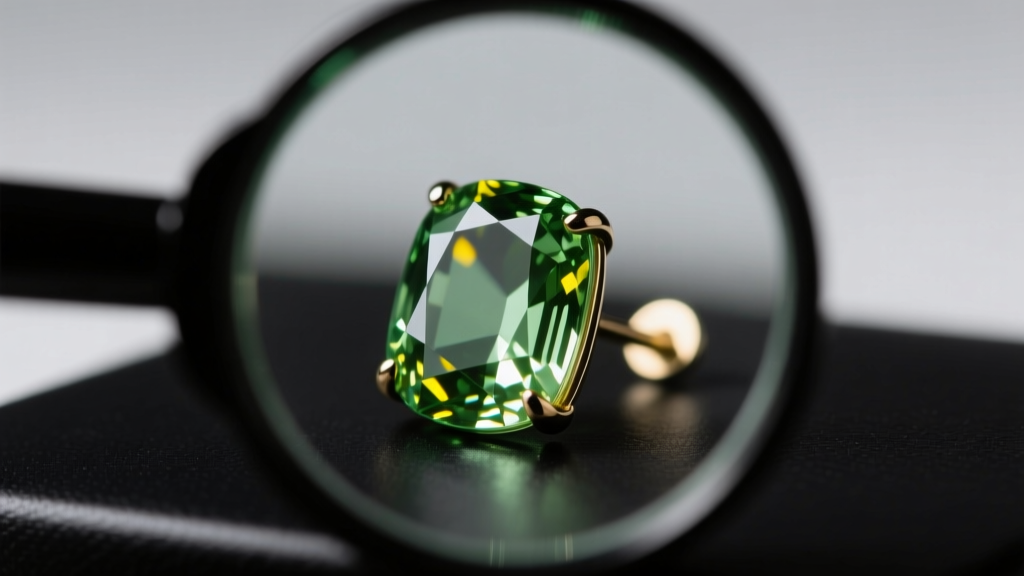
Quartz sits at a 7 on the Mohs Hardness Scale. While this makes it resistant to everyday scratching from dust and skin oils, it is highly susceptible to impact damage. Unlike diamonds or topaz, which have distinct planes of cleavage (allowing them to split smoothly along atomic planes), quartz has no cleavage. Instead, it exhibits a conchoidal fracture—meaning it shatters with curved, shell-like ridges, much like broken glass.
Common Earring Impact Scenarios
- The Phone Press: Pressing a smartphone against your ear traps the earring between the rigid screen and your cartilage, causing micro-fractures along the girdle.
- The Hairbrush Snag: Vigorous brushing can catch a prong, driving the metal into the stone's pavilion and chipping the culet.
- Hard Surface Drops: Dropping a prasiolite earring onto a granite or porcelain bathroom counter will almost guarantee a conchoidal chip on the crown facets.
Expert Fix: If your stone has a minor surface chip on the crown, a lapidary can perform a "re-polish" or minor re-cut to remove the fracture. Expect to pay between $75 and $150 per stone for this service, provided the stone has enough carat weight to survive the cutting wheel.
Troubleshooting Problem 3: Stones Slipping from Prong Settings
Prasiolite is frequently cut into large, dramatic shapes—such as checkerboard cushions, emerald cuts, or oversized pear drops—to maximize the visibility of its pastel color. However, these large cuts often result in a dangerously thin girdle (the outer edge where the metal grabs the stone).
When set in standard 4-prong settings, the thin girdle provides very little surface area for the prong tips to secure. Over time, the natural tension of the metal relaxes, or a prong catches on a sweater, lifting just enough for the stone to slip out. If you notice your green amethyst spinning in its setting or rattling when shaken, stop wearing it immediately.
Upgrading to a Bezel Setting
For large, heavy drop earrings, we strongly recommend having a bench jeweler convert the setting from a 4-prong to a full or partial bezel. A bezel wraps a continuous rim of metal around the entire girdle, distributing pressure evenly and eliminating the risk of prong-snagging. A custom bezel conversion typically costs between $150 and $300, depending on the karat of the gold and the complexity of the earring's gallery.
| Issue | Root Cause | DIY Solution | Professional Repair Cost |
|---|---|---|---|
| Color Fading | UV exposure altering iron color centers | None (Prevent via opaque storage) | Stone Replacement ($50-$150) |
| Girdle Chipping | Conchoidal fracture from hard impacts | None | Lapidary Re-cut ($75-$150) |
| Stone Spinning | Worn prongs or thin girdle tolerance | Tighten gently with nylon-jaw pliers | Prong Re-tipping ($40-$80) |
| Cloudy Facets | Hard water calcium deposits or skin oils | Distilled water & pH-neutral soap soak | Ultrasonic Steam Clean ($20-$40) |
The Synthetic Trap: Hydrothermal Quartz Identification
As the demand for green amethyst earrings has surged, so has the market for synthetic alternatives. Hydrothermal synthetic quartz is grown in laboratories using nutrient-rich aqueous solutions under high heat and pressure. While chemically identical to natural prasiolite, synthetic stones lack the natural inclusions—such as "tiger's thumb" growth patterns, liquid veils, or two-phase inclusions—that authenticate earth-mined gems.
If your earrings feature stones that are entirely flawless, possess an unnaturally vivid, neon-green saturation (rather than the typical muted olive), and cost under $30, you are likely wearing hydrothermal synthetics. According to the Gemological Institute of America (GIA), synthetic quartz must be disclosed as such in ethical retail transactions. Synthetic stones are actually more resistant to UV fading than their heat-treated natural counterparts, but they hold virtually zero resale value.
Safe Cleaning Protocols to Prevent Cloudiness
Because prasiolite earrings sit close to the neck and hair, they are constantly bombarded with hairspray, perfume, and sebum. This buildup creates a cloudy film on the pavilion facets, blocking light return and making the stone look dead and grey.
The Ultrasonic Danger
Never place heat-treated green amethyst in an ultrasonic cleaner. While solid quartz can generally withstand ultrasonic vibrations, prasiolite often contains microscopic internal stress fractures caused by the initial heat-treatment process. The high-frequency cavitation bubbles in an ultrasonic bath can violently expand these micro-fractures, causing the stone to crack completely in half.
The Expert Cleaning Recipe
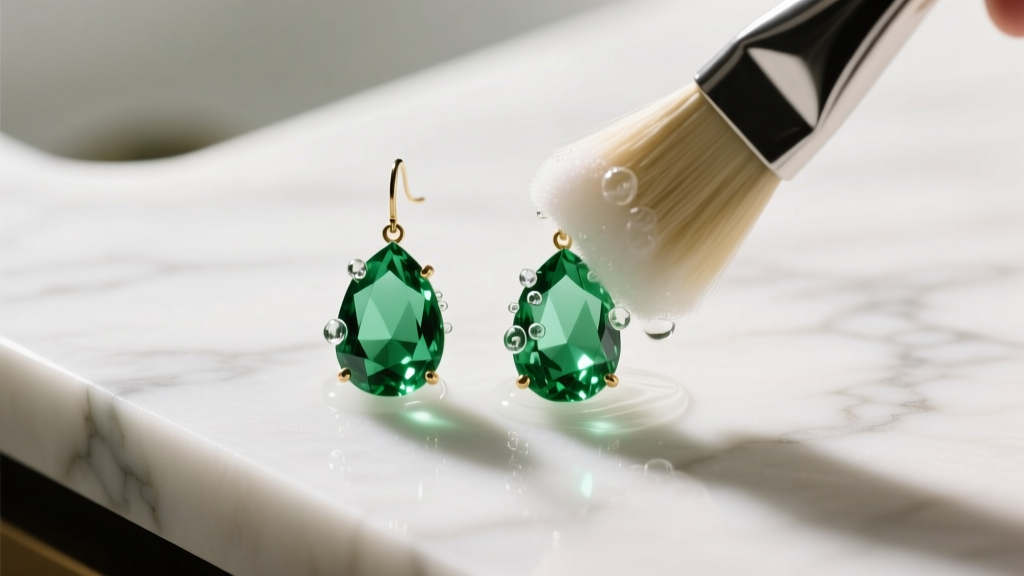
- Fill a glass bowl with distilled water (tap water contains calcium and magnesium that will leave stubborn hard-water spots on the facets).
- Add two drops of pH-neutral dish soap (avoid harsh detergents or jewelry dips containing ammonia).
- Soak the earrings for exactly 10 minutes to loosen sebum and cosmetics.
- Gently agitate the pavilion (back) of the stones using a brand-new, ultra-soft baby toothbrush.
- Rinse with fresh distilled water and pat dry with a lint-free microfiber cloth. Do not air dry, as water spots will form immediately.
When to Seek Professional Jeweler Intervention
While routine cleaning and careful storage will solve 90% of green amethyst earring issues, structural failures require a professional bench jeweler. If you notice a visible crack line running through the table facet, or if a prong has completely snapped off, do not attempt DIY repairs with superglue or household adhesives. Cyanoacrylate glues will seep into the porous fractures of the quartz, permanently clouding the stone and making future professional re-setting impossible. Take the piece to a certified gemologist or bench jeweler who can safely extract the stone, laser-weld the metal setting, and assess the structural integrity of the gem.


