A Beginner's Guide to Styling and Buying 80s Earrings Gold
Discover how to identify, authenticate, and style vintage 80s earrings gold. Learn about 14k vs 18k hallmarks, textured finishes, and modern styling tips.


The Defining Characteristics of 1980s Gold Earrings
The 1980s was an era of unapologetic glamour, power dressing, and bold self-expression. When we talk about 80s earrings gold, we are referring to a very specific design language that prioritized volume, texture, and geometric drama. Unlike the delicate, minimalist gold jewelry of the 2010s, vintage 80s gold pieces were designed to be seen from across a boardroom or a crowded dance floor.
For beginners entering the vintage jewelry market, understanding the hallmark traits of this decade is crucial for identifying authentic pieces and avoiding modern reproductions. Here are the core design elements that define 1980s gold earrings:
- Electroformed Hollow Gold: To create massive, oversized hoops and geometric shapes without making them unbearably heavy, 80s jewelers heavily utilized electroforming. This process created lightweight, hollow solid gold earrings that offered maximum visual impact without tearing the earlobe.
- Florentine and Matte Finishes: High-polish gold was common, but the 80s also popularized the Florentine finish—a cross-hatched, matte texture that diffused light and gave gold a rich, velvety appearance.
- Rope Twists and Granulation: Many vintage 80s gold drop earrings and studs featured rope-twist borders or granulation (tiny gold beads) to add intricate detailing to larger, bold silhouettes.
- Asymmetry and Mixed Metals: While yellow gold dominated, it was frequently paired with rose gold accents or oxidized silver to create high-contrast, architectural designs.
Decoding Gold Purity: 14k vs. 18k in Vintage Pieces
When shopping for vintage 80s earrings gold, you will primarily encounter 14k and 18k gold. Understanding the difference in purity is essential, as it affects the piece's color, durability, and market value. According to the Gemological Institute of America (GIA), the karat system measures the proportion of pure gold alloyed with other metals like copper, silver, or zinc to increase strength.
In the United States, 14k gold was the standard for everyday 80s jewelry because its higher alloy content made it durable enough to support heavy clip-on mechanisms and thick posts. In contrast, European 80s designers often favored 18k gold for its richer, deeper yellow hue.
| Karat | Common Hallmarks | Gold Content | 1980s Use Case | 2026 Vintage Price Range |
|---|---|---|---|---|
| 14k | 585, 14k, 14kt | 58.5% | Heavy hoops, everyday studs, clip-ons | $150 - $600 |
| 18k | 750, 18k, 18kt | 75.0% | Designer pieces, intricate dangles | $400 - $1,200 |
| 22k | 916, 22k | 91.6% | Rare, soft geometric cuffs, high karat studs | $800 - $2,500+ |
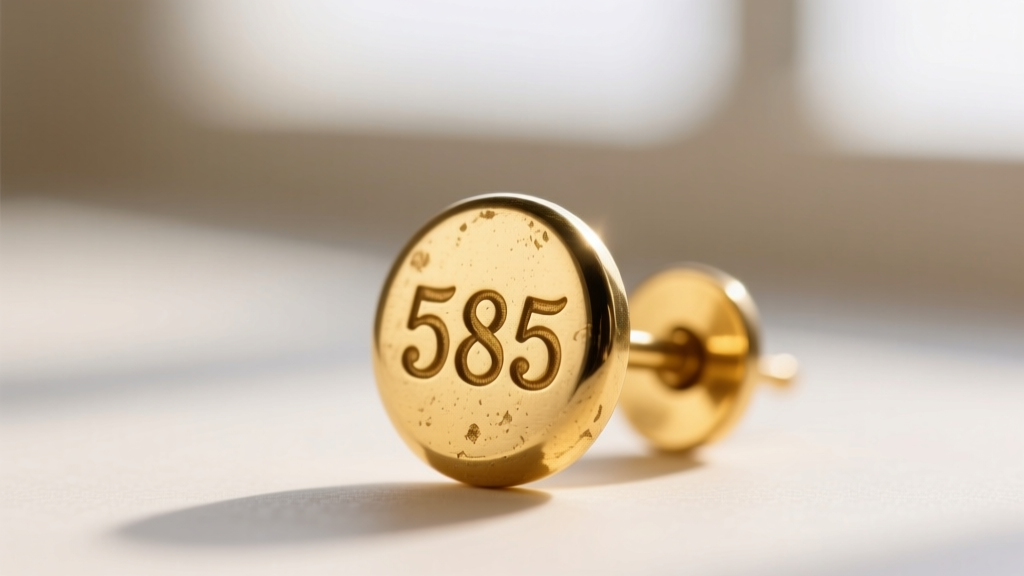
Note: Always look for these numerical hallmarks stamped near the post or on the clip-back mechanism. As noted by Lang Antiques, numerical stamps (like 585 or 750) became increasingly standardized globally during the 1970s and 1980s, making them highly reliable indicators of authenticity.
Clip-Ons vs. Pierced: Navigating 80s Earring Backs
One of the most surprising discoveries for beginners buying 80s earrings gold is the sheer volume of clip-on styles. In the 1980s, ear piercing was not as universally ubiquitous as it is today, and many women preferred clip-ons to avoid stretching their lobes with the era's heavy, oversized designs.
Understanding Omega and Screw Backs
If you are buying pierced 80s gold earrings, you will likely encounter omega backs or screw backs rather than the standard friction push-backs (butterfly backs) we use today. Omega backs feature a hinged, curved lever that snaps over a thick post, providing superior support for heavy gold hoops. Screw backs feature a threaded post and a nut that twists on, ensuring the earring cannot fall off.
Converting Vintage Clip-Ons
If you find a stunning pair of 80s gold clip-ons but have pierced ears, you have two options:
- Professional Conversion: A bench jeweler can carefully snip off the clip mechanism and solder a modern 18-gauge (1.0mm) or 20-gauge (0.8mm) gold post onto the back. This typically costs between $40 and $80 per earring, depending on the complexity of the goldwork.
- Clip-to-Pierced Adapters: For a non-destructive approach, you can purchase silicone or metal clip-to-pierced converters that slide over the existing clip mechanism and feature a post that goes through your ear.
Authentication 101: Spotting Real Vintage Gold
The market is flooded with modern reproductions and gold-plated pieces masquerading as vintage 80s gold. To protect your investment, you must know how to authenticate solid gold. Here is a practical decision framework for beginners:
Expert Troubleshooting Tip: Inspect the high-wear edges of the earring under a 10x jeweler's loupe. If you see a silver or copper-colored metal bleeding through the yellow surface, the piece is gold-plated or gold-filled, not solid gold. Solid gold will wear down evenly and retain its color throughout.
The Magnet Test: Pure gold and its standard alloys (14k/18k) are non-magnetic. Hold a strong neodymium magnet near the earring. If the earring snaps to the magnet, it contains a ferrous base metal and is likely plated. Exception: The internal spring mechanism inside some 80s omega backs or clip-ons may contain steel, so test the main body of the earring, not just the hinge.
The Ceramic Streak Test: Gently drag the earring across an unglazed ceramic tile. Real gold will leave a golden-yellow streak, while pyrite (fool's gold) or brass will leave a dark green or black streak. Be cautious, as this can scratch soft 22k gold, so use it only on inconspicuous areas of 14k pieces.
Modern Styling: Integrating 80s Gold into a 2026 Wardrobe
The key to wearing 80s earrings gold today is contrast. Because the earrings themselves are loud, textured, and voluminous, your styling should anchor them in modern minimalism to avoid looking like you are wearing a costume.
- The Power Clash: Pair oversized, hammered 80s gold hoops with a crisp, oversized white button-down shirt and tailored wide-leg trousers. The structured, modern tailoring balances the vintage volume of the gold.
- Single Statement Rule: If you are wearing heavy 80s gold drop earrings, skip the necklace entirely. Let the earrings frame your face, and opt for a simple gold signet ring or a sleek 2mm gold bangle to tie the look together without overwhelming your neckline.
- Evening Edge: Contrast the warmth of vintage 18k gold with cool, modern textures like black leather or charcoal silk. A pair of geometric 80s gold clip-ons worn with a black turtleneck creates a striking, editorial silhouette.
Care and Maintenance for Textured Vintage Gold
Cleaning 80s gold requires a gentle touch, especially if the piece features a Florentine matte finish or is electroformed (hollow). Never put hollow 80s gold earrings in an ultrasonic cleaner. The high-frequency vibrations can cause micro-fractures in the thin gold shells, and water can become trapped inside the hollow chambers, leading to permanent water damage or discoloration.
Instead, create a lukewarm bath of distilled water and a few drops of pH-neutral dish soap. Soak the earrings for 5 to 10 minutes to loosen oils and cosmetics. Use a soft baby toothbrush to gently agitate the dirt out of rope-twist grooves or granulation details. Rinse under a gentle stream of lukewarm water, and immediately pat dry with a lint-free microfiber cloth. For matte finishes, avoid aggressive rubbing, which can slowly polish away the texture over time and turn your matte 80s gold into a high-shine finish.


