A Beginner's Guide to Vintage Weiss Clip On Earrings
Discover how to identify, buy, and care for vintage Weiss clip on earrings. Learn about markings, rhinestone quality, and pricing in this guide.

The Legacy of Albert Weiss: A Mid-Century Costume Jewelry Powerhouse
Before the widespread cultural shift toward pierced ears in the late 1960s and 1970s, clip-on earrings were the undisputed standard of American fashion. Among the most coveted names from this golden era of costume jewelry is Albert Weiss. Founded in New York City in 1942, the Weiss company quickly earned a reputation for producing high-quality, meticulously crafted pieces that rivaled fine jewelry in their brilliance and design complexity. For modern collectors and vintage enthusiasts in 2026, vintage Weiss clip on earrings represent an accessible yet deeply historical entry point into mid-century fashion.
Weiss did not manufacture his own glass stones; instead, he sourced premium rhinestones from renowned Austrian and Czechoslovakian manufacturers, including Swarovski. The brand's pieces were sold in upscale department stores and boutique jewelers, bridging the gap between everyday accessorizing and high-society glamour. Understanding the nuances of these earrings—from their mechanical construction to their signature stone cuts—is essential for any beginner looking to build an authentic, valuable collection.
Decoding the Marks: How to Authenticate Vintage Weiss Pieces
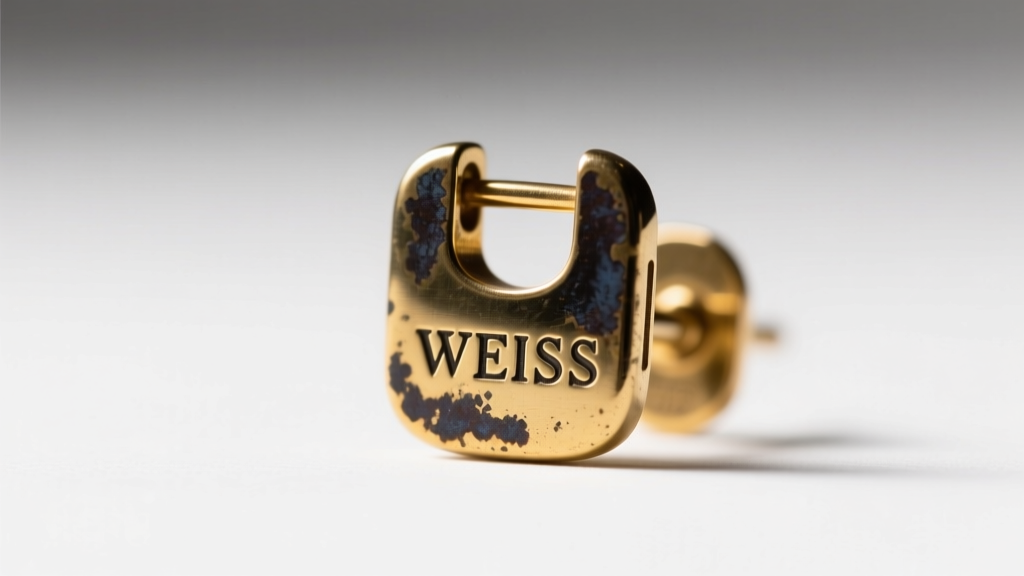
Authentication is the first hurdle for any vintage jewelry beginner. While many mid-century pieces were left unmarked, Weiss was relatively consistent in signing his work, especially from the 1950s onward. According to Collectors Weekly, identifying genuine Weiss requires looking for specific stamps, usually located on the flat back of the earring clip or the metal base plate.
- 'WEISS' or 'WEISS CO.': The most common markings, typically stamped in a clean, uppercase sans-serif font.
- 'A.W.': An earlier, rarer mark used in the 1940s. Pieces with this stamp often command a premium among serious collectors.
- Patent Numbers: Many Weiss clip-ons feature patent numbers stamped near the hinge, relating to the specific clip mechanism rather than the jewelry design itself.
It is important to note that some genuine Weiss earrings are completely unmarked. In these cases, authentication relies on evaluating the quality of the metalwork, the precision of the prong-set stones, and the overall weight of the piece. Weiss rarely used glued-in stones for his premium lines; instead, he utilized intricate metal prongs to secure the rhinestones, a hallmark of superior mid-century manufacturing.
The Mechanics of Mid-Century Clip-On Earrings
One of the most fascinating aspects of vintage Weiss clip on earrings is the engineering of the clip itself. Because non-pierced ears were the norm, jewelry makers invested heavily in designing mechanisms that could securely grip the earlobe without causing excessive pain. As a beginner, understanding these mechanisms will help you assess both the comfort and the era of the earrings you are buying.
Comparing Vintage Clip Mechanisms
| Clip Type | Era of Popularity | Comfort Level | Identifying Features |
|---|---|---|---|
| Standard Tension Clip | 1930s - 1950s | Low to Moderate | Simple hinged metal paddle relying on spring tension; often leaves red marks after extended wear. |
| Screw-Back Clip | 1940s - 1960s | Moderate to High | Features a small screw on the back allowing the wearer to adjust the tension and pressure on the earlobe. |
| Comfort Clip (Pad-Back) | 1960s - 1970s | High | Hinged mechanism featuring a removable silicone or rubber pad to distribute pressure evenly across the lobe. |
When shopping for vintage Weiss clip on earrings, inspect the hinge for structural integrity. A worn-out spring will cause the earring to droop or fall off. Fortunately, standard tension clips can often be gently tightened using jewelry pliers, though screw-backs and comfort clips require more specialized repair if the internal threading or rubber pads degrade.
Evaluating Rhinestones: Aurora Borealis and Foil Backs
The true magic of Weiss jewelry lies in its stones. Albert Weiss was an early adopter of the Aurora Borealis (AB) finish, a microscopic metallic coating applied to glass stones to create an iridescent, rainbow-like reflection. Invented by Swarovski in collaboration with Christian Dior in 1955, the AB finish quickly became a staple in Weiss designs. If a pair of Weiss earrings features AB stones, you can confidently date them to 1956 or later.
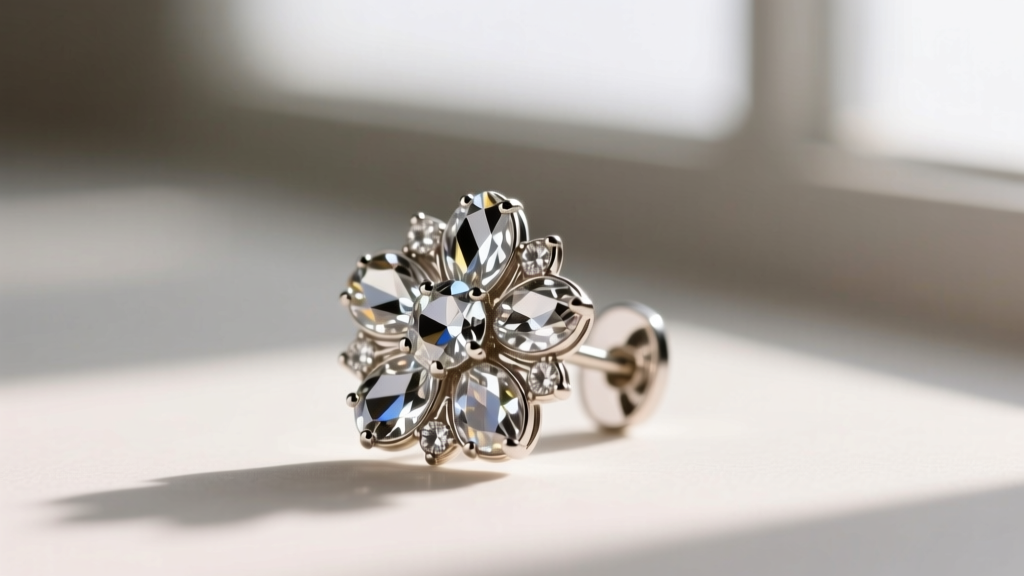
Beyond the AB finish, Weiss utilized a variety of stone cuts, including the round brilliant chaton, the elongated marquise, and the rectangular baguette. Most of these stones are 'foil-backed,' meaning a thin layer of metallic paint or silver leaf is applied to the bottom of the glass to maximize light reflection. This foil backing is incredibly fragile. When evaluating a pair of vintage earrings, always check for 'dead stones'—rhinestones that have turned grey, black, or cloudy. This indicates that moisture has breached the setting and oxidized the foil, permanently ruining the stone's brilliance.
2026 Market Guide: Pricing and Valuation
The market for vintage costume jewelry has stabilized and matured as we move through 2026. While fine jewelry continues to fluctuate with gold and diamond markets, high-quality vintage Weiss clip on earrings are valued based on rarity, condition, and design complexity. According to The Spruce Crafts, condition is the ultimate dictator of price in the costume jewelry realm.
| Condition & Design Tier | Estimated 2026 Price Range | Collector Demand |
|---|---|---|
| Basic Clear Rhinestones (Minor Wear) | $25 - $45 | Low (Great for beginners) |
| Standard AB Floral/Geometric Designs | $60 - $95 | Moderate (Highly wearable) |
| Elaborate Parures (Matching Sets) / Rare 'A.W.' Marks | $120 - $250+ | High (Sought by serious collectors) |
When purchasing online, always request high-resolution, well-lit photos of the back of the earrings. This allows you to verify the stamp, check the condition of the clip spring, and ensure no rhinestones are missing or damaged.
Care and Maintenance: Preserving Your Vintage Finds
Caring for vintage Weiss clip on earrings requires a completely different approach than caring for modern fine jewelry. The biggest enemy of mid-century costume jewelry is water. Submerging these pieces or using ultrasonic cleaners will instantly destroy the foil backing of the rhinestones and weaken the adhesive used in older settings.
Expert Rule of Thumb: Never apply perfume, hairspray, or lotions while wearing vintage clip-ons. The chemicals in modern cosmetics can strip the Aurora Borealis coating and tarnish the gold-tone or rhodium-plated metal bases.
Step-by-Step Cleaning Protocol
- Dry Dusting: Use a brand-new, ultra-soft makeup brush or a clean, dry toothbrush to gently sweep away dust and skin oils from the metal prongs and stone facets.
- Spot Cleaning Metal: If the metal base is tarnished, lightly dampen a cotton swab with a tiny amount of glass cleaner (ensure it does not contain ammonia). Carefully wipe the metal, avoiding any contact with the rhinestones.
- Polishing: Buff the metal gently with a dry, lint-free microfiber cloth to restore its shine.
- Storage: Store your earrings in a lined jewelry box or individual soft pouches. Keep them in a climate-controlled environment, as high humidity accelerates the oxidation of the foil backs and the base metals.
Styling Vintage Clip-Ons for the Modern Wardrobe
You do not need to wear a 1950s swing dress to rock vintage Weiss clip on earrings. In 2026, the contrast between mid-century glamour and modern minimalist fashion creates a striking, curated aesthetic. Pair a bold, clear-rhinestone Weiss floral clip-on with a structured, oversized blazer and a simple white t-shirt for an elevated daytime look. For evening wear, let a pair of cascading AB marquise Weiss earrings serve as the focal point against a sleek, dark turtleneck or an elegant updo. By understanding their history, mechanics, and proper care, you can confidently integrate these wearable pieces of art into your everyday style.


