The Guy Earring Left Ear: Ultimate Care & Cleaning Guide
Master the care and cleaning of your guy earring left ear. Learn expert tips on materials, hygiene, and preventing irritation for men's single-ear styles.


The Biomechanics of the Single Left Ear Earring
The guy earring left ear is a timeless style staple. While the cultural codes of the 1980s and 90s have long since dissolved into modern minimalist fashion, the practical realities of wearing a single earring in the left ear remain uniquely challenging. When you commit to a single-ear aesthetic, that solitary piercing bears 100% of your environmental wear, friction, and hygiene neglect.
From a biomechanical perspective, the left ear faces specific stressors. Most men are right-hand dominant, meaning they hold their smartphones to their left ear. The friction from glass and metal screens, combined with the heat generated by the battery, creates a microclimate that encourages bacterial growth and sebum buildup. Furthermore, the modern reliance on wireless earbuds (like AirPods or Sony WF series) introduces constant pressure against the tragus and earlobe, which can lead to pressure necrosis or irritation bumps if your jewelry profile is too high.
Left-side sleepers also subject their earring to hours of compressive force against cotton pillows, which can bend standard 20-gauge or 18-gauge posts over time, leading to uneven healing channels (fistulas) and chronic tenderness. Understanding these specific mechanical stressors is the first step in upgrading your maintenance routine.
Material Science: Choosing Low-Maintenance Metals
The most common failure mode for men's earrings isn't physical breakage; it's galvanic corrosion and contact dermatitis. Sweat, cologne, and natural skin oils are highly acidic and will rapidly degrade cheap alloys. If you want a true "put it in and forget it" experience, you must upgrade your materials.
Implant-Grade Titanium (ASTM F136)
This is the undisputed gold standard for body jewelry. ASTM F136 titanium is completely nickel-free, highly resistant to corrosion, and incredibly lightweight. It will not tarnish, rust, or react with your skin's microbiome. Expect to pay between $30 and $60 for a high-quality threadless titanium end and post.
14k or 18k Solid Gold (Nickel-Free)
Gold is a classic choice for the guy earring left ear aesthetic, but it must be solid, not plated. Gold-plated or gold-vermeil jewelry features a microscopic layer of gold over a base metal like brass or copper. Once that plating wears off from friction, the base metal will oxidize and turn your earlobe green or black. Solid 14k or 18k gold from reputable brands (like BVLA or Anatometal) costs $150+ but offers lifelong durability.
Metals to Avoid
- Surgical Steel: Often marketed as "hypoallergenic," most commercial surgical steel (like 316L) contains 8-10% nickel. Over time, nickel exposure can trigger a systemic allergic reaction.
- Sterling Silver: Silver contains copper, which reacts with sulfur in the air and your sweat to create silver sulfide (tarnish). Worse, silver can cause localized argyria, leaving a permanent gray tattoo-like stain in the piercing channel.
The Definitive Cleaning Protocol
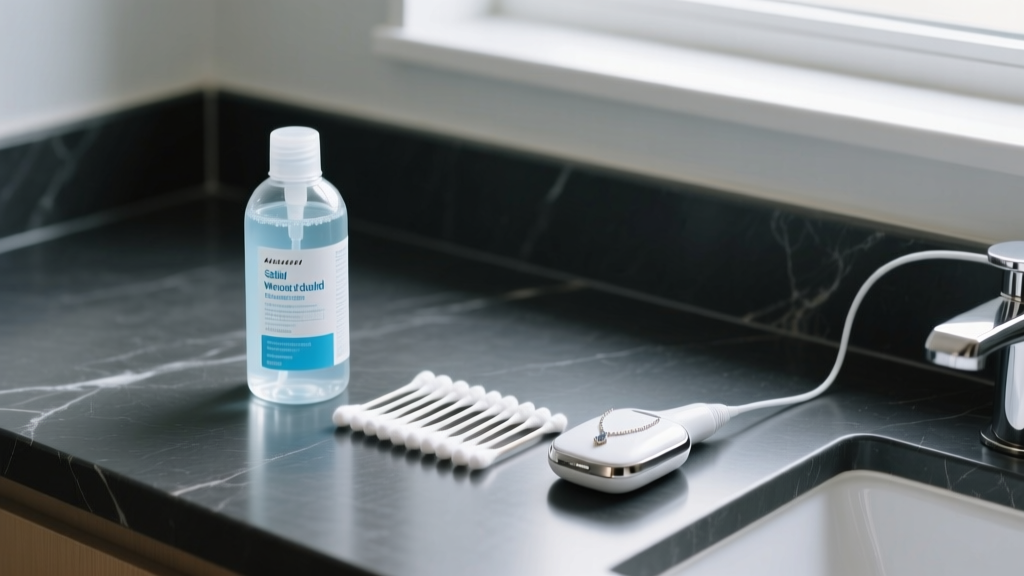
Forget the rubbing alcohol, hydrogen peroxide, and harsh soaps. These cytotoxic agents destroy the fibroblasts (cells responsible for tissue repair) and strip the ear of its natural lipid barrier, leading to dry, flaky, and irritated skin. According to the Association of Professional Piercers (APP), a gentle, pH-balanced approach is mandatory for long-term tissue health.
Daily Maintenance (The Shower Rinse)
During your daily shower, let warm water cascade over your left ear for 30 seconds. This softens and flushes out dead skin cells and sebum trapped around the post. Do not aggressively scrub the earring; let the water pressure do the work.
Weekly Deep Clean (Sterile Saline)
Once a week, use a sterile saline wound wash (0.9% sodium chloride with no additives). Spray it directly onto a cotton swab or non-woven gauze pad and gently wipe the front and back of the earlobe, as well as the jewelry post. This mimics the body's natural tear composition and cleanses without causing cellular damage.
Monthly Jewelry Detox (Ultrasonic Cleaning)
Remove the earring from your ear once a month. Place it in a small ultrasonic jewelry cleaner filled with warm water and a drop of mild, fragrance-free dish soap. The high-frequency sound waves create microscopic cavitation bubbles that blast away microscopic debris from the jewelry's crevices, especially if you wear a gemstone or textured design. Rinse thoroughly and dry with a lint-free cloth before reinserting.
"Contact dermatitis from nickel or harsh cleaning chemicals is the leading cause of chronic earlobe eczema in men. Switching to implant-grade titanium and utilizing sterile saline resolves 90% of these cases without topical steroids."
— Guidelines adapted from the American Academy of Dermatology (AAD)
Troubleshooting Common Left-Ear Issues
Even with the best materials, environmental factors can cause issues. Here is how to troubleshoot the most common complaints associated with the guy earring left ear.
| Symptom | Root Cause | Expert Solution |
|---|---|---|
| Foul Odor ("Ear Cheese") | Bacteria breaking down trapped sebum and dead skin cells in the fistula. | Switch to a threadless titanium post. The smooth surface prevents debris accumulation. Clean weekly with saline. |
| Snagging on Shirts/Helmets | Externally threaded jewelry or butterfly backings catching on fabric. | Upgrade to internally threaded or threadless (push-pin) jewelry. The insertion end is smooth, eliminating snag points. |
| Redness & Itching | Nickel allergy or contact dermatitis from hair products/cologne. | Remove steel jewelry immediately. Cleanse with saline. Reinsert ASTM F136 titanium only after the skin calms down. |
| Tenderness & Bumps | Pressure necrosis from sleeping on the left ear or tight motorcycle helmets. | Use a flat-back labret stud instead of a standard butterfly back. The flat disc distributes pressure evenly. |
Gauge Sizing and Structural Integrity
Most men's standard lobe piercings are done at 18-gauge (1.0mm) or 16-gauge (1.2mm). If your left ear was pierced with a standard mallard kiosk gun, it is likely 20-gauge (0.8mm). Thinner 20-gauge posts act like a cheese wire; if you snag your earring on a towel or a t-shirt collar, the thin metal can easily slice through the tissue, causing a blowout or migration.
If you are experiencing tearing or the earring feels unstable, visit a professional piercer to have the fistula stretched or re-pierced at a stable 16-gauge or 14-gauge (1.6mm) thickness. A thicker post provides a structural pillar that resists bending and tearing, which is crucial for men who lead active lifestyles or wear over-ear headphones for work.
Final Thoughts on Longevity
The guy earring left ear is a subtle but powerful style statement. By treating it not just as an accessory, but as a minor body modification that requires specific biomechanical and chemical care, you ensure the piercing remains healthy, odor-free, and aesthetically sharp for decades. Invest in ASTM F136 titanium, ditch the rubbing alcohol, and respect the unique friction your left ear encounters daily.


