Heart Shaped Earrings Gold: The Ultimate Beginner Guide
Discover how to choose the perfect heart shaped earrings gold. Learn about karats, gauges, styles, and pricing in this beginner-friendly guide.

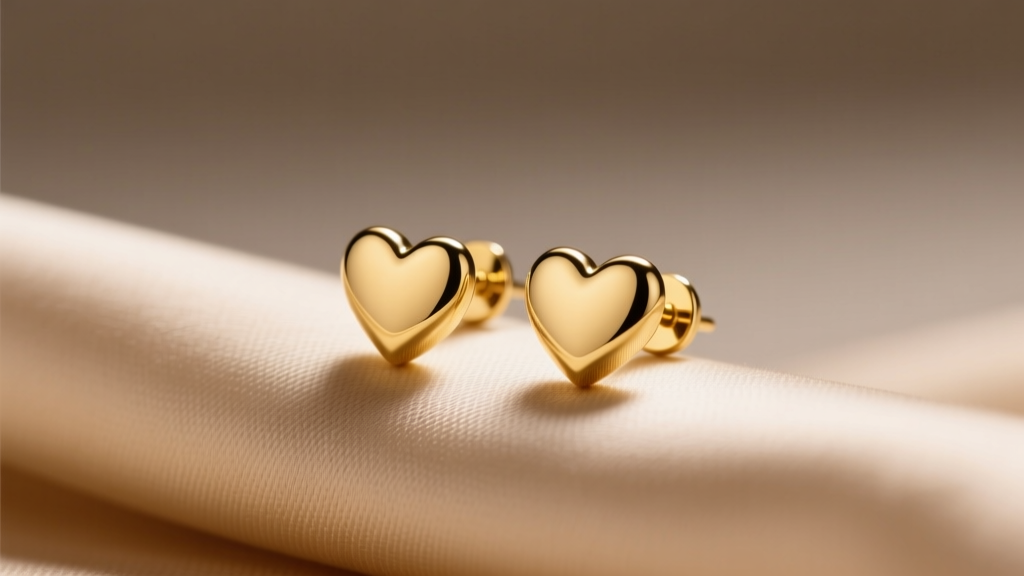
When it comes to building a timeless jewelry collection, few pieces carry the romantic weight and enduring appeal of heart shaped earrings gold. Whether you are shopping for your first pair of fine jewelry studs or looking to upgrade from costume pieces to solid metals, navigating the world of gold purity, gauge sizes, and structural integrity can feel overwhelming. As a beginner, you might assume that buying gold jewelry is as simple as picking a design you like. However, the intricate silhouette of a heart shape introduces unique engineering challenges that don't apply to basic round or square studs.
In this comprehensive, beginner-friendly explainer, we will break down the metallurgy, anatomy, and sizing specifics you need to know before investing in gold heart earrings in 2026. By the end of this guide, you will know exactly how to evaluate quality, avoid common beginner traps, and choose a pair that will last a lifetime.
Why Gold Purity Matters for Intricate Shapes
The first decision you will face is choosing the right karat (k) of gold. Pure gold is measured on a 24-point scale, but understanding how purity affects the shape of the earring is critical. The Gemological Institute of America (GIA) notes that pure 24k gold is exceptionally soft and malleable. While this is great for simple bands, it is a structural nightmare for the sharp, delicate bottom point of a heart-shaped earring.
The Karat Breakdown for Heart Silhouettes
- 24k Gold (99.9% pure): Too soft. The bottom point of the heart will easily bend, warp, or snap if snagged on a sweater.
- 18k Gold (75% pure): Offers a rich, buttery yellow hue and excellent hypoallergenic properties. However, it is still relatively soft. Best for small, chunky heart studs rather than elongated, wire-thin drop designs.
- 14k Gold (58.5% pure): The undisputed champion for heart shaped earrings gold. The remaining 41.5% consists of alloy metals (like copper, silver, and zinc) that provide the tensile strength needed to maintain the sharp angles of the heart without bending.
- 10k Gold (41.7% pure): Highly durable and budget-friendly, but lacks the warm luster of higher karats. It also carries a higher risk of causing contact dermatitis if the alloys include nickel.
Beginner Tip: If you have sensitive ears or metal allergies, always opt for 14k or 18k yellow or rose gold. White gold is often alloyed with nickel to achieve its silvery color, which is a primary culprit for allergic reactions. If you prefer the silver look, look for 14k white gold alloyed with palladium instead of nickel.
Decoding the Styles: Studs, Huggies, and Drops
Heart motifs translate across nearly every earring category, but the way the metal is distributed changes the wearability and comfort. Here is a structural comparison of the three most popular styles.
| Style | Best Gauge Size | Weight Profile | Ideal Face Shape |
|---|---|---|---|
| Heart Studs | 20g (0.81mm) or 18g (1.02mm) | Lightweight (0.5g - 1.5g) | Heart or Square (adds softness to the jawline) |
| Heart Huggies | 18g (1.02mm) or 16g (1.29mm) | Medium (2.0g - 4.0g) | Round or Oval (frames the ear without elongating) |
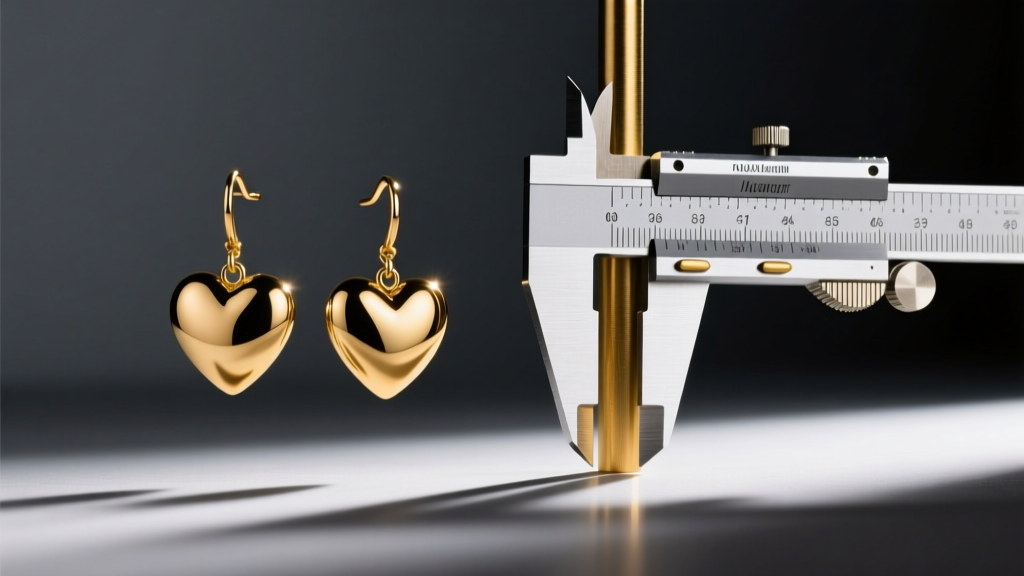
| Heart Drops | 20g (0.81mm) standard hook | Variable (1.5g - 5.0g+) | Round or Square (the vertical drop elongates the face) |
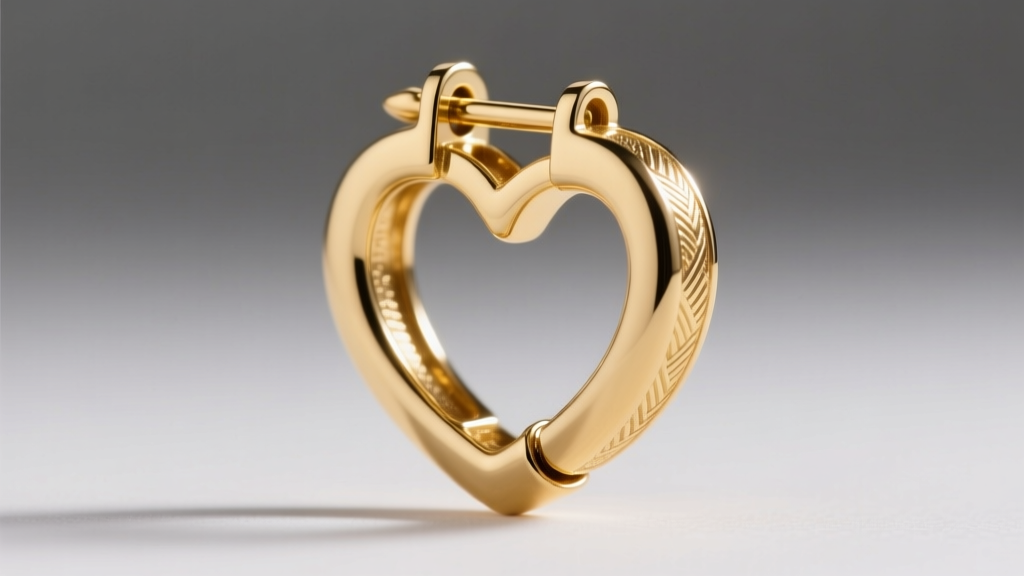
The Huggie Hinge Mechanism
If you are leaning toward heart-shaped huggies (small hoops that 'hug' the earlobe), pay close attention to the closure. Beginners often buy cheap huggies with flimsy wire-and-catch closures that warp within weeks. Look for a clicker hinge mechanism. A high-quality clicker will produce a satisfying, audible 'snap' when closed, ensuring the heart motif aligns perfectly at the front of the ear without the risk of the earring sliding open during sleep.
The Anatomy of a Heart Earring: Cast vs. Stamped
How your earring is manufactured dictates its longevity. There are two primary methods used to create gold heart earrings: die-stamping and casting.
Die-Stamped Hearts: These are punched out of a flat sheet of gold. They are incredibly lightweight and affordable. However, because they are essentially flat metal cutouts, they lack dimensionality. If you sit on a stamped heart earring or bend it, it will crease and lose its shape permanently.
Cast Hearts: Molten gold is poured into a 3D mold (often created via lost-wax casting). This results in a solid, three-dimensional heart with rounded, beveled edges that catch the light beautifully. Cast earrings are heavier, more expensive, and significantly more resistant to bending. For a premium, heirloom-quality piece, always choose a solid cast design over a flat stamped cutout.
Sizing, Gauges, and Piercing Placement
One of the most frequent mistakes beginners make is ignoring the post thickness (gauge) and length. The gauge refers to the diameter of the metal wire that passes through your piercing. According to the Association of Professional Piercers (APP), standard jewelry gauges are strictly regulated to prevent tissue damage.
- Standard Lobe Piercings: Usually heal at 20g (0.81mm) or 18g (1.02mm). Most commercial heart studs are made in these sizes.
- Cartilage / Helix Piercings: Typically pierced at 16g (1.29mm).
The Cartilage Trap: Why Backings Matter
If you plan to wear a heart-shaped stud in your upper cartilage, you must consider the backing. Traditional 'butterfly' friction backs are bulky and can press the sharp bottom point of the heart into your ear when you lie down. For cartilage placements, seek out heart studs that feature a flat-back labret post with an internal thread or push-fit end. This ensures the heart sits flush against the front of the ear, while the flat disc rests comfortably against the back of your cartilage without digging into your skin.
2026 Pricing Tiers: What to Expect
Understanding the market value of gold will protect you from overpaying for vermeil or underpaying for suspiciously cheap 'solid' gold. Here is a realistic pricing framework for heart shaped earrings gold in the current market.
Budget Tier ($40 - $120)
In this range, you are primarily looking at Gold Vermeil (a thick layer of gold over sterling silver) or hollow 10k gold. Vermeil is a great entry point for trend-driven styles, but be aware that the gold layer will eventually wear away at the high-friction points of the heart, exposing the silver beneath.
Mid-Range Tier ($150 - $350)
This is the sweet spot for solid 14k gold. You can expect well-cast, 3D heart studs, small solid huggies, and simple drop earrings. Brands in this tier often use secure screw-back or la-clique closures, which are vastly superior to standard friction backs.
Luxury Tier ($400 - $1,500+)
At this level, you are paying for 18k gold, intricate pavé diamond accents set into the heart silhouette, and designer prestige. The craftsmanship here should be flawless, with prongs that are perfectly flush and polishing that reaches into the deepest crevices of the heart's cleft.
Care and Maintenance to Prevent Tarnish and Bending
While pure gold does not tarnish, the alloy metals in 10k and 14k gold can react with environmental factors. To keep your heart shaped earrings gold looking pristine, follow these strict maintenance rules:
- Avoid the Ultrasonic Trap: Ultrasonic cleaners are fantastic for plain gold, but if your heart earrings feature glued-in gemstones (like mother-of-pearl or turquoise inlays), the high-frequency vibrations will shatter the adhesive and ruin the piece.
- The Lotion Film: Hand creams and body lotions create a microscopic film over gold, dulling its reflective properties. Wipe your earrings with a lint-free microfiber cloth once a week to remove lipid buildup.
- Storage Separation: The sharp bottom point of a heart earring can easily scratch softer jewelry. Store them in individual soft pouches or dedicated compartments in a jewelry box. Never toss them loosely into a drawer where the heart point can catch on chains or other posts.
Stylist's Note: The cleft (the top dip) of the heart is a natural trap for skin oils and perfume residue. Use a soft-bristled baby toothbrush dipped in warm water and a drop of mild dish soap to gently agitate this specific area once a month. Rinse thoroughly and pat dry.
Choosing the right pair of heart shaped earrings gold is about balancing aesthetic romance with structural reality. By prioritizing 14k gold for durability, understanding the gauge requirements of your specific piercings, and investing in cast rather than stamped designs, you ensure that your jewelry remains as resilient as it is beautiful. Whether you opt for a subtle everyday stud or a dramatic drop, you are now equipped to make an informed, confident purchase.


