Hexagon Earrings: A Beginner's Guide to Geometric Styling
Discover how to choose, style, and care for hexagon earrings. Learn about face shape matching, metal durability for geometric edges, and gauge sizing.

The Appeal of Geometric Jewelry
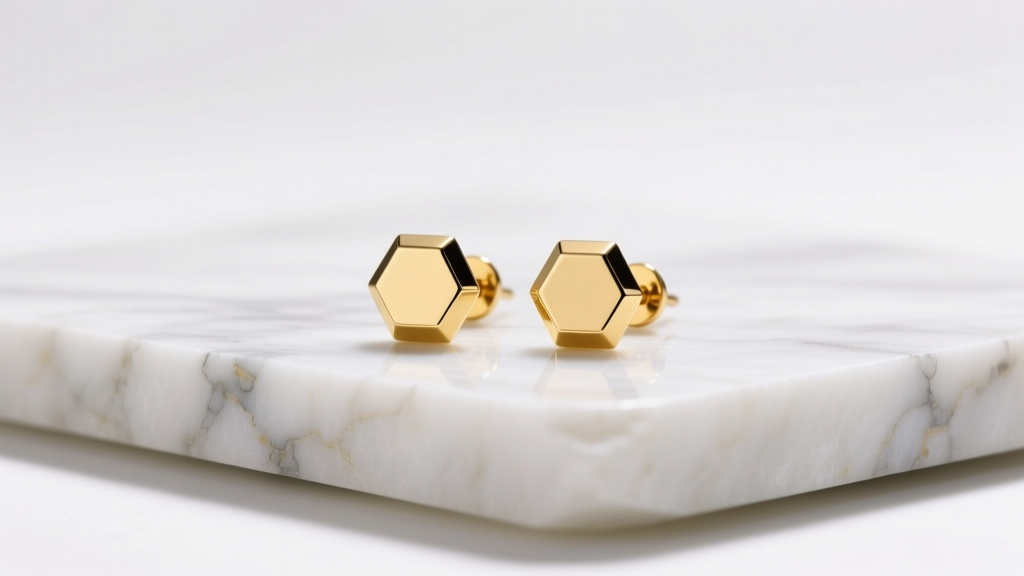
Geometric jewelry has transcended fleeting trends to become a staple in modern accessory wardrobes, and hexagon earrings sit right at the apex of this movement. The hexagon—a six-sided polygon with 120-degree interior angles—offers a perfect bridge between the sharpness of a square and the softness of a circle. For beginners looking to incorporate architectural lines into their daily rotation, hexagon earrings provide a structured, sophisticated aesthetic that works in both professional and casual settings. However, styling and selecting geometric jewelry requires more than just picking a shape you like; it demands an understanding of facial symmetry, metallurgical durability, and precise gauge sizing.
In this comprehensive guide, we will break down everything you need to know about buying, wearing, and maintaining hexagon earrings, ensuring your investment remains crisp, comfortable, and visually striking for years to come.
Matching Hexagon Earrings to Your Face Shape
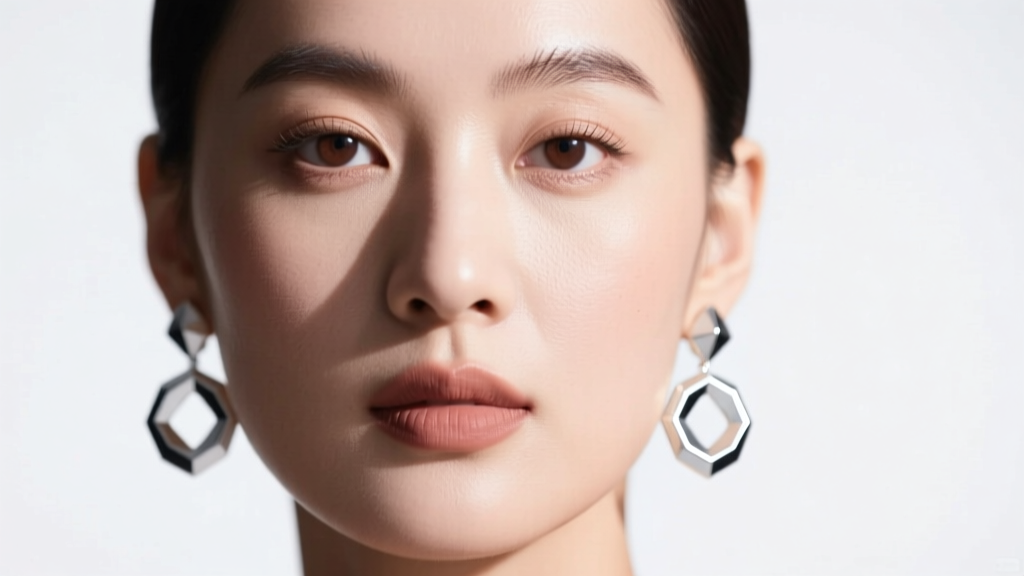
The fundamental rule of styling geometric jewelry is contrast. Because hexagons feature distinct, straight lines and pointed vertices, they interact with your natural facial contours in specific ways. Understanding your face shape is the first step in choosing the right hexagon earring silhouette.
| Face Shape | Ideal Hexagon Style | Why It Works |
|---|---|---|
| Round | Elongated Hexagon Drops | The sharp 120-degree angles and vertical drop create an illusion of length, contrasting beautifully with soft, curved jawlines. |
| Oval | Medium Hexagon Studs or Hoops | Oval faces are highly versatile. Medium-sized geometric studs highlight the cheekbones without overwhelming the face's natural balance. |
| Square | Hexagon Hoops with Rounded Corners | Square faces already possess strong, angular jawlines. A hexagon hoop with slightly softened or beveled edges adds geometry without looking overly harsh. |
| Heart | Micro Hexagon Studs or Huggies | Heart-shaped faces feature wider foreheads and narrow chins. Small, lightweight hexagon huggies draw attention to the earlobe without adding bulk to the lower face. |
Material Matters: Why Edges Dictate Metal Choice
One of the most common mistakes beginners make when buying geometric jewelry is ignoring metallurgy. A hexagon has six distinct vertices (corners). If you purchase a large, hollow hexagon hoop made from a soft metal, those corners will warp, bend, and scratch easily. To maintain crisp geometric lines, you must choose a metal with an appropriate Vickers Hardness (HV) rating.
The Durability Breakdown for Geometric Edges
- 14k Solid Gold (130-160 HV): The gold standard for everyday geometric studs. The alloy mix (usually copper and silver) provides enough rigidity to keep the six corners sharp and resistant to snagging on clothing.
- Implant-Grade Titanium (300-350 HV): Incredibly hard and lightweight. According to the Association of Professional Piercers, titanium is biocompatible and highly resistant to deformation, making it the ultimate choice for large hexagon dangles that won't stretch your earlobe.
- 925 Sterling Silver (60-70 HV): While beautiful and affordable, pure silver and standard sterling are relatively soft. If you buy sterling silver hexagon earrings, opt for smaller, thicker studs rather than large, thin wire hoops, which will easily bend out of shape at the vertices.
- Brass/Alloy (Variable): Often used in fast fashion. While initially rigid, the plating on the sharp corners will wear off first due to friction, leading to rapid tarnishing and skin discoloration.
The Gemological Institute of America (GIA) notes that the specific alloy mix in gold dramatically alters its durability. When shopping for hexagon earrings, always verify the karat and alloy composition to ensure the metal can physically support the structural demands of a six-sided design.
Sizing and Gauge: Getting the Right Fit
Geometric shapes draw the eye, meaning any sizing discrepancy will be immediately noticeable. Furthermore, the weight distribution of a hexagon earring differs vastly from a traditional round hoop.
Understanding Gauge Thickness
The 'gauge' refers to the thickness of the post or wire that passes through your piercing. Wearing the wrong gauge in a heavy geometric earring can lead to the 'cheese-cutter effect,' where a thin wire slowly migrates through the earlobe tissue due to uneven weight distribution.
- 20-Gauge (0.81mm): Standard for lightweight micro-studs (4mm - 6mm). Perfect for delicate, minimalist hexagon designs.
- 18-Gauge (1.02mm): The ideal middle ground for standard hexagon drops and medium hoops (10mm - 15mm). Provides enough structural integrity to support the weight of the six-sided frame.
- 16-Gauge (1.29mm): Mandatory for cartilage piercings (helix, tragus, conch) or heavy statement hexagon dangles. If you are wearing a large geometric piece in the lobe, a 16g post or a silicone backing disc is highly recommended to distribute the weight and prevent tearing.
Hexagon Hoops vs. Studs vs. Dangles: A Buyer's Framework
When building your collection, it helps to categorize hexagon earrings by their functional silhouette. Each serves a distinct purpose in a jewelry wardrobe.
1. The Hexagon Stud (5mm - 10mm)
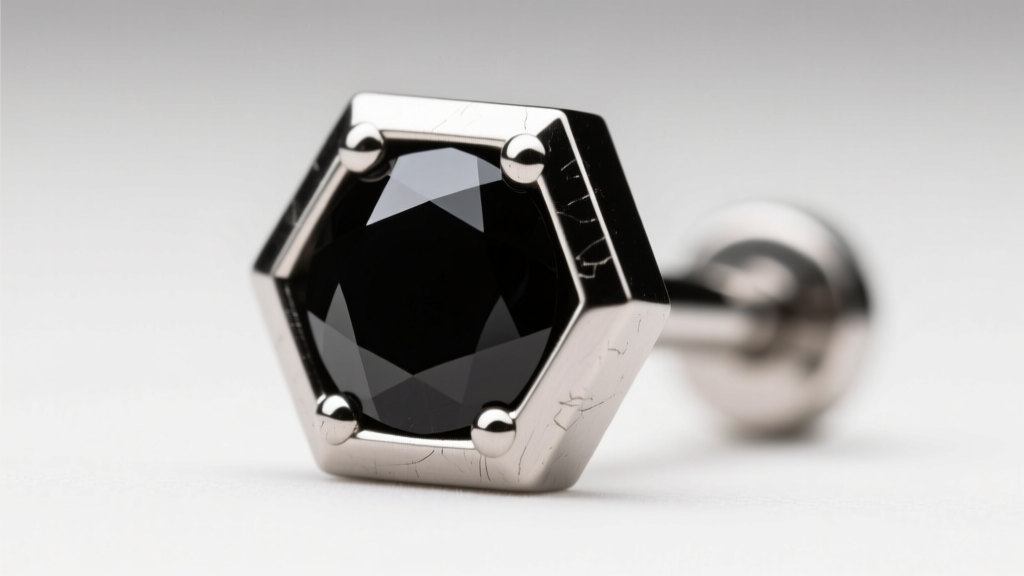
The ultimate everyday essential. Hexagon studs sit flush against the earlobe. Look for designs with a bezel-set gemstone (like black onyx or white sapphire) in the center of the hexagon to add depth. Because they are small, you can comfortably sleep in them, though removing them is always best for long-term post straightness.
2. The Hexagon Hoop (15mm - 25mm)
Unlike circular hoops, hexagon hoops sit with distinct angles jutting outward. This creates a subtle 'halo' effect around the ear. When buying hexagon hoops, pay close attention to the clasp mechanism. A hinged clicker closure is vastly superior to a traditional wire-and-tube clasp for geometric hoops, as it maintains the exact 120-degree angle at the top of the earring without creating a visible gap.
3. The Hexagon Dangle / Drop (30mm+)
Statement pieces that catch the light and draw attention to the neck. Because of their size, opt for hollowed-out wireframes or ultra-lightweight materials like anodized titanium. A solid gold hexagon drop of this size would be prohibitively heavy and expensive.
Pricing Tiers: What Should You Expect to Pay?
Understanding the market rate for geometric jewelry prevents you from overpaying for plated metals or underestimating the cost of solid gold craftsmanship.
| Material Tier | Typical Price Range | Best For |
|---|---|---|
| Gold-Plated Brass / Stainless Steel | $15 - $35 | Trend-chasing, occasional wear, and festival styling. Expect corner plating to wear off within 6-12 months. |
| Solid 925 Sterling Silver | $40 - $85 | Daily wear on a budget. Requires regular polishing to prevent tarnish, especially in the crevices of the hexagon corners. |
| 14k Solid Gold (Yellow, White, or Rose) | $150 - $450+ | Lifetime investment pieces, sensitive ears, and heirloom quality. Holds geometric edges perfectly. |
Maintaining the Crisp Edges of Hexagon Jewelry
The very feature that makes hexagon earrings beautiful—their sharp, defined corners—is also their biggest vulnerability. Corners are the first points of contact when you take jewelry on and off, making them prone to micro-abrasions.
Pro-Tip: Never store hexagon earrings loose in a jewelry box where they can tumble against other pieces. The sharp vertices will scratch softer metals and gemstones. Always store them in individual soft microfiber pouches or dedicated slotted compartments.
To clean geometric earrings, avoid harsh ultrasonic cleaners if the piece features tension-set stones at the vertices, as the high-frequency vibrations can loosen the settings. Instead, use a soft-bristled baby toothbrush with warm water and a drop of mild dish soap. Gently brush the interior angles of the hexagon where skin oils and lotions tend to accumulate, rinse thoroughly, and dry with a lint-free cloth.
Final Thoughts
Hexagon earrings are a masterclass in structural elegance. By understanding the interplay between the 120-degree angles and your face shape, selecting metals with the appropriate Vickers Hardness to maintain those crisp lines, and respecting gauge requirements for ear health, you can confidently integrate geometric jewelry into your personal style. Whether you opt for a minimalist 14k gold micro-stud or a bold titanium cartilage piece, the hexagon remains a timeless, mathematically perfect addition to any curated ear.


