Beyond the World's Largest Earrings: Safe Guide to Oversized Styles
Discover the secrets behind the world's largest earrings and learn how to safely wear heavy, oversized statement pieces without damaging your lobes.

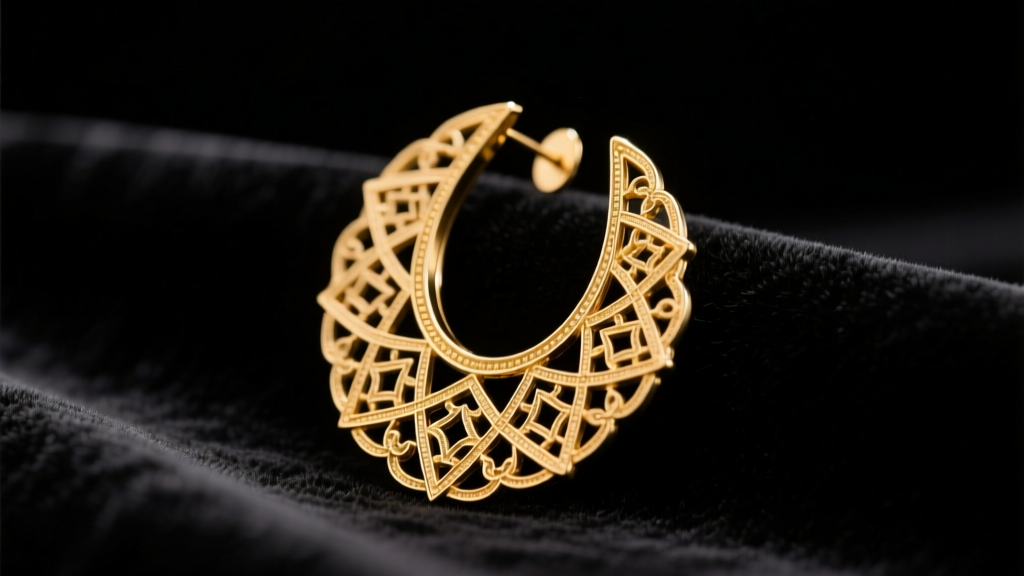
The search for the world's largest earrings often leads down a rabbit hole of viral spectacles, ancient tribal traditions, and gravity-defying Guinness World Records. From the indigenous Dayak people of Borneo, who historically stretched their lobes with heavy brass rings, to modern avant-garde runways featuring shoulder-dropping chandeliers, extreme jewelry has always captivated the human imagination. But what happens when a beginner wants to incorporate oversized, heavy statement pieces into their everyday wardrobe without suffering the painful consequences of torn tissue?
As a jewelry style guide, we believe that pushing the boundaries of size and scale should never come at the expense of your anatomical health. This beginner-friendly explainer breaks down the physics of heavy earrings, the material science of oversized jewelry, and the exact frameworks you need to wear massive statement pieces safely.
The Fascination with Extreme Jewelry: Record-Breaking Weights
When we talk about the world's largest earrings, we are usually talking about weight and surface area. According to Guinness World Records, the heaviest earrings ever worn in a sanctioned setting have tipped the scales at several kilograms per ear, often utilizing rigid structural supports that wrap around the neck or rest on the shoulders to bypass the earlobe entirely.
In traditional contexts, such as the stretched lobes of the Dayak or the Masai tribes, the earlobe is gradually conditioned over decades to support heavy, solid metal coils. However, the modern Western earlobe—typically pierced at a standard 20-gauge or 18-gauge size—is entirely unequipped to handle sudden, extreme loads. Attempting to mimic these extreme looks without proper conditioning or support mechanisms is a guaranteed path to irreversible tissue damage.
The Physics of Heavy Earrings: Why Lobes Tear
To understand why oversized earrings are dangerous, you must understand earlobe anatomy. Unlike the upper ear, the lobe contains no cartilage. It is composed primarily of areolar connective tissue, fat, and a network of collagen and elastin fibers.
The primary enemy of the earlobe is the cheese-cutter effect. This physics principle dictates that a thin wire under tension will slice through a soft medium. If you hang a 60-gram statement earring from a standard 20-gauge (0.81mm) wire, the sheer force concentrated on that microscopic surface area will easily exceed the tensile strength of your collagen matrix. Over time, this causes micro-tears, elongation, and eventually, a complete lobe split.
The Gauge-to-Weight Ratio
According to metallurgical and jewelry-making standards outlined by Ganoksin, the thickness of the ear wire must scale proportionally with the weight of the earring. Here is the critical threshold guide for beginners:
- 20-Gauge (0.81mm): Safe for lightweight studs and small hoops (under 10 grams).
- 18-Gauge (1.02mm): Standard for most commercial drop earrings (10 to 20 grams).
- 16-Gauge (1.29mm): Required for heavy statement pieces (20 to 40 grams).
- 14-Gauge (1.63mm) or thicker: Mandatory for oversized, extreme-weight jewelry (40+ grams).
How to Safely Wear Oversized Statement Earrings
You do not need to stretch your lobes to wear the world's largest earrings. By manipulating how the weight is distributed across your skin, you can safely wear pieces that weigh upwards of 50 grams. Here are the three professional methods for lobe preservation.
1. Earlobe Support Patches
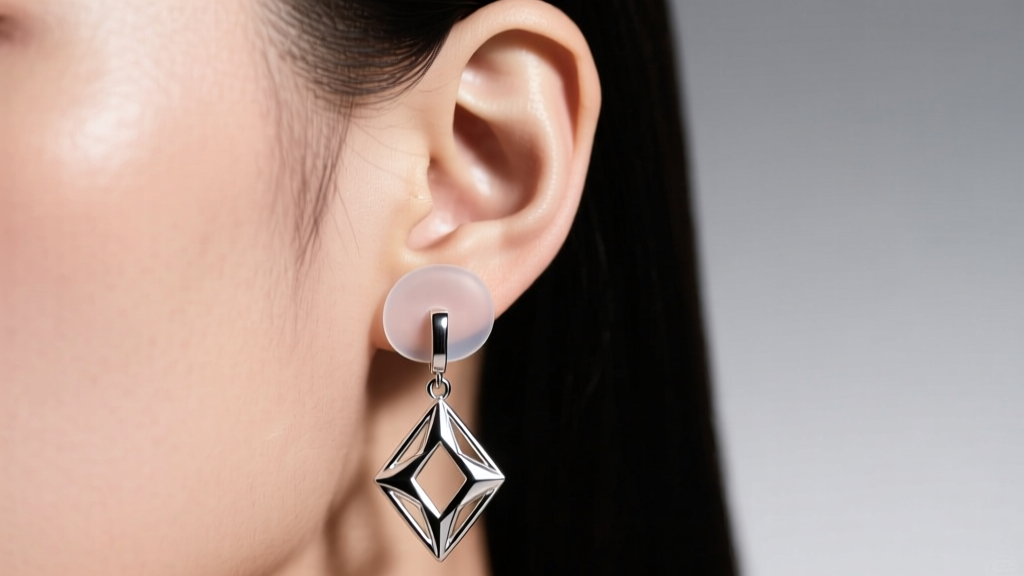
Products like Lobe Wonder are small, hypoallergenic adhesive patches with a pre-punched hole. You apply the patch to the back of your earlobe and push the earring post through both the patch and your piercing. The patch distributes the downward pulling force across a surface area of roughly 2 square centimeters, effectively neutralizing the cheese-cutter effect and preventing the earring from drooping.
2. Silicone O-Rings and Discs
For hook-style earrings, clear silicone O-rings or flat discs can be slid onto the wire before it enters the ear. These act as a friction buffer and increase the surface area resting against the back of the lobe, reducing localized pressure points.
3. French Wire Covers
If you are wearing heavy chandelier earrings on French hooks, slip a piece of soft, medical-grade silicone tubing over the part of the wire that rests inside the piercing. This artificially increases the gauge of the wire from a dangerous 20G to a safe 12G without requiring you to stretch your piercing.
Weight Categories and Lobe Impact Matrix
Use this table to determine the necessary support system based on the physical weight of your oversized earrings.
| Weight Category | Grams | Minimum Wire Gauge | Required Support Method |
|---|---|---|---|
| Standard | 1g - 15g | 20G - 18G | Standard friction backs or small silicone stoppers |
| Heavy Statement | 16g - 35g | 16G | Adhesive lobe patches + large silicone O-rings |
| Extreme / Oversized | 36g - 60g+ | 14G or thicker | Adhesive patches + silicone tubing over French wires |
| Record-Breaking | 60g+ | N/A | Do not use lobe piercings; use structural ear cuffs or clip-ons |
Material Matters: Density and Tensile Strength
When shopping for oversized earrings, the material dictates both the weight and the structural integrity of the piece. The American Academy of Dermatology frequently warns against the irritation caused by heavy, porous metals dragging through the skin.
The Problem with Solid Gold
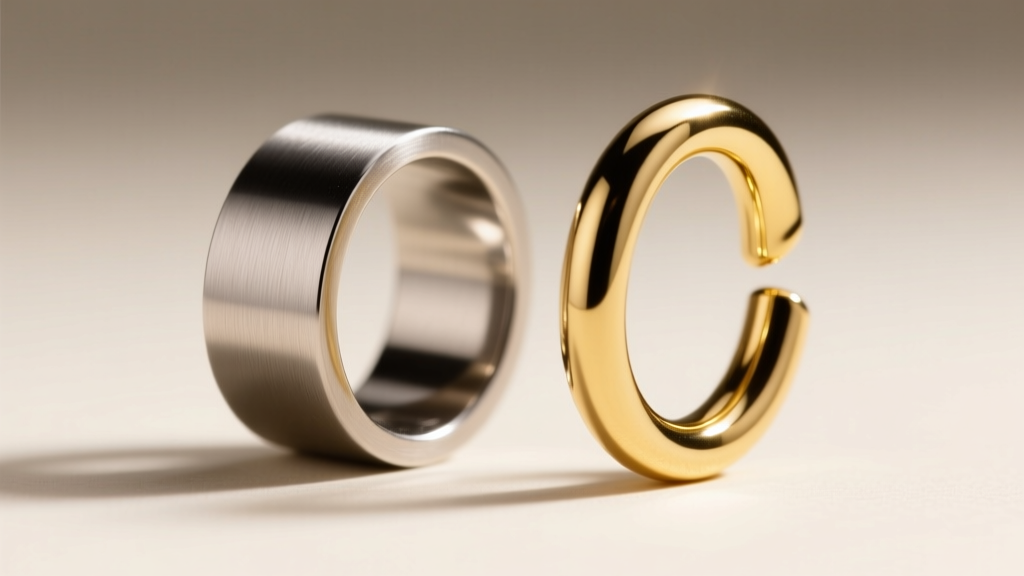
While 18k and 24k gold are luxurious, they are incredibly dense (15.6 g/cm³ to 19.3 g/cm³) and relatively soft. A large, solid 18k gold hoop will be exceptionally heavy and prone to bending under its own weight, which can warp the ear wire and cause it to slip out of the lobe.
The Titanium Advantage
For massive, oversized statement pieces, Grade 5 Titanium (Ti-6Al-4V) is the superior choice. It has a density of just 4.43 g/cm³—making it roughly 70% lighter than gold—while boasting immense tensile strength. Titanium allows jewelry designers to create massive, voluminous silhouettes that look visually heavy but remain physically light enough to be worn safely on standard earlobes.
Alternatives to Lobe Piercings for Extreme Sizes
If you want to channel the aesthetic of the world's largest earrings without subjecting your lobes to any risk, bypass the piercing entirely. Modern jewelry engineering offers several highly secure alternatives:
- Spring-Loaded Clip-Ons: Vintage-style clip-ons with adjustable tension screws can support up to 40 grams by gripping the entire side of the earlobe, distributing weight laterally rather than vertically.
- Ear Cuffs and Cartilage Wraps: Heavy, oversized ear cuffs that wrap around the helix or conch can anchor massive decorative chains and drops. The cartilage is much denser and more resistant to tearing than the lobe.
- Magnetic Earrings: For lightweight but visually massive pieces (like large resin or acrylic hoops), high-grade neodymium magnets provide a seamless, piercing-free illusion.
Recovery and Lobe Care After Wearing Heavy Jewelry
Even with the best support patches, wearing heavy statement earrings for more than four hours will cause tissue fatigue. The resting phase is just as critical as the wearing phase.
"Treat your earlobes like any other muscle group after heavy exertion. They require blood flow, hydration, and structural rest to rebuild the collagen matrix."
After removing heavy earrings, gently massage the lobes with pure, cold-pressed Jojoba oil or Vitamin E oil. This stimulates blood flow and keeps the elastin fibers supple. Never wear heavy statement pieces two days in a row; give your lobes a minimum 24-hour recovery window wearing only lightweight, 14k gold or titanium studs to allow the micro-stress in the tissue to heal.
By respecting the physics of weight distribution and choosing the right materials, you can safely explore the outer limits of jewelry design—no world records or stretched lobes required.


