Hinged Clip On Earrings: Technical Guide to Tension and Fit
Explore the technical engineering of hinged clip on earrings. Learn about tension calibration, metal fatigue, and ergonomic designs for non-pierced ears.

The Biomechanics of the Hinge: How Tension Works
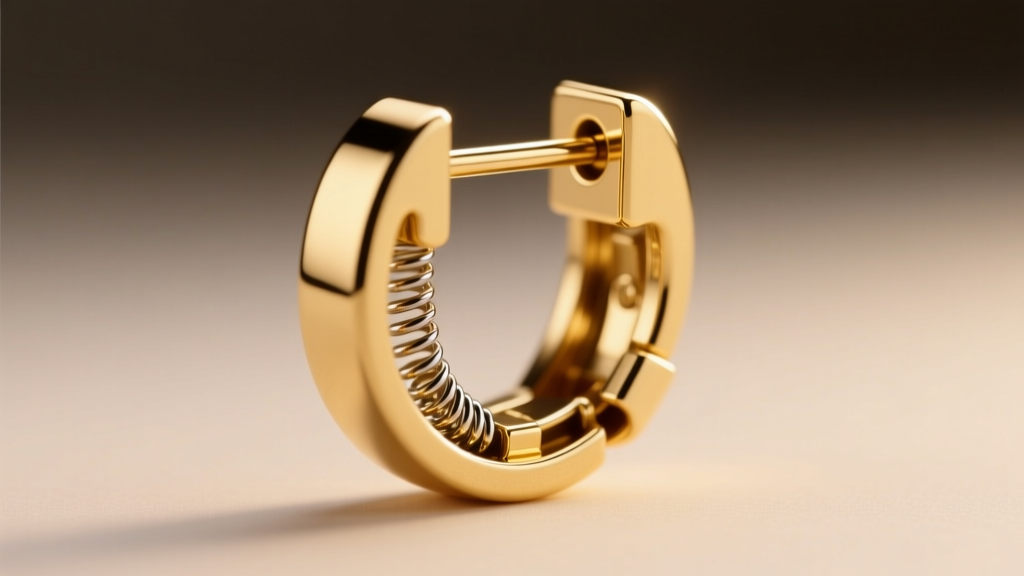
The transition from vintage screw-backs and painful paddle clips to modern hinged clip on earrings represents a significant leap in jewelry ergonomics. For non-pierced individuals, the primary challenge is securing the earring without inducing ischemia—a condition where excessive clamping force restricts capillary blood flow to the earlobe, resulting in throbbing pain within 45 to 60 minutes. To understand how premium findings avoid this, we must look at the biomechanics of the clamping force.
A properly engineered hinged clip-on mechanism applies a consistent clamping force between 0.8 Newtons (N) and 1.5N. This specific range provides enough friction to support the weight of the earring during normal head movements (such as talking or walking) while remaining below the 2.0N ischemia threshold. The secret to maintaining this narrow force band lies in the hinge architecture, which must compensate for the natural variations in earlobe thickness, which typically ranges from 4mm to 10mm among adults.
Spring vs. Friction Hinges: A Metallurgical Breakdown
There are two dominant hinge mechanisms used in contemporary manufacturing:
- Friction Barrel Hinges: These rely on the interference fit of a steel or brass pin inside a precision-machined barrel. The torque is generated by the physical deformation of the barrel walls. While cheaper to produce, friction hinges suffer from torque degradation over time as the barrel walls experience work hardening and microscopic wear.
- Torsion Spring Hinges: The gold standard for high-end hinged clip on earrings. These utilize a micro-coil torsion spring (typically wound from 0.2mm to 0.3mm wire) housed within the hinge knuckle. The spring provides a linear, predictable clamping force that does not degrade with repeated opening and closing, ensuring the earring performs identically on day one and day five hundred.
Material Science: Alloys and Metal Fatigue
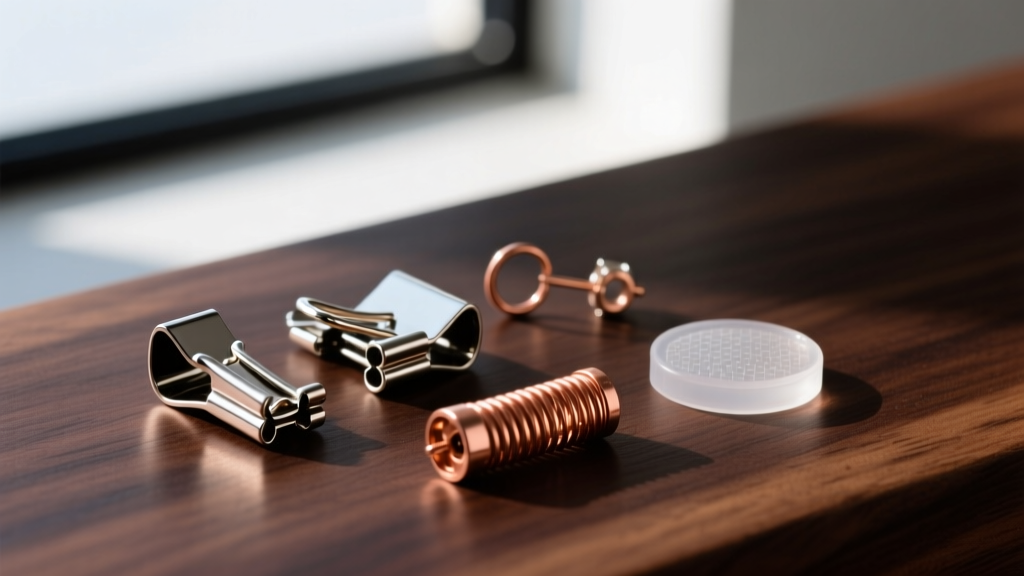
The longevity of a hinged clip-on earring is entirely dependent on the metallurgical properties of its findings. According to ScienceDirect's metallurgical archives, metal fatigue occurs when a material is subjected to cyclic loading—in this case, the repeated opening and closing of the earring clip. If the alloy lacks a sufficient fatigue limit, microscopic cracks will initiate at the hinge stress points, eventually leading to catastrophic snapping.
Mass-market manufacturers often use standard brass or low-grade zinc alloys. While brass is easy to cast and plate, it is highly susceptible to work hardening. A brass clip arm will typically snap at the hinge fulcrum after 400 to 600 articulation cycles. In contrast, precision jewelers utilize specialized alloys designed for dynamic stress.
| Alloy / Material | Vickers Hardness (HV) | Fatigue Limit | Hypoallergenic | Best Use Case |
|---|---|---|---|---|
| Standard Brass | 60 - 80 HV | Low (Prone to work hardening) | No (Contains trace nickel/lead) | Low-cost fashion jewelry |
| 304 Stainless Steel | 150 - 200 HV | High | Yes (Surgical grade) | Durable everyday clip-ons |
| Beryllium Copper (BeCu) | 350 - 400 HV | Exceptional (Spring-tempered) | No (Beryllium toxicity risk if machined) | Internal torsion springs |
| Grade 2 Titanium | 120 - 150 HV | Moderate (Low elasticity) | Yes (Highly biocompatible) | Hypoallergenic clip arms |
For the internal springs, Beryllium Copper (BeCu) is the industry standard due to its high yield strength and electrical conductivity, though it is safely encased to prevent skin contact. For the clip arm itself, 301 or 304 spring-tempered stainless steel offers the ideal balance of elasticity and corrosion resistance, often plated with rhodium or 18k gold via PVD (Physical Vapor Deposition) to ensure the plating does not flake under mechanical stress.
Ergonomic Padding: Silicone vs. Acrylic Resins
The metal clip arm is only half of the equation; the interface between the metal and the skin dictates the ultimate comfort of the earring. Historically, manufacturers used hard acrylic resins or rigid PVC for clip pads. These materials have a high coefficient of friction but lack compressibility, leading to severe pressure points on the earlobe's cartilage and nerve endings.
Modern 2026 manufacturing standards favor medical-grade liquid silicone rubber (LSR). The ideal silicone pad for a hinged clip-on earring registers between 40A and 50A on the Shore durometer scale. This specific hardness provides a 'tacky' surface that grips the skin's natural oils without slipping, while remaining soft enough to distribute the clamping force evenly across a 12mm to 15mm surface area. Unlike older urethane foams, which suffer from hydrolysis (breaking down and turning sticky when exposed to skin oils and humidity), high-quality silicone is chemically inert and UV stable.
Weight Distribution and the Fulcrum Effect
A critical, often overlooked aspect of designing hinged clip on earrings is the relationship between the earring's drop weight and the hinge's fulcrum point. When a heavy dangle element (e.g., a 15-gram gemstone cluster) is attached to a standard clip-on finding, it creates a lever arm. As the earring swings, kinetic energy multiplies the static weight, generating peak torque at the hinge pin.
To counteract this, expert jewelers utilize extended fulcrum findings. These designs move the hinge pivot point further back from the earlobe, effectively shortening the lever arm of the dangle. Additionally, for earrings exceeding 10 grams, the silicone comfort pad must be widened to at least 18mm to prevent the increased rotational force from digging into the side of the earlobe. Suppliers like Rio Grande categorize their findings by weight capacity, a crucial metric that amateur designers frequently ignore, resulting in earrings that physically pull away from the ear when the wearer nods.
Troubleshooting Common Failure Modes
Even precision-engineered hinged clip on earrings can experience mechanical issues. Understanding these failure modes is essential for both jewelers and collectors:
- Hinge Pin Extrusion: Caused by lateral torque (twisting the earring sideways while putting it on). The 0.8mm steel pin pushes through the soft brass knuckle. Solution: Always open the clip by pulling straight down on the pad, never twisting.
- Pad Delamination: The silicone pad peels away from the metal arm. This occurs when manufacturers use cyanoacrylate (super glue) instead of two-part epoxy or mechanical undercuts to secure the pad. Solution: Clean the metal arm with isopropyl alcohol and re-secure using jeweler's epoxy.
- Tension Loss in Friction Hinges: The clip feels loose and slips off the ear. Solution: See the calibration framework below.
Calibrating Tension: A Jeweler's Framework
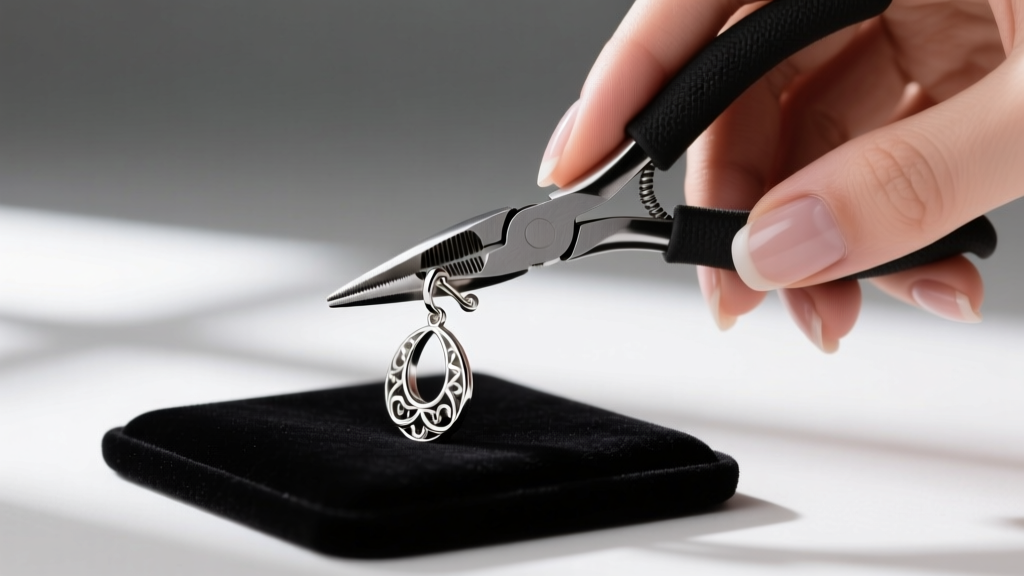
Adjusting the tension of a hinged clip-on earring requires precision. Using standard steel jewelry pliers will mar the plating and scratch the metal. According to master jewelers and educational resources from the Gemological Institute of America (GIA), proper tool selection is paramount when altering findings.
'Never apply steel jaws to a finished clip-on finding. The localized pressure will crush the hinge barrel and ruin the PVD plating. Always use nylon-jaw or copper-jaw pliers for tension adjustments.' — Standard Jewelry Bench Practices
Step-by-Step Calibration for Friction Hinges:
- Secure the earring's front face in a padded bench vise or hold it firmly against a leather bench pin.
- Using nylon-jaw chain-nose pliers, grip the very tip of the clip arm (where the pad attaches).
- To increase tension (make it tighter), gently bend the arm inward by 1 to 2 degrees. Do not bend at the hinge itself; bend the mid-section of the arm to preserve the barrel's integrity.
- To decrease tension (make it looser), apply gentle outward pressure.
- Test the clamping force by placing a piece of 2mm thick leather between the clip and the front, snapping it shut. It should hold firmly but release without excessive prying.
Conclusion: Investing in Precision Engineering
The evolution of hinged clip on earrings from painful novelty items to sophisticated, ergonomic accessories is a triumph of micro-engineering and materials science. By prioritizing torsion spring mechanics, spring-tempered stainless steel alloys, and Shore 40A silicone padding, modern jewelers can offer non-pierced clients an experience that rivals the comfort of traditional post-and-clutch piercings. Whether you are a bench jeweler sourcing findings or a collector investing in vintage and contemporary pieces, understanding the technical anatomy of the hinge ensures you select pieces that are built to last a lifetime of wear.


