Hold My Earrings GIF: How to Secure Dangle Earrings for Action
Decode the viral hold my earrings GIF trend and learn how to secure dangle earrings for sports, action, and everyday snags using expert hacks.
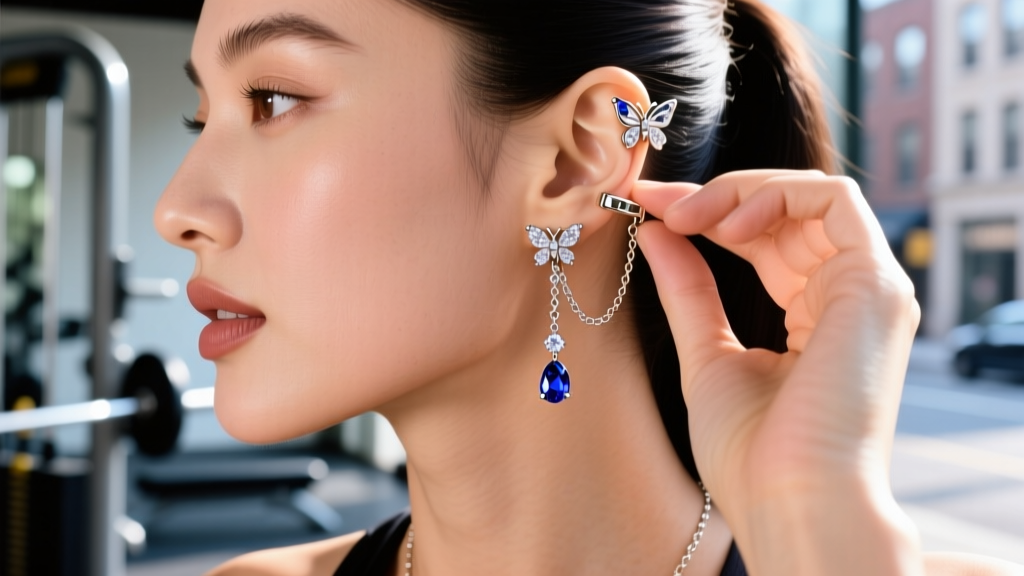

If you have spent any time on social media, you have likely encountered the viral 'hold my earrings' GIF. The meme typically features a woman confidently handing off her large, dangling earrings to a friend right before engaging in a physical altercation, an intense athletic endeavor, or a wild night on the dance floor. It is a humorous pop-culture trope, but for jewelry experts and piercers, it highlights a very real, very dangerous flaw in how we wear statement jewelry during high-impact moments.
Heavy dangle earrings are notorious snag hazards. When a 2-inch drop earring catches on a sweater, gym equipment, or an opponent's hand, the physics of the lever-arm effect can cause catastrophic damage to your earlobe. But what if you refuse to take them off? What if you want to keep your statement pieces secure, no matter the action? This step-by-step guide breaks down the mechanics of earring security, material tensile strength, and the exact upgrades you need to survive the 'hold my earrings' moments in real life.
The Physics of the Snag: Why Standard Dangles Fail
To understand how to secure your jewelry, you must first understand why it fails. The vast majority of commercial dangle earrings are manufactured with 20-gauge (0.81mm) or 18-gauge (1.02mm) posts. When a dangling element is subjected to a sudden downward pull, the post acts like a cheese wire against the soft tissue of your earlobe.
The Lever-Arm Multiplier: A drop earring that extends two inches below the lobe creates a lever. A mere 2 pounds of pull force on the bottom of the earring can translate to over 15 pounds of localized shearing force directly against the piercing channel. This is the exact mechanism behind the infamous 'earlobe cleft' or split lobe.
Standard butterfly friction backs offer almost zero resistance to this shearing force. The moment the post bends even slightly, the butterfly back slides off, resulting in lost jewelry or, worse, a torn lobe. According to the Association of Professional Piercers (APP), relying on standard friction backs for heavy or active jewelry is a primary cause of avoidable piercing trauma.
Step-by-Step: Upgrading Your Earring Security
You do not need to abandon your favorite dangles to stay active. By upgrading the backing mechanisms and understanding your jewelry's hardware, you can dramatically increase their security.
Step 1: Swap to La Pousette Locking Backs
La Pousette backs (often called locking push-backs) feature a mechanical dual-spring system that clicks into a precision-machined groove on the earring post. Unlike friction backs that rely on tension, La Pousette backs physically lock into place. They require a deliberate, two-handed squeeze to release.
- Cost: $35 - $60 per pair (often sold by fine jewelers).
- Compatibility: Requires posts with a specialized locking notch.
- Security Level: Maximum for straight-post dangles.
Step 2: Utilize Silicone O-Rings for French Wires
If your dangles use French wires (the fishhook style), they are inherently insecure for action. The solution is the silicone O-ring stopper. Unlike the bulky plastic discs that ruin the aesthetic of a fine earring, micro-silicone O-rings slide onto the wire and grip the metal via high-friction elastomer tension.
- Slide the silicone O-ring past the curve of the French wire.
- Push it flush against the back of the earlobe.
- Trim any excess wire if it extends more than 2mm past the O-ring to prevent scratching your neck.
Step 3: Bend Threadless Pins for Custom Tension
For high-end body jewelry brands like Neometal, threadless ends are the gold standard for active wear. The pin is inserted into the hollow post and held by tension. To secure a heavier dangle, you must increase the bend of the pin.
Pro-Tip: Insert the pin one-third of the way into the post, bend it slightly (about 10 to 15 degrees), and push it flush. The increased angle creates immense internal friction that will survive almost any snag.
Gauge Thickness and Material Survival Chart
Not all metals and gauges are created equal. When preparing for 'action,' the metallurgical properties of your jewelry dictate whether it will bend, snap, or tear your skin. The Gemological Institute of America (GIA) and metallurgical standards emphasize the importance of alloy purity and structural integrity in wearable metals.
| Gauge Size | Thickness (mm) | Material Recommendation | Best Use Case |
|---|---|---|---|
| 20G | 0.81mm | 14k/18k Gold | Lightweight studs; avoid for active dangles. |
| 18G | 1.02mm | 316L Surgical Steel | Standard dangles; moderate snag resistance. |
| 16G | 1.29mm | ASTM F-136 Titanium | Heavy statement drops, hoops, and active wear. |
| 14G | 1.60mm | Niobium / Titanium | Extreme impact; requires stretched lobes. |
The Titanium Advantage: ASTM F-136 implant-grade titanium offers a superior strength-to-weight ratio compared to surgical steel. A 16G titanium post can withstand significant lateral bending without snapping or warping, making it the ultimate choice for heavy dangles that might catch on clothing or equipment.
Alternative Styles: The 'No-Snag' Action Roster
If you know you are heading into a high-risk environment (like a boxing gym, a mosh pit, or a rugged hike), the smartest move is to swap your dangles for aerodynamic, snag-proof alternatives that still deliver high style.
- Continuous Sleeper Hoops: These feature a seamless wire that clicks securely into the hollow tube of the hoop. There are no hinges to break and no clasps to catch.
- Huggie Earrings with Clicker Hinges: Huggies sit flush against the earlobe. A high-quality clicker hinge will emit a distinct 'snap' when closed, ensuring the hoop cannot be pulled open by external friction.
- Flat-Back Labret Studs: For cartilage or lobe piercings where you want maximum security and zero snag potential, a 16G flat-back labret with a threadless end is virtually indestructible during physical activity.

When to Actually Hand Them Over
Despite the best locking mechanisms and thickest titanium posts, there is a hard limit to what jewelry can survive. If a heavy dangle is subjected to a sudden, high-velocity yank (such as a sports collision or an actual physical altercation), the jewelry will likely survive, but your earlobe will not.
Dermatologists and plastic surgeons frequently treat 'acquired earlobe clefts'—a condition where the piercing channel slowly stretches over time due to heavy jewelry, eventually tearing completely through the bottom of the lobe during a sudden snag. If you are engaging in contact sports, martial arts, or heavy weightlifting where equipment can easily hook your ears, the 'hold my earrings' GIF is actually the best advice you can follow: take them off, hand them to a friend, and put them back on when the dust settles.
Pre-Action Earring Audit Checklist
Before you step into an active environment, run this 30-second audit:
- The Tug Test: Gently pull the earring downward. Does the back slide, or does it hold firm?
- The Sweep Test: Run your hand over your ear. Do any sharp prongs, open jump rings, or French wire tips catch on your skin or hair?
- The Weight Check: If the earring pulls your lobe downward when you stand still, it is too heavy for any dynamic movement.
Ultimately, jewelry should enhance your life, not become a liability. By understanding the mechanics of earring security, upgrading your hardware, and respecting the limits of human tissue, you can keep your style intact—no matter how intense the moment gets.