Holly Yashi Earrings Vintage: 2026 Buyer's Guide
Explore our 2026 guide to Holly Yashi earrings vintage. Learn to authenticate hallmarks, assess bronze patina, and price rare pieces.

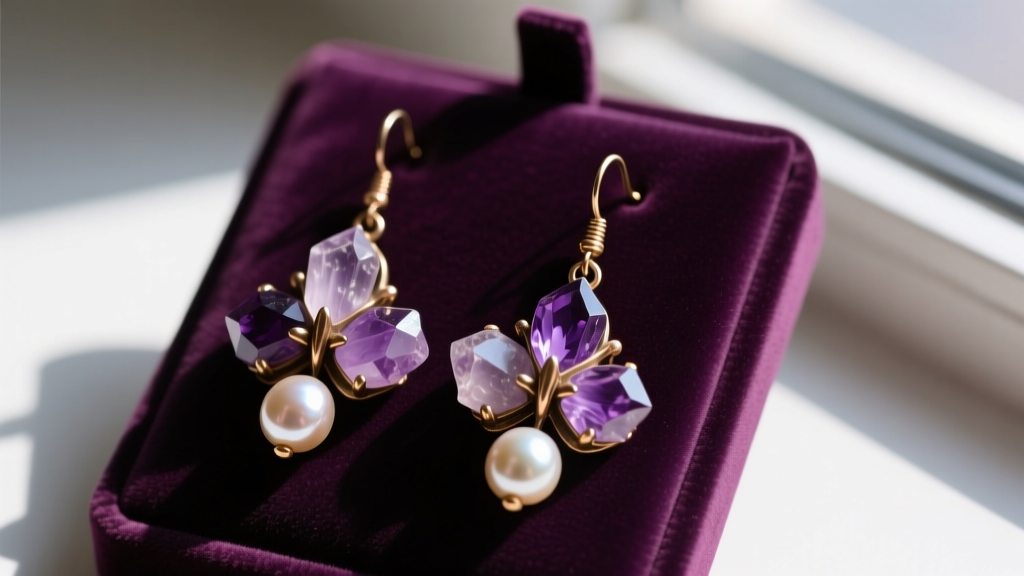
The secondary market for artisan jewelry has seen a massive resurgence, and at the forefront of this movement is the demand for holly yashi earrings vintage pieces. Known for her avant-garde, nature-inspired designs that blend raw, uncut gemstones with mixed metals, Holly Yashi carved out a unique niche in American jewelry from the 1980s through the late 1990s. Today, her vintage earrings are highly sought after by collectors who appreciate organic textures, brutalist influences, and masterful metalwork.
However, navigating the vintage market requires a discerning eye. From distinguishing original 1980s sand-cast bronze from later reproductions to understanding the structural integrity of vintage omega clasps, buying vintage Yashi requires specific technical knowledge. This comprehensive 2026 buying guide will equip you with the E-E-A-T frameworks needed to authenticate, evaluate, and invest in vintage Holly Yashi earrings with absolute confidence.
The Allure of Vintage Holly Yashi Earrings
Holly Yashi’s design philosophy was deeply rooted in the natural landscapes of Maine, where she established her studio. Unlike the highly polished, symmetrical luxury jewelry of the 1980s, Yashi’s work embraced asymmetry, raw textures, and the inherent imperfections of natural materials. Her vintage earrings often feature dramatic, sculptural silhouettes that frame the face, making them statement pieces that bridge the gap between fine jewelry and wearable art.
Collectors are particularly drawn to her work from two distinct eras:
- The 1980s Bronze Era: Characterized by heavy, sand-cast bronze, geometric brutalism, and the integration of raw, uncut amethyst and quartz clusters.
- The 1990s Gold Overlay Era: Marked by a shift toward 14K heavy gold electroplate (HGE) over brass, incorporating baroque freshwater pearls, delicate leaf motifs, and uncut tourmaline.
Understanding which era a piece belongs to is the first step in accurately assessing its market value and historical significance.
Decoding Hallmarks and Authenticating Signatures
Authentication is the most critical step when acquiring vintage artisan jewelry. As the market for holly yashi earrings vintage designs has grown, so has the proliferation of misattributed pieces. Genuine Yashi earrings from her peak production years (1985–1998) will almost always bear a distinct stamp.
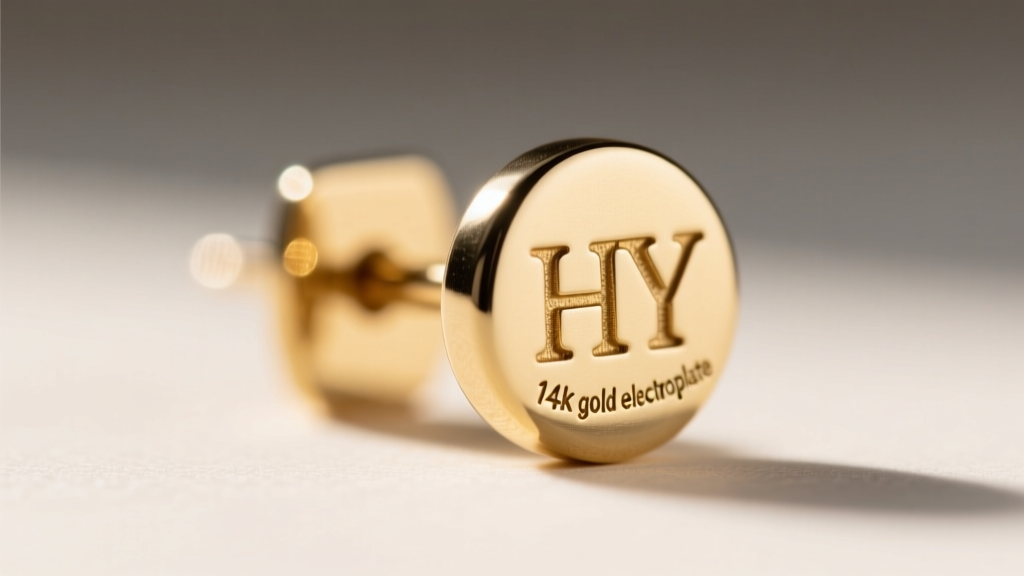
Key Hallmarks to Look For:
- The Script Signature: Early pieces often feature the full 'Holly Yashi' name stamped in a flowing script, usually accompanied by a copyright symbol (©).
- The HY Monogram: Later 1990s pieces and smaller earring posts may feature an interlocking 'HY' stamp.
- Metallurgical Stamps: This is crucial. Many of her gold-toned pieces are marked with '14K HGE' (Heavy Gold Electroplate) or '14K Gold Electroplate'. According to jewelry metallurgical standards, HGE indicates a gold layer of at least 2.5 microns thick, vastly superior to standard flash plating. If a piece claiming to be a vintage Yashi gold overlay lacks the HGE stamp, approach with extreme skepticism.
Always use a 10x jeweler's loupe to inspect the earring post, the back of the omega clasp, or the interior curve of a hoop for these microscopic stamps.
Material Composition and Patina Assessment
Holly Yashi was a master of mixed media. She did not shy away from materials that oxidize, age, and develop a living finish. When evaluating vintage pieces, it is vital to understand the difference between desirable patina and destructive corrosion.
| Material / Era | Common Alloys & Stones | Patina & Wear Traits | Collector Value Impact |
|---|---|---|---|
| 1980s Bronze | Sand-cast bronze, raw amethyst | Darkens naturally; fragile inclusions | High (Original patina preferred) |
| 1990s Gold Overlay | 14K HGE over brass, baroque pearls | Prone to micro-flaking on high-friction edges | Medium-High (Intact plating required) |
| Late 90s Mixed Media | Oxidized silver, uncut tourmaline | Silver sulfide tarnish; stone stability issues | Rare (Museum/Archive level) |
Expert Tip: Never aggressively polish vintage Holly Yashi bronze. The dark, oxidized crevices are intentional, providing contrast to the raised, high-polish areas of the sculpture. Polishing a 1980s bronze drop earring will strip its historical finish and immediately reduce its collector value by up to 40%. For uncut gemstones, refer to the GIA Gem Encyclopedia to verify the natural inclusions and raw crystal structures Yashi frequently employed.
Pricing Guide: Navigating the 2026 Vintage Market
The pricing of vintage Holly Yashi earrings varies wildly based on material, rarity, and condition. In 2026, the market has stabilized into three distinct tiers:
Tier 1: Entry-Level Bronze & Brass Drops ($150 - $350)
This tier includes standard 1980s bronze drop earrings without rare gemstone inclusions, as well as simpler 1990s brass hoops. These pieces are excellent for daily wear and entry-level collectors. Expect to see moderate patina and standard fishhook ear wires.
Tier 2: Gold-Overlay & Semi-Precious Stones ($400 - $850)
The sweet spot for most serious collectors. This tier features Yashi’s iconic 14K HGE leaf motifs, baroque pearl drops, and pieces featuring raw tourmaline or citrine. Condition is paramount here; intact gold plating and functional omega backs are required to command top-tier pricing.
Tier 3: Rare Archive & Runway Pieces ($1,200 - $3,000+)
These are the museum-grade artifacts. Oversized, sculptural runway pieces from the late 1980s, mixed-media silver and gold overlays, and pieces with documented provenance from major department store archives (like her historic collaborations with Nordstrom) fall into this elite category. Verified listings on platforms like 1stDibs often anchor the top end of this pricing spectrum.
Condition Checklist: Inspecting Clasps and Ear Wires
Vintage earrings endure decades of mechanical stress. Before finalizing a purchase, you must rigorously inspect the findings (the functional parts of the earring).
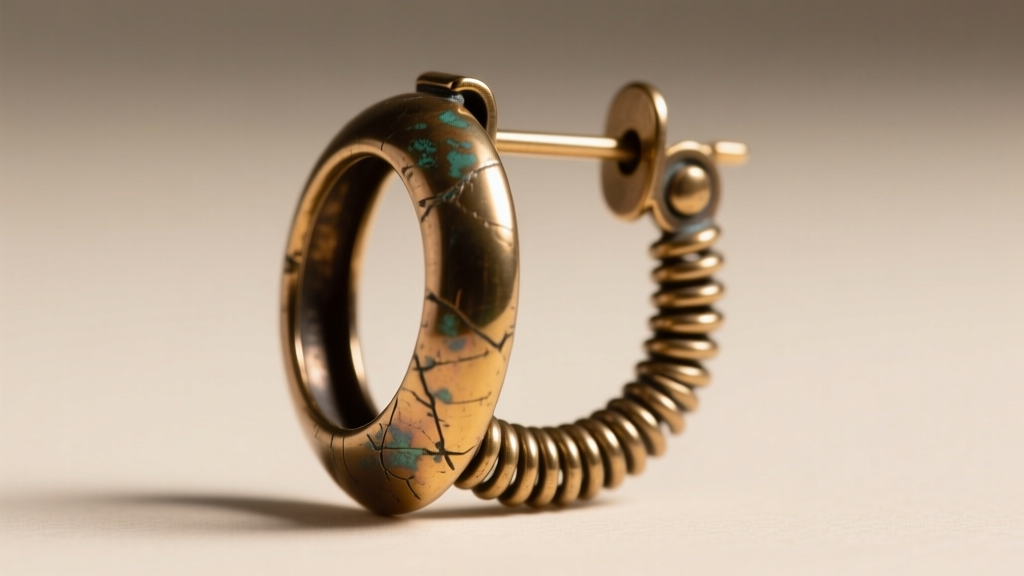
Testing Omega Backs
Holly Yashi utilized heavy-duty omega backs for her substantial 1990s gold-overlay drops to support the weight of the sculptural elements. To test the tension, gently pull the hinged lever away from the post. It should snap back with a firm, audible click. If the lever feels loose, wobbles, or fails to close flush against the earring post, the internal spring is compromised—a common failure mode in vintage jewelry that requires professional repair.
Inspecting Fishhooks and French Wires
For her lighter bronze pieces, Yashi often used base-metal or gold-plated fishhooks. Check the thinnest part of the wire (the curve that sits inside the ear piercing) for micro-fractures or thinning. Because these wires are subjected to constant bending, a hairline fracture can result in the loss of the earring. Ensure the gauge of the wire is thick enough to support the drop; authentic Yashi pieces typically use a sturdy 18-gauge or 16-gauge wire for heavier pendants.
Where to Source Authentic Vintage Holly Yashi Earrings
Finding genuine holly yashi earrings vintage pieces requires looking beyond standard fast-fashion resale apps. Focus your search on curated platforms and specialized dealers:
- 1stDibs & Ruby Lane: These platforms vet their dealers, offering a higher guarantee of authenticity and accurate metallurgical descriptions.
- Specialized Vintage Boutiques: Look for online boutiques that specialize in 1980s and 1990s American artisan jewelry. They often provide detailed macro-photography of hallmarks and condition reports.
- Etsy (With Caution): While Etsy has a vast selection, it also has the highest rate of misattribution. Always demand clear, well-lit photos of the earring post and clasp hallmarks before purchasing. If the seller cannot provide a photo of the 'HY' or 'HGE' stamp, walk away.
By applying these rigorous authentication and condition-checking frameworks, you can confidently build a collection of vintage Holly Yashi earrings that are not only visually stunning but also structurally sound and historically significant.


