Homemade Earrings: Budget and Value Assessment Guide
Discover if making homemade earrings is truly cost-effective. We break down material costs, wire gauges, and time investment to assess real value.

The True Cost of Homemade Earrings: Beyond the DIY Illusion
The appeal of crafting your own jewelry is undeniable. In 2026, with the rising costs of artisan goods and the persistent quality issues of fast-fashion accessories, many hobbyists and aspiring designers are turning to homemade earrings as a budget-friendly alternative. But is making your own earrings actually cheaper? The short answer is: it depends entirely on your material standards, tooling, and how you value your time. To conduct a proper budget and value assessment, we must strip away the romanticized view of DIY jewelry and examine the hard economics of wire gauges, metallurgical grades, and hidden labor costs.
When you purchase a $15 pair of mass-produced dangle earrings from a mall retailer, you are paying for gold-plated brass, automated stamping, and massive retail markups. When you make them at home, you control the supply chain. However, achieving a professional, hypoallergenic, and durable result requires an upfront investment that many beginners overlook. This guide breaks down the exact financial and qualitative value of homemade earrings, helping you decide whether to buy, outsource, or build your own bench setup.
Initial Capital: The Tooling Investment
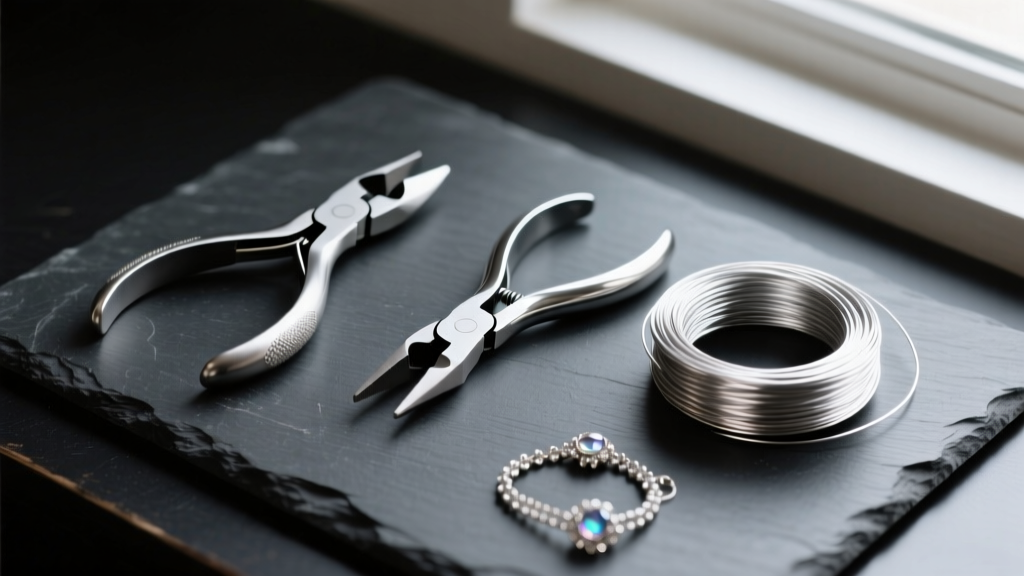
The most common mistake beginners make is purchasing a $15 jewelry tool kit from an online marketplace. These kits typically include low-carbon steel pliers with rough, unpolished jaws and misaligned cutters. When working with soft, high-value metals like fine silver or 14-karat gold-filled wire, cheap tools will mar the surface, leaving permanent scratches and gouges that ruin the professional finish of your homemade earrings.
Professional vs. Budget Tool Economics
- Flush Cutters: A professional-grade cutter (like those from Swanstrom or Tronex) costs between $45 and $60. It features a replaceable blade and leaves a perfectly flat cut, eliminating the need for excessive filing. Budget cutters ($8) leave a sharp 'pinch' point that must be filed down, adding labor time and risking work-hardening the wire.
- Round-Nose Pliers: Essential for forming consistent ear wires and loops. High-quality pairs ($55) have perfectly smooth, polished cones that grip without biting into the metal.
- Nylon-Jaw Pliers: Crucial for straightening wire without scratching. A $25 investment here saves hours of polishing later.
Your initial tooling investment for a professional-grade, lifetime-lasting bench setup will be approximately $150 to $200. While this makes your first pair of homemade earrings incredibly expensive on a per-unit basis, the cost amortizes to pennies per pair over a year of regular crafting.
Material Breakdown: Wire, Metals, and Findings
The core value proposition of homemade earrings lies in material superiority. You can utilize premium, hypoallergenic metals that fast-fashion brands simply cannot afford to use at scale. When sourcing from reputable wholesale suppliers like Rio Grande, the economics shift dramatically in favor of the DIY maker.
Wire Gauges and Metallurgical Grades
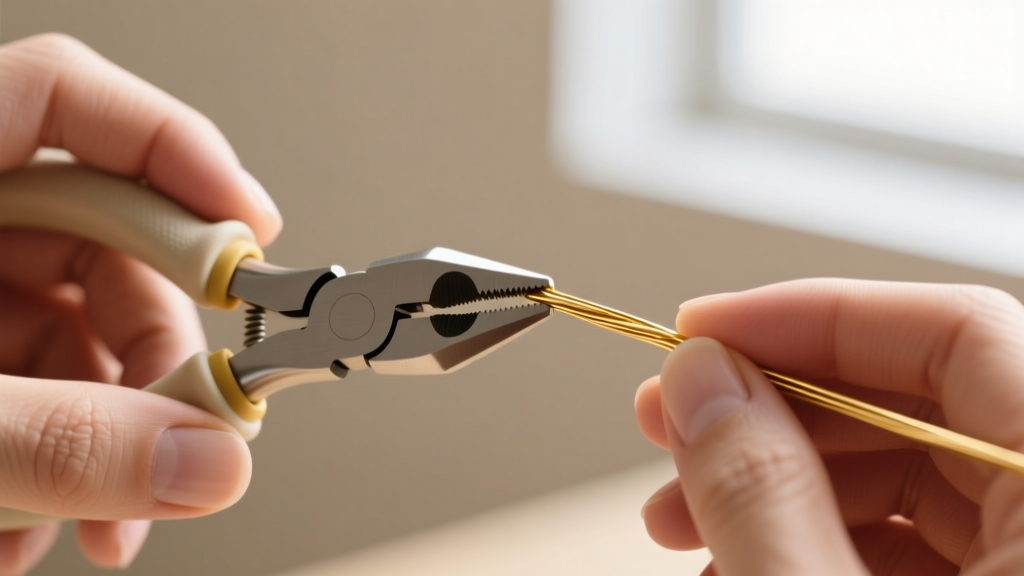
For standard French wire ear hooks, 20-gauge (0.81mm) wire is the industry standard. It provides the necessary structural integrity to hold the earring's weight while remaining thin enough to pass comfortably through a standard lobe piercing. For wrapping gemstone briolettes, you will step down to 24-gauge or 26-gauge wire.
| Metal Type | Cost per Troy Ounce (Approx.) | Yield (20g Ear Wires) | Cost Per Pair | Value Assessment |
|---|---|---|---|---|
| Sterling Silver (.925) | $35 - $45 | 18 - 22 pairs | $1.80 - $2.20 | Excellent value, but requires anti-tarnish storage. |
| Argentium Silver (.935) | $45 - $55 | 18 - 22 pairs | $2.20 - $2.75 | Premium value. Germanium content prevents firescale and drastically slows tarnishing. |
| 14/20 Gold-Filled | $25 - $35 (per oz spool) | 25 - 30 pairs | $1.00 - $1.40 | Superior to gold plate. Contains 5% solid 14k gold by weight. Will not flake. |
| Niobium | $15 - $20 | 30+ pairs | $0.50 - $0.75 | Unbeatable for hyper-sensitive ears. Inert, hypoallergenic, and anodizable. |
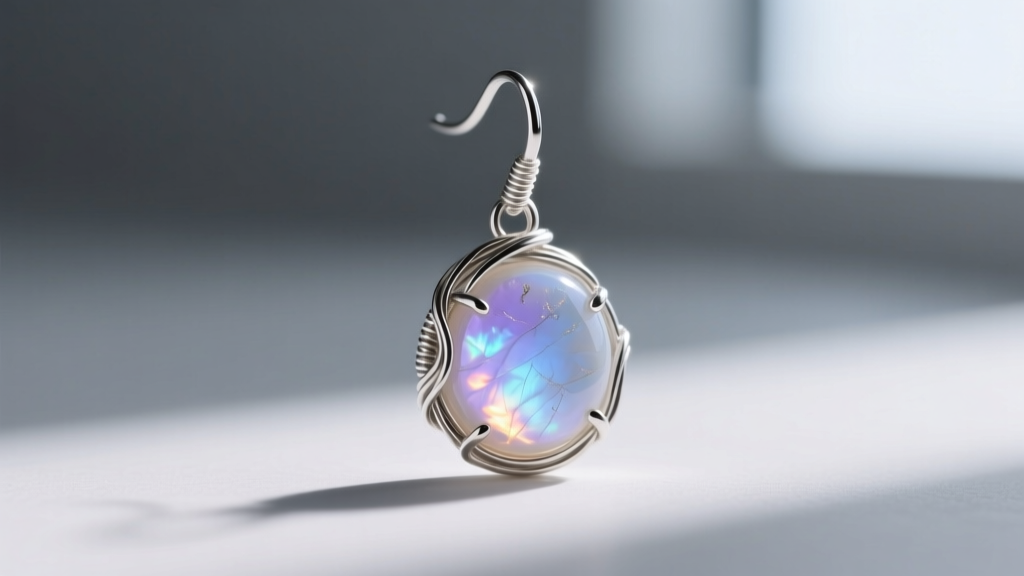
By utilizing 14/20 gold-filled wire or Niobium, your material cost per pair of ear hooks drops below $1.50. When you add a $3.00 faceted gemstone briolette sourced in bulk from Fire Mountain Gems, your total raw material cost for a premium, artisan-quality dangle earring is roughly $4.50. Compare this to the $45-$65 retail price of an equivalent artisan piece, and the financial value of homemade earrings becomes undeniable.
The Hidden Variable: Time and Labor Valuation
Budget assessments often ignore the cost of time. Forming a perfectly symmetrical pair of ear wires, wrapping a briolette without scratching the stone, and work-hardening the loops takes practice. A beginner might spend 45 minutes on a single pair of wire-wrapped dangles. If you value your time at $20/hour, your labor cost is $15 per pair, bringing the total 'cost' to $19.50.
However, as muscle memory develops, an experienced maker can produce a pair of standard wrapped dangles in 8 to 12 minutes. At that efficiency, the labor cost drops to under $4.00. Therefore, homemade earrings transition from a 'time sink' to a highly cost-effective endeavor only after you have mastered fundamental wire manipulation techniques.
Common DIY Failure Modes and How to Avoid Them
The true cost of homemade earrings isn't just the materials you buy; it's the materials you ruin. Understanding metallurgical failure modes is what separates a hobbyist from a professional. Here are the most expensive mistakes to avoid:
1. Over-Work-Hardening the Wire
Every time you bend, twist, or pull metal wire, you compress its crystal lattice structure, making it harder and more brittle. This is known as work-hardening. If you repeatedly adjust a 24-gauge silver wrap around a gemstone, the wire will eventually snap. The Fix: Use dead-soft wire for intricate wrapping, and only use half-hard wire for structural components like ear hooks that need to bear weight. Never re-bend a wire wrap once it is in place.
2. Improper Loop Closures
A flush-cut loop that is simply pushed shut will eventually catch on hair or clothing and pull open, resulting in a lost gemstone. The Fix: Always use the 'wrap and tuck' method for structural loops, or utilize a micro-bur to create a mechanical interlocking notch before closing the loop with chain-nose pliers.
3. Ignoring Contact Dermatitis Risks
Many cheap commercial earring findings contain nickel, a common allergen. According to the Mayo Clinic, nickel allergy is one of the most common causes of allergic contact dermatitis. When making homemade earrings, never compromise on the ear wire. Even if the decorative body of the earring is crafted from base metal or copper, the wire that passes through the flesh must be surgical steel, titanium, niobium, or high-karat gold to prevent severe earlobe reactions.
Final Verdict: Are Homemade Earrings Worth the Investment?
From a strict budget perspective, making homemade earrings is not a shortcut to 'free' jewelry. The upfront cost of professional tooling and the learning curve of wire manipulation require a genuine commitment. If you only plan to make one or two pairs of earrings for a special event, you are better off purchasing from an independent artisan.
However, if you suffer from metal allergies, desire complete control over your gemstone quality, or plan to make gifts and inventory for a small business, the value proposition is exceptional. By sourcing 20-gauge Argentium silver and 14/20 gold-filled wire from wholesale suppliers, you can produce heirloom-quality, hypoallergenic earrings for roughly 15% to 20% of their retail market value. In the landscape of modern jewelry, homemade earrings offer an unmatched intersection of financial prudence, material integrity, and bespoke design.


