The Ultimate Hoop Earring Male Material & Metal Comparison Guide
Discover the best metals for your hoop earring male style. Compare titanium, gold, and steel properties, gauge sizes, and healing benefits.

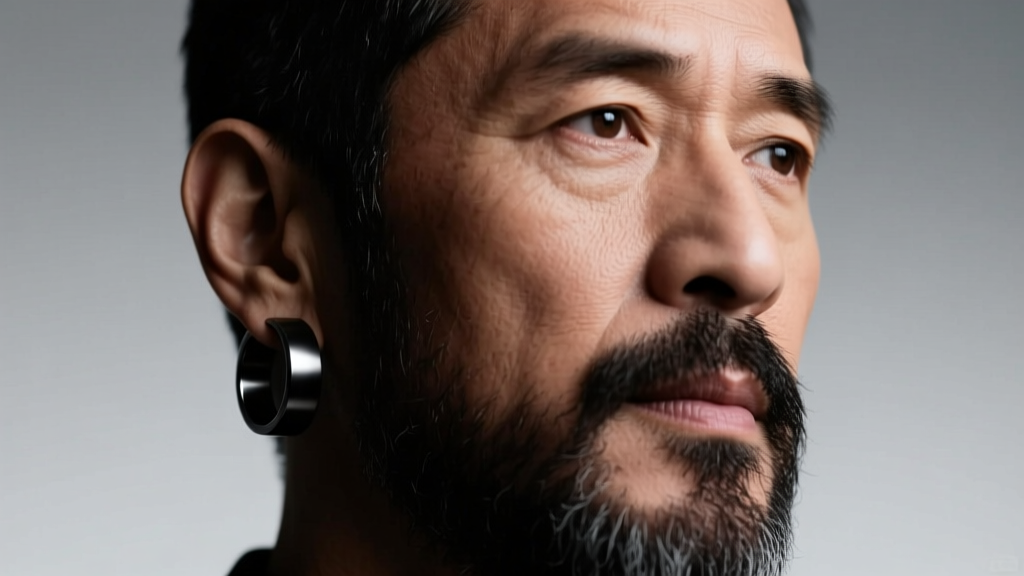
Why Material Matters for Men's Hoops
When selecting a hoop earring male wearers often prioritize aesthetics—focusing on diameter, thickness, and finish. However, the metallurgical composition of your jewelry dictates not only its longevity but also your skin's biological response. The ear lobe and cartilage are highly vascular, and the friction inherent to a hoop's movement makes material selection critical. A poor alloy choice can lead to contact dermatitis, galvanic corrosion from sweat, or localized infections.
As of 2026, the body jewelry industry has moved far beyond generic 'surgical steel' labels. Today's informed consumer must understand the difference between commercial-grade alloys and implant-certified metals. Whether you are wearing a subtle 8mm huggie or a statement 20mm seamless ring, understanding the Vickers hardness, nickel release rates, and passivation layers of your chosen metal is the key to a comfortable, lifelong wear.
The Big Four: Comparing Top Metals for Men
Implant-Grade Titanium (ASTM F136)
Titanium is the undisputed champion for sensitive ears and fresh piercings. However, not all titanium is created equal. You must look for ASTM F136 certification, which designates implant-grade Ti-6Al-4V ELI (Extra Low Interstitial). Unlike commercial pure titanium, this alloy offers superior tensile strength and a mirror-polish capability that minimizes bacterial adhesion. Furthermore, titanium is highly reactive to anodization, allowing you to customize the color of your hoop using electrical voltage rather than toxic surface platings. Expect to pay between $35 and $85 for high-quality, internally threaded or clicker titanium hoops from reputable brands like Anatometal or Industrial Strength.
Surgical Stainless Steel (316L)
316L stainless steel is the budget-friendly workhorse of men's jewelry. The 'L' stands for low carbon, which improves corrosion resistance. However, 316L contains roughly 8-10% nickel. While the chromium oxide passivation layer on high-quality polished steel traps most nickel, prolonged exposure to acidic sweat or friction from a moving hoop can degrade this layer, triggering reactions in nickel-sensitive individuals. It is an excellent choice for fully healed, non-reactive lobes, with prices typically ranging from $15 to $40.
Solid Gold (14k vs. 18k)
Gold remains the luxury standard, but purity matters immensely. 24k gold is too soft for hoop mechanics; it will warp and lose its circular tension. Therefore, 14k (58.5% gold) and 18k (75% gold) are the ideal standards. 18k offers a richer, warmer yellow hue and higher biocompatibility, while 14k provides greater scratch resistance due to its higher alloy content. Crucial warning: If opting for white gold, ensure it is alloyed with palladium rather than nickel. Avoid gold-plated or vermeil hoops entirely, as the friction of a hoop sliding through the fistula will quickly wear away the microscopic gold layer, exposing base metals. Solid gold hoops range from $150 to over $600.
Niobium (ASTM B392)
Niobium is a lesser-known but exceptional alternative to titanium. It is completely nickel-free, highly malleable, and can be anodized to achieve deep, vibrant colors, including a striking matte black. Because it is softer than titanium, it is easier for piercers to adjust and bend seamless rings for a custom fit. According to the Association of Professional Piercers (APP), niobium is highly recommended for clients with severe metal sensitivities who cannot tolerate even the trace aluminum or vanadium found in titanium alloys.
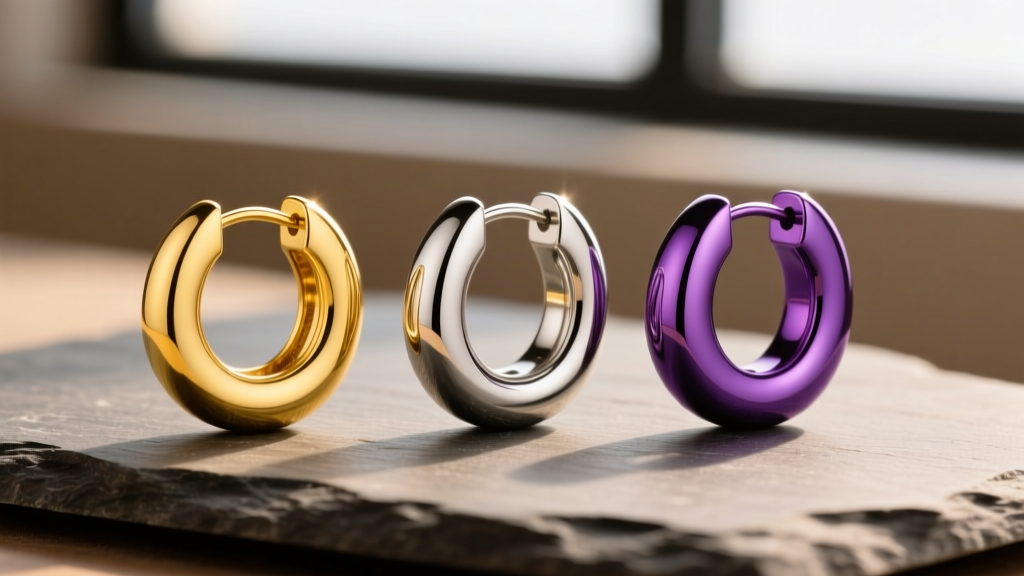
Material Properties Comparison Chart
Use the following data table to evaluate the physical and chemical properties of the most common metals used in men's hoop earrings.
| Metal / Alloy | Industry Standard | Nickel Content | Corrosion Resistance | Avg. Price Range | Best Application |
|---|---|---|---|---|---|
| Titanium (Ti-6Al-4V) | ASTM F136 | 0% | Exceptional | $35 - $85 | Fresh piercings, sensitive skin |
| Stainless Steel | 316L | 8% - 10% | High (if polished) | $15 - $40 | Healed lobes, budget buyers |
| Yellow Gold | 14k / 18k Solid | 0% (usually) | Moderate to High | $150 - $600+ | Luxury wear, fully healed ears |
| Niobium | ASTM B392 | 0% | Exceptional | $30 - $70 | Seamless rings, severe allergies |
Sizing, Gauges, and Hardware Mechanics
Material is only half the equation; the physical dimensions and closure mechanism of your hoop dictate its comfort and security.
Understanding Gauge Thickness
The 'gauge' refers to the thickness of the wire passing through your ear. Counterintuitively, a lower gauge number means a thicker wire.
- 20 Gauge (0.81mm): Standard for basic, lightweight fashion hoops. Best for older, fully healed lobe piercings. Can cause the 'cheese-cutter effect' if the hoop is heavy or snagged.
- 18 Gauge (1.02mm): The most common thickness for quality men's lobe hoops. Offers a substantial, masculine look without requiring stretching.
- 16 Gauge (1.29mm): The standard for cartilage, helix, and daith piercings. If you are buying a hoop for the upper ear, 16g is mandatory to prevent migration and rejection.
- 14 Gauge (1.60mm): Used for stretched lobes or heavy-duty industrial aesthetics.
Closure Mechanisms: Clicker vs. Seamless vs. CBR
The hardware design affects how the metal interacts with your skin. Clickers feature a hidden hinge and a satisfying snap closure; they are the easiest to insert but have a tiny seam that can harbor bacteria if not cleaned. Seamless rings rely on the metal's tension; one end slides into a hollow tube on the other. They offer the smoothest rotation through the fistula but require pliers or significant hand strength to open. Captive Bead Rings (CBRs) use the tension of the ring to hold a small bead in place. While secure, the bead can easily drop out and get lost in a sink drain.
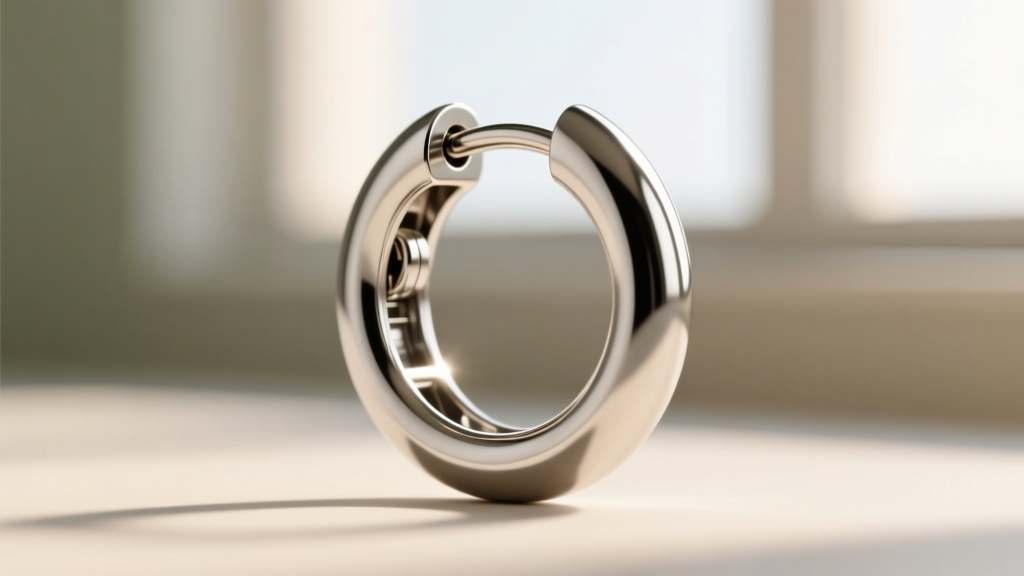
Maintenance and Tarnish Resistance
Different metals require vastly different maintenance routines to preserve their structural integrity and finish.
Expert Tip: Never use alcohol, hydrogen peroxide, or harsh chemical dips on anodized titanium or niobium. These chemicals can strip the anodized oxide layer, causing the vibrant color to fade back to raw silver-gray. Use only sterile saline or mild, fragrance-free soap.
For solid gold, natural body oils and environmental pollutants can create a dull film. A monthly soak in warm water with a few drops of mild dish soap, followed by a gentle brush with a baby toothbrush, will restore its luster. According to the Gemological Institute of America (GIA), gold should be kept away from chlorine, which can permanently damage and weaken the alloy metals mixed with the gold.
Stainless steel is remarkably low maintenance but should be dried thoroughly after showering to maintain its chromium oxide passivation layer. If your steel hoop develops tiny rust spots (usually from exposure to hard water or salt), a paste of baking soda and water will gently polish it away without scratching the surface.
Final Verdict: Which Metal Should You Choose?
Choosing the right hoop earring male wearers will love for years comes down to balancing budget, biology, and lifestyle. If you have any history of contact dermatitis, or if the piercing is less than a year old, ASTM F136 Implant-Grade Titanium is non-negotiable. Its lightweight nature reduces drag on the fistula, and its biocompatibility ensures a peaceful healing process.
For those seeking a premium, heirloom-quality piece for a fully healed lobe, 18k Solid Yellow Gold offers unmatched prestige and warmth, provided you are willing to invest in the higher price point and avoid chlorinated environments. Finally, if you want a rugged, everyday beater ring that can survive the gym, the ocean, and manual labor without breaking the bank, a high-polish 316L Stainless Steel clicker remains the most practical choice on the market.


