How Hoop Earrings Measurements Dictate Your Cleaning Routine
Learn how hoop earrings measurements impact maintenance. Discover gauge-specific cleaning, hollow tube care, and storage tips for lasting shine.

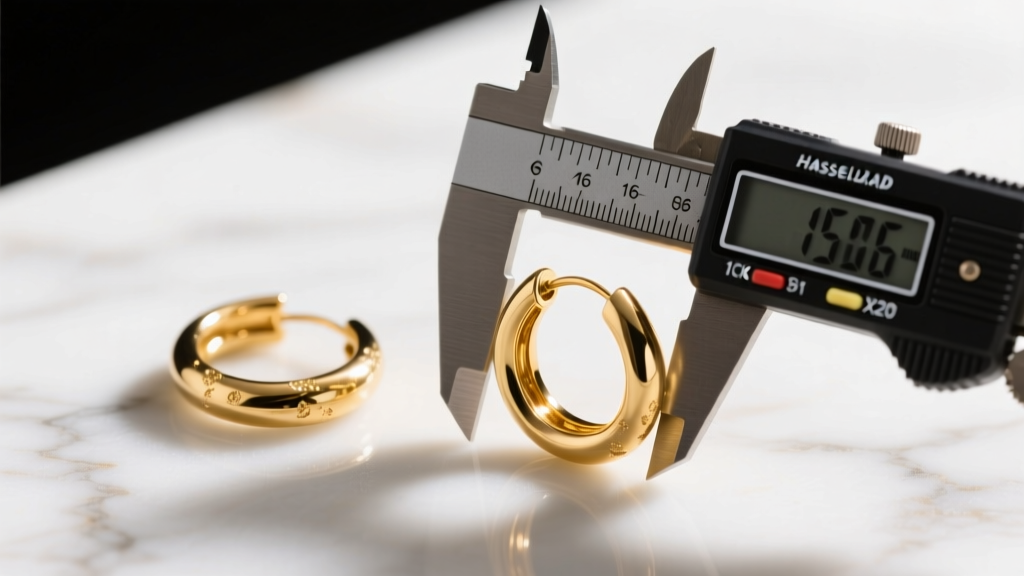
The Hidden Link Between Hoop Earrings Measurements and Longevity
When it comes to jewelry maintenance, most guides offer a blanket approach: soak in warm soapy water, brush gently, and dry. However, as any master jeweler will tell you, this one-size-fits-all advice is a recipe for structural damage and trapped grime. The reality is that your hoop earrings measurements—specifically the wire gauge, overall diameter, and tube width—dictate entirely different cleaning protocols, vulnerability profiles, and storage requirements.
A delicate 20-gauge wire hoop faces completely different physical stresses than a 5-millimeter hollow tube hoop. Understanding the precise geometry of your earrings is the first step toward preserving their finish, preventing contact dermatitis, and ensuring the clasps function flawlessly for decades. In this comprehensive guide, we break down exactly how to care for your hoops based on their specific dimensional profiles.
Decoding Wire Gauge: Maintenance by Thickness
The wire gauge (thickness) of a hoop determines its structural integrity and how it responds to physical manipulation during cleaning. According to the Association of Professional Piercers, standard jewelry gauges correspond to exact millimeter measurements, which directly impact your maintenance routine.
20g to 18g (0.81mm - 1.02mm): Delicate Wires
Hoops in the 20g to 18g range are exceptionally delicate. The primary failure mode during cleaning is work-hardening and warping. When you scrub these thin wires with a brush or bend them to access the inner curve, the metal undergoes microscopic stress fractures. Over time, this causes the hoop to lose its perfect circular geometry or snap near the solder joint.
- Cleaning Method: Never scrub. Submerge in a solution of warm distilled water and a drop of mild, phosphate-free dish soap (like Dawn) for 5 minutes.
- Drying: Pat dry with a lint-free microfiber cloth. Do not pull or drag the cloth along the wire, as the friction can warp the circle.
- Polishing: Avoid abrasive polishing cloths on thin wires; the pressure required to buff the metal will inevitably bend the hoop.
16g to 14g (1.29mm - 1.63mm): Standard & Cartilage Hoops
This is the most common measurement range for standard lobe hoops and cartilage placements (like the helix or conch). These gauges offer excellent structural rigidity but have enough surface area to accumulate sebum, dead skin cells, and hair product residue.
- Cleaning Method: Use a soft-bristled baby toothbrush to gently agitate the soapy water along the wire. Pay special attention to the area immediately adjacent to the clasp, where friction causes micro-abrasions that trap dirt.
- Ultrasonic Use: Solid 14k or 18k gold hoops in these gauges can safely undergo ultrasonic cleaning for 3-5 minutes, provided they do not feature tension-set gemstones.
12g to 8g (2.05mm - 3.26mm): Heavy Statement Hoops
Thick wire hoops are heavy, meaning gravity and momentum are their biggest enemies. When cleaning heavy-gauge hoops, the weight of the water and the metal itself can stress the hinge pin or the saddle clasp.
- Critical Rule: Always clean heavy-gauge hoops while they are resting flat on a silicone mat or a soft towel. Never hold them by the clasp while scrubbing the bottom curve, as the leverage can bend the clasp pin.
Diameter and Tube Width: Where Grime Hides
While wire gauge dictates structural care, the diameter and tube width dictate hygiene. Hollow tube hoops—often ranging from 2mm to 8mm in width—are notoriously difficult to maintain. Because they are formed from rolled sheet metal rather than cast solid, they feature a microscopic seam running along the inner or outer edge.
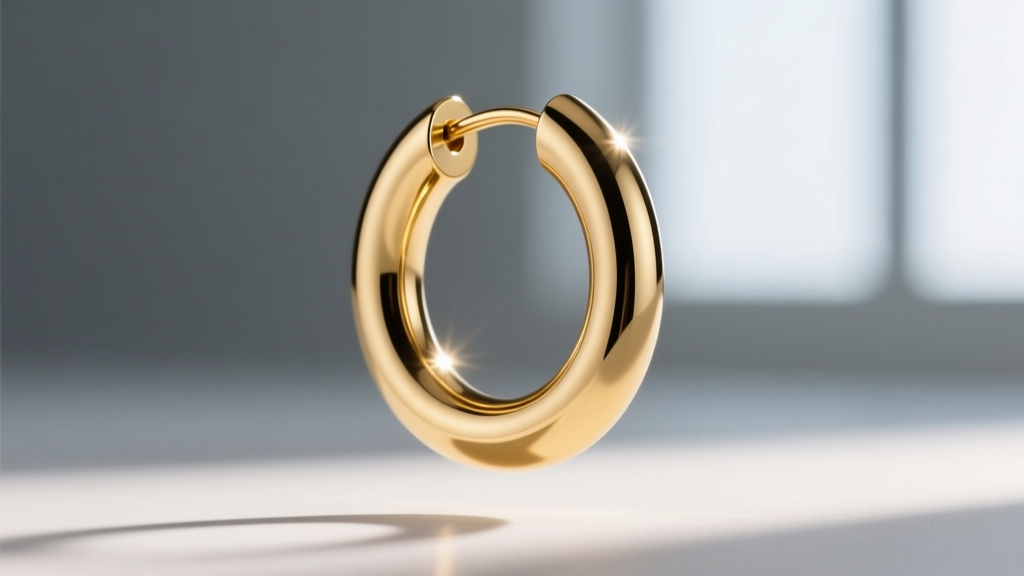
When you wash hollow hoops, soap and tap water enter this seam through the clasp opening or micro-pores in the solder. If not properly flushed and dried, the trapped alkaline soap residue mixes with skin bacteria, leading to a common issue known as 'earring ear'—a localized contact dermatitis characterized by itching and flaking on the earlobe. The Gemological Institute of America (GIA) emphasizes that thorough rinsing and drying are just as critical as the cleaning agents used.
| Measurement Profile | Primary Vulnerability | Recommended Cleaning Tool | Drying Protocol |
|---|---|---|---|
| 10mm-15mm Solid Huggies | Hinge clogging from thick lotions | Wooden toothpick or interdental brush | Air dry or compressed air |
| 20mm-40mm Solid Wire | Sebum buildup on inner curve | Soft baby toothbrush | Microfiber cloth wipe |
| 50mm+ Hollow Tube (3mm+) | Trapped soap/water causing dermatitis | Soak & flush with distilled water | Low-heat hairdryer or compressed air |
Hinge and Clasp Mechanics: Sizing the Weakest Points
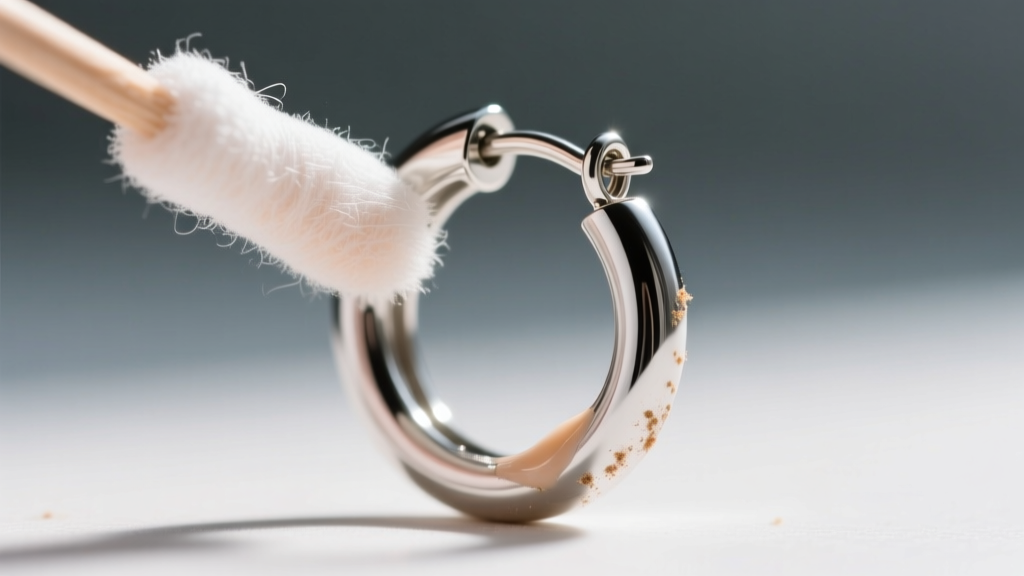
The smaller the hoop diameter, the more complex the clasp mechanism must be to allow it to open and close. Huggies (typically 8mm to 15mm in diameter) rely on micro-hinges and snap-locks. These tiny mechanical joints are magnets for heavy body creams, sunscreen, and foundation.
When lotion dries inside a huggie hinge, it acts like cement. Forcing the hoop open can snap the microscopic steel or gold pin holding the joint together. To maintain these small-measurement hoops:
- Apply all skincare and hair products before putting on your huggies.
- Once a week, use a wooden toothpick (never a metal needle, which will scratch the precious metal) to gently scrape the hinge crevice.
- Flush the hinge with a drop of 90% isopropyl alcohol to dissolve oils, then immediately rinse with distilled water to prevent the alcohol from drying out any internal lubricants used by the manufacturer.
Step-by-Step Cleaning Protocols by Hoop Profile
Protocol A: The Hollow Tube Flush (For 3mm+ Widths)
If your hoop earrings measurements include a wide, hollow profile, standard wiping is insufficient. You must flush the interior cavity.
- Step 1: Submerge the hoops in a bowl of warm distilled water mixed with a drop of mild dish soap for 10 minutes.
- Step 2: Remove the hoops and use a clean, soft-bristled makeup brush to agitate the exterior surface.
- Step 3: Hold the hoop under a gentle stream of distilled water, opening and closing the clasp to force water through the internal cavity.
- Step 4: Use a can of compressed air (held at least 6 inches away) to blow out the trapped moisture from the clasp seam. Alternatively, use a hairdryer on the 'cool' setting.
Protocol B: The Large Diameter Polish (For 50mm+ Solid Hoops)
Large, solid wire hoops show fingerprints and micro-scratches more readily than any other earring type due to their expansive surface area.
- Step 1: Wash with standard soapy water to remove oils.
- Step 2: Lay the hoop flat on a clean silicone mat.
- Step 3: Using a treated silver or gold polishing cloth, hold the hoop steady at the 12 o'clock and 6 o'clock positions. Gently rub the cloth along the curve in one direction to restore the mirror finish without bending the metal out of its circular axis.
Storage Solutions Scaled to Your Measurements
How you store your hoops is the final pillar of dimensional maintenance. Hanging large, thin-gauge hoops on standard jewelry trees allows gravity to pull the bottom curve downward over months, slowly turning a perfect circle into an oval.
For hoops with a diameter larger than 40mm and a gauge thinner than 14g, always store them flat in a compartmentalized jewelry box lined with anti-tarnish fabric. For small huggies and clickers, utilize a slotted card or a dedicated ring mandrel to keep the clasps from snagging on other pieces and bending the delicate hinge pins.
'The longevity of a hoop earring is rarely determined by the purity of the gold or the quality of the diamond; it is almost always dictated by how well the owner respects the mechanical limits of its specific measurements and hinges.' — Master Jeweler Bench Note
By aligning your care routine with the exact measurements of your hoop earrings, you transition from reactive repairs to proactive preservation, ensuring your favorite pieces remain structurally sound and brilliantly polished for a lifetime.


