Hoop Earrings With Heart Charms: 2026 Value & Budget Guide
Discover the true value of hoop earrings with heart charms in our 2026 budget guide. Compare materials, pricing tiers, and longevity.

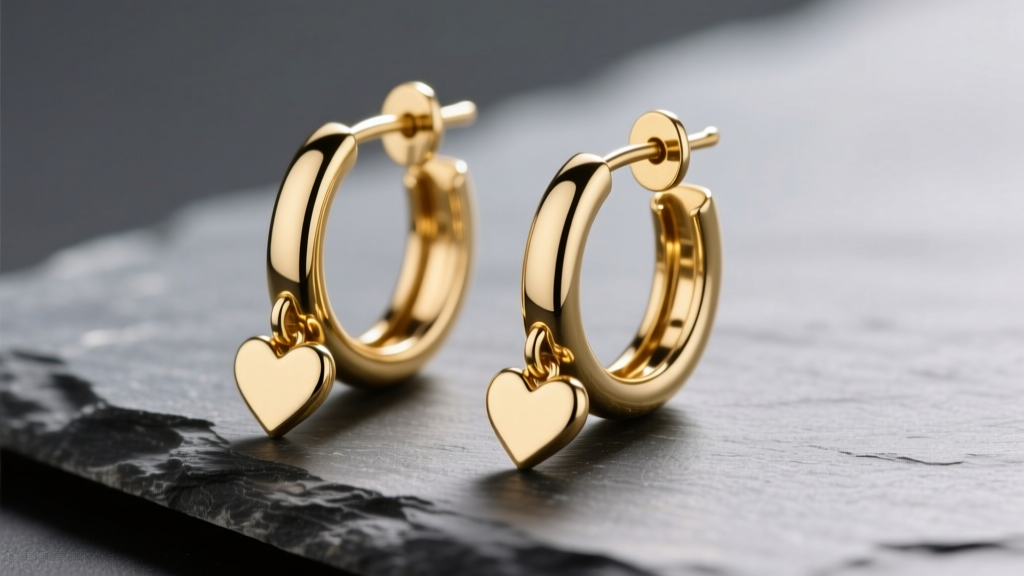
The search for the perfect hoop earrings with heart motifs often leads consumers down a confusing path of pricing tiers, misleading metal descriptions, and questionable hardware. As we navigate the jewelry market in 2026, the romantic appeal of heart-adorned hoops remains a dominant trend, but the financial value of these pieces varies wildly. A $25 pair from a fast-fashion retailer and a $350 pair from a heritage jeweler might look identical on a digital storefront, but their material integrity, mechanical longevity, and cost-per-wear (CPW) are worlds apart.
This comprehensive budget and value assessment breaks down the exact anatomy of heart charm hoops, exposing where your money actually goes. Whether you are looking for a trendy pair of micro-heart huggies or an heirloom-quality continuous hoop, understanding material grades, gauge thicknesses, and clasp mechanics is essential for making a financially sound investment.
The Anatomy of Heart Hoops: Where Your Money Actually Goes
When evaluating the budget versus value proposition of any earring, you must separate the base hoop from the charm. The addition of a heart charm introduces two major variables to the manufacturing cost: material weight and assembly labor.
Material Grades and Tarnish Timelines
The base metal dictates the lifespan of the earring. In the demi-fine and fashion spaces, manufacturers often use deceptive terminology. According to the Federal Trade Commission Jewelry Guides, specific thresholds must be met for gold plating and vermeil claims. Here is how the materials actually perform in the real world:
- Brass/Zinc with Gold Flash (0.1 - 0.5 microns): Found in the $15–$35 tier. The gold layer is microscopic and will rub off against the friction of the earlobe within 3 to 6 months, exposing the reactive brass underneath, which frequently causes contact dermatitis and turns the skin green.
- Gold Vermeil (2.5+ microns over Sterling Silver): The $50–$90 tier. Vermeil offers a solid middle ground. The sterling silver base is hypoallergenic, and the thicker gold plating can last 1 to 3 years with proper care. However, the heart charm acts as a pendulum, constantly rubbing against the hoop and accelerating wear at the friction points.
- 14k Gold-Filled (5% gold by weight): The $60–$120 tier. Mechanically bonded to a brass core, gold-filled wire is highly resistant to tarnish and offers exceptional value for budget-conscious buyers who want the look of solid gold without the fine jewelry markup.
- Solid 14k or 18k Gold: The $250–$800+ tier. As noted by the Gemological Institute of America (GIA), solid gold alloys provide permanent tarnish resistance and structural integrity, making them the only true 'buy-it-for-life' option.
The 2026 Pricing Matrix: Fast Fashion vs. Demi-Fine vs. Solid Gold
To accurately assess value, we must map the market. The table below outlines what you should expect to receive at various price points when shopping for hoop earrings with heart charms in 2026.
| Market Tier | Price Range | Base Metal & Finish | Clasp Mechanism | Expected Lifespan |
|---|---|---|---|---|
| Fast Fashion | $15 - $40 | Brass/Zinc, <0.5 micron gold flash | Thin 22g Latch-back | 3 - 6 Months |
| Demi-Fine (Vermeil) | $45 - $95 | 925 Sterling Silver, 2.5 micron gold | Hinged Clicker or Latch | 1 - 3 Years |
| Demi-Fine (Gold-Filled) | $60 - $130 | Brass core, 1/20 14k Gold-Filled | Hinged Segment Ring | 3 - 5+ Years |
| Fine Jewelry | $250 - $800+ | Solid 14k or 18k Gold | Precision Seamless/Clicker | Lifetime (Heirloom) |
Hardware & Hinge Mechanics: The Hidden Cost of Cheap Clasps
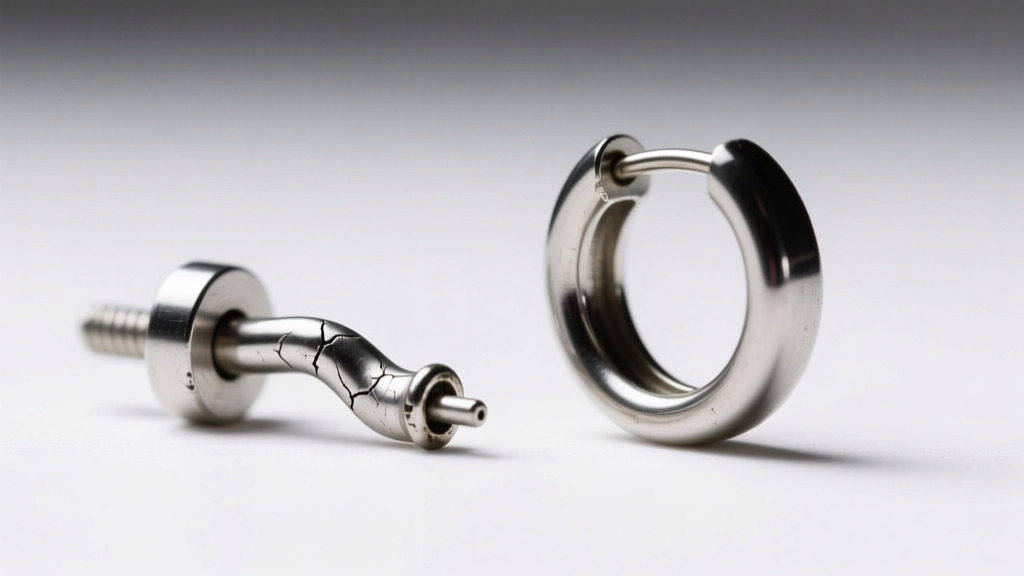
The most frequent failure point in budget hoop earrings is not the metal tarnishing, but the hardware snapping. Heart charms add localized weight to the bottom of the hoop, creating a pendulum effect that places immense stress on the earring's hinge and post.
Latch-Back vs. Hinged Clickers
Budget hoops almost universally utilize a latch-back (or fishhook) clasp. This involves a thin, V-shaped wire that snaps into a hollow catch. Because standard lobe piercings are usually 20-gauge (0.81mm) or 18-gauge (1.02mm), a 20-gauge latch-back wire supporting a heavy metal heart charm will inevitably warp, bend, or snap under the kinetic stress of daily movement.
Conversely, higher-value demi-fine and fine jewelry pieces utilize hinged segment rings (clickers). A clicker features a solid hinge on one side and a secure, snapping segment on the other. The Association of Professional Piercers frequently recommends clicker-style hardware for its structural superiority and ease of insertion. If you are buying hoops with substantial heart charms, a hinged clicker is a non-negotiable requirement for long-term value.
Failure Modes: The Solder Joint Vulnerability
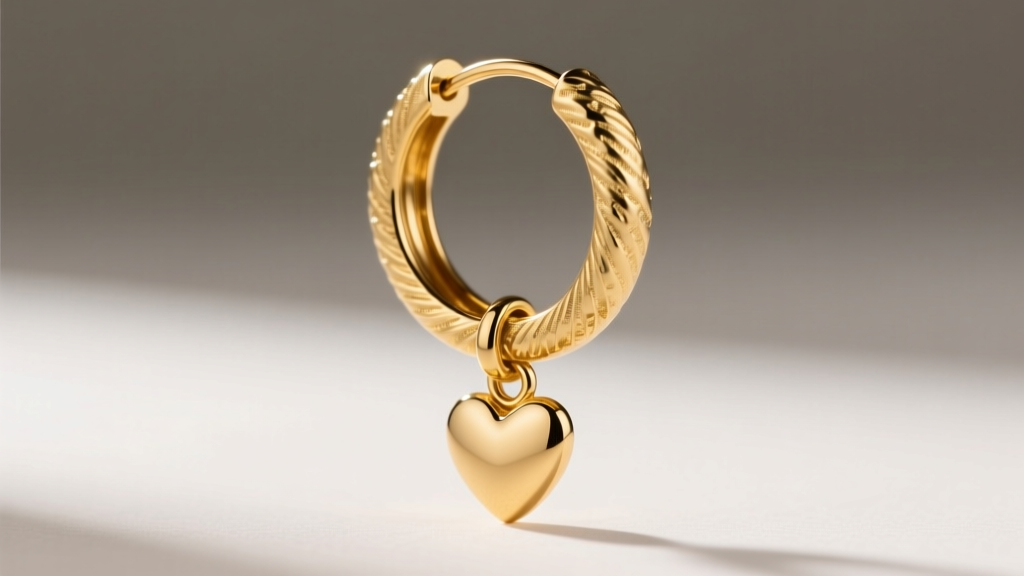
When assessing a pair of heart charm hoops, zoom in on the connection point where the heart meets the hoop. There are two manufacturing methods, and one is a guaranteed path to losing your jewelry.
Expert Rule of Thumb: If the jump ring connecting the heart charm to the hoop is not visibly soldered shut, do not buy it. The pendulum weight of the heart will twist the butted jump ring open within weeks, and the charm will be lost.
In premium manufacturing, the jump ring is laser-soldered shut, or the heart and hoop are cast as a single, continuous piece of metal. If cast as one piece, inspect the 'neck' where the top of the heart meets the hoop. This is a high-stress fulcrum. Budget castings often leave this area too thin to save on gold weight, leading to stress fractures. High-value pieces will feature a reinforced, thickened junction at this connection point.
Value Assessment Framework: Calculating Cost-Per-Wear (CPW)
To determine if a pair of hoop earrings with heart charms is a 'good deal,' savvy buyers in 2026 are utilizing the Cost-Per-Wear (CPW) formula.
CPW = Total Price / Estimated Number of Wears
- The Fast Fashion Trap: A $30 pair of gold-plated brass hoops worn 40 times before the plating rubs off and the latch-back bends yields a CPW of $0.75 per wear. Furthermore, the risk of skin irritation adds a hidden biological cost.
- The Demi-Fine Sweet Spot: A $85 pair of 14k gold-filled hoops with a soldered heart charm, worn 3 times a week for 4 years (approx. 600 wears), yields a CPW of $0.14 per wear. This represents the highest mathematical value for trend-driven jewelry.
- The Fine Jewelry Investment: A $450 pair of solid 14k gold hoops worn daily for 10 years (3,650 wears) yields a CPW of $0.12 per wear, with the added benefit of retaining intrinsic scrap gold value at the end of its life.
Final Verdict: When to Save and When to Splurge
Your budget allocation should be dictated by the scale of the heart charm and your intended wear frequency.
When to Save (Budget/Demi-Fine): If you are purchasing 'micro-heart' huggies or trend-driven, oversized novelty hoops that you will only wear for a single season or specific event, stick to the $40–$80 demi-fine tier. Look for 14k gold-filled options with secure clicker clasps. Avoid anything labeled simply as 'gold plated' without a micron thickness disclosure.
When to Splurge (Fine Jewelry): If the heart motif holds sentimental value (such as a gift, an anniversary marker, or a personal signature piece you intend to wear daily in the shower and gym), bypass demi-fine entirely. Invest in solid 14k or 18k gold. The structural integrity of solid gold ensures that the delicate solder joints holding the heart charm will not degrade from exposure to water, sweat, and friction, securing both your financial investment and your sentimental keepsake for decades to come.


