How to Clean Gold Earrings: A Buyer's Guide to Karats and Care
Discover what to look for when buying gold earrings and learn how to clean gold earrings safely based on karat, alloy, and gemstone type.

The Intersection of Purchasing and Maintenance
When shopping for fine jewelry, most buyers focus entirely on aesthetics, karat weight, and price. However, a truly informed purchasing decision requires looking ahead to the lifecycle of the piece. Understanding how to clean gold earrings properly begins long before you bring them home; it starts with understanding the metallurgical composition of the gold alloy you are buying. Pure gold is virtually indestructible by everyday chemicals, but the alloys mixed with it to create durable earring posts, hoops, and settings introduce unique vulnerabilities. This comprehensive buyer's guide will help you select the right gold purity and finish for your lifestyle, while providing expert-level protocols for maintaining their brilliance over decades of wear.
Understanding Gold Purity: What to Look For Before You Buy
Gold purity is measured in karats (K), with 24K representing 100% pure gold. Because pure gold is exceptionally soft, it is rarely used for earrings that require structural integrity, such as tension settings or thin hoop wires. Jewelers alloy gold with metals like copper, silver, zinc, and nickel to increase hardness. The specific alloy recipe drastically dictates your cleaning regimen and long-term maintenance.
| Karat | Gold Content | Durability & Buying Advice | Cleaning Vulnerabilities |
|---|---|---|---|
| 24K | 99.9% | Too soft for most earring posts. Buy only for solid, heavy cast pieces or ear cuffs. | Scratches easily during polishing. Avoid abrasive brushes entirely. |
| 18K | 75.0% | Rich, warm color. Excellent for high-end studs and dangles. Prone to micro-scratching. | Susceptible to dulling from harsh chemicals. Requires gentle, non-abrasive soaking. |
| 14K | 58.3% | The industry sweet spot for daily wear hoops and huggies. Excellent balance of color and strength. | Higher copper/zinc content makes it vulnerable to chlorine-induced stress corrosion. |
| 10K | 41.7% | Highly durable and budget-friendly. Ideal for active lifestyles and heavy cartilage jewelry. | Prone to tarnishing and oxidation due to high base-metal content. Requires frequent polishing. |
According to the Gemological Institute of America (GIA), the presence of copper and silver in 14K and 10K gold alloys is what gives the metal its strength, but these same base metals are the primary culprits behind tarnish and chemical reactivity. If you are buying earrings for daily, never-take-off wear, 14K is generally the most pragmatic choice, provided you adhere to strict chemical avoidance.
How to Clean Gold Earrings Based on Karat and Finish
The method you use to clean your earrings must be tailored to both the alloy and the surface finish. A high-polish 18K gold stud requires a different approach than a matte-brushed 14K gold hoop.
The Universal Gentle Soak (Safe for 14K, 18K, and 22K)
For standard polished gold earrings without porous gemstones, the safest and most effective cleaning method relies on simple surfactants rather than harsh chemicals.
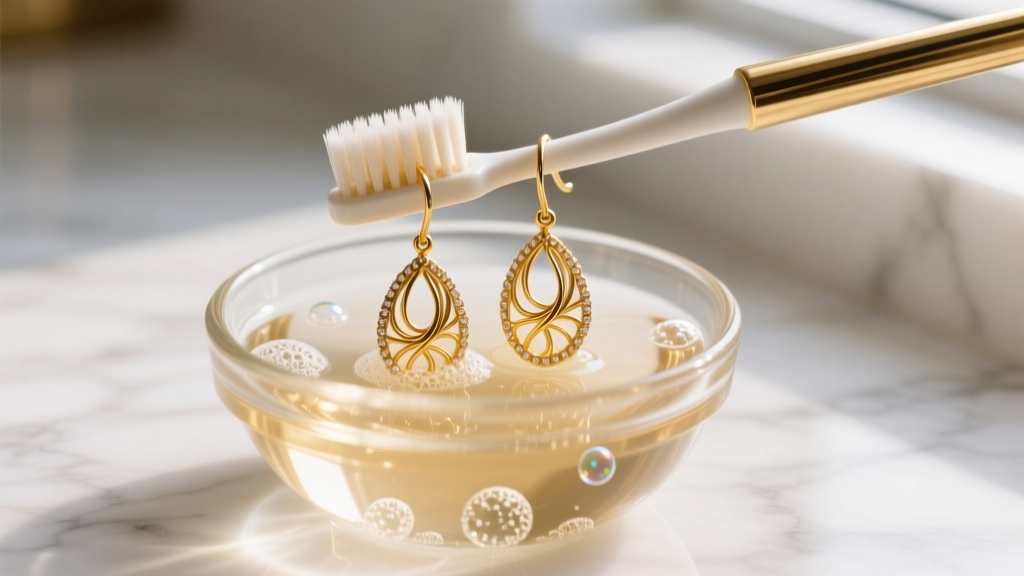
- Prepare the Solution: Mix a few drops of mild, phosphate-free dish soap (like Dawn) into a bowl of lukewarm distilled water. Avoid tap water, as hard water minerals can leave microscopic calcium deposits on the gold.
- Soak: Submerge the earrings for 15 to 20 minutes. This allows the surfactants to break down sebum, dead skin cells, and cosmetic residues trapped behind the earring post and clutch.
- Agitate Gently: Use a brand-new, ultra-soft baby toothbrush to gently sweep the crevices. Never use a standard adult toothbrush, as the bristles are stiff enough to inflict micro-scratches on 18K and 22K gold.
- Rinse and Dry: Rinse thoroughly under lukewarm distilled water. Pat dry with a lint-free microfiber cloth. Air-drying can result in water spots.
Cleaning Matte, Brushed, and Florentine Finishes
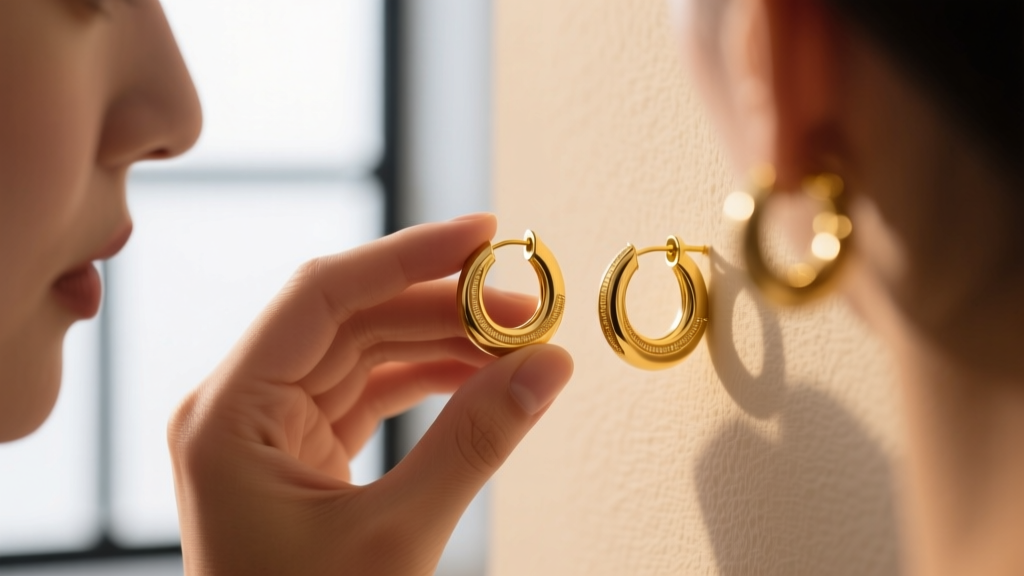
If you purchase earrings with a textured finish—such as a Florentine cross-hatch or a unidirectional brushed satin finish—never use a toothbrush or polishing cloth. Abrasive action will gradually polish the textured grooves down to a high shine, permanently altering the designer's intended aesthetic. Instead, rely solely on the soaking method and use a cotton swab to gently lift dirt from the textured grooves.
What to Avoid: Chemicals That Destroy Gold Alloys
One of the most critical concepts for buyers to understand is Stress Corrosion Cracking (SCC). This is a metallurgical failure mode where the combination of tensile stress (which naturally occurs in bent earring wires and clasped hoop hinges) and a corrosive chemical environment leads to microscopic fracturing. Over time, this causes earring posts to snap cleanly off the setting.
Expert Warning: Chlorine is the ultimate enemy of karat gold. Exposure to chlorinated pool water or household bleach reacts with the copper and zinc alloys in 14K and 10K gold, causing irreversible stress corrosion cracking. Always remove gold earrings before swimming or cleaning.
Additionally, avoid the following common household hazards:
- Toothpaste: Often recommended in DIY hacks, toothpaste contains hydrated silica, an abrasive that will permanently scratch high-karat gold and dull rhodium plating on white gold.
- Ammonia: While safe for diamonds, prolonged exposure to ammonia can degrade the copper alloys in rose gold, altering its color profile.
- Mercury: Found in some older thermometers and specialized industrial environments, mercury causes gold to amalgamate instantly, turning the surface a silvery-grey. This requires professional torching to reverse.
Earring Backings: Where Grime Hides and How to Reach It
When evaluating what to look for when buying gold earrings, the backing mechanism is frequently overlooked. The backing dictates not only security but also the difficulty of your cleaning routine.
Friction Backs (Butterfly Clutches)
The most common backing for studs. The hollow tube of the clutch traps immense amounts of dead skin and hair product. To clean these effectively, push a wooden toothpick through the hole of the clutch while it is submerged in soapy water to dislodge compacted debris.
Screw Backs
Screw backs are highly recommended for expensive diamond studs and cartilage jewelry. However, the threaded grooves of the post and the internal threads of the nut are magnets for lotion buildup. Use a soft, rubber-tipped interdental brush (the kind used for braces) to gently run through the threads of the post. Never use a metal pin or needle, as steel is harder than 14K and 18K gold and will strip the delicate threads.
La Pousette and Locking Backs
These feature internal spring mechanisms. Because they contain tiny steel springs inside a gold housing, they should never be submerged in ultrasonic cleaners or left soaking in water for extended periods, as the internal spring can rust and seize. Wipe these down with a damp alcohol prep pad instead of soaking.
Gemstone and Enamel Considerations
If your gold earrings feature gemstones or enamel work, the cleaning protocol shifts dramatically. The GIA Gemstone Care Guide emphasizes that a stone's porosity and Mohs hardness dictate its chemical tolerance.
| Gemstone Type | Examples | Cleaning Protocol | Ultrasonic Safe? |
|---|---|---|---|
| Non-Porous / Hard | Diamond, Sapphire, Ruby | Warm soapy soak, soft brush, ultrasonic safe. | Yes (unless fractured or heavily included) |
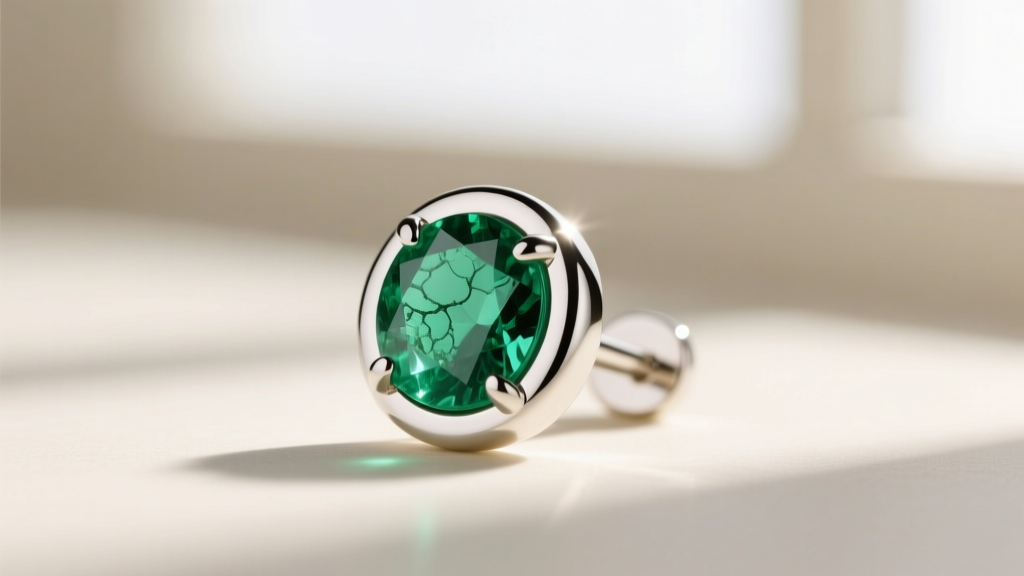
| Porous / Treated | Emerald, Jade, Turquoise | Damp microfiber cloth only. Never soak. | No (Ultrasonics will shatter oil-treated emeralds) |
| Water-Sensitive | Opal, Pearl, Amber | Dry wipe only. Avoid all liquids and heat. | No (Heat and vibration cause cracking) |
When buying gold earrings featuring emeralds, be aware that nearly all commercial emeralds are fracture-filled with cedar oil or synthetic resins to improve clarity. Submerging these in warm soapy water will strip the oil, leaving the stone looking cloudy and heavily included. For gold and emerald earrings, purchase a specialized, non-chemical jewelry wipe and gently clean only the gold setting, avoiding direct friction on the stone.
Ultrasonic vs. Steam Cleaners: Are They Worth the Investment?
For buyers who prefer to maintain their jewelry at home, mechanical cleaners are an option, but they come with strict caveats.
Ultrasonic Cleaners
Ultrasonic machines use high-frequency sound waves (typically 40-45 kHz) to create microscopic cavitation bubbles in a liquid solution. When these bubbles collapse against the gold, they blast away dirt. What to look for: Only use ultrasonic cleaners for solid 14K or 18K gold earrings featuring diamonds or sapphires. Never use them on hollow tube hoops (the vibrations can dent thin gold walls), tension-set stones, or pave settings where the tiny prongs can be vibrated loose.
Steam Cleaners
Steam cleaners blast high-pressure, high-temperature steam to melt away grease. While excellent for diamond studs, the sudden thermal shock can shatter temperature-sensitive stones like opals, tanzanite, and quartz. Furthermore, if you are buying gold earrings with enamel detailing (such as vitreous or cold enamel), the intense heat of a steam cleaner can cause the enamel to pop out of its gold bezel.
Final Buying Takeaway
Knowing how to clean gold earrings safely is a direct extension of making a smart purchasing decision. If you want low-maintenance jewelry that can withstand frequent ultrasonic cleaning and aggressive polishing, opt for 14K yellow gold with bezel-set diamonds. If you prefer the rich, romantic hue of 18K rose gold or the intricate beauty of Florentine finishes, you must commit to gentle, chemical-free soaking and meticulous storage. By aligning your buying choices with your willingness to perform the appropriate maintenance, you ensure your gold earrings remain as structurally sound and visually stunning as the day you bought them. For further reading on precious metal standards, the Federal Trade Commission's Jewelry Guides offer excellent regulatory insights into gold alloy marketing and durability expectations.


