How to Find a Lost Earring: Recovery & Prevention Guide
Learn how to find a lost earring with our expert recovery tool buying guide, search tactics, and tips for purchasing secure replacements.

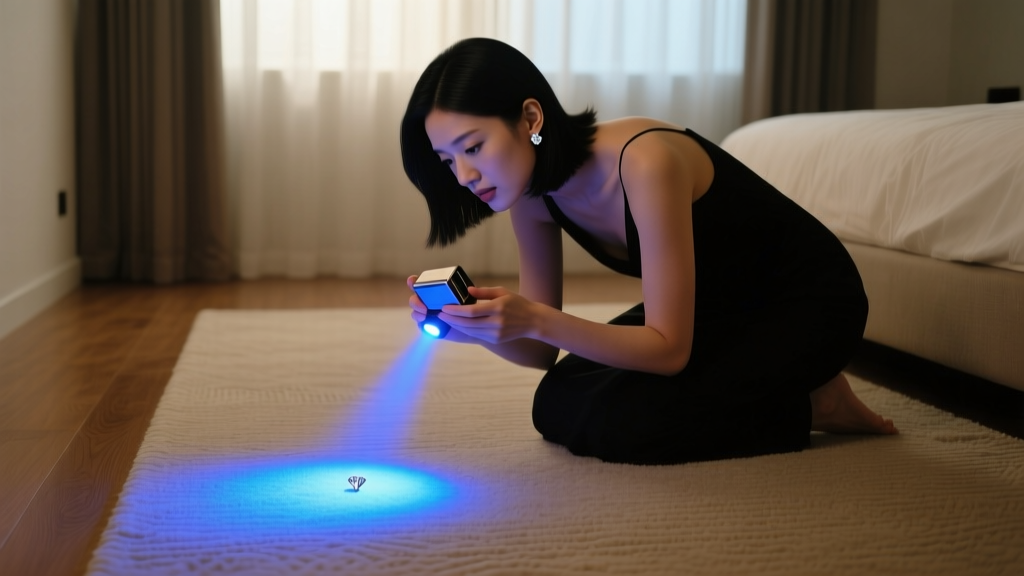
The sudden realization that your earlobe feels unusually light is a sinking feeling. Whether it is a sentimental diamond stud, a vintage gold hoop, or a modern titanium cartilage piece, losing an earring is a universal jewelry nightmare. However, learning how to find a lost earring is less about luck and more about physics, optics, and having the right recovery gear on hand. As of 2026, advancements in micro-LED technology and consumer-grade metal pinpointers have made DIY recovery more successful than ever.
This comprehensive guide bridges the gap between immediate search tactics and a strategic buying guide. We will cover exactly what recovery tools to purchase, how to execute a surface-specific search, and what to look for when buying secure, loss-proof replacement earrings.
The Golden Hour: Immediate Protocol for Lost Earrings
Before you buy any specialized tools or tear apart your room, you must execute the "Golden Hour" protocol. The first 15 minutes after realizing your earring is missing dictate your chances of recovery.
- Freeze and Retrace: Stop walking immediately. Earrings often fall when taking off sweaters, brushing hair, or lying down. Retrace your exact physical movements.
- Kill the Airflow: Turn off all HVAC systems, ceiling fans, and air purifiers. A lightweight hollow hoop or a small stud can easily be blown under baseboards by a sudden draft.
- Secure the Perimeter: Close all doors to the room where you suspect the drop occurred. Place a towel under the door gap to prevent the earring from being kicked into the hallway.
- Ditch the Shoes: Remove your shoes immediately to avoid crushing a delicate gemstone or kicking a small stud into the deep pile of a carpet.
The Recovery Arsenal: What to Buy When Searching
If the naked-eye sweep fails, it is time to bring in specialized equipment. When building your jewelry recovery kit, avoid cheap, generic gadgets. Here is a buying guide for the specific tools you need to find a lost earring.
1. UV Flashlights (The Optical Advantage)
Not all blacklights are created equal. To find diamonds and reflective metals, you must buy a UV flashlight with a 365nm wavelength. Cheaper 395nm flashlights emit a harsh purple visible light that washes out the subtle fluorescence of diamonds and the reflective glint of gold. According to the Gemological Institute of America (GIA), approximately 25% to 35% of diamonds exhibit some degree of fluorescence, most commonly blue, which will glow vividly under a true 365nm UV beam in a dark room.
2. Metal Detector Pinpointers
Full-sized beach metal detectors are too cumbersome for indoor use. You need a handheld pinpointer. When shopping, look for models with adjustable sensitivity and ferrous/non-ferrous discrimination. This allows the device to ignore the iron nails in your hardwood floor or the steel springs in your mattress, while pinging the high electrical conductivity of 14k gold, 18k gold, or platinum.
Recovery Tool Comparison Chart
| Tool Type | Best Used For | Key Spec to Look For | Estimated Price Range |
|---|---|---|---|
| UV Flashlight | Diamonds, silver, gold reflections | 365nm wavelength (not 395nm) | $20 - $45 |
| Handheld Pinpointer | Metallic studs, hoops, cartilage bars | Non-ferrous discrimination, 11kHz+ frequency | $120 - $250 |
| Flexible Grabber Tool | Earrings dropped behind heavy dressers | Claw grip, 40-inch+ reach | $10 - $20 |
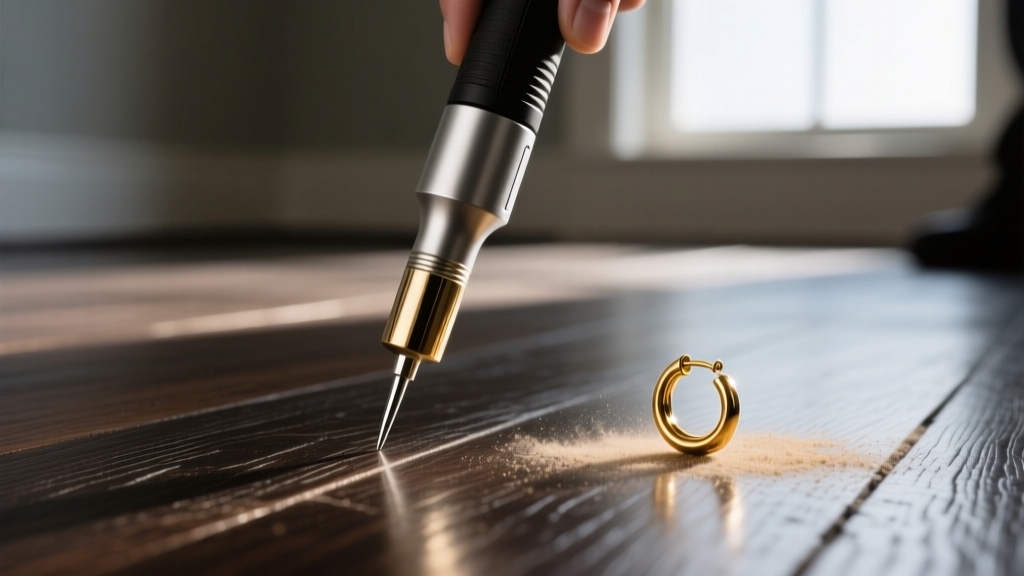
Surface-Specific Search Strategies
The physical environment dictates your search methodology. A technique that works on tile will fail miserably on a shag rug.
Carpet and Rugs: The Vacuum Pantyhose Trick
Vacuuming is the fastest way to clear a carpeted area, but you risk sucking the earring into the dustbin and losing it in the debris. The Fix: Stretch a piece of sheer pantyhose or a thin mesh screen tightly over the vacuum hose nozzle and secure it with a rubber band. Turn the vacuum to its lowest suction setting. Sweep the hose in a slow, overlapping grid pattern. The earring will catch on the mesh, allowing you to retrieve it safely.
Hardwood and Tile: The Parallel Flashlight Sweep
Do not shine your flashlight down at the floor from a standing position. Get down on your stomach and place the flashlight directly on the floor, pointing the beam parallel to the surface. This technique, known as "raking light," forces even the flattest earring post or smallest diamond pavé to cast a long, dramatic shadow, making it instantly visible against the grain of the wood or the grout lines of the tile.
Prevention Buying Guide: Securing Your Next Pair
If your lost earring is gone for good, your next purchase must prioritize security. When browsing for replacements, pay close attention to the backing mechanisms and the metallurgical composition of the post.
Upgrade Your Backings
Standard "butterfly" friction backs are the leading cause of lost earrings. The metal loops stretch out over time, losing their grip. When buying new studs, look for these secure alternatives:
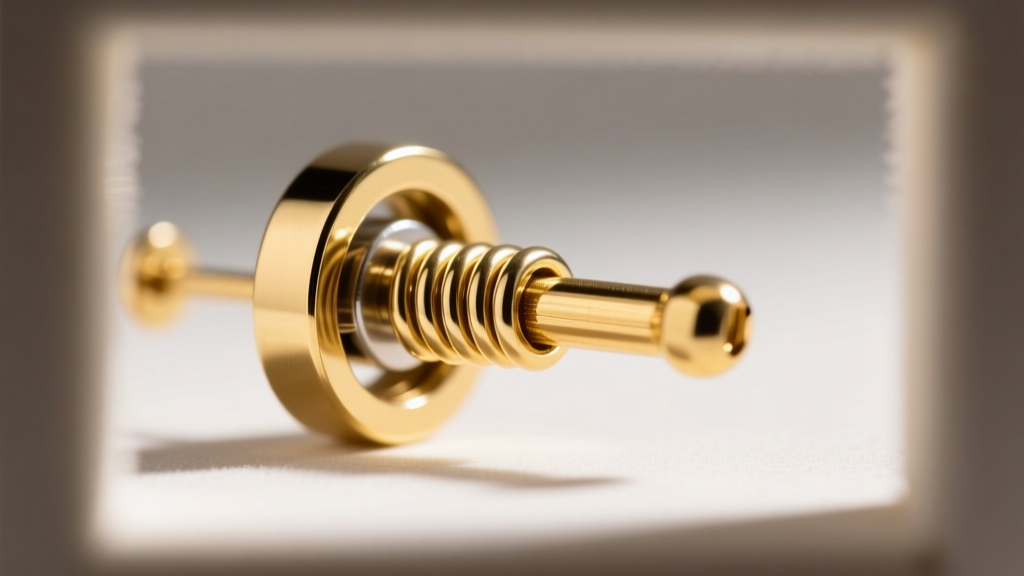
- La Pousette Backs: The gold standard for fine jewelry. These feature a spring-loaded internal mechanism that clicks securely into a grooved earring post. You must squeeze two tiny side tabs to release them. They are nearly impossible to pull off accidentally.
- Silicone O-Rings: An inexpensive, high-friction alternative. While they do not lock mechanically, the high coefficient of friction of medical-grade silicone prevents them from sliding off smooth metal posts.
- Screw-Backs: Common in vintage and high-carat diamond studs. The post is threaded, and the backing screws on. Ensure the threading is at least 3mm long for adequate grip.
Metallurgy Matters: Detectability
Believe it or not, the metal you choose affects your ability to find the earring if you drop it again. According to the Federal Trade Commission (FTC) Jewelry Guides, precious metals have specific purity standards, but they also have distinct electrical properties.
High Conductivity (Easy to Find): 14k gold, 18k gold, and platinum are highly conductive. If dropped in grass or on a floor with nails, a consumer metal detector will easily distinguish their non-ferrous, high-conductivity signal from the surrounding environment.
Low Conductivity (Hard to Find): Grade 23 titanium and 316L surgical steel are fantastic for hypoallergenic cartilage piercings, but they have very low electrical conductivity. A standard metal detector pinpointer may struggle to register a small titanium stud, especially if it is buried in a thick carpet or near other metallic interference.
When to Call a Professional Recovery Expert
If the earring is a high-value heirloom and your DIY efforts have failed, consider hiring a professional metal detecting hobbyist. Networks like RingFinders connect you with local experts who use high-end Minelab or XP pulse-induction detectors. Expect to pay a flat call-out fee of $50 to $150, plus a contingency percentage of the item's appraised value if recovered. This is a highly viable option for earrings lost outdoors in snow, sand, or tall grass, where visual search methods are entirely useless.
Expert Takeaway: Figuring out how to find a lost earring is a race against time and physics. Invest in a 365nm UV flashlight today, keep it in your jewelry box, and always spec your future fine jewelry purchases with locking La Pousette backs to ensure you never have to use it.


