How to Get Wylder's Earring: Material & Sourcing Guide
Discover how to get Wylder's earring in real life. Compare bronze, brass, and silver materials, gauge sizes, and hypoallergenic options for artisan replicas.

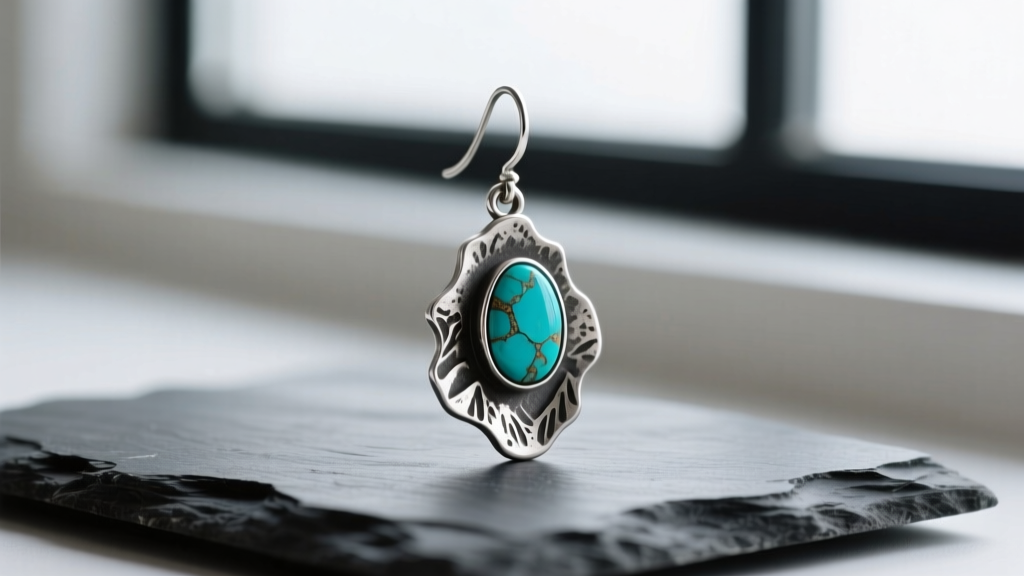
The Quest for Organic Artisan Ear Jewelry
When enthusiasts of fantasy, rustic, and nature-inspired aesthetics ask how to get wylder's earring designs, they are usually searching for pieces that evoke the untamed beauty of the forest. Whether inspired by a specific indie artisan, a fantasy video game, or a broader "cottagecore" and woodland aesthetic, "Wylder" style earrings are characterized by organic motifs: hammered textures, vine-like filigree, raw uncut gemstones, and deeply oxidized metals. However, sourcing or commissioning these intricate pieces requires a deep understanding of metallurgy. The materials used in nature-inspired jewelry dictate not only the visual authenticity of the piece but also its structural integrity, weight distribution, and biocompatibility with your skin.
In this comprehensive guide, we break down the exact material properties, gauge requirements, and sourcing strategies you need to acquire or commission high-quality, nature-inspired drop earrings that will last a lifetime without causing contact dermatitis or structural failure.
The Metallurgy of Nature-Inspired Designs
Organic jewelry designs—featuring leaves, branches, and asymmetrical raw stones—are rarely stamped from flat sheet metal. Instead, they rely on lost-wax casting, a process where a wax model is carved, encased in investment plaster, burned out, and replaced with molten metal. The choice of alloy is critical here, as different metals capture microscopic textures (like leaf veins or bark ridges) with varying degrees of fidelity.
Silicon Bronze vs. Traditional Brass
Many mass-market fantasy earrings are made from cheap zinc alloys (often branded as Zamak or pewter). While inexpensive, zinc alloy has a low tensile strength and a high failure rate at the solder joints where the ear hook meets the heavy drop body. True artisan Wylder-style pieces utilize Silicon Bronze or Jeweler's Red Brass. Silicon bronze (an alloy of copper, silicon, and zinc) flows exceptionally well in casting, capturing intricate organic details while offering superior corrosion resistance compared to standard brass. Red brass (85% copper, 15% zinc) provides a warm, rose-gold hue that mimics aged copper without the rapid, uncontrolled verdigris patina.
Oxidized Sterling Silver and Argentium
For those seeking a darker, more mystical woodland aesthetic, oxidized sterling silver is the premium choice. Standard 925 sterling silver is treated with liver of sulfur (potassium polysulfide) to create a blackened patina, which is then hand-polished to leave the dark oxidation in the recessed textures of the design. However, for a more durable option, modern jewelers are turning to Argentium Silver (935 or 960). Argentium replaces some of the copper in the alloy with germanium, making it highly tarnish-resistant and allowing for deeper, more permanent contrast when selectively oxidized.
Material Comparison Chart for Artisan Earrings
| Material | Composition | Best Application | Patina / Oxidation | Hypoallergenic Rating |
|---|---|---|---|---|
| Jeweler's Red Brass | 85% Cu, 15% Zn | Intricate vine/leaf castings | Develops warm antique patina | Moderate (Nickel-free, but contains Copper) |
| Silicon Bronze | Cu, Si, Zn | Heavy organic drop earrings | Slow, even darkening | High (Excellent for sensitive skin) |
| Oxidized 925 Silver | 92.5% Ag, 7.5% Cu | High-contrast forest motifs | Intentional black recesses | High (Avoid if severe copper allergy) |
| Implant-Grade Titanium | Ti-6Al-4V (ASTM F-136) | Ear hooks and posts | None (Permanent metallic gray) | Maximum (100% Biocompatible) |
For a detailed breakdown of biocompatible metals, the Association of Professional Piercers provides extensive guidelines on why implant-grade titanium remains the gold standard for any metal that passes through the fistula (the piercing hole).
Gauge Sizing and Structural Failure Modes
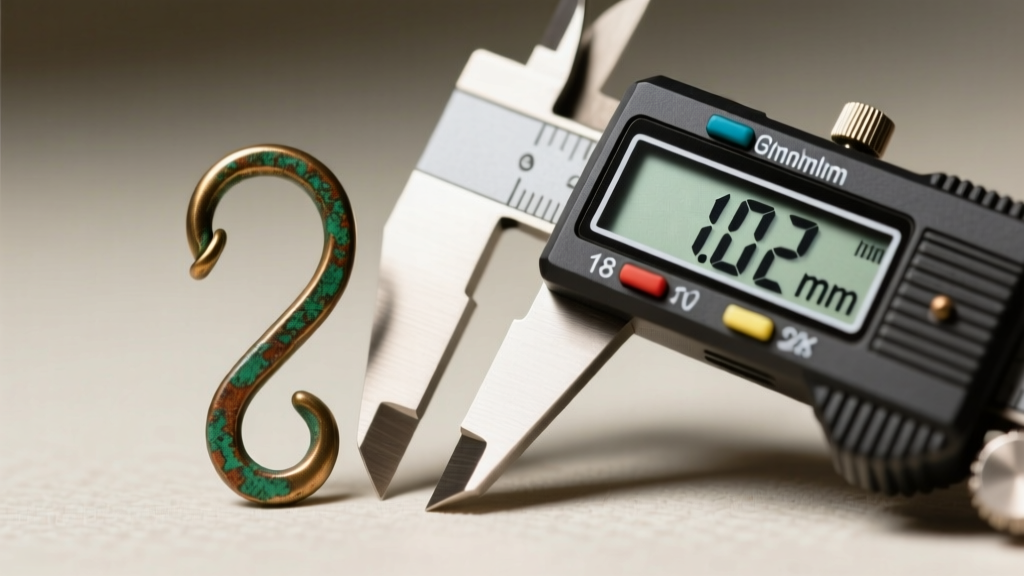
A common mistake when sourcing heavy, nature-inspired drop earrings is ignoring the wire gauge of the ear hook. Standard lobe piercings are done at 20-gauge (0.81mm) or 18-gauge (1.02mm). However, a heavy Wylder-style earring featuring a raw quartz point or a solid bronze oak leaf can weigh upwards of 15 grams. If a jeweler uses a standard 20-gauge wire for the hook, the weight of the earring will cause the wire to bend, warp, and eventually snap at the loop stress point.
The Gauge Mismatch Solution
To maintain structural integrity without tearing your earlobe, master jewelers employ a hybrid soldering technique. The main body and the primary hook loop are forged from 16-gauge (1.29mm) or 14-gauge (1.63mm) silicon bronze for maximum tensile strength. However, the actual post or wire that passes through the ear is soldered using 18-gauge or 20-gauge ASTM F-136 titanium. This ensures the piercing itself is protected by a lightweight, biocompatible metal, while the heavy drop is supported by a robust structural alloy. Forcing an 18-gauge hook into a freshly healed 20-gauge piercing can cause micro-tears and granulomas, so always verify the exact millimeter thickness of the ear wire before purchasing.
Combating Copper Oxidation and Contact Dermatitis
Nature-inspired earrings heavily feature copper-based alloys like brass and bronze. While beautiful, copper reacts with the lactic acid and salts in human sweat to produce copper chloride, resulting in the dreaded green discoloration on the skin and, in some cases, contact dermatitis. The American Academy of Dermatology notes that while copper itself is rarely a true allergen, the acidic reaction can cause severe irritation, and cheap brass alloys often contain hidden nickel trace elements which are a primary allergen.
Sealing Techniques for Daily Wear
If you are commissioning a custom Wylder-style piece in brass or bronze, request that the jeweler apply a micro-crystalline wax sealant, such as Renaissance Wax, to the back of the earring and the ear hook. Unlike cheap clear nail polish (which yellows, chips, and traps moisture against the skin), museum-grade micro-crystalline wax creates a breathable, invisible barrier that prevents copper oxidation without altering the tactile feel of the metal. For long-term sealing, some artisans use electrophoretic e-coating, which bonds a microscopic layer of clear polymer to the metal via an electrical current, providing years of protection against skin acids.
Identifying Quality Craftsmanship in Artisan Sourcing
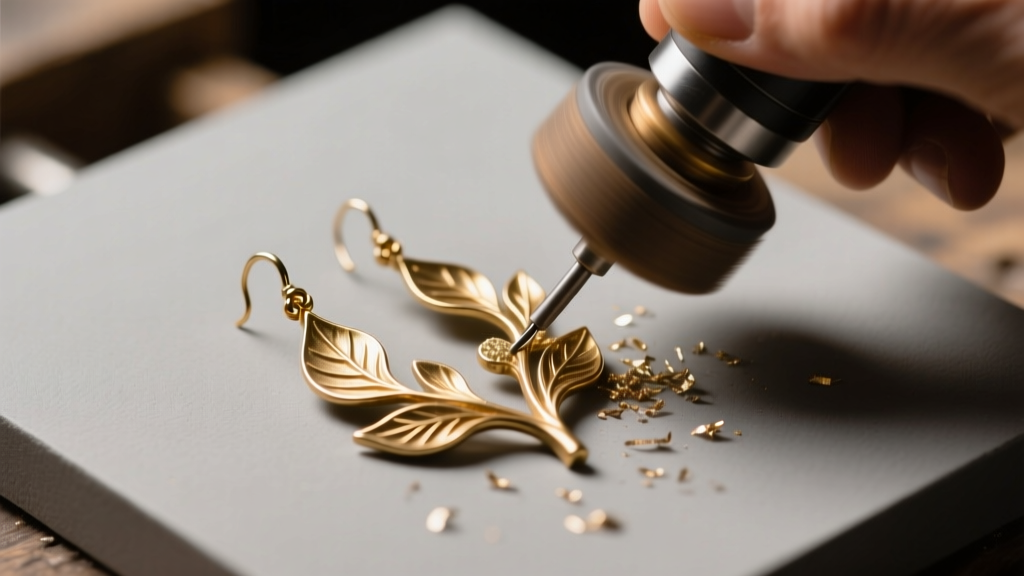
Knowing how to get wylder's earring designs requires knowing where to look and what questions to ask. Avoid mass-market "fantasy" jewelry stores that rely on zinc-alloy die-casting. Instead, seek out independent metallurgists and lost-wax casting specialists on platforms like Etsy or through custom jewelry guilds. When evaluating a piece, look for the following markers of quality:
- Seamless Solder Joints: The connection between the ear wire and the drop body should be a smooth, continuous flow of silver or gold solder, not a bulky, porous blob of lead-free tin.
- Tumbled Edges: Organic designs should look wild, not sharp. High-quality castings are tumbled in steel shot to work-harden the metal and smooth out any microscopic burrs that could catch on hair or clothing.
- Stone Security: Raw stones should be held by custom-fabricated bezels or heavy-gauge prongs. Glue-set stones in metal clay or cheap castings will inevitably fail when exposed to humidity or temperature changes.
By prioritizing material integrity, precise gauge sizing, and advanced sealing techniques, you can successfully source or commission breathtaking, woodland-inspired earrings that honor the wild aesthetic while respecting the delicate biology of your piercings. For further reading on metal alloys and their behavior in fine jewelry, the Gemological Institute of America (GIA) offers excellent resources on the science of jewelry metals.


