How to Size Earrings: Material Weight & Gauge Guide
Learn how to size earrings by balancing material density, gauge thickness, and weight distribution to prevent lobe damage and ensure comfort.

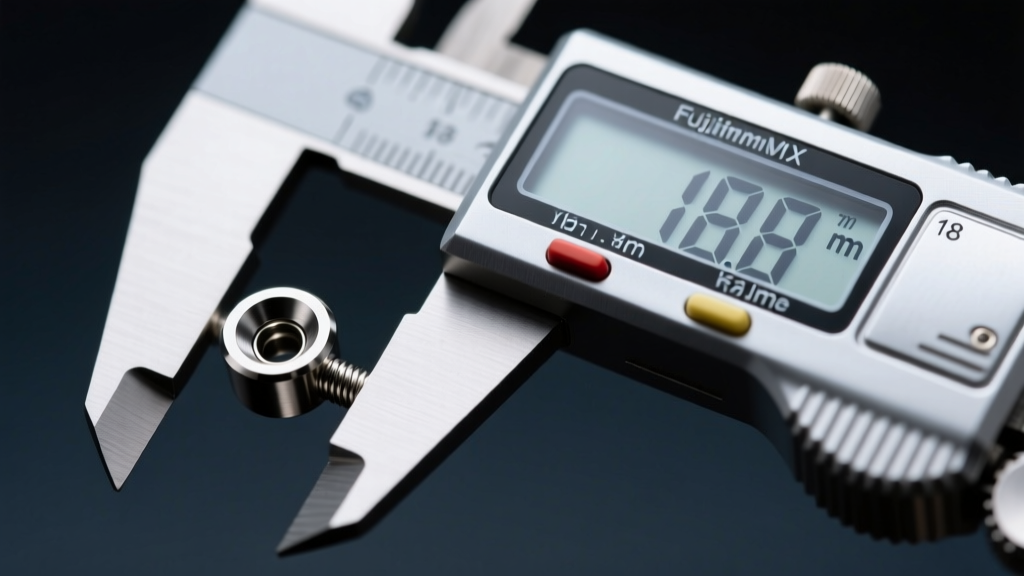
The Physics of Earlobe Stretching: Why Material Density Matters
When you learn how to correctly size earrings, you quickly discover that measuring the physical dimensions in millimeters is only half the equation. The other half—and arguably the more critical factor for long-term tissue health—is material density. A 15-millimeter hoop crafted from solid 14-karat gold will exert vastly different gravitational stress on your earlobe compared to a 15-millimeter hoop made from aerospace-grade titanium. Understanding the specific gravity of jewelry metals is the cornerstone of professional styling and piercing aftercare.
Specific gravity (SG) determines how heavy a material is relative to its volume. For context, pure water has an SG of 1.0. Implant-grade titanium (ASTM F-136) boasts a remarkably low SG of 4.5, making it exceptionally lightweight and ideal for fresh piercings or large-gauge jewelry. In stark contrast, 14-karat yellow gold has an SG of approximately 13.5, meaning it is exactly three times heavier than titanium for the exact same volume. If you fail to size earrings appropriately by ignoring these metallurgical realities, you risk accelerated lobe elongation, migration, and chronic tissue fatigue.
Tungsten carbide, a popular material for men's rings and heavy body jewelry, sits at the extreme end with an SG of 19.3. While incredibly scratch-resistant, tungsten is entirely unsuitable for large-diameter hoops or elongated dangles because the sheer mass will drag the piercing channel downward, eventually causing the dreaded "cheese-cutter effect" where the jewelry slowly slices through the earlobe.
Standard Gauge Sizes vs. Material Thickness
The wire thickness of your earring post or hoop directly dictates how the weight is distributed across the piercing fistula (the healed tube of skin). A thinner gauge concentrates the downward force of heavy materials into a microscopic surface area, accelerating tissue damage. Below is a comprehensive breakdown of standard gauges and the ideal material pairings to maintain structural integrity.
| Gauge (G) | Millimeters (mm) | Inches (in) | Ideal Material Applications | Weight Limit Recommendation |
|---|---|---|---|---|
| 20G | 0.81 mm | 0.032" | Titanium, Aluminum, Niobium | Under 3 grams (Studs only) |
| 18G | 1.02 mm | 0.040" | Surgical Steel, 14k Gold, Titanium | Under 5 grams (Small hoops/dangles) |
| 16G | 1.29 mm | 0.051" | All Metals, Glass, Stone | Under 10 grams (Standard cartilage/lobe) |
| 14G | 1.63 mm | 0.064" | Brass, Bronze, Heavy Gold Alloys | 15+ grams (Heavy statement dangles) |
As noted by the Association of Professional Piercers (APP), initial piercings should always utilize 14G or 16G implant-grade titanium to minimize pressure necrosis. If you are sizing earrings for a delicate 20G lobe piercing, you must strictly limit the jewelry to low-density metals or hollow acrylics to prevent the post from migrating through the skin over time.
Weight Distribution in Hoops and Dangles
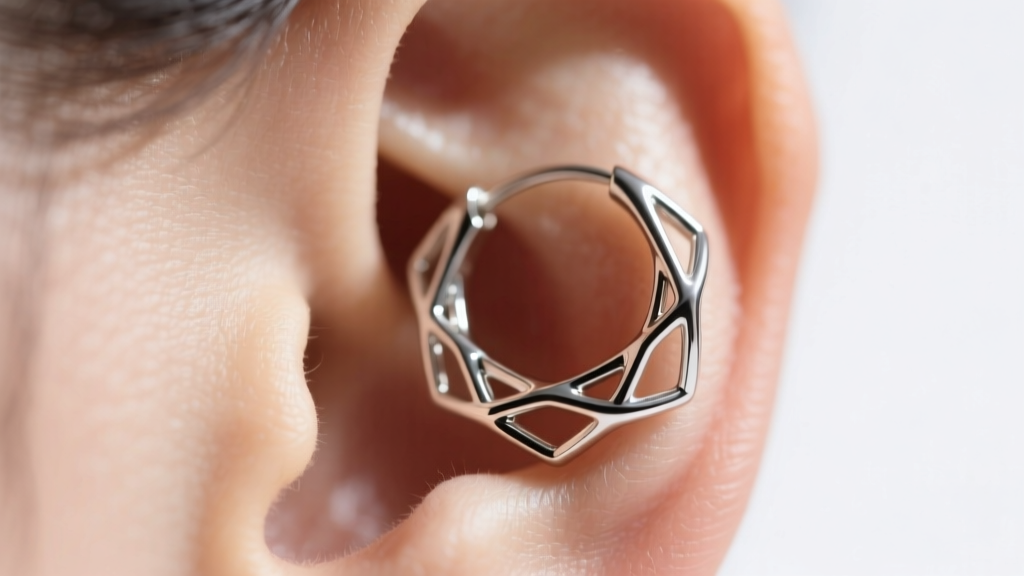
Sizing earrings that hang below the earlobe requires a deep understanding of leverage and tensile strength. A 40-millimeter solid brass dangle earring creates a pendulum effect. With every step you take, the kinetic energy multiplies the static weight of the metal, placing sudden, sharp torque on the bottom of the piercing channel.
Calculating the "Drop Factor"
To safely wear oversized or elongated earrings without causing irreversible lobe damage, professional jewelers employ specific structural modifications:
- Hollow Tubing: Instead of casting dangles in solid silver or gold, high-end manufacturers use hollow metal tubing. This maintains the visual volume and diameter of the earring while reducing the overall mass by up to 70%.
- Wider Gauge at the Apex: For heavy chandelier earrings, the wire that passes through the ear should be flared or stepped up to a 14G (1.6mm) thickness, even if the decorative elements below taper down to a finer gauge.
- Low-Density Alloys: Utilizing aircraft-grade aluminum (SG 2.7) or specialized polymer resins for the main body of a large hoop ensures the earring remains visually striking without acting as an anchor on your earlobe.
Cartilage Piercings: Sizing for Swelling and Biocompatibility
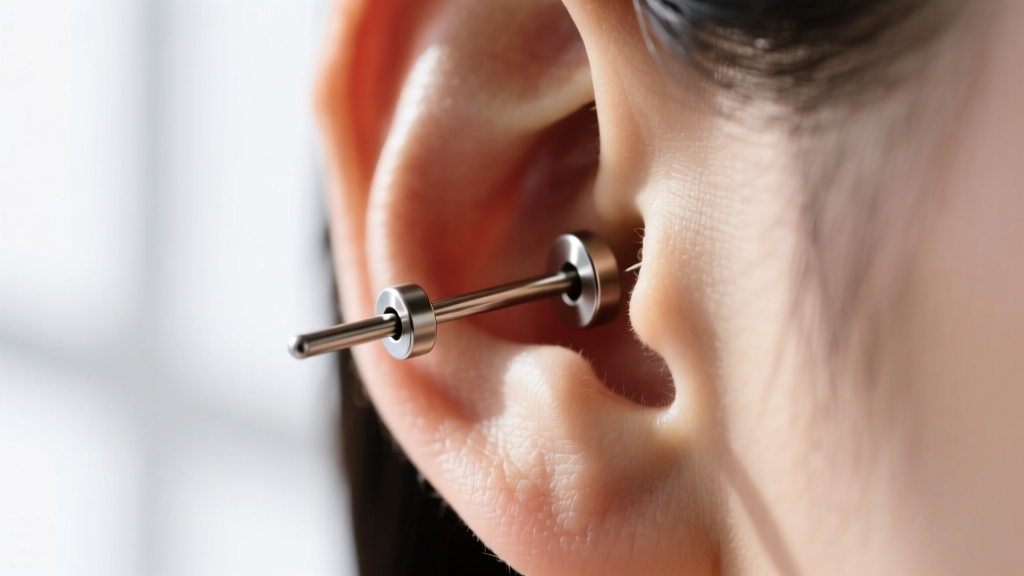
When sizing earrings for cartilage placements like the helix, tragus, or conch, the primary concern shifts from gravitational weight to volumetric swelling and biocompatibility. Cartilage is avascular (lacking direct blood supply) and highly prone to hypertrophic scarring if subjected to friction or allergic reactions.
For a fresh helix piercing, a professional will typically size the initial jewelry with an extra-long post—usually 8mm to 10mm in length—to accommodate the inevitable inflammatory swelling that peaks around days three through seven. Once the swelling subsides (typically between weeks four and eight), it is absolutely critical to "downsize" to a snug-fitting 5mm or 6mm post. Leaving an oversized, long post in a healed cartilage piercing creates a lever arm; bumping the protruding end will violently torque the internal fistula, leading to irritation bumps and delayed healing.
Material purity is non-negotiable here. According to dermatological studies published by the National Center for Biotechnology Information, nickel is the most common cause of allergic contact dermatitis in jewelry. Even "surgical steel" contains up to 15% nickel. Therefore, sizing earrings for cartilage must always involve ASTM F-136 implant-grade titanium or pure niobium, which are entirely nickel-free and biologically inert.
Troubleshooting Common Sizing and Material Failures
Even experienced collectors encounter issues when balancing aesthetics with anatomical limits. Here is how to troubleshoot the most common failures related to improper earring sizing and material selection:
1. The Earlobe "Slitting" Phenomenon
If you notice your piercing hole elongating into a vertical slit, your earrings are too heavy for their gauge. The immediate fix is to switch to a thicker gauge (e.g., moving from 18G to 14G) or transition to lightweight materials like carved wood, bone, or hollow titanium. You must give the tissue time to contract and heal before attempting heavy drops again.
2. Threadless Ends Popping Out
Threadless (press-fit) jewelry relies on the tension of a slightly bent pin inside a hollow post. If your threadless end keeps falling out, the post may be sized incorrectly (too short, causing the backing to push the pin out) or the pin hasn't been bent at a sufficient angle. A proper bend should resemble a shallow "V" shape, creating maximum friction against the inner wall of the titanium post.
3. Green Skin Discoloration
This is not an infection, but a chemical reaction. Copper-rich alloys like brass and bronze oxidize when exposed to the natural acids and salts in your sweat, leaving a harmless but unsightly green residue. If you prefer the aesthetic of gold but want to avoid both the weight of solid gold and the oxidation of brass, opt for PVD (Physical Vapor Deposition) coated titanium, which offers the color of gold with the lightweight, hypoallergenic properties of titanium.
Expert Insight: "Never sleep in hoop earrings, regardless of the material or gauge. The mechanical pressure of your head against a pillow forces the hoop to twist inside the piercing channel, creating micro-tears in the fistula that invite bacterial infiltration and localized swelling."
Ultimately, knowing how to accurately size earrings requires a holistic view of human anatomy and material science. By respecting the specific gravity of metals, matching gauge thickness to weight loads, and prioritizing biocompatible alloys, you can curate a jewelry collection that is both visually spectacular and anatomically sustainable for decades to come.


