How to Store Earrings: Metal-Specific Best Practices
Learn how to store earrings based on their metal properties. Discover exact protocols for silver, gold, titanium, and plated pairs to prevent tarnish.

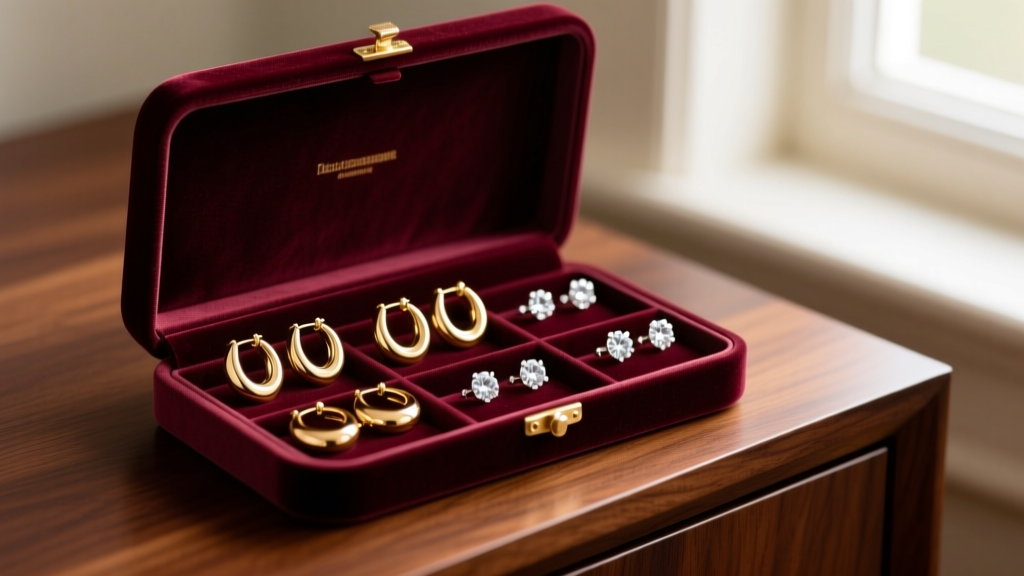
Understanding how to store earrings properly requires more than just keeping them untangled; it demands a foundational knowledge of applied metallurgy and chemistry. Every metal alloy reacts differently to atmospheric humidity, sulfur compounds, UV radiation, and physical friction. A storage method that preserves 18k yellow gold might actively accelerate the degradation of gold vermeil or sterling silver. In this comprehensive guide, we break down the exact material properties of popular earring metals and provide precise, actionable storage protocols to maximize their lifespan.
The Chemistry of Tarnish and Micro-Abrasions
Before diving into specific metals, it is crucial to understand the two primary enemies of fine jewelry: chemical oxidation and physical abrasion. Tarnish is not a defect in the metal; it is a natural chemical reaction. For instance, when silver is exposed to hydrogen sulfide in the air, it forms silver sulfide—a black, dull layer on the surface. Physical abrasion, governed by the Mohs Hardness Scale, occurs when harder metals or gemstones scratch softer ones during storage. Storing diamond studs (Mohs 10) in the same compartment as 14k gold hoops (Mohs 2.5-3) guarantees that the gold will accumulate micro-scratches over time.
Sterling Silver: Managing Sulfur and Humidity
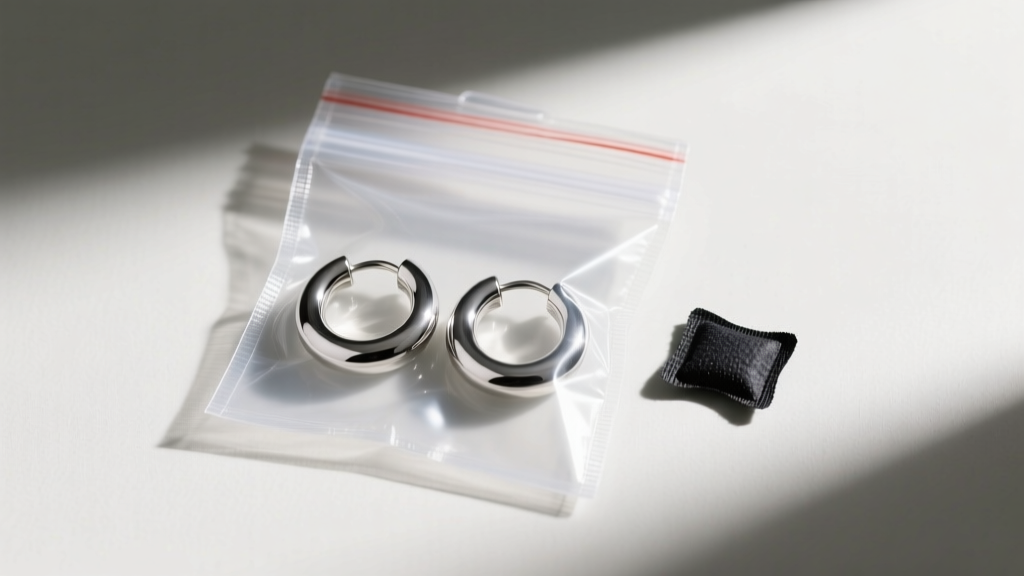
Sterling silver is an alloy composed of 92.5% pure silver and 7.5% copper. Pure silver is highly resistant to tarnish, but the copper added for structural integrity is highly reactive to moisture and sulfur. If you are figuring out how to store earrings made of 925 sterling silver, airtight environments paired with chemical absorbers are mandatory.
The Silver Storage Protocol
- Anti-Tarnish Strips: Place a 3M anti-tarnish strip inside the storage bag. These strips contain copper-based polymers that bind to sulfur gases before they can reach your silver earrings. Replace them every 6 months.
- Pacific Silvercloth: For long-term storage, wrap silver huggies or studs in Pacific Silvercloth. This specialized cotton fabric is embedded with microscopic silver particles that act as a sacrificial anode, tarnishing themselves to protect your earrings.
- Avoid Cardboard and Rubber: Never store silver in cardboard boxes or secure them with rubber bands. Both materials emit sulfur gases and acidic compounds that will cause rapid, severe blackening.
According to The Silver Institute, keeping silver in low-humidity environments and utilizing anti-tarnish cloths can reduce the need for abrasive polishing, which slowly strips away the silver layer over the decades.
Solid Gold and Platinum: Preventing Micro-Abrasions
While pure 24k gold does not tarnish, jewelry is rarely made from it due to its extreme softness. 14k and 18k gold contain alloy metals like zinc, copper, and nickel. Platinum, while highly durable and completely tarnish-resistant, is prone to developing a matte 'patina' from microscopic surface displacements.
Compartmentalization is Key
When determining how to store earrings crafted from solid gold or platinum, your primary focus should be on preventing metal-on-metal and gem-on-metal friction. The Gemological Institute of America (GIA) emphasizes that gold alloys can be easily scratched by harder materials.
- Individual Pouches: Store each pair of solid gold or platinum earrings in its own soft, lint-free flannel pouch or a dedicated fabric-lined compartment.
- Gemstone Isolation: Diamond, sapphire, and ruby accents are significantly harder than the precious metals holding them. Store diamond-studded platinum earrings completely isolated from plain gold bands or softer gemstones like pearls and opals.
- Post Protectors: For heavy solid gold drop earrings, use silicone earring backs or friction posts to keep the earrings upright in a display box, preventing the posts from bending under their own weight.
Gold Vermeil and Plated Earrings: Moisture and Friction Control
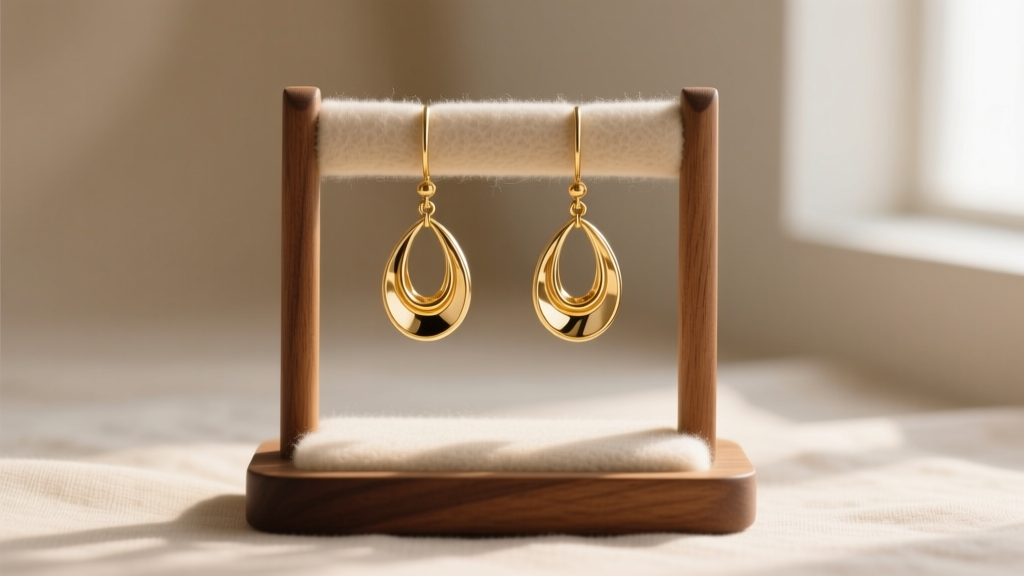
Gold vermeil consists of a sterling silver base plated with a minimum of 2.5 microns of gold, whereas standard gold-plated earrings often use a brass base with a much thinner gold layer (under 0.5 microns). The primary threat to these earrings is friction, which wears away the gold layer, and trapped moisture, which causes the base metal to oxidize and push through the plating (often seen as green or black spotting).
Preserving the Plating
- Zero-Friction Storage: Never toss vermeil or plated dangles into a communal jewelry dish. The friction from daily movement will wear the gold plating off the high-contact points. Hang them on a velvet-lined stand or lay them perfectly flat.
- Moisture Wicking: Include silica gel desiccant packets in your jewelry drawer or storage box. Trapped humidity accelerates the oxidation of the brass or silver base metal beneath the gold.
- Clean Before Storing: Human sebum and acidic sweat degrade gold plating rapidly. Always wipe vermeil earrings with a dry, microfiber cloth to remove skin oils before putting them away.
Titanium and Niobium: The Hypoallergenic Advantage
Implant-grade titanium (ASTM F136 / Grade 23) and pure niobium are highly favored for cartilage piercings and sensitive lobes due to their biocompatibility and zero nickel content. These metals are incredibly inert and will not rust, tarnish, or react to humidity.
Storing Anodized Colors
While the base metals are virtually indestructible in a jewelry box context, many titanium and niobium earrings are anodized to produce vibrant colors (like teals, purples, and golds). This color is created by an oxidized surface layer that refracts light. To preserve anodized hues:
- UV Protection: Prolonged exposure to direct sunlight can fade certain anodized finishes over several years. Store them in opaque drawers or closed boxes rather than on open, sunlit vanity trays.
- Chemical Avoidance: Ensure no harsh chemical cleaners or alcohol-based perfumes are stored in the same enclosed space, as volatile organic compounds can occasionally dull the anodized finish.
Material Storage Comparison Matrix
Use the following table as a quick-reference framework to audit your current jewelry storage setup.
| Metal Type | Mohs Hardness | Tarnish Risk | Primary Enemy | Ideal Storage Method |
|---|---|---|---|---|
| Sterling Silver (925) | 2.5 - 3.0 | High | Sulfur, Humidity | Airtight bags + Anti-tarnish strips |
| 14k / 18k Solid Gold | 2.5 - 3.0 | Very Low | Micro-abrasions | Individual soft flannel pouches |
| Platinum | 4.0 - 4.5 | None | Diamonds, Patina | Isolated, fabric-lined compartments |
| Gold Vermeil | 2.5 (Surface) | Moderate (Base) | Friction, Moisture | Flat or hanging, with silica gel |
| Titanium (Grade 23) | 6.0 | None | UV Light (Anodized) | Opaque, dry compartments |
The Jewelry Box Fallacy: Environmental Hazards
Many consumers assume that purchasing an expensive, multi-tiered wooden jewelry box solves all storage problems. However, traditional wooden boxes can actually accelerate jewelry degradation. The glues used in mass-produced wooden boxes often off-gas sulfuric compounds and formaldehyde. Furthermore, synthetic velvet linings can trap ambient moisture against the metal.
Building the Ultimate Earring Vault
To create a chemically stable environment for high-end earrings, look for archival-quality storage solutions. Acid-free tissue paper, tarnish-resistant treated flannels, and powder-coated metal cabinetry are vastly superior to cheap MDF wood boxes. For high-humidity climates, integrating a small, rechargeable electric dehumidifier into your dressing room or placing renewable silica canisters inside your primary jewelry safe will drastically reduce the oxidation rate of your entire collection.
Ultimately, knowing how to store earrings based on their specific metallurgical profile ensures that your pieces remain as pristine as the day they were purchased. By treating your jewelry box not just as an organizational tool, but as a controlled micro-environment, you protect both the financial and sentimental value of your collection for decades to come.


