How to Style, Wear, and Clean Statement Shrimp Earrings
Learn how to style, wear, and clean statement shrimp earrings. Discover weight limits, face-shape matching, and enamel care in our expert guide.

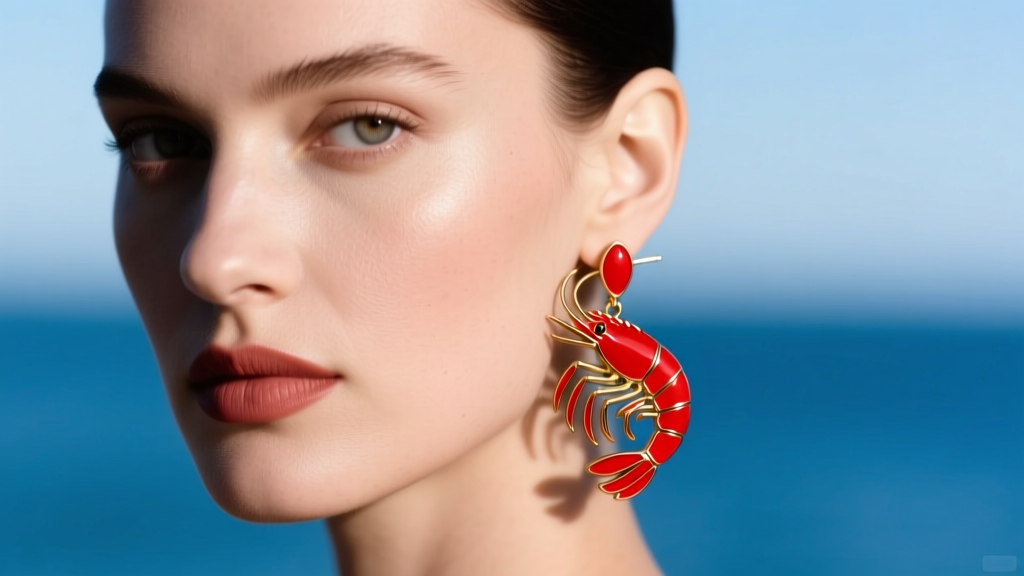
Shrimp earrings have evolved from quirky novelty items into highly sought-after statement pieces in contemporary jewelry fashion. Whether crafted from vibrant vitreous enamel, translucent UV-cured resin, or sculpted sterling silver, these crustacean-inspired designs offer a playful yet sophisticated aesthetic. However, their unique three-dimensional shapes and varying material weights require specific styling techniques and specialized maintenance routines. In this comprehensive guide, we break down exactly how to select, wear, and preserve your shrimp earrings to ensure they remain a staple in your jewelry rotation for years to come.
The Anatomy of Shrimp Earrings: Materials and Weight Dynamics
Before styling your shrimp earrings, it is crucial to understand the material composition, as this directly dictates the weight, durability, and appropriate wear time. The curved, segmented body of a shrimp design naturally lends itself to dangles and drops, which can inadvertently place excessive stress on standard earlobe piercings if the material is too dense.
| Material | Average Weight (per earring) | Durability & Risk Factors | Best Piercing Type |
|---|---|---|---|
| Enameled Brass | 8g - 14g | Prone to chipping if dropped; heavy on stretched lobes. | Standard Lobe (18G-16G) |
| 3D Printed Resin | 2g - 5g | Lightweight but susceptible to UV yellowing and snapping. | Standard Lobe, Helix, Cartilage |
| Sterling Silver (925) | 6g - 10g | Highly durable; wire hooks can bend if snagged. | Standard Lobe, Industrial |
| Acetate / Celluloid | 3g - 6g | Vintage appeal; vulnerable to heat warping and cracking. | Standard Lobe |
According to guidelines from the Association of Professional Piercers (APP), standard earlobe piercings can generally tolerate up to 15 grams of weight for short durations before experiencing fatigue or downward migration. If your enameled brass shrimp dangles exceed 12 grams each, you must employ support strategies to prevent irreversible lobe stretching.
Step-by-Step: Matching Shrimp Earrings to Your Face Shape
The visual weight and directional curve of shrimp earrings can dramatically alter the perceived proportions of your face. Use this framework to select the ideal silhouette.

Round and Square Faces
For round or square jawlines, the goal is to create vertical elongation. Opt for linear shrimp drop earrings where the crustacean is designed in a straight, diving posture rather than a tight curl. Drops that fall between 2.5 and 3.5 inches below the earlobe will draw the eye downward, softening angular jaws and lengthening the neck. Avoid tightly coiled 'shrimp ball' studs, which add unwanted horizontal width to the cheeks.
Oval and Heart Faces
Oval faces can carry almost any shrimp earring variation, but curled huggie-style shrimp hoops that wrap snugly around the lower cartilage or lobe highlight the natural symmetry of the face. For heart-shaped faces (wider forehead, narrow chin), choose upside-down shrimp dangles or designs where the tail fans out at the bottom. This adds visual volume to the lower half of the face, balancing a pointed chin.
How to Wear Heavy Shrimp Dangles Without Stretching Your Lobes
If you have fallen in love with a pair of heavy, enameled brass shrimp dangles, you do not have to sacrifice your piercing health. Follow this three-step protocol to distribute the weight safely.
- Upgrade the Ear Wire: Many novelty earrings come with thin, 22-gauge brass fishhooks that act like cheese wire on heavy designs. Use nylon-jaw jewelry pliers to carefully open the jump ring and swap the hook for an 18-gauge or 16-gauge sterling silver or titanium leverback. The thicker wire distributes pressure across a wider surface area of the fistula (the piercing hole).
- Apply Silicone Support Patches: Purchase 8mm to 10mm oval silicone earring support discs. Pierce the disc with the earring post before securing the backing. This creates a rigid, invisible scaffold behind the earlobe that prevents the heavy shrimp from pulling the tissue downward.
- Implement the 4-Hour Rule: Even with support, heavy statement pieces should be rotated. Limit continuous wear of 12g+ shrimp earrings to four hours, then switch to lightweight titanium studs to allow the collagen in your earlobe to recover.
The Ultimate Cleaning Routine for Novelty Seafood Jewelry
The intricate segments, antennae, and painted eyes of shrimp earrings trap oils, hairspray, and environmental dust. However, the cleaning method must be strictly tailored to the material. Ultrasonic cleaners, while excellent for plain diamond studs, will vibrate the painted enamel right off a brass shrimp.
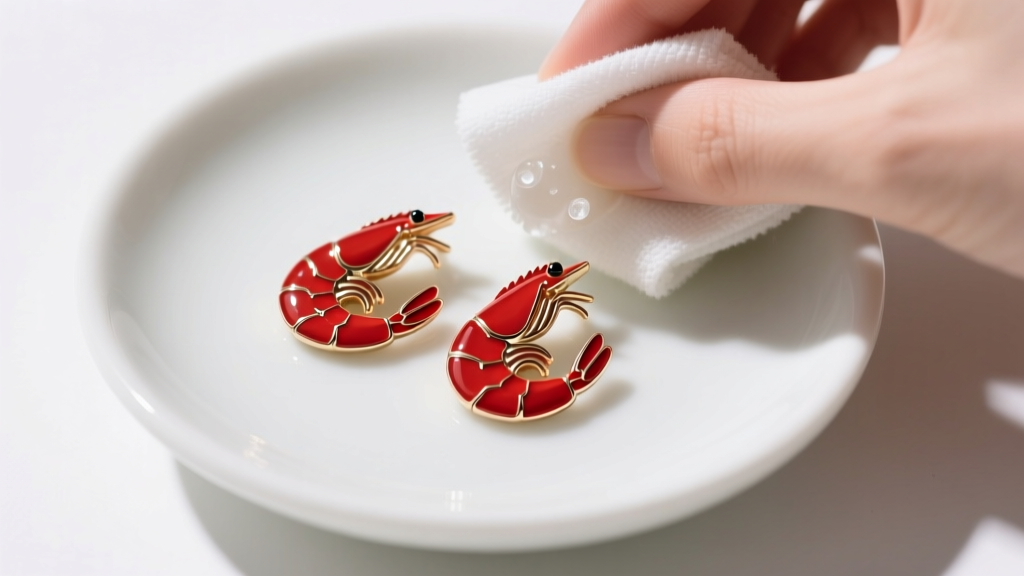
Cleaning Enameled and Painted Shrimp Earrings
- Step 1: Mix three drops of pH-neutral dish soap (like Dawn) into a bowl of lukewarm distilled water. Avoid hot water, which can expand the brass base and crack the enamel overlay.
- Step 2: Dip a soft-bristled baby toothbrush into the solution and gently agitate the crevices between the shrimp's tail segments.
- Step 3: Rinse briefly under a slow stream of cool water and immediately pat dry with a lint-free microfiber cloth. Never let enameled jewelry air dry, as water spots will permanently etch into the glossy finish over time.
Cleaning Resin and Acetate Shrimp Earrings
Never use isopropyl alcohol, hand sanitizer, or commercial jewelry dips on resin or acetate. These chemicals cause a chemical reaction that leads to clouding, micro-fractures, and irreversible yellowing. Instead, wipe resin shrimp earrings down with a slightly damp cloth and a dab of mineral oil to restore their translucent luster. For deep cleaning, the Jewelers of America recommends using specialized, non-ammonia plastic cleaners designed for acrylics.
Troubleshooting Common Shrimp Earring Failures
Novelty jewelry often suffers from specific structural failure modes due to its unconventional geometry. Here is how to troubleshoot and repair the most common issues.
The 'Snag and Bend' Hook Deformation
Because shrimp antennae and legs protrude outward, these earrings catch on hair and clothing frequently. This usually results in the ear wire bending outward at a 45-degree angle. The Fix: Do not use metal pliers to bend the wire back, as this will mar the finish and work-harden the metal until it snaps. Use nylon-jaw pliers to gently coax the wire back into its original curve. If the wire is sterling silver, it will bend easily; if it is brass, apply gentle, sustained pressure rather than quick jerks.
Resin Yellowing and Cloudiness
Cheap, mass-produced resin shrimp earrings often turn a sickly yellow after a few months of sun exposure. This is caused by the breakdown of the epoxy polymers under UV light. The Fix: While you cannot reverse deep UV yellowing, you can polish out surface cloudiness caused by skin oils. Apply a microscopic amount of automotive headlight polishing compound to a cotton swab and buff the resin in circular motions. Wipe clean and seal with a micro-thin layer of clear, UV-resistant nail polish to halt further degradation.
Enamel Chipping on the Tail Fan
The tail fan is the most exposed and fragile part of a shrimp dangle. If a chip occurs, the exposed brass underneath will quickly oxidize and turn green against your skin. The Fix: Clean the chipped area with a cotton swab dipped in white vinegar to neutralize the oxidation. Once dry, carefully fill the chip with a matching shade of glass enamel paint or high-quality model-making acrylic. Seal the repair with a single coat of clear jewelry-grade epoxy resin to prevent moisture from reaching the brass core.
Expert Insight: 'When storing statement shrimp earrings, never toss them loosely into a jewelry box. The protruding legs and antennae will inevitably become tangled with chain necklaces, leading to bent wires and chipped enamel. Always store them flat in individual, anti-tarnish flannel pouches or hung from a dedicated tiered earring organizer.'
By understanding the material science, weight distribution, and specific maintenance requirements of your shrimp earrings, you can confidently wear these conversation-starting pieces without compromising your piercing health or the longevity of the jewelry. Whether you are pairing a delicate silver shrimp stud with a tailored blazer or rocking oversized resin drops at a summer festival, proper care ensures your seafood-inspired style remains flawless.


