How to Choose and Style Diamond Pear Drop Earrings
Learn how to select, style, and care for diamond pear drop earrings. Expert tips on face shapes, L/W ratios, V-prongs, and maintenance.

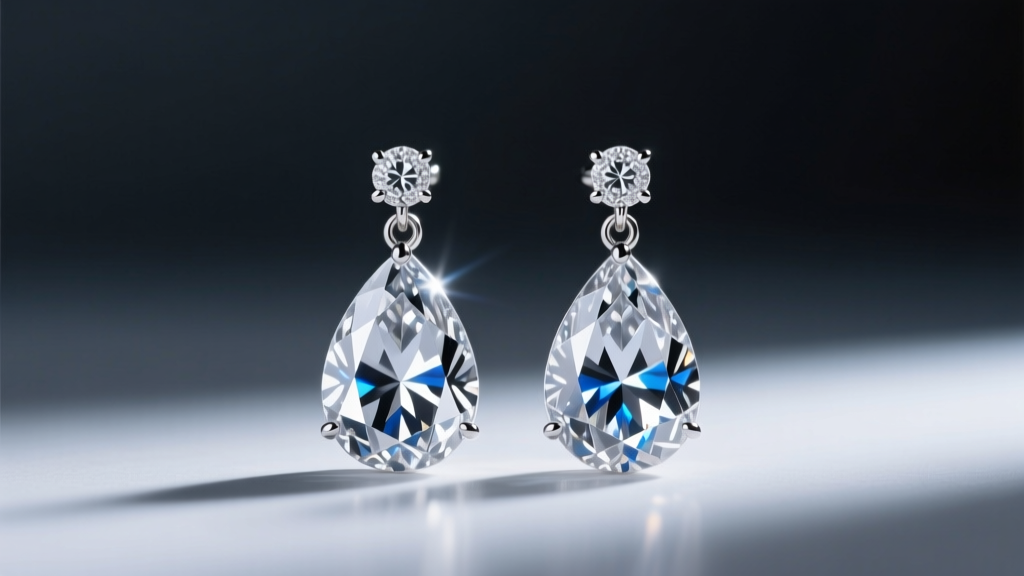
The pear-shaped diamond, often referred to as the teardrop cut, is a masterclass in optical brilliance. Combining the rounded belly of a brilliant round cut with the tapered elegance of a marquise, a well-cut pear diamond features 58 facets designed to maximize light return. When translated into diamond pear drop earrings, this unique silhouette offers a level of sophistication that bridges the gap between classic studs and dramatic chandeliers. However, selecting the perfect pair requires more than just picking a carat weight. From understanding the notorious 'bow-tie' effect to matching the drop length to your specific facial geometry, this comprehensive guide will walk you through the exact steps to choose, style, and maintain your teardrop drops.
Step 1: Match the Drop Length to Your Face Shape
Drop earrings naturally draw the eye downward, making them a powerful tool for balancing facial proportions. The length and width of the pear diamond will dictate the visual effect.
Round and Square Faces
If you have a round or square face shape, your goal is to create the illusion of length and soften angular jawlines. Opt for diamond pear drop earrings that hang at least 1.5 inches below the earlobe. The elongated, tapered point of the pear cut should face downward to visually stretch the neck and narrow the cheeks. Avoid wide, short drops that end exactly at the jawline, as these will emphasize width.

Oval and Heart Faces
Oval faces are naturally balanced and can pull off almost any proportion of pear drop earring. For heart-shaped faces—characterized by a wider forehead and a narrow, pointed chin—choose pear drops that feature a slightly wider 'belly' or are set in a delicate halo. The added width at the bottom of the earring will beautifully balance a narrow chin. Keep the drop length moderate (around 1 inch) to avoid over-elongating an already tapered lower face.
Step 2: Select the Ideal Diamond Specifications
Unlike round brilliants, pear-shaped diamonds do not have a universally standardized cut grade from gemological laboratories. You must evaluate the proportions yourself, paying strict attention to the length-to-width (L/W) ratio and the presence of light obstructions.
Mastering the Length-to-Width Ratio
The L/W ratio determines whether your teardrop looks delightfully plump or severely stretched. According to GIA's comprehensive guide on pear-shaped diamonds, personal preference plays a role, but specific ratios yield the most balanced light performance for drop earrings.
| Length-to-Width Ratio | Visual Appearance | Best Earring Application |
|---|---|---|
| 1.30 - 1.44 | Wider, 'chubby' teardrop | Stud-style drops, minimal dangle, halo settings |
| 1.45 - 1.75 | Classic, balanced pear | Traditional drop earrings, maximum brilliance |
| 1.76 - 2.00 | Elongated, slender | Dramatic long-line drops, Art Deco designs |
Checking for the Bow-Tie Effect
The bow-tie effect is a dark, bow-tie-shaped shadow that stretches across the center width of fancy-shaped diamonds. It occurs when light leaks out of the pavilion due to improper facet alignment. When inspecting diamond pear drop earrings, view them under diffused, natural lighting. A slight bow-tie is inevitable in pear cuts, but it should never be so prominent that it creates a stark black void across the stone's belly.
Step 3: Choose the Right Setting and Metal
The structural integrity of your earrings is just as critical as the diamond's 4Cs. The anatomy of a pear diamond includes a highly vulnerable culet (the pointed tip). If this point is struck against a hard surface, the diamond can chip or cleave entirely.
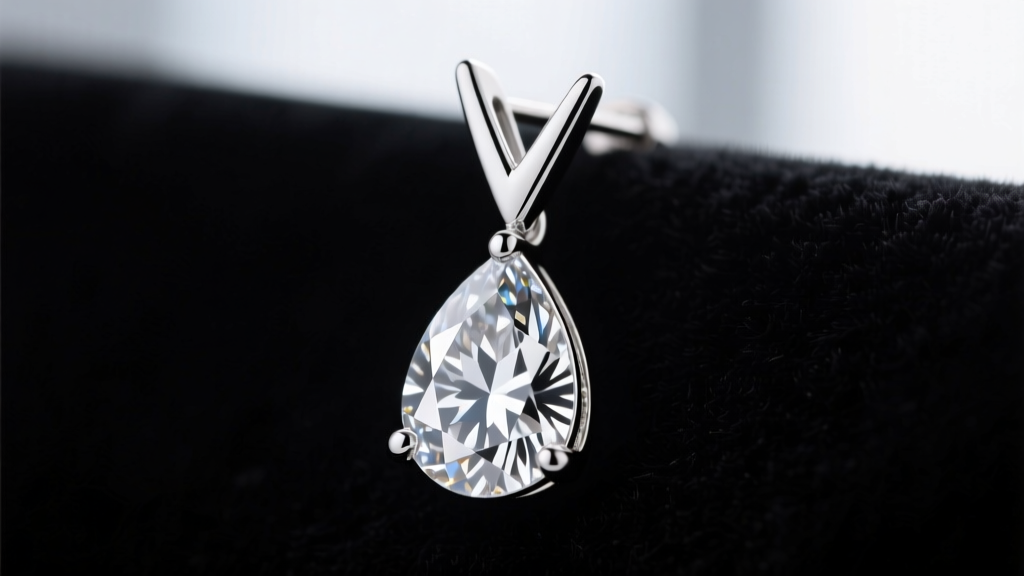
The Non-Negotiable V-Prong
Never purchase pear drop earrings that secure the pointed tip with a standard rounded prong. You must ensure the setting utilizes a V-prong at the tip. A V-prong wraps around the sharp edge in a protective metal casing, absorbing impact and shielding the most fragile part of the stone. For the rounded belly, standard rounded prongs (usually three or four) are perfectly adequate and allow maximum light entry.
Metal Selection: Platinum vs. White Gold
For fine diamond drop earrings, the metal must provide secure tension over decades of wear.
- 950 Platinum: The ultimate choice for security. Platinum is dense, hypoallergenic, and does not wear away over time. When scratched, the metal merely displaces, keeping the prongs tight against the diamond.
- 18k White Gold: A more budget-friendly option that offers a bright, reflective backdrop for colorless diamonds (D-F grades). However, white gold requires rhodium plating every 12 to 18 months to maintain its stark white color, and the prongs can wear thin over a decade of heavy use.
Step 4: Coordinate with Necklines and Occasions
Styling diamond pear drop earrings requires an understanding of negative space and clothing architecture. Because the pear shape is inherently directional and elongated, it interacts heavily with the neckline of your garment.
Strapless and Off-the-Shoulder
These necklines expose the collarbone and upper chest, providing a blank canvas. This is the ideal scenario for dramatic, elongated diamond pear drops (1.5 to 2.5 inches in length). The exposed skin allows the earrings to act as the focal point without competing with fabric ruffles or collars.
V-Neck and Plunging Necklines
A V-neck naturally creates a downward visual arrow. If you pair this with long, slender pear drops, the effect can look overwhelming and overly aggressive. Instead, opt for shorter, wider pear drops (L/W ratio around 1.40) or pear-shaped studs that sit flush on the lobe to provide sparkle without elongating the torso excessively.
High Necklines and Turtlenecks
Fabric that sits high on the neck can easily catch on the swinging point of a drop earring, risking damage to both the garment and the diamond's setting. If you must wear drops with a high collar, choose leverback closures that keep the diamond close to the earlobe, minimizing the swing radius.
Step 5: Secure and Maintain Your Drops
Drop earrings endure more kinetic stress than studs or hoops due to their swinging nature. Proper maintenance ensures the diamonds remain secure and brilliant. As highlighted in the GIA Diamond Buying Guide, regular inspection of the setting is paramount for high-value jewelry.
The 6-Month Prong Check
Because of the swinging motion, the post and the V-prong are subjected to micro-tensions every time you turn your head or brush your hair. Every six months, take your earrings to a bench jeweler to have the V-prong tightened and the earring post checked for microscopic bends or solder fractures.
Safe Cleaning Protocols
While ultrasonic cleaners are excellent for removing trapped oils from the pavilion facets, they can be dangerous for pear-shaped diamonds. If your diamond has a 'feather' inclusion (a small internal fracture) located near the pointed tip, the high-frequency vibrations of an ultrasonic cleaner can cause the feather to expand, potentially cracking the stone.
The Safe Cleaning Method:
- Fill a small bowl with warm water and a few drops of mild, ammonia-free dish soap.
- Let the diamond pear drop earrings soak for 15 minutes to loosen sebum and cosmetics.
- Use a soft-bristled baby toothbrush to gently scrub the back of the diamond (the pavilion), where oils accumulate and dull the brilliance.
- Rinse under lukewarm running water, ensuring the drain is securely plugged.
- Pat dry with a lint-free microfiber cloth, avoiding paper towels which can leave microscopic scratches on the metal setting.
By meticulously evaluating the cut proportions, insisting on protective V-prong settings, and matching the drop length to your unique anatomy, you can secure a pair of diamond pear drop earrings that offer unparalleled elegance and enduring structural integrity.


