How to Take Off Earrings Safely and Preserve Jewelry Value
Learn how to take off earrings safely without bending posts or losing gems. Expert tips on removing stuck backs and preserving fine jewelry value.

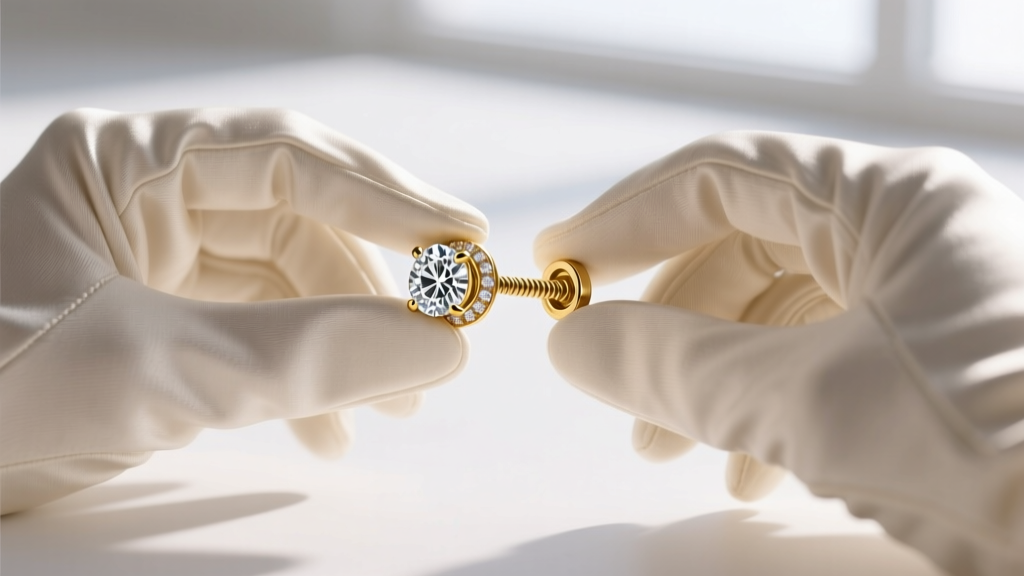
Learning how to take off earrings might seem like a trivial daily task, but when fine jewelry is involved, improper removal is one of the leading causes of preventable damage. From bending delicate 20-gauge gold posts to stripping microscopic screw threads, the physical act of removing your earrings carries hidden financial risks. As a jewelry value assessor, I frequently see clients incur hundreds of dollars in repair bills simply because they forced a stuck backing or yanked a hinged clicker at the wrong angle.
This guide approaches earring removal through the lens of budget and value preservation. We will break down the exact mechanics of different backing types, the material science of why certain posts bend, and the most cost-effective troubleshooting methods to protect your investment.
The Hidden Financial Costs of Forcing Stuck Earrings
When you purchase fine jewelry, you are investing in precious metals and gemstones. However, the structural integrity of an earring is often concentrated in its thinnest component: the post or wire. Standard lobe earrings are typically crafted in 20-gauge (0.81mm) or 18-gauge (1.02mm) thicknesses.
- 18k Gold (75% pure gold): Highly valued for its rich color and hypoallergenic properties, but inherently soft. A 20-gauge 18k gold post can easily bend or snap if subjected to lateral pressure during removal.
- 14k Gold (58.5% pure gold): Stiffer and more durable, but still susceptible to thread-stripping if cross-threaded screw backs are forced.
- Grade 23 Titanium (Ti-6Al-4V): Exceptionally strong and rigid. While the post won't bend, forcing a stuck titanium screw back can strip the internal threads of the backing, rendering a $40 replacement backing necessary.
Furthermore, aggressively pulling on a friction back can catch on the prongs of a diamond or gemstone setting. If a prong is pulled back, you risk losing the stone entirely—a catastrophic loss of value that far exceeds the cost of professional removal.
Step-by-Step: How to Take Off Earrings by Backing Mechanism
Different earring styles require distinct removal techniques to preserve their structural integrity and resale value.
Friction Push Backs (Butterfly Backs)
The most common and least secure backing. To remove them safely, do not simply pull the backing straight off while holding the front stud. This puts lateral stress on the post. Instead, pinch the backing between your thumb and index finger, and gently twist it back and forth while applying slow, steady outward pressure. This wiggling motion navigates the notches on the post without bending the metal.
Threaded Screw Backs
Screw backs are an excellent investment for security, especially for high-value diamond studs. To remove, grip the front of the earring firmly and rotate the backing counter-clockwise. If you encounter resistance, stop immediately. Forcing a cross-threaded screw back will strip the microscopic threads, requiring a jeweler to re-tap the post or solder on a new one (typically a $45–$85 repair).
Hinged Clickers and Segment Rings
Common in cartilage piercings and hoops, clickers feature a delicate hinge and a tension-based snap closure. Never pull the two ends apart laterally. Locate the nearly invisible seam, insert your fingernail into the groove, and gently pry upward to release the tension pin. Pulling the hoop apart will warp the circular geometry, ruining the clicker's closure mechanism.
Troubleshooting Stuck Earrings: A Value-Preservation Matrix
When an earring refuses to budge, panic often leads to destructive force. Use this matrix to assess the situation and choose the most cost-effective, safe removal method.
| Issue | Root Cause | Safe Removal Technique | Estimated Repair Cost if Forced |
|---|---|---|---|
| Stuck Friction Back | Dried sebum, dead skin, or hair tangled around the post notches. | Soak the earlobe in warm saline for 5 minutes to dissolve debris, then twist gently. | $25 - $50 (Straightening or laser-welding a bent post) |
| Frozen Screw Back | Cross-threading or microscopic calcium/sweat buildup in the threads. | Apply a drop of sterile mineral oil to the threads, wait 10 minutes, and use a rubber grip pad for counter-torque. | $45 - $85 (Re-tapping threads or replacing the post) |
| Jammed Clicker Hinge | Soap scum or lotion trapped inside the tension joint. | Use a soft-bristled toothbrush with warm water to clean the seam, then gently pry with a wooden toothpick. | $30 - $60 (Hinge realignment or complete hoop replacement) |
Lubricants and Solvents: Protecting Porous Gemstones
When mechanical removal fails, lubrication is the next logical step. However, the chemicals you use to loosen a stuck earring can severely depreciate the value of certain gemstones. According to the Gemological Institute of America (GIA), organic and porous gemstones require highly specific care.
The Golden Rule of Jewelry Lubrication: Never use rubbing alcohol, acetone, or harsh chemical solvents to loosen a stuck earring. While safe for diamonds and sapphires, these solvents will strip the natural oils from pearls, dry out opals (causing crazing and cracking), and permanently discolor porous stones like turquoise and lapis lazuli.
For safe, value-preserving lubrication, use sterile saline wound wash or a tiny drop of food-grade mineral oil. Apply the lubricant directly to the post using a cotton swab, avoiding the gemstone setting entirely.
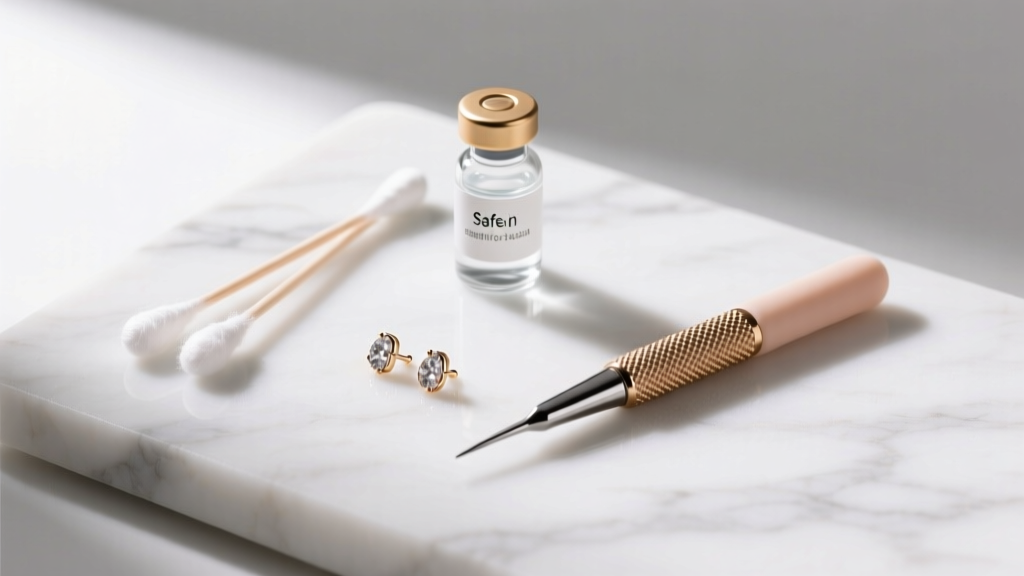
If you are dealing with a cartilage piercing that has swollen around a 16-gauge (1.29mm) or 14-gauge (1.63mm) flat-back labret, the Association of Professional Piercers (APP) strongly recommends using a warm sterile saline compress to reduce tissue inflammation before attempting to unscrew the front bead. Forcing a bead through swollen tissue can cause micro-tears, leading to hypertrophic scarring and compromising the future viability of the piercing.
The Break-Even Point: When to Seek Professional Removal
At what point does the DIY approach become a financial liability? Assessing the break-even point between your time, the risk of damage, and professional fees is crucial for high-value items.
- Visit a Professional Piercer (Cost: $15 - $30 or free): If you have a stuck threadless push-pin or an internally threaded flat back in a cartilage piercing, visit an APP-certified piercer. They possess specialized hemostats and taper tools designed to grip jewelry without scratching the mirror finish. This is the most cost-effective route for body jewelry.
- Visit a Bench Jeweler (Cost: $35 - $75): If a fine jewelry screw back is completely stripped, or a friction back is wedged against a delicate pearl setting, a jeweler can use a micro-torch or specialized cutting tools to remove the backing without harming the stone. Paying $50 for a jeweler's time is a sound investment to protect a $2,000 pair of diamond studs.
- Visit the ER or Urgent Care (Cost: $150 - $500+): If the earlobe is infected, swollen over the earring back (embedding), or torn, seek medical attention immediately. Medical professionals will prioritize your health over the jewelry and will likely cut the earring off with wire snips, destroying the piece entirely. To avoid this massive financial and physical cost, address tightness or swelling at the very first sign of trouble.
Upgrading Your Backings: An Investment in Security and Ease
If you frequently struggle with how to take off earrings safely, the most proactive budget decision you can make is upgrading your backing mechanisms. Standard butterfly backs are cheap to manufacture but offer poor security and are prone to trapping debris.
Consider investing in aftermarket precision backs like La Poussière or Comfy Earrings. These brands utilize silicone-lined sleeves or specialized locking mechanisms that slide on and off smoothly without requiring intense grip strength or twisting. While a set of high-end locking backs may cost between $30 and $60, they drastically reduce the wear-and-tear on your earring posts, preserve the structural integrity of your fine jewelry, and provide peace of mind that your valuable gemstones will not be lost to a failed friction back.
Ultimately, treating the removal process with the same care and attention as the purchase itself ensures your jewelry retains its beauty, structural integrity, and financial value for decades to come.


