The Engineering of Huge Hoop Earrings: Weight & Gauge Guide
Discover the engineering behind huge hoop earrings. We analyze wire gauges, material density, weight limits, and fistula health for oversized hoops.
The Physics of Torque and Lobe Integrity
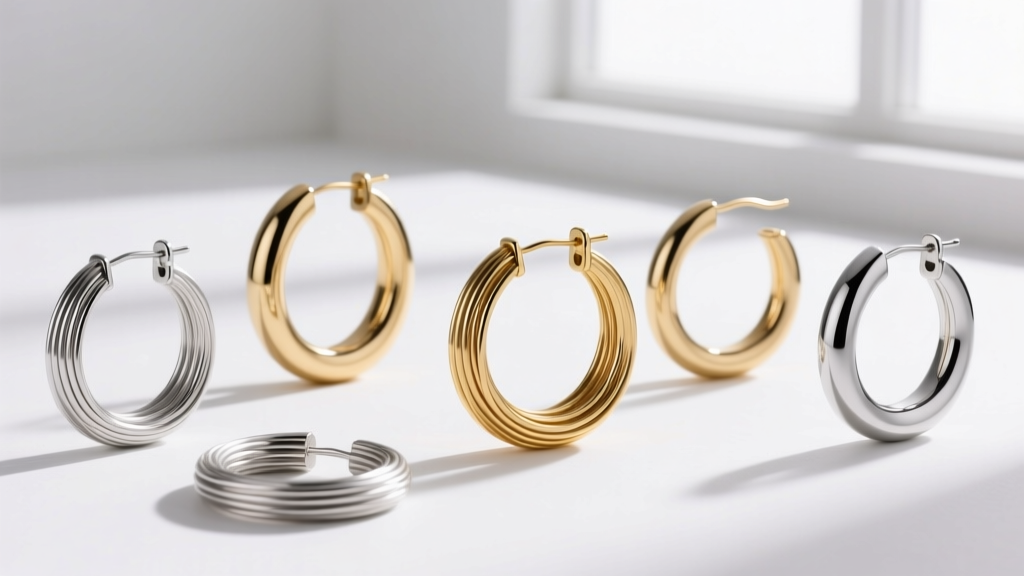
When jewelry enthusiasts and designers discuss huge hoop earrings, the conversation often revolves around bold aesthetics, face-framing proportions, and runway trends. However, from a manufacturing and biomechanical perspective, crafting and wearing hoops that exceed 70mm in diameter introduces complex engineering challenges. A hoop earring is essentially a cantilevered beam anchored to a soft tissue fistula. As the diameter increases, the physics of leverage, material density, and structural integrity become the defining factors between a masterpiece of jewelry design and a recipe for lobe trauma.
The primary mechanical enemy of the oversized hoop is torque. Torque is calculated as force multiplied by the distance from the pivot point. In a standard 20mm huggie or small hoop, the mass of the metal rests millimeters from the earlobe. In a 120mm hoop, the center of gravity extends far below the piercing. This creates significant downward and rotational leverage. When a large hoop catches on a sweater, a seatbelt, or even long hair, the sheer force applied to the fistula is multiplied exponentially. According to guidelines established by the Association of Professional Piercers (APP), excessive localized pressure on a healing or mature fistula can lead to tissue migration, rejection, or the dreaded "cheese-cutter effect," where thin, heavy jewelry slowly slices through the skin over time.
Metallurgical Density and Weight Reduction
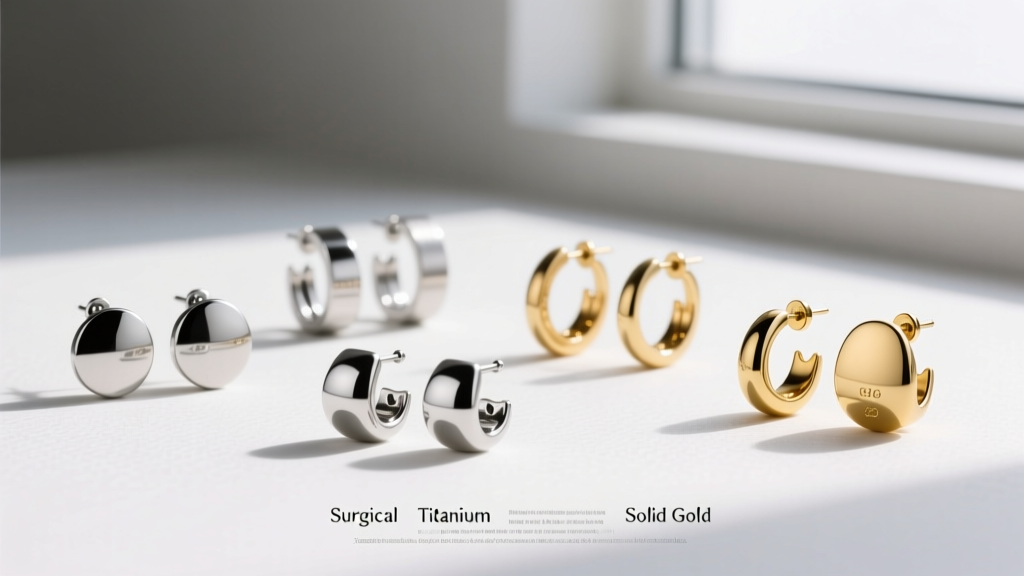
To combat gravitational pull and preserve lobe health, material selection is paramount. The specific gravity (density) of the chosen metal dictates the baseline weight of the earring. While solid 14k or 18k gold is the industry standard for fine jewelry, its high density makes it highly problematic for huge hoop earrings unless specific structural modifications are made.
| Material | Density (g/cm³) | Yield Strength | Best Application for Huge Hoops |
|---|---|---|---|
| 6061 Aluminum | 2.70 | Low-Medium | Avant-garde, ultra-lightweight statement pieces (requires anodizing) |
| Grade 23 Titanium (Ti-6Al-4V) | 4.43 | Very High | Hypoallergenic, durable everyday oversized hoops |
| 316L Surgical Steel | 8.00 | High | Budget-friendly heavy hoops (requires healthy, mature fistulas) |
| 14k Yellow Gold (Solid) | ~13.50 | Medium | Only viable if cast as hollow tubing or kept under 80mm diameter |
For hoops exceeding 90mm, master jewelers frequently turn to Grade 23 Titanium or aerospace-grade aluminum. Titanium offers an exceptional strength-to-weight ratio and is entirely biocompatible, eliminating the risk of nickel allergies that can cause contact dermatitis on stretched earlobes. When gold is strictly required by the client, manufacturers utilize hollow tubing techniques or electroforming to create a voluminous exterior with a hollow interior, reducing the overall mass by up to 60%.
Wire Gauge and Structural Failure Modes
The wire gauge—the thickness of the metal passing through the earlobe—is the second most critical variable in the engineering of huge hoop earrings. In the American Wire Gauge (AWG) system, a lower number indicates a thicker wire. Standard lightweight hoops often utilize 18-gauge (1.0mm) or 16-gauge (1.2mm) wire. However, applying these gauges to a 100mm+ diameter hoop guarantees structural failure.
The Ovaling Effect
When a wearer opens a large hoop by twisting it laterally, the metal undergoes torsional stress. If the wire is too thin (e.g., 18g), the yield strength of the metal is easily surpassed, causing the perfectly circular hoop to warp into an oval. Once a hoop loses its circular geometry, the tension required to snap the clasp shut is misaligned, leading to a compromised closure and a high risk of the earring falling out and getting lost.
- 18 Gauge (1.0mm): Strictly prohibited for hoops over 60mm. High risk of permanent deformation.
- 14 Gauge (1.6mm): The minimum acceptable thickness for hoops between 70mm and 90mm. Provides adequate rigidity while remaining comfortable for standard lobe piercings.
- 12 Gauge (2.0mm) to 10 Gauge (2.5mm): Mandatory for hoops exceeding 100mm. This thickness resists torsional warping and distributes the weight across a wider surface area inside the fistula, reducing the cheese-cutter effect.
Manufacturing Techniques: CNC vs. Cast
The method used to create the earring's components drastically affects its longevity. As of 2026, advanced 5-axis CNC milling has largely replaced traditional casting for the hinge and clasp components of luxury oversized hoops. Casting can introduce microscopic porosity and air bubbles within the metal, creating brittle failure points at the exact location where the earring experiences the highest mechanical stress: the hinge. CNC-milled hinges from solid billets of titanium or gold allow for tolerances as tight as 0.02mm, ensuring a seamless snap that will not rattle loose over years of wear. Manufacturing suppliers like Rio Grande have extensively documented the superior fatigue resistance of milled findings over cast ones in heavy-load jewelry applications.
Clasp Engineering for Heavy Loads
The closure mechanism is the weakest link in any hoop earring, but it is especially vulnerable in huge hoop earrings due to the pendulum effect. As the wearer walks, the heavy bottom arc of the hoop swings, generating kinetic energy that travels up the wire and violently impacts the clasp.
Why Continuous Hoops Fail
Continuous hoops (or infinite hoops) rely on the natural tension of the metal wire to hold a thin pin inside a hollow tube. While elegant for small huggies, this tension-based design is catastrophic for large diameters. The swinging motion of a 100mm hoop will easily overcome the friction holding the pin, resulting in the earring opening and dropping silently to the floor.
The Hinged Saddle and Locking Pin
For oversized designs, a hinged saddle clasp with a mechanical locking pin is mandatory. This design features a robust hinge on one side and a precision-machined groove on the other. When closed, a secondary locking mechanism (often a micro-screw or a deep-tension snap) secures the post. This ensures that even if the hoop is pulled downward, the tensile load is transferred to the thick steel or titanium hinge pin rather than the delicate closure seam.
Anatomical Considerations and Best Practices
Even the most perfectly engineered huge hoop earring can cause damage if the wearer's anatomy is not suited for the load. Before investing in oversized statement pieces, consider the following biomechanical checklist:
- Fistula Maturity: Only wear hoops larger than 80mm in piercings that are fully healed and matured (minimum 12-18 months old). Fresh tissue lacks the collagen density to support lateral torque.
- Piercing Angle: The original piercing must be drilled perfectly perpendicular to the angle of the earlobe. An angled fistula will force the thick 12g or 14g wire to bend slightly upon insertion, creating chronic pressure points and localized swelling.
- Lobe Volume: Individuals with smaller, thinner earlobes should avoid solid gold hoops over 70mm. The limited surface area of the fistula cannot distribute the weight effectively, accelerating tissue thinning.
- Nighttime Removal: Never sleep in huge hoop earrings. The lateral pressure of a pillow against a 100mm lever arm can easily tear the earlobe or bend the earring beyond repair.
By respecting the laws of physics, selecting low-density or hollow-structured metals, and demanding thick wire gauges with CNC-milled clasps, you can safely enjoy the dramatic, architectural presence of huge hoop earrings without sacrificing the long-term health of your piercings.