Inlay Earrings Explained: Materials, Styles, and Care Guide
Discover everything about inlay earrings. Learn about bezel vs. channel settings, best gemstone materials, and expert care tips to protect your jewelry.

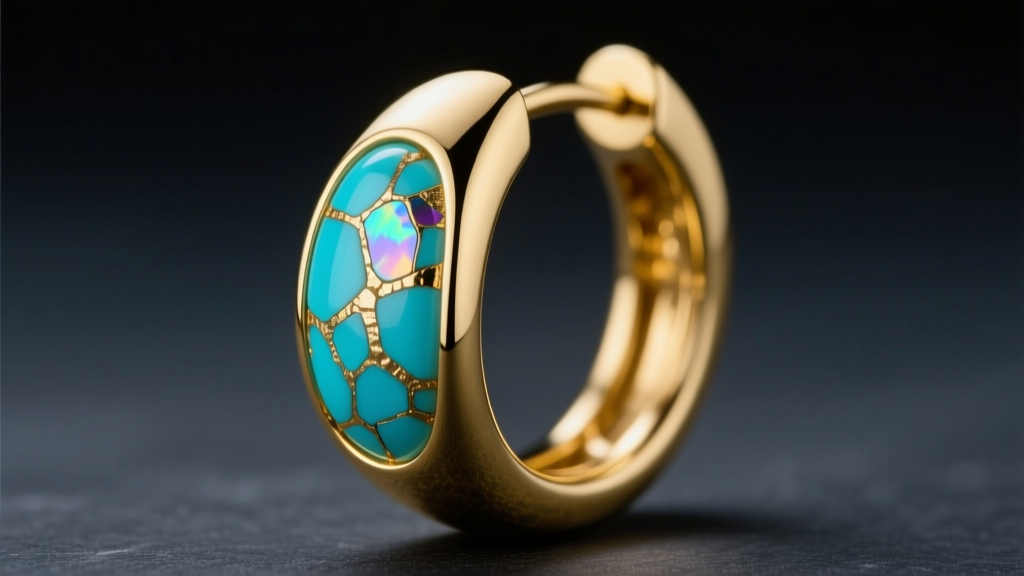
If you have ever been drawn to the smooth, vibrant pop of color in a piece of jewelry without the snagging prongs of traditional stone settings, you have likely been admiring inlay work. Inlay earrings offer a seamless, modern aesthetic that ranges from everyday minimalist studs to bold, artisan-crafted statement hoops. However, not all inlay is created equal. The difference between a piece that lasts a lifetime and one that loses its stone in a month comes down to the setting technique, the base metal, and the adhesive used.
This beginner-friendly guide will decode the craftsmanship behind inlay earrings, helping you understand what you are buying, how to choose the right materials for your lifestyle, and how to care for them properly.
What Exactly Are Inlay Earrings?
In jewelry making, an inlay refers to a technique where a gemstone, shell, or synthetic material is cut and shaped to fit precisely into a recessed cavity within a metal base. Unlike pave or prong settings where the stone sits on top of the metal and is held by claws, inlay stones sit flush with or slightly below the metal surface. The result is a smooth, continuous texture that is highly resistant to snagging on hair or clothing.
According to the Gemological Institute of America (GIA), inlay work has been used for thousands of years, dating back to ancient Egyptian and Mesopotamian jewelry. Today, it is a staple in both high-end fine jewelry and Southwestern artisan designs.
The 3 Main Inlay Techniques Used in Earrings
When shopping for inlay earrings, the way the stone is secured dictates the piece's durability. Here are the three primary methods jewelers use:
1. Bezel Inlay (The Gold Standard)
In a bezel inlay, a thin strip of metal surrounds the perimeter of the stone. The jeweler places the cut stone into the recess and then uses a burnishing tool to fold the metal lip over the edges of the gemstone. This relies on mechanical tension rather than glue, making it the most secure and durable method for solid gemstone inlays.
2. Channel Inlay
Channel inlay features parallel metal walls with the gemstone strips fitted snugly between them. This technique is often used for linear designs, such as rectangular drop earrings or the outer edges of hoop earrings. The stones are usually held in place by a combination of precise friction-fitting and specialized jeweler's epoxy.
3. Flush or Gypsy Inlay
Commonly seen in smaller stud earrings, flush inlay involves drilling a hole directly into the metal, inserting a precisely cut stone, and burnishing the surrounding metal over the stone's girdle. It creates a sleek, low-profile look that is perfect for cartilage piercings or second-hole studs.
Material Deep Dive: Solid vs. Crushed vs. Synthetic
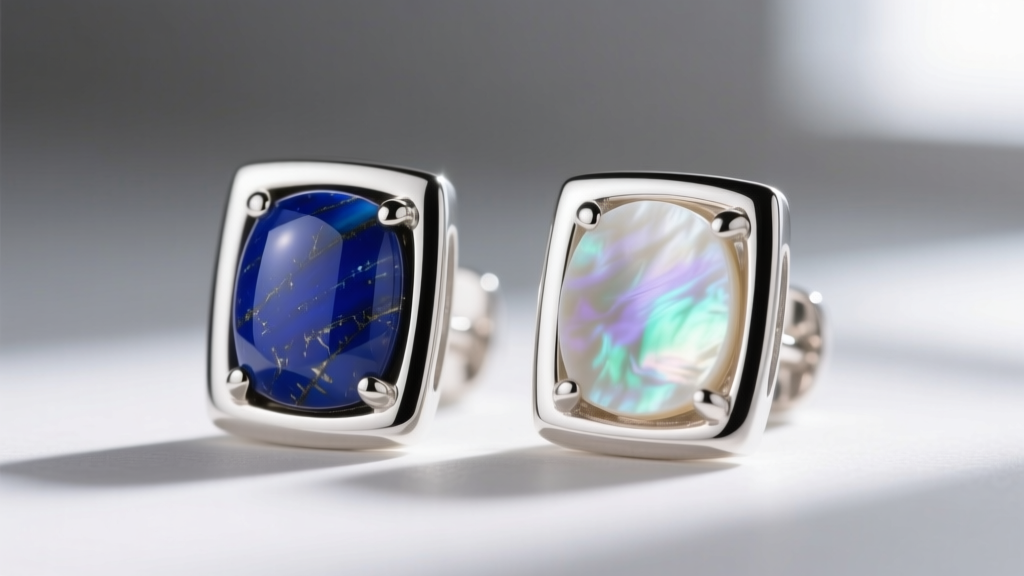
The material inside the inlay drastically affects the price, durability, and care requirements of your earrings. Here is a breakdown of the most common inlay materials you will encounter on the market.
| Material Type | Examples | Durability (Mohs) | Pros & Cons | Typical Price Range |
|---|---|---|---|---|
| Solid Gemstone | Turquoise, Lapis Lazuli, Opal | 5.0 - 6.5 | Highest value; natural variations; requires careful maintenance to prevent scratching or crazing. | $150 - $600+ |
| Crushed Stone | Crushed Turquoise, Malachite | N/A (Bound by epoxy) | Vibrant, uniform look; relies heavily on adhesive; can discolor if exposed to harsh chemicals. | $40 - $150 |
| Organic Shell | Mother of Pearl, Abalone | 2.5 - 4.0 | Stunning iridescence; very soft and prone to scratching; highly sensitive to acids and perfumes. | $60 - $250 |
| Synthetic / Lab | Lab-Created Opal, Enamel | 5.5 - 7.0 | Extremely durable; consistent color; lacks the natural inclusions of earth-mined stones. | $50 - $200 |
For beginners looking for everyday wear, lab-created opal (often branded as Gilson opal) is an exceptional choice. Natural opals contain water and can crack (craze) in dry environments or under heat, whereas synthetic opals are structurally stable and much more resistant to chipping.
Choosing the Right Base Metal
The metal holding your inlay is just as important as the stone itself. Because inlay earrings require a precisely milled cavity, the metal must be durable enough to hold its shape without warping.
- 14k or 18k Solid Gold: The premier choice for fine jewelry. Gold is malleable enough for jewelers to burnish tightly over solid stones, creating a secure mechanical lock.
- ASTM F136 Implant-Grade Titanium: If you have sensitive earlobes or are buying for unhealed cartilage piercings, titanium is essential. It is entirely nickel-free and biocompatible. However, because titanium is incredibly hard, it is difficult to burnish, meaning titanium inlay earrings often rely on high-grade aerospace epoxies rather than folded bezels.
- Sterling Silver (925): A classic, affordable option. Silver tarnishes over time, which can darken the metal around light-colored inlays like Mother of Pearl, requiring regular polishing.
Expert Warning: Avoid gold-plated brass or copper bases for inlay earrings. These base metals oxidize and expand over time when exposed to sweat and humidity. This microscopic expansion can literally push the inlay stone out of its cavity.
The Golden Rules of Inlay Earring Care
Caring for inlay earrings requires a departure from standard jewelry cleaning routines. The biggest mistake beginners make is treating inlay pieces like solid diamond or sapphire jewelry.
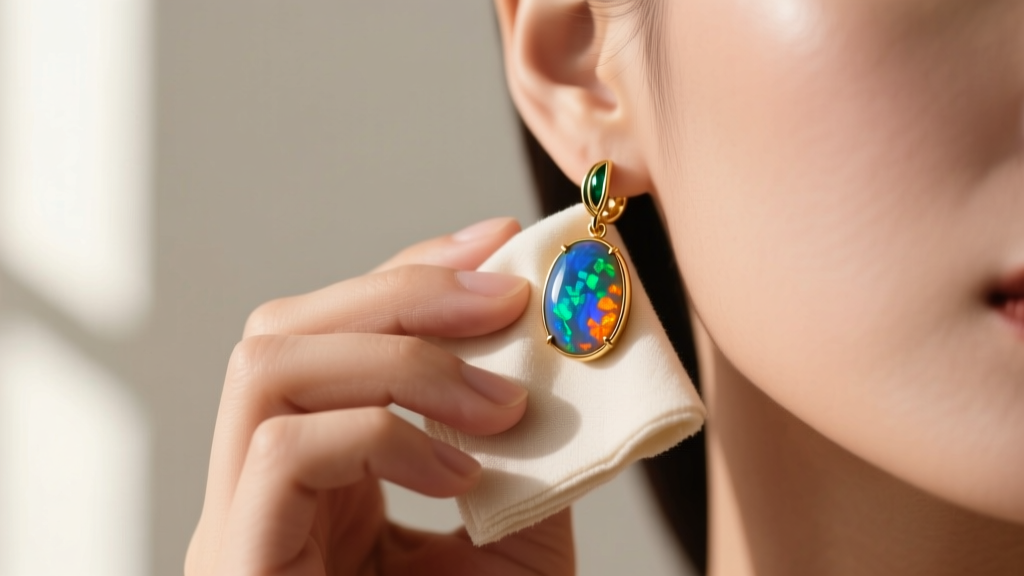
Never put inlay earrings in an ultrasonic cleaner. The high-frequency vibrations can shatter brittle stones like turquoise and will instantly shake loose any crushed stone held by epoxy.
To maintain your inlay earrings, follow this strict care protocol:
- Keep Them Dry: Porous stones like turquoise and malachite will absorb water, lotions, and sweat, leading to permanent color shifts. Always remove them before showering or swimming.
- Clean Gently: Use a dry, soft microfiber cloth to wipe away skin oils. If a deeper clean is needed, use a barely damp baby toothbrush with a drop of mild dish soap, avoiding direct scrubbing on the stone-to-metal seam.
- Avoid Chemicals: Hairspray, perfume, and chlorine are the enemies of organic inlays like Abalone and Mother of Pearl. The Jewelers of America strongly advises putting jewelry on only after cosmetics and perfumes have fully dried.
- Check the Adhesive: If you own crushed inlay earrings, inspect the surface every six months. If you see tiny pits or bubbles, the epoxy is degrading. A local jeweler can easily clean the cavity and re-pour a fresh layer of two-part jeweler's epoxy (such as Epoxy 330) for a minimal fee.
Pricing Guide: What Should You Expect to Pay?
Understanding the pricing tiers will help you spot genuine quality and avoid overpaying for mass-produced pieces.
- $25 - $75 (Fashion / Entry Level): Expect crushed stone or synthetic materials set in gold-plated brass or sterling silver. Great for trend-driven styles, but expect a lifespan of 1 to 3 years with regular wear.
- $100 - $350 (Bridge / Artisan): Solid semi-precious stones (like Sleeping Beauty Turquoise or Lapis) set in solid 14k gold or high-quality sterling silver using bezel or channel techniques. These are heirloom-quality pieces if cared for properly.
- $400 - $1,500+ (Fine / High-End): Precision-cut natural opals, custom patterns, and master-level flush settings in 18k gold or platinum. At this tier, the stone cutting is done entirely by hand to ensure zero gaps between the gem and the metal.
By understanding the mechanics of the setting, the properties of the gemstone, and the integrity of the base metal, you can confidently invest in inlay earrings that will remain a vibrant, snag-free staple in your jewelry collection for years to come.


