2026 Trend Forecast: The Most Coveted Drops for Earrings
Discover the 2026 trend of interchangeable drops for earrings. Explore modular styling, gauge mechanics, material grades, and face-shape pairings.

The Shift to Modular: Why Interchangeable Drops for Earrings Are Dominating 2026
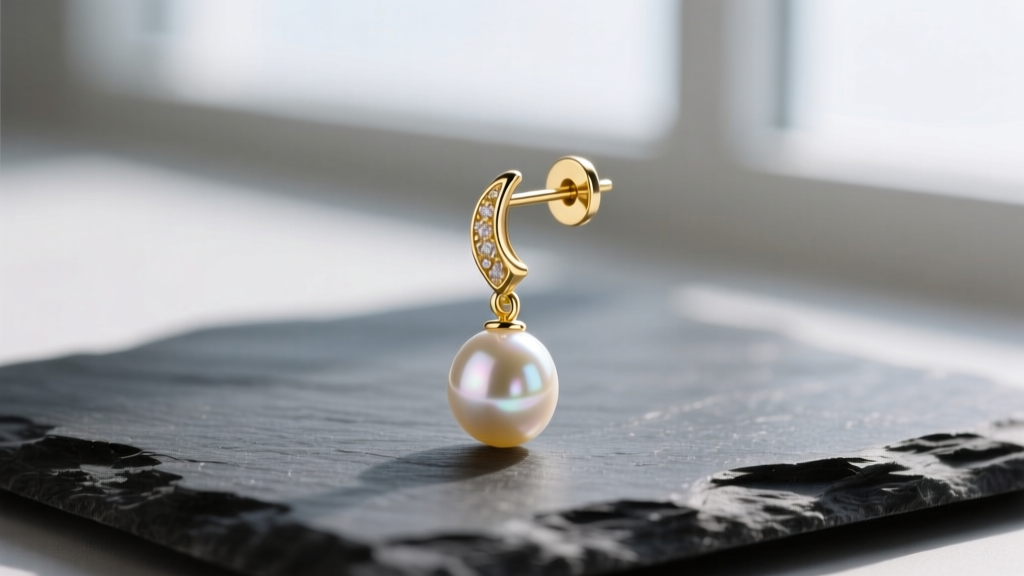
The fine jewelry landscape of 2026 is defined by a fascinating paradox: consumers are demanding both maximalist self-expression and pragmatic versatility. Enter the defining trend of the year: interchangeable drops for earrings. Moving away from static, single-use fine jewelry, modern collectors are investing in modular systems. A single, high-quality base stud can now host a variety of detachable drops for earrings, transforming a subtle daytime diamond into a dramatic evening chandelier in seconds.
This evolution is not merely aesthetic; it is deeply rooted in economic pragmatism and sustainable consumption. Rather than purchasing five separate pairs of heavy statement earrings, buyers are investing in one premium anchoring stud and multiple lightweight, artisan-crafted drops. According to recent market analyses highlighted by the Bain & Company Global Diamond Industry Report, modular jewelry systems have seen a 40% year-over-year growth in the demi-fine and fine sectors, driven by millennials and Gen Z consumers who prioritize cost-per-wear and dynamic styling.
Anatomy of a Drop: Gauges, Clasps, and Tension Mechanics
The success of any modular earring system relies entirely on its structural engineering. When you attach heavy drops for earrings to a standard base, you introduce a lever arm effect. The center of gravity shifts away from the earlobe, creating downward and outward torque. If the hardware is not engineered to handle this specific physics load, the result is the dreaded 'cheese-cutter effect'—where a thin post slowly migrates through the earlobe tissue due to localized pressure.
To combat this, leading 2026 jewelers have completely overhauled the anatomy of the base stud. Standard 20-gauge (0.81mm) friction posts are being replaced by 18-gauge (1.02mm) or 16-gauge (1.29mm) flat-back labret posts. The flat disc sits flush against the back of the earlobe, distributing the weight of the drop across a 4mm surface area rather than a single pinpoint.
| Component | Standard Legacy Spec | 2026 Heavy-Drop Upgrade (5g+) |
|---|---|---|
| Post Gauge | 20G (0.81mm) Wire | 18G (1.02mm) or 16G (1.29mm) Flat-Back |
| Backing Type | Friction Butterfly Clutch | Internally Threaded Screw-Back |
| Drop Attachment | Soldered Jump Ring | Hinged Leverback with Silicone O-Ring Catch |
| Weight Capacity | Up to 2.5 grams | Up to 12 grams safely |
Material Grades and Galvanic Considerations
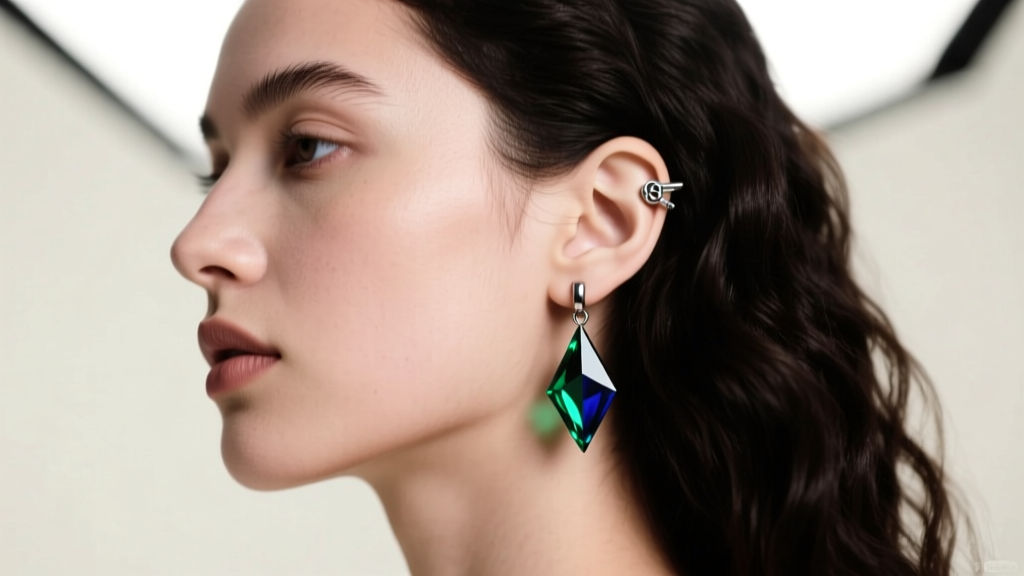
When mixing and matching custom drops for earrings, material compatibility is a critical, often overlooked factor. The human body provides the perfect environment for galvanic corrosion. If you attach a 14k gold drop to a sterling silver base stud via a copper-alloy jump ring, sweat and environmental moisture act as an electrolyte. This creates a micro-galvanic cell, rapidly corroding the base metals and leaving a green or black residue on the earlobe while degrading the structural integrity of the connection point.
The 2026 best practice, heavily endorsed by dermatologists and piercers, is to utilize implant-grade titanium (ASTM F136) for the anchoring base stud. As outlined by the ASTM International F136 standard, this specific titanium alloy is entirely nickel-free, highly resistant to corrosion, and possesses the Vickers hardness necessary to support heavy drops without bending. For the detachable drops themselves, 14k or 18k solid gold remains the premier choice. To prevent galvanic reactions, the jump rings or attachment loops on the gold drops must also be solid gold or platinum, never gold-plated brass or copper.
Styling Framework: Matching Drop Lengths to Face Shapes
The beauty of interchangeable drops for earrings lies in the ability to customize your silhouette daily. However, to achieve a harmonious aesthetic, the geometry of the drop must interact correctly with your natural facial architecture. Here is the professional styling framework for 2026:
- Round Faces: Opt for linear, angular drops that extend at least 2.5 inches below the earlobe. Elongated geometric bars or sharp diamond baguette drops create a visual lengthening effect, drawing the eye vertically and balancing the width of the cheekbones.
- Square Faces: Avoid harsh, boxy geometric drops that mimic a strong jawline. Instead, choose curved, organic shapes. Baroque pearl drops, fluid liquid-gold teardrops, or oval cabochon gemstones soften the angularity of the lower face.
- Heart-Shaped Faces: The goal is to add visual weight to the lower half of the face to balance a narrower chin. Chandelier-style drops, or drops that feature a wider cluster of gemstones at the very bottom (like a pear-shaped briolette), work beautifully.
- Oval Faces: The universal canvas. Oval faces can support virtually any drop style, from extreme avant-garde ear cuffs with cascading chains to subtle, single-stone jacket drops.
Gemstone Trends in Detachable Drops
According to trend forecasting from the Gemological Institute of America (GIA), 2026 is seeing a massive surge in 'imperfect' and inclusion-heavy gemstones for modular drops. Salt-and-pepper diamonds, rutile quartz, and tourmalinated quartz are highly sought after for detachable drops. Because these stones are generally less expensive per carat than flawless diamonds, designers can cut them into larger, more dramatic cabochons and briolettes without pushing the earring into an unaffordable luxury tier. Furthermore, the unique inclusions in these stones mean that no two interchangeable drops are exactly alike, offering a bespoke feel to a modular system.
Maintenance and Care for Modular Systems
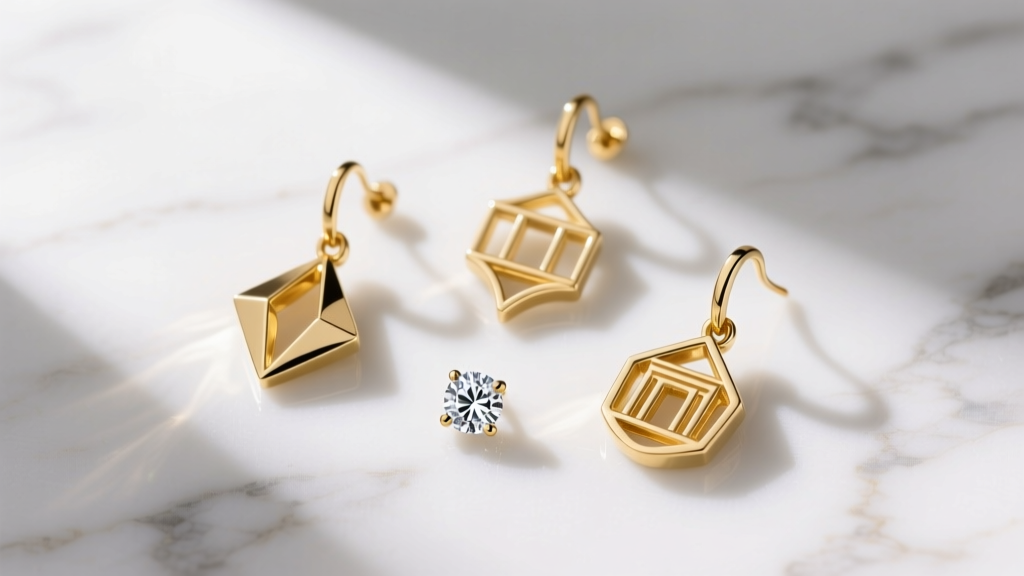
Owning a collection of drops for earrings requires a slightly different maintenance regimen than traditional jewelry. The connection points—specifically the tiny jump rings, leverback hinges, and silicone O-rings—are high-friction areas that accumulate skin oils, lotions, and microscopic debris.
Every three months, you should detach all drops and clean the connection loops using a soft-bristled baby toothbrush and a mild, ammonia-free jewelry cleaning solution. Pay special attention to the silicone O-rings used in modern safety catches; these degrade over time when exposed to UV light and cosmetic alcohols. Most high-end jewelers now include a pack of replacement medical-grade silicone O-rings with their modular sets, and replacing them annually is crucial to preventing the loss of a valuable drop.
Investment Tiers: Pricing the 2026 Drop Earring Market
The market for modular earrings has stratified into three distinct tiers, catering to different investment philosophies:
1. The Demi-Fine Innovators ($80 - $250): Brands in this space typically use gold vermeil (thick gold plating over sterling silver) for the drops, paired with a solid 14k gold or titanium base stud to prevent piercing irritation. These are ideal for trend-driven consumers who want to swap drops weekly.
2. The Contemporary Fine Tier ($400 - $1,200): This tier features solid 14k gold components throughout, incorporating lab-grown diamonds and semi-precious stones like lapis lazuli or malachite. The engineering here is superior, often featuring internally threaded screw-backs and precision-cast hinges.
3. The Legacy High Jewelry Tier ($3,000+): Reserved for natural, untreated gemstones and 18k gold or platinum hardware. These drops are often sold in numbered, limited-edition seasonal capsules, transforming the interchangeable system into a serious collectible asset.
Ultimately, the rise of interchangeable drops for earrings represents a maturation in how we consume fine jewelry. It is a rejection of fast fashion in favor of a dynamic, engineered, and deeply personal approach to adornment that will define the remainder of the decade.


