Isle of Skye Earrings: A Technical Guide to Celtic Metalwork
Explore the technical craftsmanship of Isle of Skye earrings, from Edinburgh silver hallmarks to Scottish agate bezel settings and wire gauges.

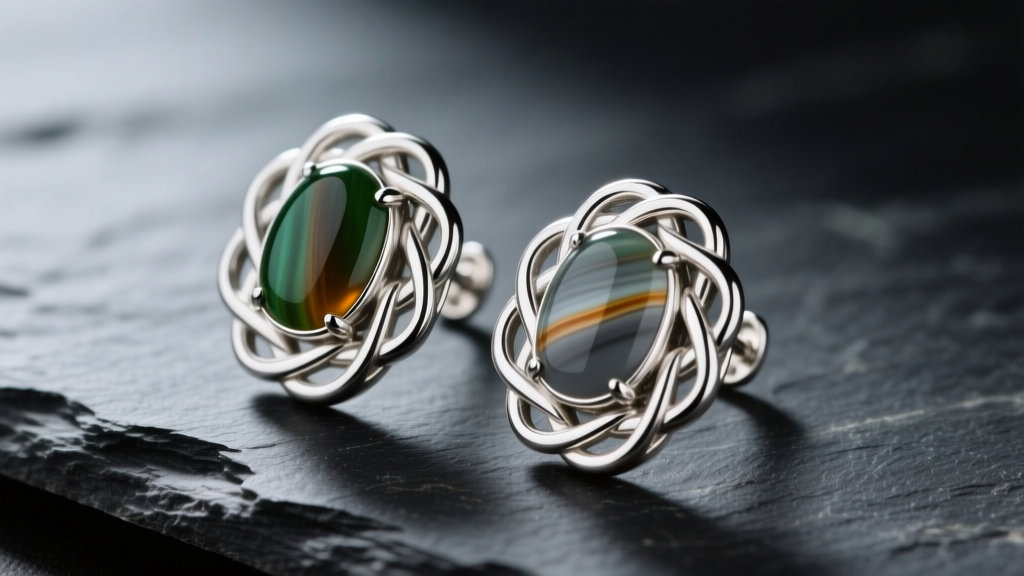
The Anatomy of Authentic Isle of Skye Earrings
When collectors and jewelry enthusiasts seek out isle of skye earrings, they are rarely looking for mass-produced fashion accessories. Instead, they are pursuing a highly specialized niche of Scottish artisan jewelry that merges rugged coastal aesthetics with centuries-old Celtic metalworking traditions. True pieces originating from or inspired by the Isle of Skye demand a rigorous standard of craftsmanship, particularly when dealing with local lapidary materials and intricate knotwork. In this expert deep dive, we deconstruct the metallurgical, structural, and gemological specifications that define high-grade Scottish heritage earrings, providing you with the technical framework to evaluate authenticity and structural longevity.
Edinburgh Assay Office Hallmarks & Silver Purity
The foundation of any authentic piece of Scottish silver jewelry is its hallmark. Sterling silver, by definition, must contain exactly 92.5% pure silver and 7.5% alloying metals (usually copper) to achieve the necessary tensile strength for wire drawing and casting. For artisans operating in or around the Highlands and Islands, the Edinburgh Assay Office is the governing body responsible for verifying this purity. A genuine hallmark on high-end Celtic earrings will feature three critical stamps:
- The Standard Mark: The lion passant, confirming the 925 sterling standard.
- The Town Mark: A three-towered castle, indicating Edinburgh as the assaying origin.
- The Date Letter: A specific alphanumeric character that changes annually, allowing you to trace the exact year the piece was hallmarked.
Beware of pieces stamped merely with '925' without the accompanying assay marks. While international mass-producers use the 925 stamp, traditional Scottish silversmiths rely on the full hallmark to guarantee the alloy's integrity, which is especially crucial when the metal is subjected to the complex soldering required for Celtic knotwork.
Lapidary Technicalities: Skye Marble vs. Scottish Agate
The gemological profile of isle of skye earrings typically revolves around two distinct regional materials: Skye Marble (often geologically classified as a serpentine or Cambrian limestone depending on the specific quarry vein) and Scottish Agate (sourced from amygdaloidal basalts). Understanding the Mohs hardness and cleavage properties of these stones is critical for evaluating the security of the earring's setting.
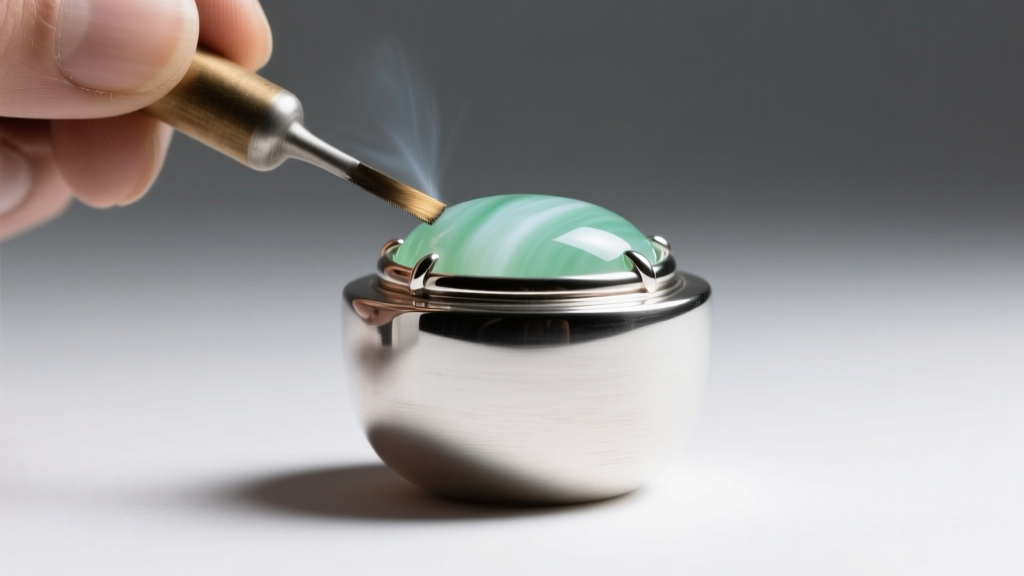
Bezel Construction and Stone Hardness
Because Skye Marble is relatively soft and porous, it cannot withstand the localized pressure of prong settings. Artisans must employ full bezel settings with a minimum wall thickness of 0.5mm to 0.8mm to protect the stone's girdle from chipping. Conversely, Scottish Agate, a microcrystalline quartz, boasts a Mohs hardness of 6.5 to 7.0, allowing for more delicate settings, including partial bezels or heavy-gauge prong settings. According to the Gemological Institute of America (GIA), the conchoidal fracture pattern of agate requires the lapidary to leave a slightly rounded cabochon edge rather than a sharp 90-degree angle to prevent stress fractures during the burnishing process.
| Material | Mohs Hardness | Optimal Setting Type | Bezel Wall Thickness | Vulnerability |
|---|---|---|---|---|
| Skye Marble / Serpentine | 3.0 - 4.0 | Full Bezel | 0.6mm - 0.8mm | Scratching, acid erosion, girdle chipping |
| Scottish Agate (Quartz) | 6.5 - 7.0 | Partial Bezel / Prong | 0.3mm - 0.5mm | Hard impacts causing conchoidal fracturing |
| Scottish Cairngorm (Smoky Quartz) | 7.0 | Claw / Prong | N/A (Prong diameter 0.8mm) | Thermal shock during resizing or repair |
Structural Engineering of Celtic Knot Dangles
The visual complexity of Celtic knotwork—characterized by continuous, interlacing lines—presents a unique metallurgical challenge. Creating these interlocking loops requires multiple solder joints. If an artisan uses a single grade of solder for a multi-step assembly, previously completed joints will remelt and collapse when the torch is applied to the next joint.
Step-Soldering and Wire Gauge Specifications
Master silversmiths constructing isle of skye earrings utilize a technique called step-soldering, employing three distinct grades of silver solder based on their melting points:
- Hard Solder (Melting point ~788°C): Used for the initial, foundational loops of the Celtic knot.
- Medium Solder (Melting point ~740°C): Applied to secondary interlacing weaves.
- Easy Solder (Melting point ~680°C): Reserved for final closures and attaching the jump rings that connect the knotwork to the ear wire.
Furthermore, the wire gauge used for the knotwork dictates the earring's structural lifespan. For drop earrings featuring heavy agate cabochons, the primary structural wire must be no thinner than 18-gauge (1.02mm). Using 20-gauge (0.81mm) or 22-gauge (0.64mm) wire for the main load-bearing loops will result in tensile deformation over time, causing the intricate knots to warp under the pendulum effect of walking and movement.
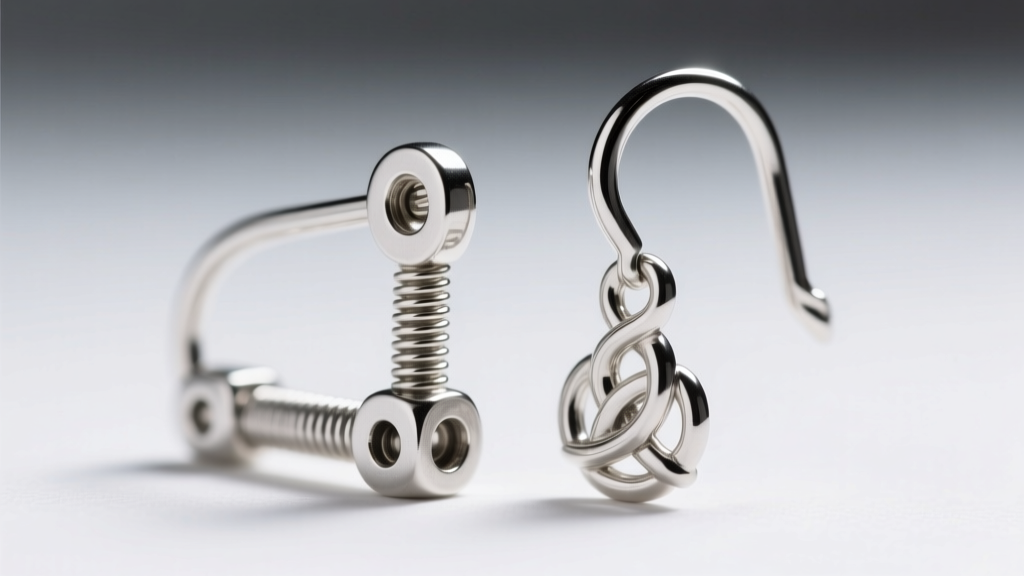
Suspension Mechanisms: Leverback vs. French Wire
The connection point between the earring and the earlobe is the most common failure point in heavy artisan drops. Traditional French hooks (usually 20-gauge) offer an elegant, minimalist profile but rely entirely on gravity and friction to stay in the ear. For heavy Skye marble drops, a 20-gauge French wire is insufficient and requires the constant use of silicone earring stoppers. The superior technical choice for heritage drop earrings is the leverback ear wire. A well-machined leverback features a hinged, spring-loaded closure that snaps securely into a catch, creating a closed loop. This not only prevents loss but also distributes the kinetic energy of the swinging drop more evenly across the earlobe tissue, reducing the risk of lobe tearing.
Care and Maintenance for Coastal-Exposed Silver
Sterling silver's 7.5% copper content makes it highly reactive to sulfur and moisture. Earrings worn in coastal environments—like the salty, humid air of the Scottish islands—are prone to rapid tarnishing. However, many artisan Celtic earrings feature an intentional oxidized patina (often achieved using liver of sulfur) to darken the recesses of the knotwork and make the raised silver lines pop.
Expert Maintenance Rule: Never use liquid silver dips or ultrasonic cleaners on oxidized Celtic jewelry. The chemical thiourea in liquid dips will strip the intentional patina in seconds, leaving the earring flat and lifeless. Instead, use a treated polishing cloth (impregnated with micro-abrasives and anti-tarnish agents) to gently buff only the high-relief areas of the knotwork, preserving the dark contrast in the recesses.
To protect Skye marble settings from environmental degradation, avoid exposing the earrings to acidic substances, including perfumes, hairsprays, and citrus-based lotions. The calcium carbonate and serpentine minerals in the marble will etch upon contact with low-pH chemicals, permanently dulling the cabochon's polish. Store the earrings in an airtight anti-tarnish bag with a silica gel desiccant packet to control ambient humidity when not in use.
Conclusion
Evaluating isle of skye earrings requires looking far beyond the surface aesthetics of the Celtic motifs. By scrutinizing the Edinburgh assay hallmarks, verifying the appropriateness of the bezel thickness relative to the stone's Mohs hardness, and ensuring the structural wire gauges are sufficient to support the drop weight, you can distinguish true heritage craftsmanship from superficial imitations. When engineered correctly, these earrings are not just beautiful accessories; they are masterclasses in structural metallurgy and regional lapidary art, built to endure for generations.


