Jacla Earrings Material Guide: Metals, Weight and Care
Discover the best materials for Jacla earrings. Compare German silver, brass, and oxidized metals for weight, durability, and skin safety.

The Anatomy and Origins of Jacla Earrings
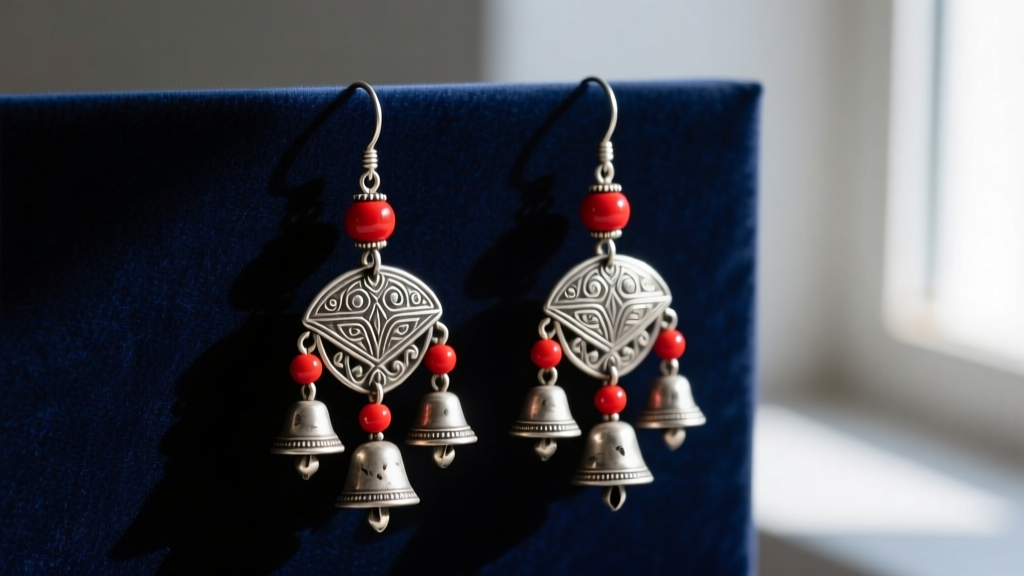
Jacla earrings (also widely known as Jhakla) are a cornerstone of traditional South Asian and nomadic tribal jewelry, particularly associated with the Kuchi and Banjara communities of India, Pakistan, and Afghanistan. Unlike standard studs or lightweight hoops, Jaclas are defined by their architectural complexity. A traditional pair features a prominent dome or bell-shaped top, intricate filigree or repousse metalwork, and cascading elements like tiny bells (ghungroos), glass beads, and enamel accents.
Because of their elaborate construction, the material composition of Jacla earrings dictates not only their aesthetic appeal and historical authenticity but also their wearability. A single authentic, fully embellished Jacla can weigh anywhere from 40 to 120 grams. Understanding the metallurgical properties, weight distribution, and skin-compatibility of these materials is essential for collectors, vintage jewelry enthusiasts, and modern wearers looking to incorporate these statement pieces into their wardrobe without compromising ear health.
Core Metal Comparison: Base Alloys vs. Precious Plating
The structural foundation of any Jacla earring relies on its base metal. Historically, nomadic tribes utilized readily available, durable alloys rather than precious metals. Today, the market offers a spectrum of materials, each with distinct physical properties, tarnish rates, and price points.
| Material | Composition | Weight Profile | Allergy Risk | Price Range (USD) |
|---|---|---|---|---|
| German Silver | Copper, Nickel, Zinc | Heavy | High (Nickel) | $25 - $80 |
| Solid Brass | Copper, Zinc | Heavy | Low-Medium | $40 - $120 |
| Oxidized Sterling | 92.5% Silver, 7.5% Copper | Medium-Heavy | Very Low | $150 - $400+ |
| White Metal / Pewter | Tin, Antimony, Copper | Medium | Variable | $15 - $50 |
German Silver (Nickel Silver): Despite the name, German silver contains absolutely no elemental silver. It is an alloy of copper, nickel, and zinc prized for its bright, silvery luster and high tensile strength. However, the high nickel content makes it a primary culprit for contact dermatitis. According to the American Academy of Dermatology, nickel allergy is one of the most common causes of allergic contact dermatitis, making unsealed German silver Jaclas risky for prolonged wear.
Solid Brass: Brass offers a beautiful, warm golden hue that develops a rich, dark patina over time. It is highly malleable, allowing artisans to hammer intricate designs into the domes. The primary drawback of brass is its copper content; when copper reacts with the salts and acids in human sweat, it produces copper chelates, which can temporarily stain the earlobes and neck green. This is a harmless chemical reaction, not an allergy, but it requires regular polishing to prevent.
Oxidized Sterling Silver: For modern luxury adaptations, artisans use 925 sterling silver treated with liver of sulfur to create a dark, antique finish that highlights the intricate relief work. This is the safest option for sensitive skin, though it significantly increases the cost and slightly reduces the overall structural rigidity compared to brass or German silver.
Weight Distribution and Ear Lobe Health
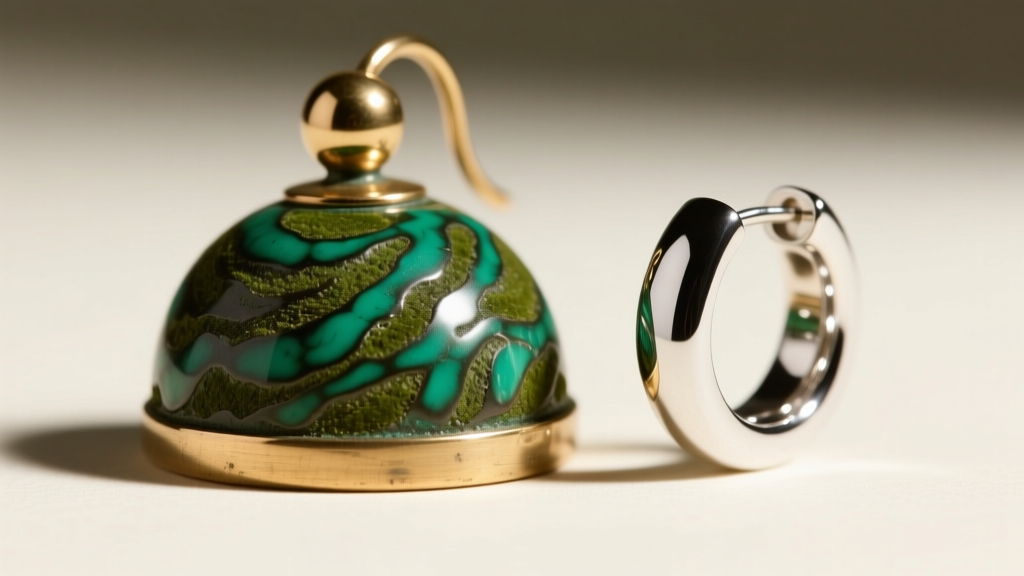
The most critical factor when wearing Jacla earrings is managing their substantial mass. A standard earlobe piercing can comfortably support 15 to 20 grams of weight indefinitely. Authentic Jaclas frequently exceed 60 grams per ear. Wearing heavy earrings without proper support leads to a phenomenon known in body modification circles as the "cheese cutter effect."
Gauge Requirements and the "Cheese Cutter" Effect
The cheese cutter effect occurs when a thin wire bearing a heavy load slowly slices through the soft tissue of the earlobe. Standard commercial earrings use 20-gauge (0.8mm) or 18-gauge (1.0mm) wire. For Jacla earrings, this is dangerously thin.
- 16-Gauge (1.2mm): The absolute minimum thickness for Jaclas weighing under 40 grams.
- 14-Gauge (1.6mm): Recommended for traditional Jaclas weighing 40 to 80 grams. This thickness distributes the downward force across a wider surface area of the piercing fistula.
- 12-Gauge (2.0mm) or higher: Required for massive, heavily beaded ceremonial pieces exceeding 80 grams, often requiring a pre-stretched lobe.
The Role of the Sahara (Support Chain)
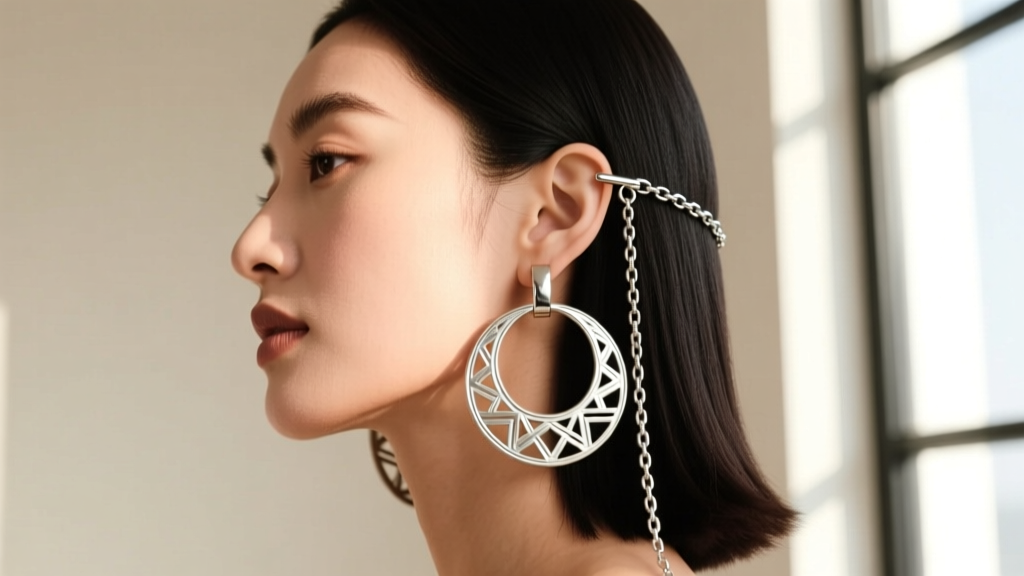
To bypass the limitations of the earlobe, traditional Jaclas are designed with a sahara—a delicate chain that connects the top or middle of the earring to a comb or hook placed in the hair. The sahara transfers up to 80% of the earring's weight from the delicate lobe tissue to the scalp, allowing the wearer to sport massive, 100-gram heirloom pieces comfortably for hours during weddings and festivals.
Decorative Embellishments: Lac, Enamel, and Glass
The base metal is only half the story; the materials used for embellishment drastically alter the earring's center of gravity and fragility.
Lac (Natural Resin): Often used to fill the hollow domes of the earrings or to set uncut stones. Lac is incredibly lightweight, which helps keep the overall mass of the earring down. However, it is highly sensitive to temperature fluctuations. Leaving lac-set Jaclas in a hot car can cause the resin to soften and release the stones, while extreme cold makes it brittle and prone to cracking.
Meenakari (Enamel): Traditional Meenakari involves fusing powdered glass to the metal recesses at high temperatures. While visually stunning, glass enamel is essentially a rigid, brittle layer. If a Jacla earring with heavy Meenakari work is dropped on a hard surface, the enamel will chip or shatter, a failure mode that is nearly impossible to repair seamlessly without a master artisan.
Shisha (Mirrors) and Glass Beads: Small mirrors and cut glass beads add significant weight to the lower tiers of the earring. Authentic vintage pieces use hand-cut glass, which is heavier and more reflective than modern acrylic or plastic substitutes found in mass-produced costume versions.
Navigating Allergies and Skin Reactions
Because vintage and tribal Jaclas are predominantly crafted from base metals like German silver and brass, wearers with metal sensitivities must take proactive measures. Nickel contact dermatitis presents as redness, itching, and blistering along the earlobe and the side of the neck where the heavy earrings rest.
If you have acquired a vintage pair of German silver Jaclas and wish to wear them safely, you must create a physical barrier between the metal and your skin. While clear nail polish is a common DIY hack, it degrades quickly against skin oils and friction. A more reliable solution is to apply a specialized polyurethane-based jewelry sealant, such as Jeweler's Skin Guard, to the ear wires and the back of the domes. Alternatively, a local jeweler can re-plate the ear wires and contact points in rhodium or 18k gold, which are hypoallergenic and highly durable.
Maintenance, Tarnish, and Long-Term Care
Proper maintenance of Jacla earrings requires an understanding of their specific material composition. The Gemological Institute of America (GIA) emphasizes that cleaning methods must be tailored to the metal and any porous stones or resins present in the piece.
- For Solid Brass and Copper: Use a mild acid like lemon juice mixed with baking soda to strip away green oxidation and restore the bright golden shine. Rinse thoroughly and dry completely to prevent water spots.
- For Oxidized Silver and German Silver: Never use chemical silver dips or abrasive polishing cloths on oxidized pieces. These products will strip away the intentional dark patina (the liver of sulfur treatment) that gives the Jacla its antique, high-contrast look. Instead, use a soft, dry microfiber cloth to gently wipe away skin oils after each wear.
- Storage: Because of the tangled nature of chains and bells, Jaclas should never be thrown into a communal jewelry box. Wrap each earring individually in acid-free tissue paper or anti-tarnish flannel bags. Store them flat to prevent the ear wires from bending under the weight of the heavy domes.
Expert Insight: If your Jacla features tiny brass bells (ghungroos), avoid submerging them in liquid cleaners. Moisture trapped inside the hollow bells will cause internal corrosion, eventually seizing the tiny metal shot inside and silencing the bell's signature chime. Always use a damp cloth for surface cleaning only.
By respecting the material properties and structural demands of Jacla earrings, you can preserve these magnificent pieces of wearable art for generations while ensuring your own comfort and skin health.


