How to Style the Jalen Hurts Earring Look (2026 Guide)
Learn how to style the iconic Jalen Hurts earring look. Our step-by-step guide covers gauge sizes, pearl grades, and secure backings for active wear.
The Anatomy of the Signature Single-Stud Look
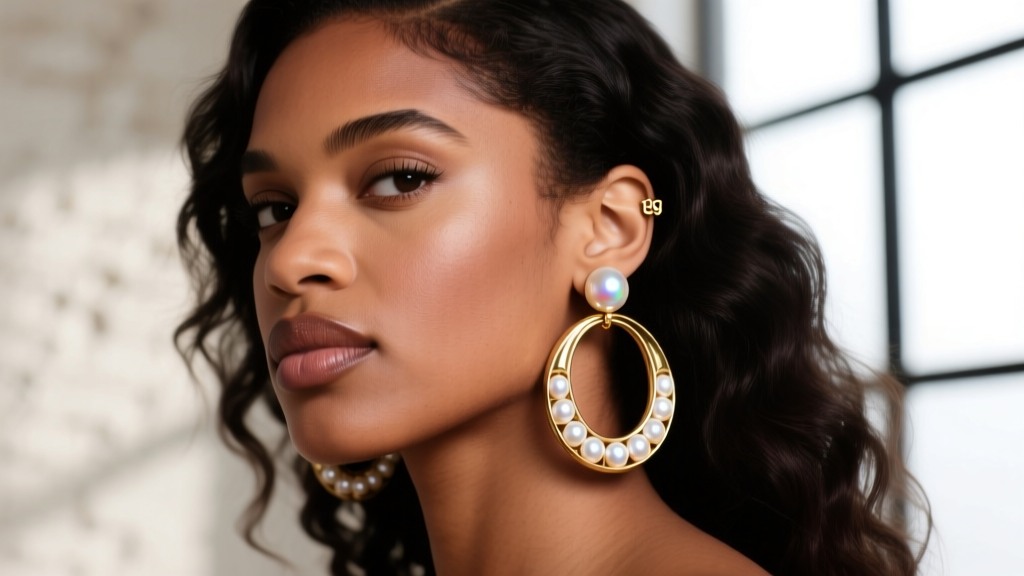
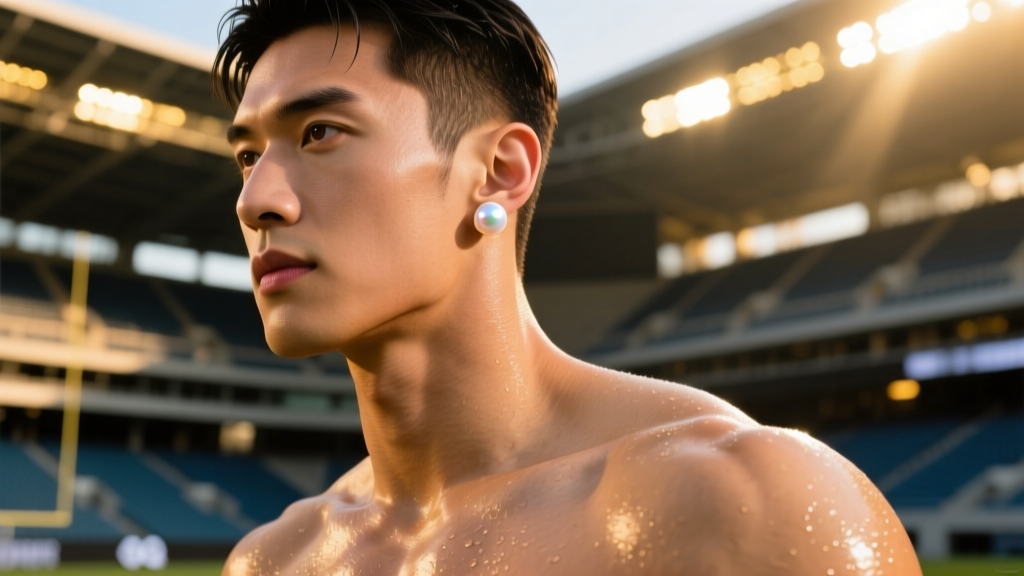
When Philadelphia Eagles quarterback Jalen Hurts stepped onto the field and into post-game press conferences wearing a single, high-quality stud earring, he didn't just accessorize; he shifted the paradigm of men's jewelry in professional sports. As we navigate the style landscape of 2026, the single-stud aesthetic has transitioned from a niche athlete flex to a mainstream menswear staple. The 'Jalen Hurts earring' look is defined by its asymmetry, premium material quality, and unapologetic confidence. It is not about wearing excessive hardware; it is about selecting one flawless piece that anchors your personal style.
Achieving this look requires more than just buying a generic stud at the mall. It demands an understanding of metallurgy, gemology, and the biomechanics of active wear. This step-by-step guide will walk you through the exact specifications needed to replicate and personalize this iconic aesthetic, ensuring your jewelry survives both the gym and the boardroom.
Step 1: Selecting the Right Stone and Material
Hurts has frequently been spotted wearing pearls and diamond clusters. For a masculine, athletic aesthetic, the stone must have presence without looking overly ornate. If you are opting for a pearl, the luster and nacre thickness are your primary metrics for quality. A dull, chalky pearl will look like a plastic bead under harsh lighting.
Pearl vs. Diamond: What Works Best?
While diamonds offer undeniable brilliance, a high-grade pearl provides a sophisticated, unexpected contrast to athletic wear and streetwear. According to the Gemological Institute of America (GIA), the value of a pearl is heavily dictated by its luster and surface cleanliness. For the Hurts aesthetic, you want a stone that catches the light sharply but maintains a classic, understated profile.
| Pearl Type | Ideal Size for Men | Luster Profile | Estimated Price Range |
|---|---|---|---|
| Freshwater | 8mm - 9mm | Soft, satiny glow | $50 - $150 |
| Akoya | 8.5mm - 9.5mm | Sharp, mirror-like reflection | $300 - $800 |
| White South Sea | 10mm - 12mm | Deep, luxurious satin | $1,200 - $3,500+ |
Expert Tip: Avoid anything under 8mm. Smaller pearls tend to get lost on a larger facial canvas and can read as overly delicate. A 9mm to 10mm Akoya or South Sea pearl hits the perfect visual weight for a masculine single-stud look.
Step 2: Nailing the Gauge and Post Thickness
The most common mistake men make when adopting the single-stud trend is wearing earrings with wire-thin posts. Standard women's fashion earrings are typically 20-gauge (0.8mm) or 18-gauge (1.0mm). These thin posts bend easily, look insubstantial, and can cause the heavy stone to droop awkwardly on the earlobe.
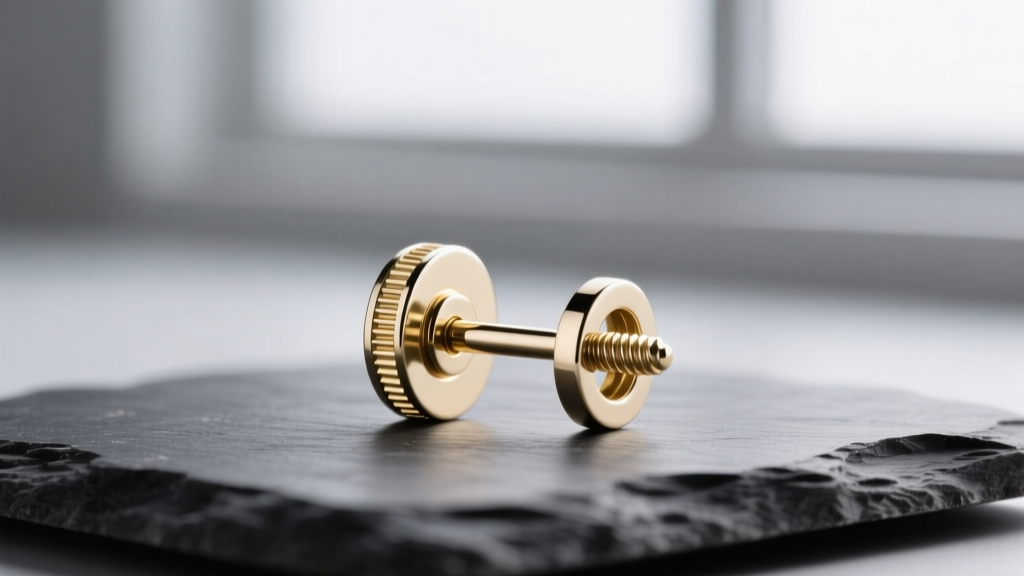
To achieve the robust, premium look associated with high-end men's jewelry, you need a thicker post. The Association of Professional Piercers (APP) recommends 14-gauge (1.6mm) or 16-gauge (1.2mm) for initial piercings and long-term structural integrity. A 16-gauge post provides a noticeably thicker, more masculine silhouette and prevents the earring from spinning or tilting forward under the weight of a 9mm pearl or diamond cluster.
- 18-Gauge (1.0mm): Too flimsy for heavy stones; prone to bending during sports.
- 16-Gauge (1.2mm): The sweet spot for men's studs. Offers excellent stability and fits most standard high-end jewelry lines.
- 14-Gauge (1.6mm): Maximum durability. Ideal if you are setting a large, heavy stone or plan to wear the earring 24/7 during intense physical activity.
Ensure the metal is implant-grade titanium (ASTM F-136) or solid 14k/18k gold. Avoid silver or plated metals, as the friction and sweat from an active lifestyle will quickly degrade the finish and cause contact dermatitis.
Step 3: Choosing the Right Backing for Active Lifestyles
There is nothing more frustrating than losing a $500 earring because a cheap butterfly backing slipped off during a workout or while changing clothes. The standard friction back (butterfly clutch) relies on a small metal scroll that gradually loosens over time due to tension loss and friction.
Secure Backing Alternatives
If you are adopting the Jalen Hurts earring style, you must upgrade your backing mechanism. Here are the two professional-grade options:
- Screw-Backs: The post features precision threading, and the backing screws onto it. This is the most secure method for athletes. The only downside is that threading a tiny backing onto a 16-gauge post requires patience and good eyesight.
- La Pousette (Push-Pull) Backs: Originally designed for high-end diamond studs, this mechanism uses a spring-loaded internal clutch. You squeeze two small tabs to slide the backing on and off, and it locks into a groove on the post. It offers the security of a screw-back with the convenience of a friction back.
Never wear standard friction backs during contact sports, weightlifting, or activities where your ear might catch on a towel or collar. The lateral force will easily pop the backing off, resulting in a lost stone.
Step 4: Placement, Proportion, and Face Shape
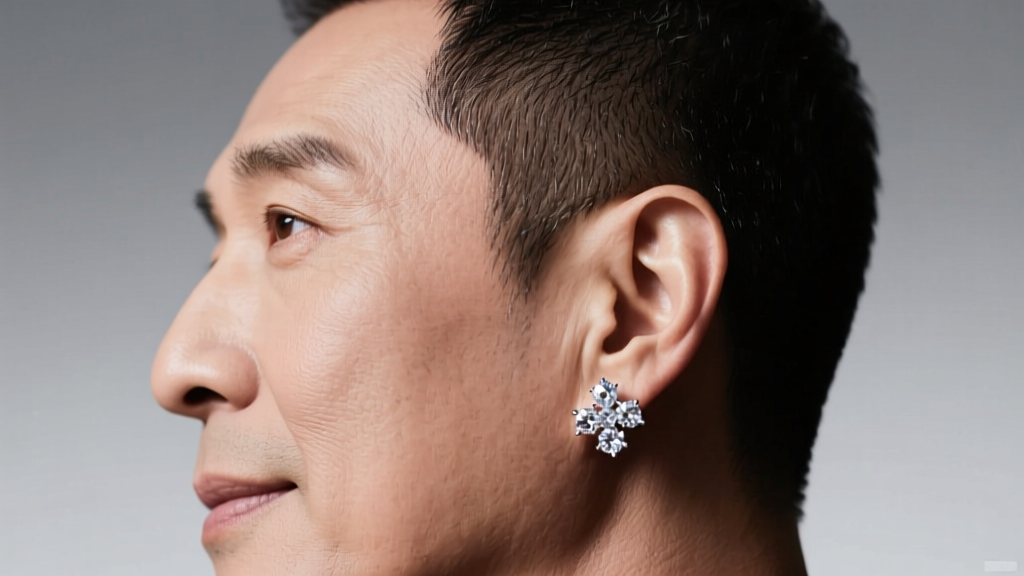
The placement of your single stud is just as critical as the stone itself. The Hurts aesthetic relies on the earring sitting dead-center on the earlobe. If the piercing is too high, the earring will look like it is migrating toward the cartilage; if it is too low, it will pull the lobe downward, creating an aged appearance.
Wearing a single earring introduces asymmetry to your face. From a stylistic perspective, this draws the eye and can actually help balance strong jawlines or square face shapes by breaking up visual symmetry. When deciding which ear to pierce, consider your dominant side, how you part your hair, and which side of your face you naturally present to cameras or crowds. In 2026, the outdated stigmas regarding 'which ear' means what have been entirely eradicated; choose the side that feels most natural and visually balanced with your tattoos, hairstyle, and overall aesthetic.
Maintenance and Care for Athletic Wearers
Athletic environments are hostile to fine jewelry. Sweat is highly acidic and can dull the luster of pearls and degrade the alloys in lower-karat gold. Furthermore, showering with your earring in exposes the setting to hard water minerals and soap scum, which will quickly make a brilliant diamond look like a cloudy piece of glass.
The Weekly Cleaning Protocol
To maintain the high-impact look of your earring, implement a strict cleaning routine. For diamonds, a simple soak in warm water with a few drops of mild, ammonia-free dish soap, followed by a gentle brushing with a baby-soft toothbrush, will restore brilliance. For pearls, never use ultrasonic cleaners or harsh chemicals. Simply wipe the pearl with a damp, lint-free microfiber cloth after heavy sweating to remove acidic residue and body oils that can eat away at the nacre over time.
Final Thoughts on the Single-Stud Statement
The Jalen Hurts earring trend is ultimately an exercise in curated minimalism. It proves that men's jewelry does not need to be loud, layered, or excessive to make a profound statement. By focusing on the exact specifications—a 9mm high-luster stone, a thick 16-gauge post, and a secure mechanical backing—you elevate a simple accessory into a permanent, reliable pillar of your personal style. Whether you are walking into a stadium or a boardroom, the right single stud speaks volumes before you ever say a word.


