Kate Hines Earrings: Technical Guide to Active Luxury
Explore the technical specs behind Kate Hines earrings. Dive into PVD metallurgy, gauge sizes, and secure closures for active luxury jewelry.


When analyzing the intersection of high-performance athleisure and fine jewelry, the search for Kate Hines earrings represents a highly specific, technical niche. Hines, a prominent fitness model and wellness entrepreneur, frequently showcases an ear curation that bridges the gap between delicate luxury and sweat-proof durability. Her aesthetic relies on chunky, seamless gold hoops, threadless diamond cartilage studs, and huggies that withstand high-impact workouts without tarnishing, snagging, or causing tissue irritation.
Replicating this 'active luxury' look requires moving beyond standard mall-kiosk jewelry. As of 2026, achieving the Kate Hines earring aesthetic demands a strict adherence to implant-grade metallurgy, precise gauge tolerances, and biomechanically sound closure systems. This expert deep dive dissects the exact technical specifications required to build an active-proof ear curation that mirrors this elevated, athletic style.
Deconstructing the Active Luxury Aesthetic
The hallmark of the Hines-inspired ear curation is visual weight combined with structural minimalism. Unlike traditional fine jewelry, which often relies on delicate chains and protruding prong settings, active luxury jewelry prioritizes aerodynamic profiles. The visual anchors of this style include:
- Seamless Huggies and Clickers: Ranging from 8mm to 12mm in diameter, designed to hug the earlobe or helix without dangling.
- Chunky Tube Hoops: 4mm to 6mm outer thickness, providing a bold visual presence while maintaining a smooth, snag-free surface.
- Bezel-Set Diamond Ends: Low-profile gemstone settings that eliminate the risk of catching on hair, towels, or athletic wear.
To achieve this look, one must completely abandon porous base metals and traditional friction-back closures, both of which fail under the physiological stress of intense physical activity.
Metallurgy: PVD Coating vs. Traditional Electroplating
The most critical technical failure point in active jewelry is tarnish and corrosion caused by human sweat. Sweat contains lactic acid, urea, and salts, with a pH ranging from 4.5 to 7.0. Standard gold electroplating—which uses a cyanide-based chemical bath to deposit a microscopic layer of gold over brass or copper—will rapidly degrade when exposed to this acidic environment, leading to green skin and contact dermatitis.
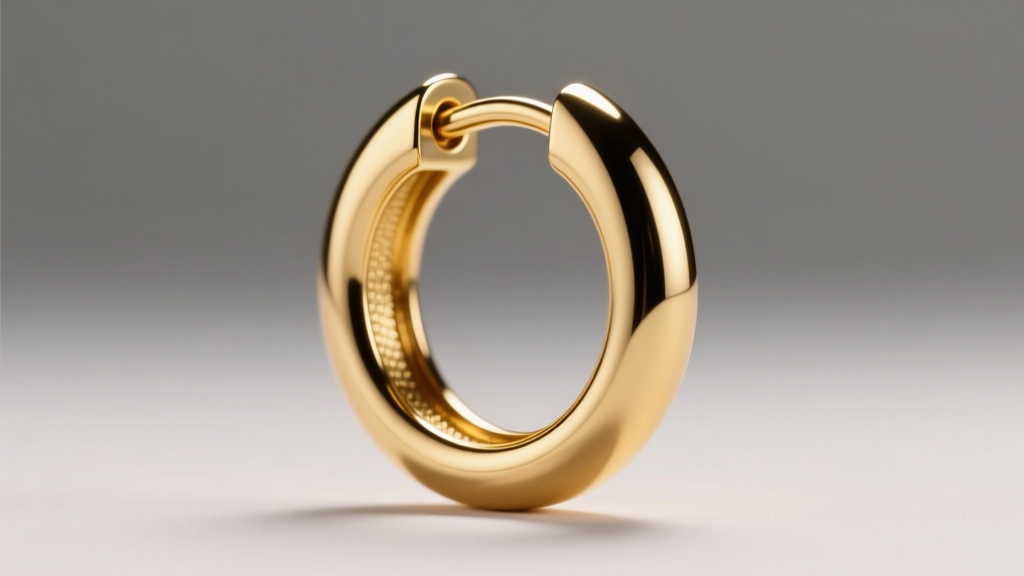
To replicate the pristine, untarnished gold seen in Kate Hines' ear stack, you must source jewelry utilizing PVD (Physical Vapor Deposition) technology over an ASTM F-136 implant-grade titanium base. According to ASTM International standards, F-136 titanium is entirely nickel-free and biocompatible. The PVD process takes place in a vacuum chamber where solid gold is vaporized at the molecular level and bonded to the titanium substrate. This creates a coating that is up to 10 times thicker and infinitely more adherent than electroplating, making it completely impervious to lactic acid, chlorinated pool water, and hot yoga environments.
Gauge Sizes and Biomechanical Stress
A common mistake when purchasing chunky, heavyweight hoops is ignoring the gauge (wire thickness) relative to the piercing fistula (the healed tissue tube). Wearing a heavy 14k solid gold hoop on a thin 20-gauge wire creates a biomechanical hazard known in the body modification industry as the 'cheese-cutter effect.' During high-impact activities like running or plyometrics, the kinetic energy and downward momentum of the heavy hoop concentrate on a microscopic surface area, slowly slicing through the earlobe tissue.
Below is the technical framework for selecting the correct wire thickness based on the jewelry's overall mass and intended placement:
| Piercing Location | Standard Gauge | Active Luxury Recommendation | Biomechanical Rationale |
|---|---|---|---|
| Standard Earlobe | 20g (0.81mm) | 16g (1.29mm) or 14g (1.60mm) | Prevents the cheese-cutter effect when wearing chunky 4mm+ tube hoops during cardio. |
| Helix / Cartilage | 18g (1.02mm) | 16g (1.29mm) | Provides structural rigidity for threadless ends; prevents the post from bending if snagged. |
| Tragus | 18g (1.02mm) | 16g (1.29mm) | Accommodates the thicker tissue density of the tragus while supporting secure clicker hinges. |
| Conch | 16g (1.29mm) | 14g (1.60mm) | Reduces migration risk in high-movement cartilage areas when wearing larger decorative ends. |
As noted by the Association of Professional Piercers (APP), upgrading to a 16g or 14g wire distributes the kinetic load across a wider surface area of the fistula, ensuring the piercing remains healthy and tear-free even during intense physical exertion.
Diamond Settings: Prong vs. Bezel for Athletic Wear
The cartilage clusters frequently spotted in active luxury curations rely heavily on diamond accents. However, traditional prong settings—which use four to six microscopic metal claws to hold a gemstone—are a liability in the gym. Prongs easily catch on the elastic bands of sports bras, towel loops, and hair ties, which can bend the metal and dislodge the stone.
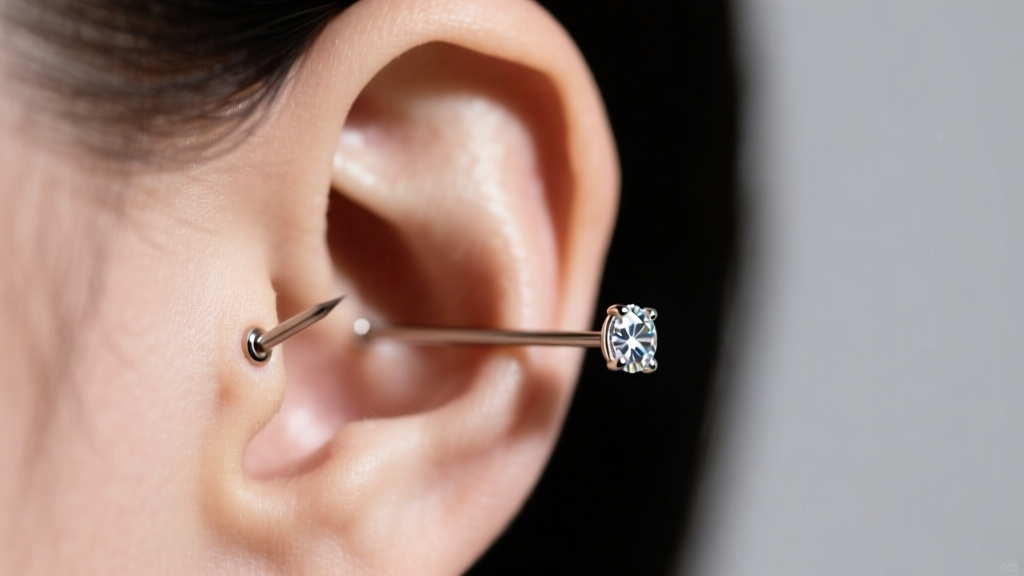
The technical solution is the bezel setting. In a bezel-set stud, a continuous rim of metal completely encircles the diamond's girdle. This creates a flush, aerodynamic profile that is entirely snag-proof. When sourcing diamond ends to mimic the Hines aesthetic, look for bezel-set stones with a low dome profile, ideally utilizing VS clarity and F-G color grades to ensure maximum light return even in the low-lit environments of indoor fitness studios.
Closure Mechanics: Why Threadless Ends Dominate
The traditional 'butterfly' friction back is obsolete for active jewelry. The tension-based spring mechanism degrades over time, and the open loops trap dead skin, sebum, and sweat, creating a breeding ground for staphylococcus bacteria. Furthermore, the friction back is easily pulled off when removing tight athletic wear.
To achieve a truly secure cartilage or lobe stud, the industry standard has shifted to threadless push-pin systems (often referred to generically by the brand name Neometal). These systems utilize a slightly bent titanium pin that is inserted into a hollow post. The bend creates immense internal spring tension against the inner wall of the post. The harder you pull on the end, the tighter the internal tension grips. This mechanical lock ensures the jewelry will never fall out during a workout, yet can be easily removed by a professional using specialized hemostats.
Hinged Segment Rings (Clickers)
For hoops and huggies, the traditional seamless ring (which requires twisting the metal open and closed) weakens the structural integrity of the gold over time and can warp the piercing channel. Instead, active luxury relies on hinged segment rings with a snap-click closure. These feature a micro-machined hinge on one side and a precision-milled clasp on the other that locks into place with an audible 'click,' ensuring the ring remains perfectly circular and secure under all conditions.
Sourcing and Pricing the Active Luxury Stack
Building a technically sound, sweat-proof ear curation requires investing in specialized body jewelry brands rather than traditional fashion jewelers. Expect the following pricing tiers for authentic, implant-grade, PVD-coated, or solid 14k/18k pieces:
- High-End Body Jewelry (BVLA, Anatometal): $150 - $450+ per piece. These brands offer custom anodizing, precision bezel settings, and the highest grade of threadless mechanics.
- Active Luxury Specialists (Maria Tash): $200 - $800+. Known for their proprietary invisible closures and specialized diamond cuts designed specifically for movement and light reflection.
- Accessible Implant-Grade (Junipurr, Castle Ring): $80 - $250. Excellent for building out a multi-piece cartilage stack without compromising on ASTM F-136 titanium standards.
Maintenance and Ultrasonic Cleaning Protocols
Even the most advanced PVD coatings and bezel settings require proper maintenance to remove the microscopic buildup of sebum, dead skin cells, and gym environment dust. Chemical cleaners, alcohol, and hydrogen peroxide should be strictly avoided, as they can degrade the optical clarity of diamonds and dull the polish of the gold.
The professional protocol for maintaining active luxury earrings is the use of a 45kHz ultrasonic cleaner filled with distilled water and a few drops of pH-neutral, ammonia-free jewelry soap. The 45kHz frequency creates microscopic cavitation bubbles that implode against the jewelry, blasting debris out of the microscopic crevices of the hinge mechanisms and the underside of diamond settings without causing micro-abrasions to the metal. A three-minute cycle once a month will keep the jewelry looking identical to the day it was machined.
Expert Takeaway: The 'Kate Hines' earring aesthetic is not defined by a single brand, but by a rigorous commitment to functional luxury. By prioritizing ASTM F-136 titanium, PVD molecular bonding, 16-gauge structural integrity, and snag-proof bezel settings, you can build an ear curation that survives the most grueling workouts while maintaining a flawless, high-end finish.