How to Keep Ear Piercing From Closing Without Earring: Expert Guide
Learn how to keep ear piercing from closing without earring using glass retainers, PTFE, and expert fistula maintenance steps for lobes and cartilage.

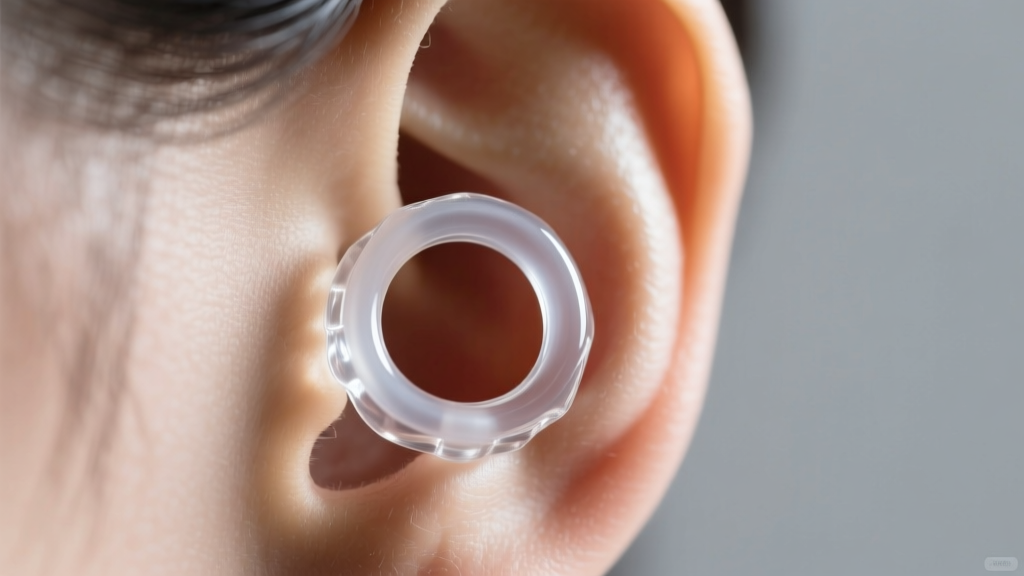
The Science of the Fistula: Why Piercings Close
Understanding how to keep ear piercing from closing without earring requires a basic grasp of human anatomy. When you get your ears pierced, the body forms a fistula—a tubular tunnel of healed skin tissue that lines the puncture wound. This process, known as epithelialization, creates a permanent scaffold. However, the body is highly efficient at reabsorbing unused tissue. If the physical scaffold (your jewelry) is removed, macrophages begin breaking down the fistula walls, causing the hole to shrink and eventually fuse shut.
The speed of this closure depends entirely on the maturity of the fistula, the vascularity of the pierced tissue, and individual immune responses. While a brand-new lobe piercing can close in a matter of hours, a decades-old fistula might only shrink to a smaller gauge rather than closing completely. For those facing strict workplace dress codes, contact sports, or medical procedures like MRI scans, finding a way to maintain the fistula without wearing traditional metallic earrings is a critical necessity.
Step-by-Step: How to Keep Ear Piercing From Closing Without Earring
Transitioning from standard earrings to invisible retainers is not as simple as swapping jewelry. You must follow a strict protocol to avoid micro-tears, irritation bumps, and bacterial infections. Follow these steps to safely maintain your piercings incognito.
Step 1: Assess Your Fistula Maturity
Before removing your current jewelry, evaluate the age of your piercing. If your lobe piercing is under six months old, or your cartilage piercing is under one year old, the fistula is still in the active remodeling phase. Removing jewelry at this stage, even for an hour, carries a massive risk of immediate closure. Only attempt to use retainers in fully matured piercings (12+ months for lobes, 18-24+ months for cartilage).
Step 2: Select the Correct Gauge and Material
Retainers must match your exact gauge size to prevent the fistula from contracting. Standard lobe piercings are typically 20G (0.8mm) or 18G (1.0mm), while standard cartilage piercings (like the helix or tragus) are usually 16G (1.2mm) or 14G (1.6mm). Never force a thicker retainer into a smaller hole, as this will cause blowouts and scar tissue formation.
Step 3: Sanitize and Insert with Care
Wash your hands thoroughly with antibacterial soap. Sterilize the retainer using a saline solution or an alcohol wipe (ensure the alcohol fully evaporates before insertion to avoid chemical burns inside the fistula). Apply a microscopic amount of water-based lubricant to the tip of the retainer and gently slide it through the fistula. Secure the ends with transparent, medical-grade silicone O-rings to prevent the retainer from slipping out while you sleep.
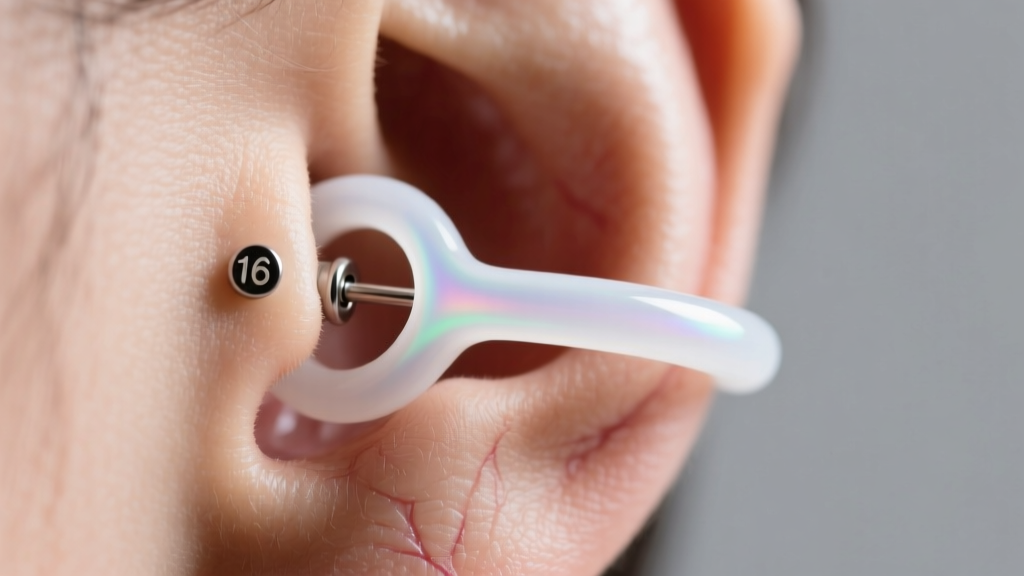
Material Comparison: What to Use When You Cannot Wear Metal
Not all invisible retainers are created equal. The market is flooded with cheap plastics that can harbor bacteria and cause severe contact dermatitis. According to guidelines from the Association of Professional Piercers (APP), material porosity and biocompatibility are paramount when selecting a long-term retainer.
| Material | Best For | Pros | Cons | Avg. Price Range |
|---|---|---|---|---|
| Borosilicate Glass | Long-term wear, MRI scans, sensitive skin | Non-porous, completely hypoallergenic, autoclavable, smooth surface | Rigid (can break under extreme pressure), slightly heavier | $12 - $25 |
| PTFE (Bioflex) | Cartilage, awkward angles, sports | Highly flexible, biocompatible, lightweight, can be custom-cut | Can warp over time, slightly porous if scratched | $5 - $15 |
| Clear Acrylic | Short-term emergencies (a few hours) | Inexpensive, widely available, very discreet | Highly porous, harbors bacteria, degrades with body heat | $3 - $8 |
| Implant-Grade Titanium (ASTM F-136) with Glass Top | Metal allergies, permanent invisible wear | Unmatched durability, flawless healing properties, secure threading | Most expensive, requires professional fitting | $35 - $65 |
Expert Tip: Avoid clear acrylic retainers for anything longer than 24 hours. Acrylic is a porous material that absorbs sebum and dead skin cells, leading to foul odors and localized infections. Borosilicate glass (from reputable brands like Glasswear Studios or Intrinsic Body) remains the gold standard for safe, long-term invisible wear.
Lobe vs. Cartilage: Closure Timelines and Strategies
The strategy for keeping your piercing open varies drastically depending on the anatomical location. The vascular differences between earlobes and cartilage dictate how quickly the body attempts to close the void.
Earlobe Maintenance
Earlobes are highly vascular, meaning they receive a robust blood supply. This allows them to heal quickly (6-8 weeks initially), but it also means the body is quick to send macrophages to close the hole when jewelry is removed. A mature lobe piercing (5+ years old) might shrink from an 18G to a 20G over a week without jewelry, but it rarely closes completely. To maintain lobes without earrings, glass retainers with flat, discreet tops are ideal, as they sit flush against the skin and are easily hidden by hair.
Cartilage Maintenance
Cartilage is avascular, receiving nutrients through diffusion from the surrounding skin. Because of this, cartilage fistulas are notoriously brittle and prone to rapid contraction. Even a fully healed, decade-old helix piercing can shrink significantly within 48 hours if left empty. Furthermore, cartilage cannot handle the rigid pressure of thick glass retainers if the angle of the piercing has shifted slightly over the years. For cartilage, flexible PTFE (polytetrafluoroethylene) retainers are superior, as they can bend to accommodate the natural curvature of the ear without causing pressure necrosis.
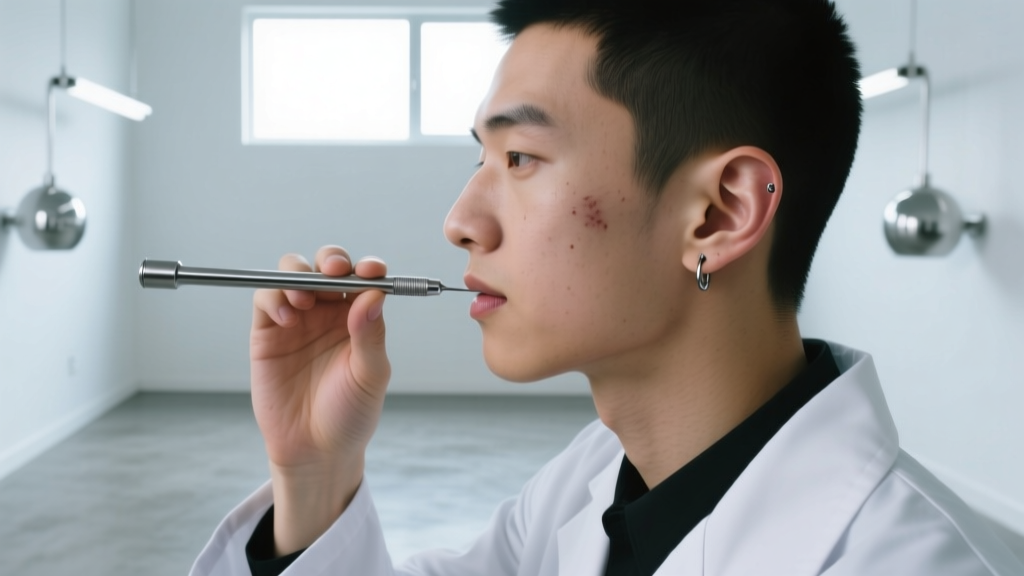
Troubleshooting: What to Do If the Hole Starts to Shrink
Despite your best efforts, you may find that your piercing has begun to close after a prolonged period without traditional earrings. If you encounter resistance when trying to reinsert your jewelry or retainer, stop immediately. Forcing jewelry through a shrunken fistula will cause micro-tears, leading to hypertrophic scarring and irritation bumps.
The Warm Compress Method
If the hole feels tight, apply a warm, damp compress to the ear for 5 to 10 minutes. The heat increases localized blood flow and relaxes the elastin fibers in the skin, making the fistula more pliable. Afterward, apply a drop of sterile saline or water-based lubricant and attempt to gently guide an 18G or 20G taper through the opening.
When to Seek Professional Help
If the fistula has closed to the point where a taper cannot pass, do not attempt to repierce it yourself. Visit a professional, APP-certified piercer. They can use a sterile, surgical steel taper to gently stretch the tissue back to its original gauge over a series of sessions, or safely repierce the exact same channel using a receiving tube to minimize trauma. As noted in the APP FAQ on piercing aftercare, professional intervention is always the safest route for compromised fistulas.
'A piercing is a wound that the body is constantly trying to heal. When you remove the jewelry, you are signaling the body to complete that healing process by closing the gap. Patience and proper materials are your only defense against closure.' — Professional Piercing Standards Guide
Hygiene Protocol for Invisible Retainers
Just because you cannot see the retainer does not mean it is exempt from daily hygiene. Invisible retainers, particularly those made of PTFE or silicone, can trap dead skin cells and sebum against the ear. Cleanse the area daily with a sterile saline spray (0.9% sodium chloride). Once a week, remove the retainer entirely, wash it with mild, fragrance-free antibacterial soap, rinse thoroughly, and reinsert. This routine prevents the buildup of biofilm and ensures your fistula remains healthy, open, and ready for your favorite earrings whenever you choose to wear them again.


