Keloid Earring Investment: Budget vs. Value Assessment
Discover the true cost of a keloid earring. We assess budget vs. value for implant-grade titanium, niobium, and solid gold to protect sensitive ears.

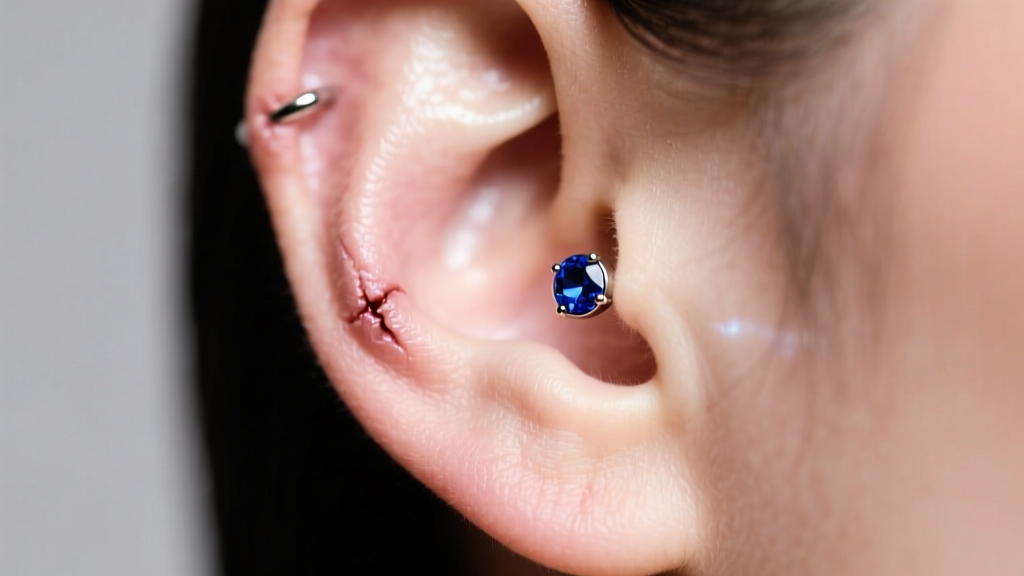
For individuals prone to abnormal scar tissue formation, shopping for earrings is not merely a fashion choice; it is a medical necessity. The term 'keloid earring' is frequently searched by those who have experienced the frustration, pain, and financial burden of hypertrophic scars and true keloids triggered by inappropriate jewelry metals. While the initial price tag of mass-market 'hypoallergenic' earrings may seem appealing, the long-term value proposition is often disastrous for sensitive ears.
In this comprehensive budget and value assessment, we break down the true cost of keloid-safe earrings. We will evaluate material grades, threading mechanics, gauge sizes, and the stark financial reality of medical scar treatments versus investing in high-quality, biocompatible jewelry from the start.
The Hidden Cost of 'Hypoallergenic' Marketing
The jewelry market is saturated with pieces labeled 'hypoallergenic' or 'surgical steel.' However, from a metallurgical and dermatological standpoint, these terms are largely unregulated marketing buzzwords. The most common culprit for piercing irritation and subsequent keloid formation is 316L surgical stainless steel. While it is a high-grade steel used in medical tools, it contains 8% to 10% nickel.
When worn in a healing or even fully healed fistula (the piercing channel), the saline environment of the body can break down the passive oxide layer of the steel, leading to nickel ion leaching. This micro-irritation triggers an immune response. For those with a genetic predisposition to keloids, this chronic inflammation signals fibroblasts to overproduce collagen, resulting in a keloid.
According to the Association of Professional Piercers (APP), implant-grade materials are the only safe standard for initial piercings and for individuals with a history of metal sensitivities or abnormal scarring.
Buying a $15 pair of steel or silver-plated earrings might save you money today, but if it triggers a keloid, the financial and emotional toll will exponentially outweigh the initial savings.
Material Breakdown: What Actually Prevents Keloids?
To accurately assess value, we must look at the specific alloys and elemental metals that are proven to be biocompatible. A true keloid earring must be entirely inert within the human body.
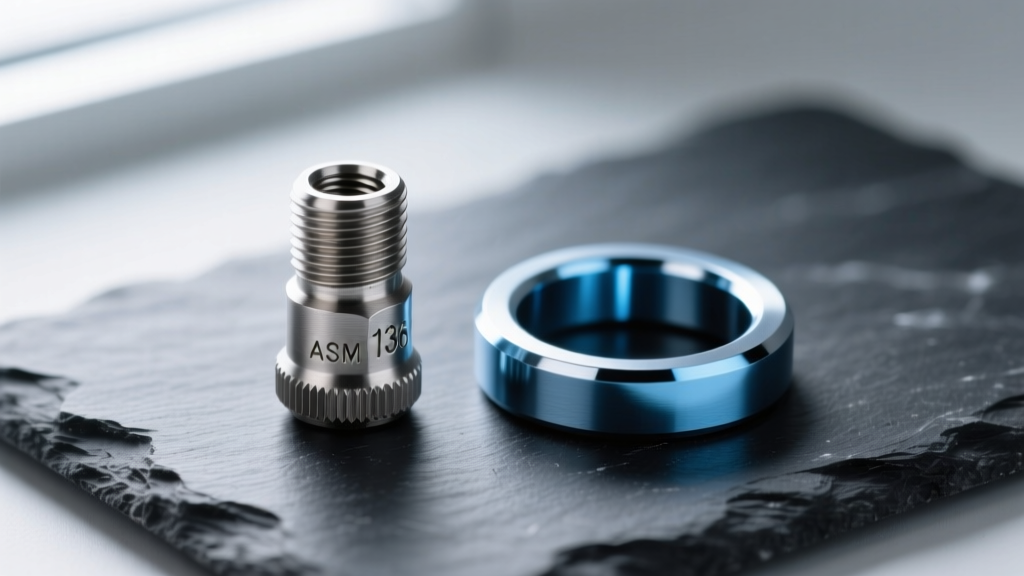
Implant-Grade Titanium (ASTM F136)
This is the gold standard for keloid-prone individuals. ASTM F136 titanium is an alloy of titanium, aluminum, and vanadium that is entirely nickel-free. It is the exact same material used for joint replacements and pacemaker casings. Because it is highly biocompatible, the body does not recognize it as a foreign threat, drastically reducing the inflammatory response that leads to keloids.
- Budget Range: $15 to $45 for basic studs; $50 to $150 for gem-set ends.
- Value Assessment: Exceptional. It offers the highest biocompatibility at a fraction of the cost of precious metals.
Niobium (ASTM F67)
Niobium is a highly inert elemental metal. It is softer than titanium, making it easier for piercers to bend into custom shapes for rings, but it cannot be easily machined into complex threaded posts. It is an excellent choice for hoop-style keloid earrings.
- Budget Range: $20 to $60 for seamless rings or clickers.
- Value Assessment: High value for cartilage and lobe hoops, though limited in stud-style options.
Solid 14k or 18k Gold (Nickel-Free Alloys)
Gold is a premium choice, but it comes with a major caveat: it must be alloyed with palladium or silver, not nickel. Many commercial jewelers alloy white gold with nickel to achieve a silver color, which is a massive trigger for keloids. Always verify that the gold is specifically formulated for body jewelry (often referred to as 'implant-grade gold' by high-end manufacturers like BVLA or Anatometal).
- Budget Range: $80 to $300+ for solid gold threadless ends.
- Value Assessment: Moderate to High. You are paying for the precious metal and luxury craftsmanship, but the biocompatibility is on par with titanium.
Budget vs. Value: Pricing Tiers for Keloid-Safe Earrings
Understanding where your money goes helps reframe the 'sticker shock' of professional body jewelry. Below is a comparative analysis of the 2026 market pricing for keloid-safe materials versus mass-market alternatives.
| Material Category | Avg. Price (Studs) | Nickel Content | Keloid Trigger Risk | Longevity & Value |
|---|---|---|---|---|
| Mass-Market 'Surgical Steel' | $10 - $25 | 8% - 10% | High | Poor (corrodes over time) |
| Sterling Silver (925) | $15 - $40 | 0% (but contains copper) | Medium-High (tarnish causes irritation) | Poor (not for 24/7 wear) |
| ASTM F136 Titanium | $25 - $65 | 0% | Extremely Low | Excellent (lifetime wear) |
| Solid 14k/18k Gold (Palladium alloy) | $90 - $350 | 0% | Extremely Low | Excellent (heirloom quality) |
Gauge and Threading: The Overlooked Irritation Triggers
Even if you purchase a flawless ASTM F136 titanium earring, you can still trigger a keloid if the physical mechanics of the jewelry damage the fistula. Trauma is a primary catalyst for abnormal collagen production.
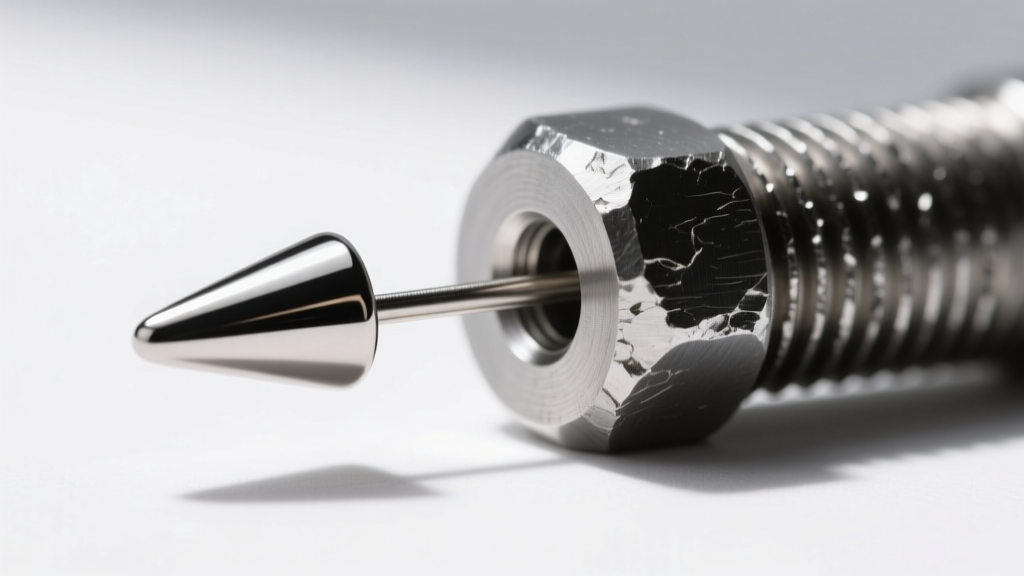
The Danger of External Threading
Cheap earrings feature external threading, meaning the screw pattern is cut into the post that passes through your ear. These jagged threads act like a microscopic file, tearing the delicate epithelial lining of the piercing channel every time you insert or remove them. This repeated micro-trauma causes chronic inflammation, paving the way for keloids.
The Solution: Internally Threaded or Threadless
For a true keloid earring, you must invest in internally threaded jewelry (where the screw is on the decorative end, and the post is perfectly smooth) or threadless (push-pin) jewelry. Threadless jewelry uses a slight bend in the pin to create tension against the inside of the hollow post, securing it without any threads at all. This allows for completely smooth, trauma-free insertion.
Gauge Sizing Matters
Wearing an earring that is too thin for your piercing can cause the 'cheese-cutter effect,' where the thin wire migrates through the tissue under the weight of the jewelry. This migration causes tissue stress and scarring. The American Academy of Dermatology (AAD) notes that any form of skin trauma or tension can provoke keloid growth in susceptible individuals. Ensure your earrings match your piercing gauge (typically 18g or 16g for lobes, 16g or 14g for cartilage) to distribute weight evenly.
The Medical Math: Earring Cost vs. Keloid Treatment
To truly understand the value of a high-quality keloid earring, we must compare the upfront cost of premium jewelry against the medical expenses required to treat a keloid once it forms. According to dermatological data outlined by StatPearls on Keloids, treatment is often prolonged, expensive, and requires multiple modalities.
- Intralesional Corticosteroids (Kenalog-40): $150 to $300 per injection session. Most keloids require 3 to 6 sessions spaced a month apart.
- Cryotherapy: $200 to $500 per session to freeze the scar tissue from the inside out.
- Surgical Excision: $1,000 to $3,000+. Surgery alone has a massive recurrence rate (up to 80%) unless paired with post-operative radiation or steroid injections.
- Pressure Earrings: $50 to $150 for specialized magnetic pressure clips worn 12-24 hours a day for months.
When you factor in the time off work, the discomfort of steroid injections directly into the earlobe, and the high recurrence rates, the total cost of a single keloid event can easily exceed $1,500. In this light, spending $120 on a pair of premium, threadless, implant-grade titanium earrings with solid gold ends is not an expense; it is a highly cost-effective preventative measure.
Final Verdict: Where to Allocate Your Jewelry Budget
If you are genetically predisposed to keloids, your jewelry budget must prioritize metallurgical purity and mechanical smoothness over fast-fashion aesthetics. The value of a keloid earring lies in its ability to remain entirely invisible to your immune system.
Skip the mall kiosks and mass-market silver. Allocate your budget toward reputable body jewelry brands that guarantee ASTM F136 titanium or nickel-free solid gold, and ensure your pieces are threadless or internally threaded. By investing in biocompatible materials and trauma-free designs, you protect your ears, your wallet, and your peace of mind.


