Diamond Earring Kim Kardashian Styles: Troubleshooting Fit & Sparkle
Troubleshoot heavy diamond earring Kim Kardashian styles. Fix lobe droop, secure high-carat posts, and restore sparkle to cluster settings.

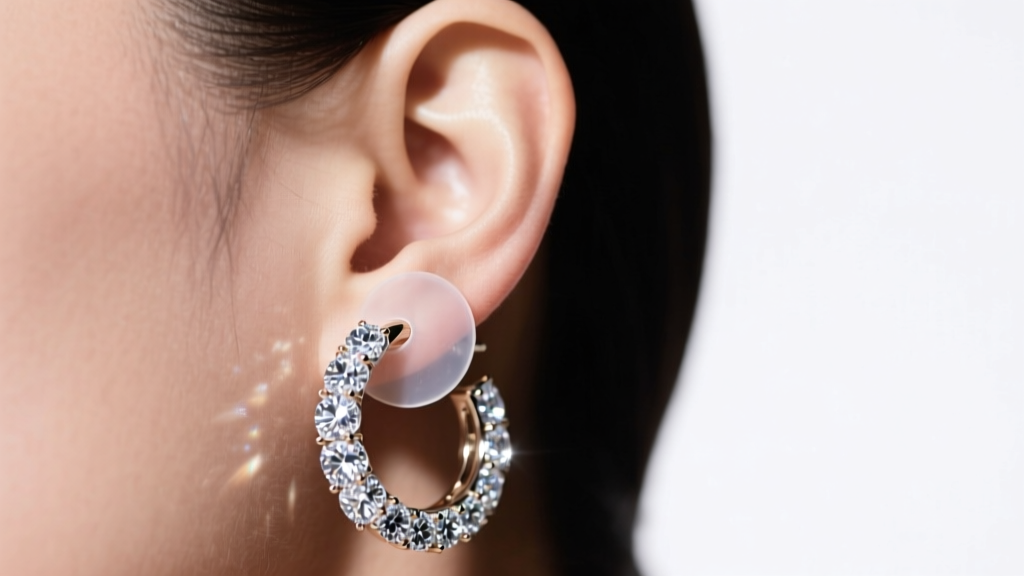
When analyzing the iconic jewelry moments of the last decade, the diamond earring Kim Kardashian frequently wears on red carpets and in editorial shoots sets a massive trend. From Lorraine Schwartz’s gravity-defying floral clusters to Jacob & Co.’s massive pear-shaped drops, these pieces are masterclasses in high jewelry. However, replicating or wearing these heavy, high-carat styles introduces severe structural and maintenance challenges. Standard jewelry settings are rarely engineered to support 15+ grams of platinum and diamonds on a delicate earlobe. In this 2026 troubleshooting guide, we break down the exact failure modes of high-carat celebrity earring styles and provide actionable, jeweler-grade solutions to fix lobe droop, prevent catastrophic loss, and maintain optical brilliance.
Troubleshooting Lobe Droop: Gauge Sizing and Weight Distribution
The most common complaint when wearing celebrity-inspired diamond hoops or heavy chandelier drops is lobe fatigue and forward drooping. The human earlobe can comfortably support approximately 4 to 6 grams before experiencing micro-tears or permanent stretching. Many of the iconic diamond earring Kim Kardashian styles weigh between 12 and 25 grams per ear.
The Gauge Thickness Fix
Standard fine jewelry posts are typically 20-gauge (0.81mm) or 19-gauge (0.91mm). Under the pendulum effect of a heavy diamond drop, a 20-gauge post will bend, warp, or slice through the piercing channel. To troubleshoot this, request your jeweler to upgrade the post to an 18-gauge (1.02mm) or 16-gauge (1.29mm) wire. Note that if your piercing was done with a standard 20-gauge needle, you will need to have a professional piercer gradually taper the hole to accommodate the thicker, supportive post.
External Support Mechanisms
If upgrading the gauge is impossible, you must distribute the weight across a wider surface area behind the ear. Use invisible silicone earlobe support patches (like LobeWonder) which feature a medical-grade adhesive that spreads the downward vector force across the back of the lobe. Alternatively, swap standard push-backs for jumbo silicone friction backs that measure at least 12mm in diameter to create a wider load-bearing shelf.
Security Failures: Why Standard Push-Backs Risk Million-Dollar Drops
High-carat diamond earrings represent a massive financial investment, yet they are frequently secured by the weakest component: the friction push-back. The Jewelers of America notes that friction backs rely solely on the tension of a grooved post, which degrades over time as the metal fatigues from repeated removal. For heavy statement pieces, this is a catastrophic failure point.
Earring Back Security & Weight Capacity Matrix
| Backing Type | Weight Capacity | Security Level | Best Application |
|---|---|---|---|
| Standard Friction | < 3 Grams | Low | Lightweight everyday studs |
| Jumbo Silicone | < 8 Grams | Medium | Heavy hoops, lobe support |
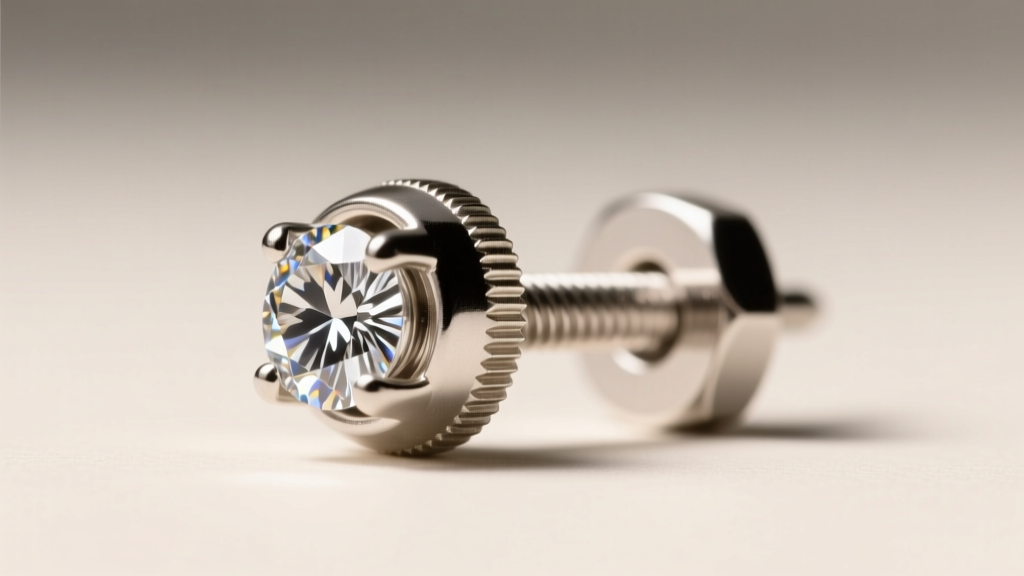
| Screw-Back | < 15 Grams | High | High-value solitaires |
| La Pousette | < 25+ Grams | Very High | Red carpet drops, heavy clusters |
| Omega Clip | < 30 Grams | High | Lobe-hugging button clusters |
For any diamond piece exceeding 5 carats total weight, insist on a La Pousette locking back or a threaded screw-back. The La Pousette mechanism utilizes a spring-loaded internal clutch that snaps securely into a deep groove on the post, making it physically impossible to slide off without depressing the side triggers. This is the exact hardware used by celebrity jewelers to insure pieces loaned for the Met Gala and Oscars.
The Cluster Trap: Restoring Sparkle to Complex Diamond Settings
Kim Kardashian frequently wears intricate pavé, geometric, and floral cluster settings. While visually stunning, these settings are notorious traps for sebum, skincare residues (like heavy silicone-based moisturizers), and setting sprays. Because diamonds are highly lipophilic (oil-attracting), a microscopic layer of oil will completely kill the stone's light return, making a D-color diamond look like a cloudy I-color.
The Chemistry of Diamond Cleaning
According to the GIA Diamond Care Guide, ultrasonic cleaners are highly effective for shaking loose debris from deep pavé settings. However, you must exercise extreme caution. If your diamond earring features fracture-filled stones, or if the cluster incorporates porous accent stones like emeralds, opals, or pearls, ultrasonic vibrations will shatter the filler or cloud the porous gems.
The Safe Manual Protocol
- The Solution: Mix a 1:6 ratio of household ammonia to warm distilled water. Ammonia cuts through the hydrophobic lipid barrier that dish soap often leaves behind.
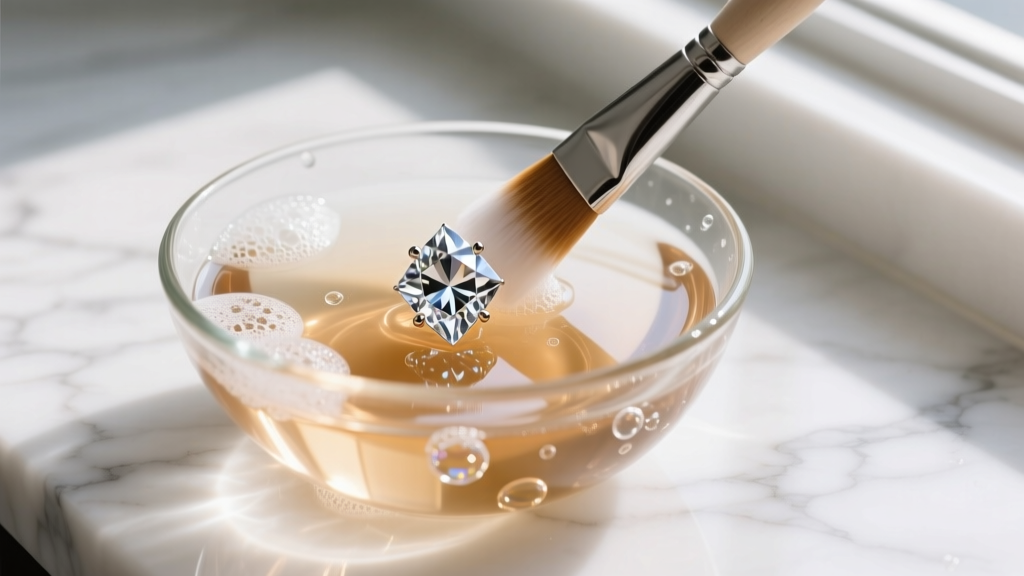
- The Tool: Use a baby-soft toothbrush or a specialized jewelry brush with ultra-fine nylon bristles to reach beneath the gallery wire.
- The Technique: Soak for 15 minutes, gently agitate the brush from the pavilion (bottom) side of the diamonds, and rinse with distilled water to prevent hard water spot calcification.
Metal Fatigue: Choosing the Right Alloy for Heavy Settings
The final troubleshooting point for heavy diamond earrings is the metal alloy itself. While 18k yellow gold is prized for its rich color and high purity, it is inherently softer than 14k gold or platinum. When an 18k gold post is subjected to the lateral torque of a heavy diamond hoop swinging, it will eventually succumb to metal fatigue and snap at the solder joint where the post meets the earring head.
To solve this, high-end jewelers employ a bi-metal construction. They will craft the decorative hoop or cluster in 18k yellow gold, but engineer the post, the head, and the structural gallery wire in Platinum 950 or 14k white gold. Platinum's tensile strength and malleability mean it will bend and stretch before it snaps, providing a crucial early warning sign and preventing the sudden loss of a $100,000 diamond earring. Always inspect the solder joints of heavy earrings every six months under a 10x jeweler's loupe for micro-fractures.
Appraisal & Insurance Troubleshooting for Celebrity-Grade Pieces
When purchasing or replicating high-carat diamond earrings, a common point of failure occurs during the insurance appraisal process. Standard homeowner's policies have strict sub-limits for jewelry (often capped at $1,500 to $2,500). To properly cover a piece inspired by the diamond earring Kim Kardashian wore to the Met Gala, you must secure a scheduled personal articles floater.
Troubleshooting appraisal discrepancies requires ensuring your jeweler provides a document that details the exact GIA Diamond Anatomy metrics, including the 4Cs, fluorescence, and specific millimeter dimensions of the stones. Furthermore, the appraisal must explicitly state the metal weight and the type of setting (e.g., 'platinum 950 La Pousette locking mechanism'). If the appraisal lacks these granular details, insurance adjusters may depreciate the replacement value by up to 40% in the event of a claim.
Final Thoughts on High-Carat Troubleshooting
Achieving the flawless, high-impact look of a diamond earring Kim Kardashian champions requires more than just a large budget; it demands an understanding of jewelry engineering. By upgrading your post gauges, utilizing locking hardware, and adhering to strict lipophilic cleaning protocols, you can wear heavy, high-carat diamond earrings with total confidence and structural security.


