Rainbow Earrings Hoops: Technical Anodization Guide 2026
Discover the metallurgy behind rainbow earrings hoops. Compare titanium vs niobium anodization voltages, gauge tolerances, and 2026 care protocols.

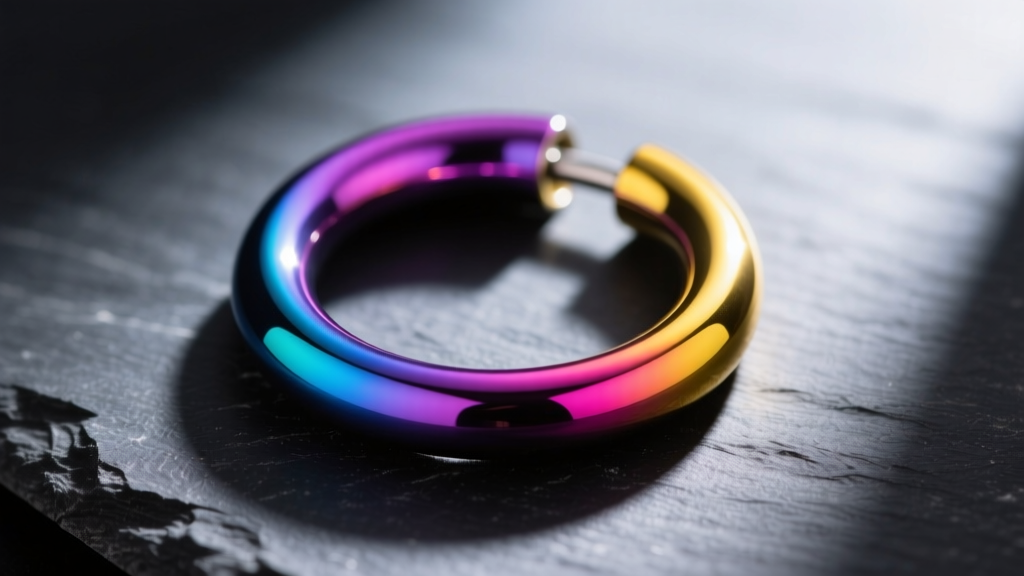
The Electrochemistry of Reactive Metal Color
When evaluating high-end rainbow earrings hoops, it is critical to distinguish between superficial surface treatments and permanent metallurgical transformations. In the professional body jewelry sector, authentic rainbow coloration is not achieved through paints, resins, or electroplating. Instead, it is the result of anodization—an electrolytic passivation process that increases the thickness of the natural oxide layer on the surface of reactive metals. According to the Association of Professional Piercers (APP), anodized titanium and niobium represent the gold standard for hypoallergenic, vibrantly colored jewelry that will not flake, peel, or induce contact dermatitis.
The colors you see in a premium rainbow hoop are not actually pigments. They are caused by thin-film interference. As light passes through the transparent titanium dioxide (TiO2) or niobium pentoxide (Nb2O5) layer and reflects off the metal substrate beneath, specific wavelengths of light interfere constructively or destructively. By precisely controlling the voltage applied during the anodization bath, manufacturers dictate the exact nanometer thickness of the oxide layer, thereby 'tuning' the hoop to reflect specific colors of the visible light spectrum.
Substrate Selection: Titanium vs. Niobium for Hoops
The structural integrity of rainbow earrings hoops depends entirely on the base metal. While both titanium and niobium can be anodized to produce brilliant rainbow gradients, their mechanical properties dictate their application in hoop designs.
ASTM F136 Titanium (Ti-6Al-4V ELI)
Grade 23 titanium, compliant with the ASTM F136 Standard, is the premier substrate for hinged clickers and segment rings. The alloy's high tensile strength and fatigue resistance allow for the machining of ultra-precise hinge mechanisms and tension-fit segment closures. However, titanium requires higher voltages to achieve certain colors and possesses a rigid crystalline structure that makes it difficult to bend into seamless continuous rings without specialized annealing.
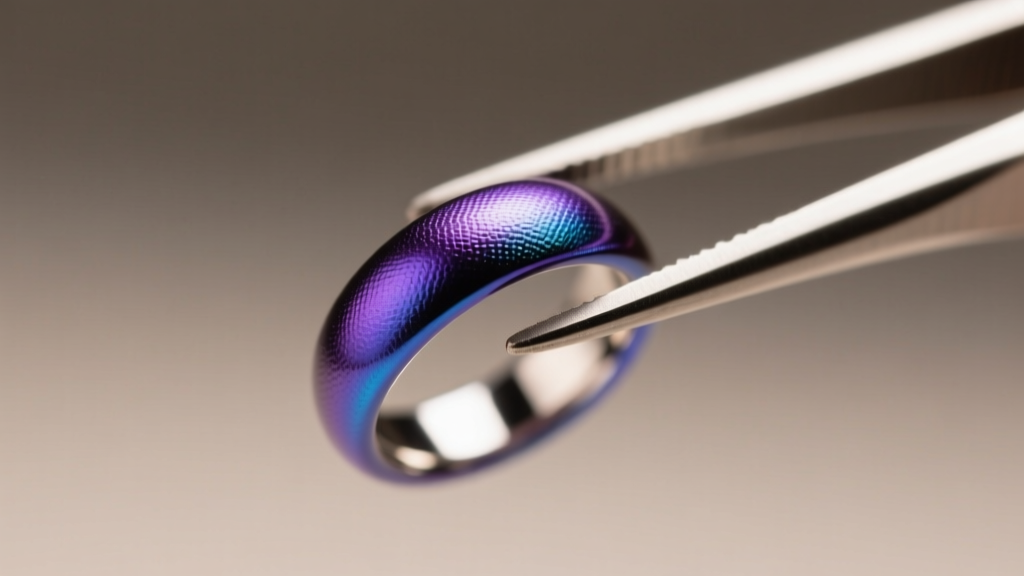
Unalloyed Niobium
Niobium is significantly softer and more malleable than titanium. This makes it the superior choice for seamless captive bead rings (CBRs) and continuous hoops that must be bent open and closed by hand or with ring-opening pliers. The oxide layer on niobium also forms more rapidly and can achieve deeper, more saturated magentas and blues at slightly lower voltage thresholds. The trade-off is structural: niobium is generally unsuitable for hinged clickers, as the metal lacks the memory and rigidity required to keep a microscopic hinge pin securely locked under the lateral torque of a healed cartilage piercing.
Voltage-to-Color Matrix: Engineering the Rainbow
To produce a true 'rainbow' effect on a single hoop, jewelers utilize a technique called gradient masking or step-anodization. The hoop is slowly lowered into an electrolytic bath (typically a mild trisodium phosphate or baking soda solution) while the voltage is held constant, or the voltage is stepped up while the piece is fully submerged. Below is the technical matrix for titanium anodization:
| Target Voltage (DC) | Oxide Thickness (approx.) | Resulting Color | Hoops Application |
|---|---|---|---|
| 10 - 15V | 20 - 35 nm | Copper / Bronze | Base layer / Warm gradient start |
| 20 - 30V | 45 - 60 nm | Deep Purple | Mid-tone transition |
| 45 - 55V | 80 - 100 nm | Steel Blue | Primary cool tone |
| 65 - 75V | 110 - 130 nm | Teal / Light Blue | Highlight reflection |
| 80 - 90V | 140 - 160 nm | Gold / Green | Rare transition band |
| 100 - 115V | 170 - 200 nm | Magenta / Pink | Outer gradient edge |
Note: If a jeweler attempts to push titanium past 120V, the oxide layer undergoes dielectric breakdown, resulting in a milky, opaque white finish that scatters light rather than reflecting distinct spectral colors.
Mechanical Tolerances and Hoop Mechanisms
The introduction of a rainbow anodized finish complicates the manufacturing tolerances of hoop closures. The anodized oxide layer adds between 20 and 200 nanometers of thickness to the metal. While this seems negligible, in the context of a 16-gauge (1.2mm) hinged clicker, it can interfere with the closure mechanism.
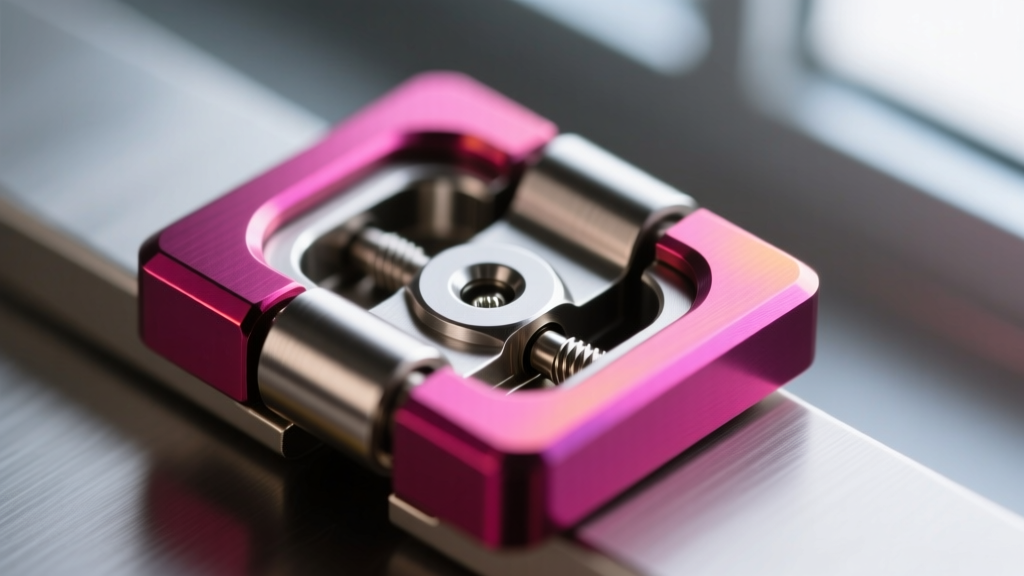
- Hinged Clickers: Premium manufacturers mask the internal hinge pin and the receiving latch with a non-conductive lacquer prior to anodizing. If the hinge is anodized, the added oxide friction can cause the latch to bind, or worse, the microscopic oxide layer can shear off inside the joint, leading to a gritty closure and eventual mechanical failure.
- Segment Rings: These rely on the precise compression fit of a removable segment into the hoop body. Anodizing the entire piece increases the outer diameter of the segment and decreases the inner diameter of the receiving tube. Jewelers must machine the segment slightly undersized to account for the specific voltage thickness of the requested rainbow gradient.
- Captive Bead Rings (CBRs): The tension required to hold the bead in place is calculated based on the raw metal's spring rate. Because anodization does not alter the bulk metallurgical properties of the titanium or niobium, the tension remains unaffected, provided the bead itself is either unanodized or anodized to a matching tolerance.
Failure Modes: Dielectric Breakdown and Wear
Despite the permanence of the electrochemical bond, the oxide layer on rainbow earrings hoops is vulnerable to specific environmental and mechanical failure modes. Understanding these is crucial for long-term care and troubleshooting.
The rainbow color is not a coating that 'chips' off; it is the metal itself. However, because the colored oxide layer is only nanometers thick, physical abrasion will wear it away, revealing the natural gunmetal gray of the raw titanium beneath.
1. Galvanic Corrosion and Battery Contact
If an anodized titanium hoop comes into contact with a dissimilar metal (such as a stainless steel piercing clamp or a silver jewelry box) in the presence of an electrolyte (like saline or sweat), a micro-galvanic cell is formed. This can cause localized arcing, which instantly burns the oxide layer, leaving permanent gray or black scorch marks on the rainbow gradient.
2. Ultrasonic Cleaning Arcing
Never place anodized rainbow hoops in an ultrasonic cleaner alongside other metals. The high-frequency vibrations and cavitation bubbles can cause the jewelry to strike the stainless steel basket of the cleaner. This metal-to-metal contact in a conductive cleaning solution will strip the anodized color via electrical discharge.
3. pH Degradation
While titanium dioxide is highly chemically inert, extreme alkaline environments (pH > 11) can slowly dissolve the oxide layer. Avoid cleaning rainbow hoops with harsh alkaline soaps or industrial degreasers; a simple sterile saline spray or mild, pH-neutral glycerin soap is sufficient to maintain the optical clarity of the surface.
2026 Sourcing Standards and Brand Benchmarks
As of 2026, the market is saturated with cheap, acrylic-coated 'rainbow' hoops that cause severe allergic reactions. When sourcing authentic reactive metal rainbow earrings hoops, verify that the manufacturer provides mill certificates for ASTM F136 titanium or unalloyed niobium. Industry leaders such as Neometal, Industrial Strength Body Jewelry, and Body Vision Los Angeles (BVLA) utilize proprietary masking techniques and computer-controlled DC rectifiers to ensure flawless, arcing-free rainbow gradients. Always demand internally threaded or threadless (push-pin) ends for any hoop attachments to prevent tissue tearing and preserve the structural integrity of the anodized surface during insertion.


