Koi Earrings: A Beginner’s Guide to Styles, Metals, and Placement
Discover everything about koi earrings in our beginner-friendly guide. Learn about enamel vs. metal styles, gauge sizes, and ear placements.

The Symbolism Behind Koi Fish Jewelry
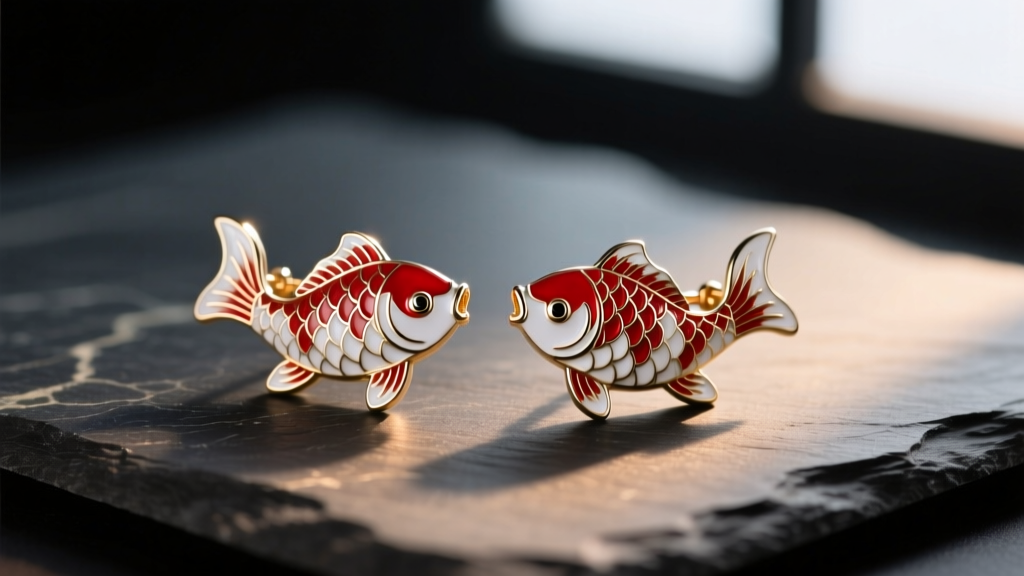
Before diving into the metallurgy and sizing of koi earrings, it is essential to understand the rich cultural symbolism that makes this motif so enduring. In Japanese and Chinese mythology, the koi fish is revered for its perseverance and strength. According to legend, a koi that successfully swims upstream against the powerful currents of the Yellow River and leaps over the Dragon Gate is transformed into a majestic dragon. When you wear koi fish earrings, you are often carrying a talisman of resilience, ambition, and transformation.
The direction the koi faces in the jewelry design also carries specific meaning. A koi swimming upward (toward the earlobe or helix) represents a current struggle, active perseverance, and the drive to overcome adversity. Conversely, a koi swimming downward signifies that the wearer has already achieved their goals and is enjoying a state of peace and success. Furthermore, color plays a vital role: red or orange koi symbolize love and bravery, black represents overcoming hardship, and white denotes career success and spiritual purity.
Material Breakdown: Enamel vs. Cast Metal
Because koi fish are famous for their vibrant, multi-colored scales, jewelers must use specialized techniques to capture their beauty. The two primary methods you will encounter when shopping for koi earrings are enamel work and cast metal detailing.
Cloisonné and Champlevé Enamel
Enamel is the most popular medium for koi designs because it allows for sharp, opaque color blocking. According to the educational resources at Lang Antiques University, the two most common techniques used in fine jewelry are cloisonné and champlevé. Cloisonné involves soldering microscopic gold or silver wires onto a metal base to create 'cells' which are then filled with glass powder and fired in a kiln. Champlevé, on the other hand, involves carving troughs directly into a thick piece of metal before filling them with enamel. For beginners, cloisonné koi earrings offer a stunning, stained-glass effect, but the glass surface can be brittle if dropped on a hard surface.
Hypoallergenic Metals for Sensitive Earlobes
If you prefer a more minimalist look, cast metal koi earrings rely on texture and gemstone accents rather than color. When choosing metal, your skin sensitivity should dictate your purchase. For newly pierced lobes or cartilage, the Association of Professional Piercers (APP) strongly recommends implant-grade titanium (ASTM F136). Titanium is completely nickel-free, lightweight, and will not react with your body's healing fluids. If you are buying solid gold, ensure it is 14k or 18k; anything lower may contain nickel or copper alloys that can cause contact dermatitis. Avoid 'gold-plated' brass for everyday wear, as the plating will eventually wear off, exposing your skin to reactive base metals.
Sizing, Gauges, and Ear Placement
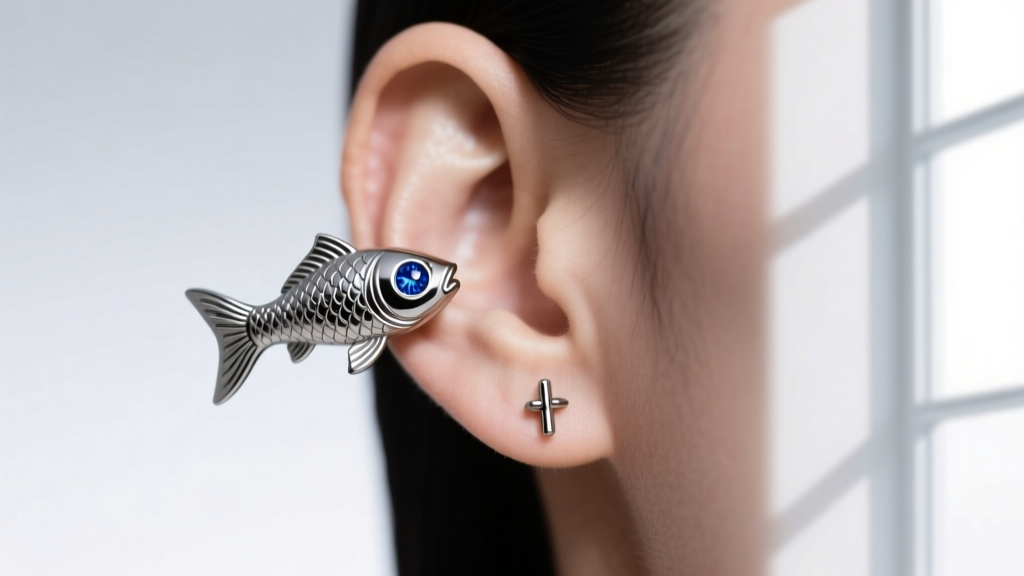
One of the most common mistakes beginners make is ignoring the 'gauge' (thickness) of the earring post and how it relates to the weight of the koi design. Gauge is measured inversely: the lower the number, the thicker the metal wire. A standard fashion earring is usually 20-gauge (0.81mm), but a heavy, solid-silver cast koi earring on a 20G wire will act like a cheese slicer, slowly migrating through your earlobe over time due to gravity.
| Ear Placement | Standard Gauge Size | Best Koi Earring Style | Weight & Design Considerations |
|---|---|---|---|
| Standard Lobe | 20G (0.81mm) or 18G (1.02mm) | Drop earrings, Dangles, Studs | Use 18G for heavy cast metal or large enamel drops to prevent lobe stretching. |
| Upper Lobe / Flat | 18G (1.02mm) | Small studs, Ear cuffs | Keep designs under 3 grams to avoid pulling on delicate secondary piercings. |
| Helix / Cartilage | 16G (1.29mm) or 18G (1.02mm) | Flat-back labret studs, Clickers | Must use internally threaded or threadless titanium to avoid cartilage irritation. |
| Tragus | 16G (1.29mm) | Micro koi studs (3mm - 5mm) | Requires a very short post length (5mm - 6mm) to sit flush against the cartilage. |
For cartilage piercings like the helix, a koi fish design is often crafted as a flat-back labret stud. This ensures the fish lies flat against the ear without catching on hair or clothing. Always opt for 'threadless' or 'internally threaded' jewelry for cartilage; externally threaded posts (where the screw grooves are on the post itself) can tear the delicate fistula of the piercing when inserted.
Face Shape and Styling Mechanics
Koi earrings are incredibly versatile, but adjusting the silhouette of the earring to complement your face shape will elevate your styling from good to masterful.
- Round Faces: Avoid circular koi hoops or wide huggies, as they will emphasize the roundness of your face. Instead, opt for elongated koi drop earrings where the fish is depicted swimming straight down. The vertical lines will help visually lengthen your face and jawline.
- Square Faces: Soften a strong, angular jawline with curved designs. A koi fish that wraps around a circular hoop, or a Yin-Yang pair of koi earrings that form a soft, organic circle, will beautifully balance your facial structure.
- Heart-Shaped Faces: Since your forehead is wider than your chin, you want to add visual weight to the lower half of your face. Chandelier-style koi earrings or dangles with gemstone accents (like sapphire or ruby eyes) at the bottom of the fish will draw the eye downward and create perfect symmetry.
- Oval Faces: You have the most versatile face shape. Nearly any koi earring style—from delicate 5mm cartilage studs to dramatic 3-inch enamel dangles—will suit your proportions.
How to Clean and Maintain Enamel Koi Earrings
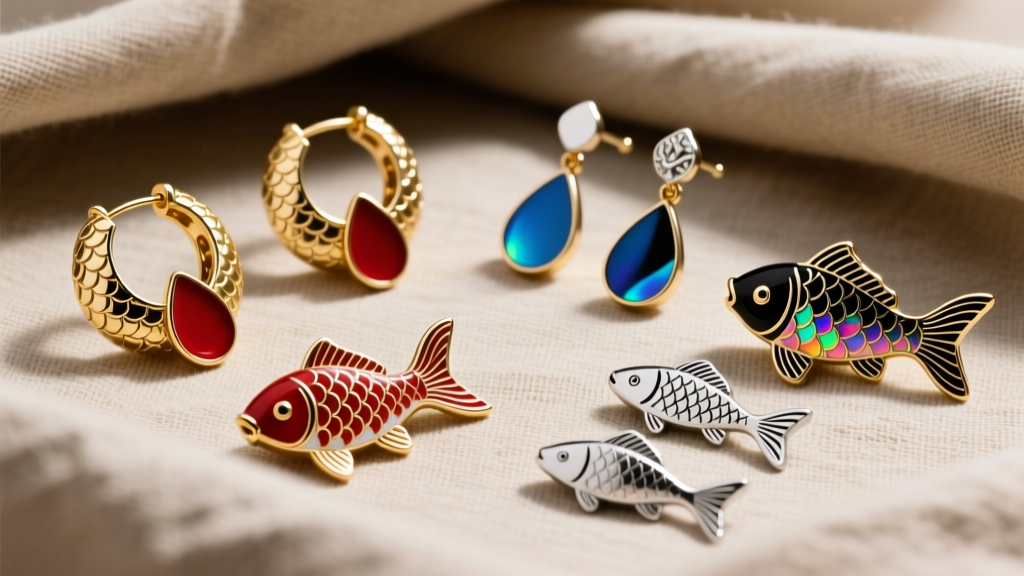
Enamel koi earrings require a very specific care routine. The glass-like finish is highly susceptible to thermal shock and chemical degradation. If you clean them incorrectly, the vibrant reds and whites of the koi scales will cloud, crack, or pop out of their metal settings.
The 'Do's' of Enamel Care
- Use Mild Surfactants: Mix a few drops of gentle, phosphate-free dish soap (like Dawn) into a bowl of lukewarm water.
- Use a Baby Toothbrush: Dip an extra-soft baby toothbrush into the soapy water and gently brush the metal prongs and the surface of the enamel to remove skin oils and lotion buildup.
- Dry Immediately: Pat the earrings completely dry with a microfiber cloth. Leaving water to air-dry can cause hard water spots on the enamel and tarnish the silver or copper base metal.
The 'Don'ts' of Enamel Care
- NEVER use an ultrasonic cleaner: The high-frequency sound waves used to clean diamond rings will shatter the glass enamel on your koi earrings instantly.
- NEVER use silver dip or liquid tarnish removers: These harsh acids will strip the polish right off the enamel, leaving it permanently dull and porous.
- AVOID extreme temperature changes: Do not wear enamel koi earrings in a sauna or hot tub, and then immediately jump into a cold pool. The rapid expansion and contraction of the metal base will cause the enamel to craze (develop micro-fractures).
Pricing Tiers: What to Expect
Understanding the market pricing for koi earrings will help you identify quality pieces and avoid overpaying for mass-produced fashion jewelry.
Budget Tier ($15 - $45): In this range, you will find gold-plated or silver-plated brass earrings with basic epoxy resin or cold enamel (paint) fills. These are great for occasional wear or testing out the koi aesthetic, but expect the plating to wear off within 6 to 12 months of regular use.
Mid-Tier ($60 - $180): This is the sweet spot for most buyers. Here, you will find solid 925 sterling silver pieces featuring genuine vitreous (kiln-fired) cloisonné enamel. You may also find 14k gold vermeil (a thick layer of gold over sterling silver) with small cubic zirconia accents. These pieces offer excellent longevity if cared for properly.
Fine Jewelry Tier ($300 - $1,500+): At the luxury level, koi earrings are cast in solid 14k or 18k gold, or platinum. The 'enamel' is often replaced by custom-cut gemstones (like chalcedony, jade, or sapphires) that are bezel-set to mimic the scales of the fish. These are heirloom-quality investment pieces that will retain their value and can be passed down through generations.
Whether you choose a minimalist titanium helix stud or a pair of dramatic cloisonné drops, koi earrings offer a beautiful blend of artistic expression and personal meaning. By paying close attention to gauge sizes, metal purity, and proper enamel care, your koi jewelry will remain as vibrant and resilient as the mythical fish it represents.


