Ladybird Earrings: A Beginner's Guide to Styling Bug Motifs
Discover how to style ladybird earrings with our beginner guide. Learn about enamel grades, metal types, and the best bug motifs for your face shape.

The Symbolism and Appeal of Nature-Inspired Jewelry
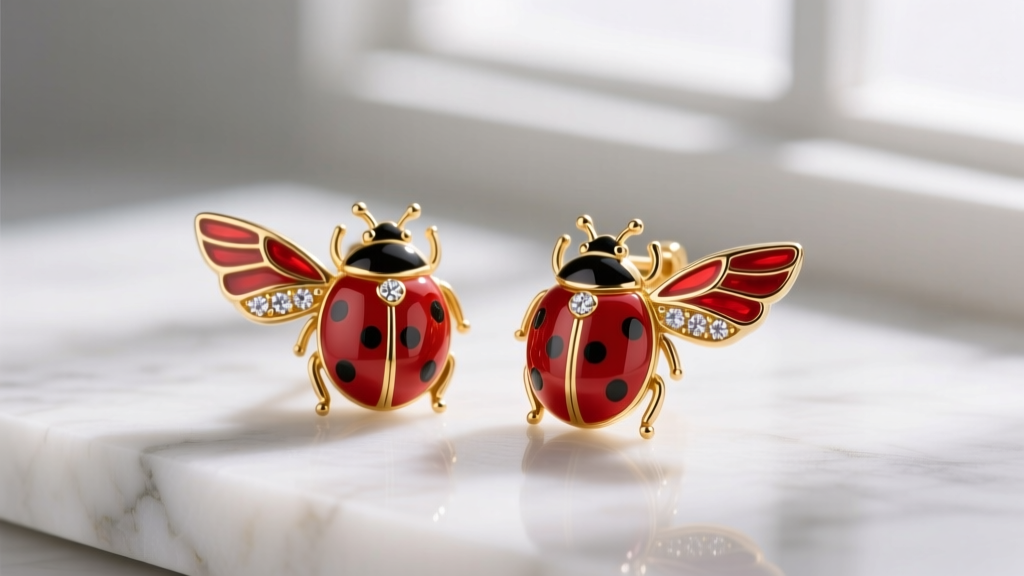
Nature-inspired jewelry has maintained a steadfast presence in the accessories market for centuries, but few motifs carry as much universal charm and positive symbolism as the ladybird. Often referred to as ladybugs in North America, ladybirds are globally recognized as harbingers of good luck, prosperity, and joy. For beginners stepping into the world of novelty and motif-based jewelry, ladybird earrings offer a perfect entry point. They strike an ideal balance between whimsical self-expression and sophisticated craftsmanship, provided you know what to look for regarding materials and construction.
Unlike generic geometric studs, insect motif jewelry requires a keen eye for detail. The curvature of the wings, the placement of the spots, and the vibrancy of the coloration all dictate whether a piece looks like a cheap trinket or a fine jewelry staple. This comprehensive guide will walk you through the metallurgy, enamel techniques, and styling frameworks necessary to curate a high-quality ladybird earring collection that transcends fleeting trends.
Decoding Materials: Enamel Types and Metal Bases
The defining feature of most ladybird earrings is their vibrant red or orange wing casings. Achieving this color requires enamel work, but not all enamel is created equal. Understanding the difference between these techniques is crucial for assessing quality and longevity.
Cold Enamel (Epoxy Resin) vs. Vitreous Enamel
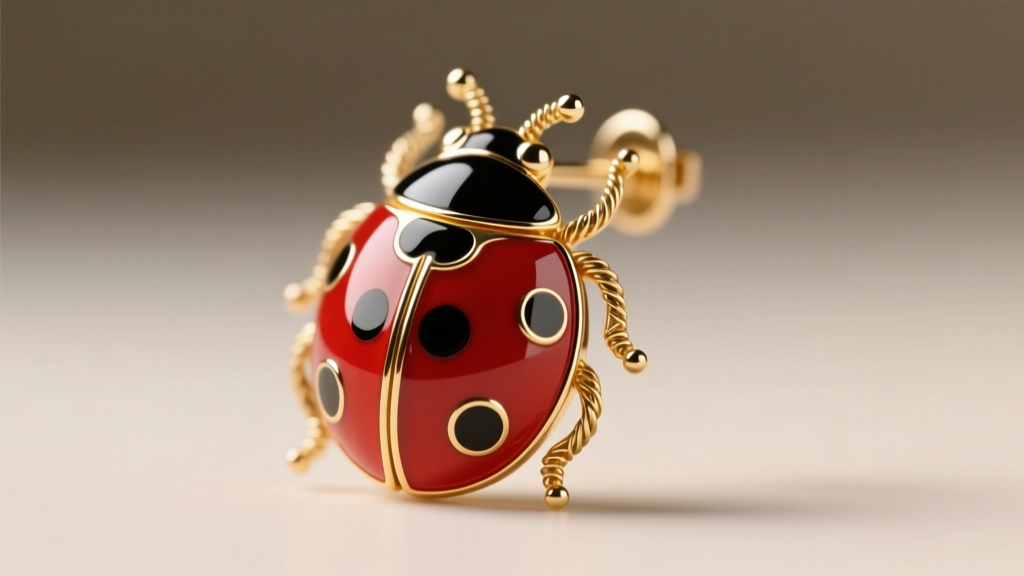
Budget-friendly ladybird earrings typically utilize cold enamel, which is essentially a pigmented epoxy resin. While it allows for bright, opaque colors and is inexpensive to produce, cold enamel is prone to yellowing under UV exposure and can chip or peel away from the metal base over time. In contrast, vitreous enamel involves fusing powdered glass to a metal substrate at extremely high temperatures (typically between 1,400°F and 1,600°F). The result is a brilliant, scratch-resistant, and permanent glass finish that will not fade. According to the Gemological Institute of America (GIA), vitreous enamel has been used in fine jewelry for millennia due to its enduring stability and gem-like luster.
Cloisonné and Champlevé Techniques
If you are investing in mid-to-high-tier ladybird earrings, look for the cloisonné technique. This involves soldering microscopic gold or silver wires onto the metal base to create tiny compartments (cloisons) which are then filled with enamel. This not only prevents color bleeding but adds a stunning textural element to the insect's wings. Champlevé, on the other hand, involves carving troughs into the metal itself before filling them with enamel, resulting in a slightly more recessed, vintage aesthetic.
Metal Bases and Hypoallergenic Requirements
The metal beneath the enamel is just as important. Avoid brass or nickel-silver bases if you have sensitive earlobes, as the metal can leach through microscopic enamel fractures or react at the earring post. Opt for 925 Sterling Silver or 14k/18k Gold Vermeil. Vermeil is strictly regulated; it must consist of a sterling silver base plated with at least 2.5 microns of 10k or higher gold. This ensures the earring post remains hypoallergenic while providing the warm, luxurious glow that complements red and black enamel perfectly.
Face Shape Matching: A Structured Approach
Because ladybird earrings come in various silhouettes—from compact studs to elaborate dangling drops—beginners should select styles that harmonize with their natural facial geometry. The goal is to create balance, either by contrasting sharp features with rounded motifs or elongating softer features with vertical drops.
| Face Shape | Ideal Ladybird Silhouette | Styling Rationale |
|---|---|---|
| Round | Dangle or Drop Earrings | Vertical movement elongates the face. Look for ladybirds suspended from delicate chains or leaf motifs to draw the eye downward. |
| Square | Rounded Huggies or Climbers | Curved, organic shapes soften a strong jawline. A crawling ladybird ear climber adds movement without harsh geometric angles. |
| Oval | Asymmetrical Studs or Medium Hoops | Oval faces are highly versatile. A single statement ladybird stud on one ear paired with a smaller complementary stud on the other creates modern asymmetry. |
| Heart | Bottom-Heavy Teardrops | Wider foreheads and narrow chins benefit from visual weight at the bottom of the ear. Teardrop-shaped enamel ladybirds provide this balance beautifully. |
Piercing Placements and Gauge Specifications
While standard lobe piercings are the default home for most jewelry, the anatomy of a ladybird lends itself beautifully to alternative placements. However, beginners must understand gauge sizing to ensure a proper, safe fit without damaging the piercing channel.
Standard Lobe vs. Cartilage Sizing
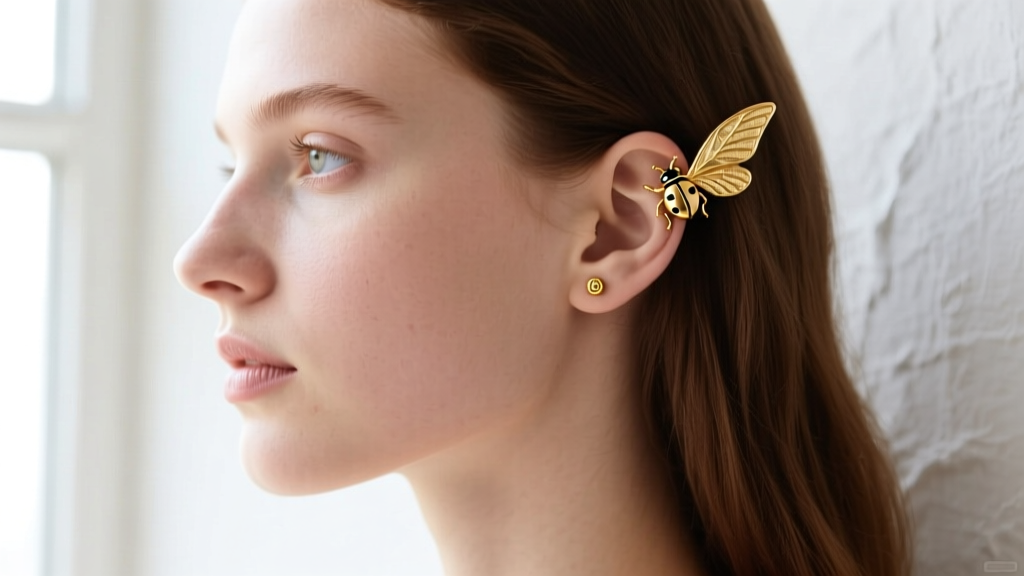
Most commercial ladybird studs are manufactured with a 20-gauge (0.8mm) or 18-gauge (1.0mm) post, which is standard for healed earlobe piercings. If you are looking to place a ladybird motif on your cartilage (such as the helix or tragus), you will likely need a 16-gauge (1.2mm) post or hoop. Forcing a thicker 16G earring into an 18G hole can cause micro-tears, while placing a thin 20G post into a 16G cartilage piercing can lead to the "cheese-cutter effect," where the thin metal migrates through the tissue.
For those considering a ladybird huggie or clicker ring for the helix, always measure your inner diameter carefully. A standard helix hoop requires an inner diameter of 8mm to 10mm to sit flush against the ear without pinching. The Association of Professional Piercers (APP) strongly recommends waiting until a piercing is fully healed (which can take up to a year for cartilage) before swapping to decorative, motif-heavy jewelry, as the intricate crevices of a ladybird design can harbor bacteria during the healing process.
Market Pricing Tiers: What to Expect
When shopping for ladybird earrings, price is a direct indicator of the manufacturing techniques and material integrity. Here is a breakdown of what you can expect across different market tiers in the current jewelry landscape.
- Fashion Tier ($15 - $45): Expect brass or alloy bases with cold enamel (resin) and cubic zirconia spots. The posts may be surgical steel, but the earring backs are often plated alloys that can tarnish quickly. These are fun for occasional wear but lack heirloom longevity.
- Demi-Fine Tier ($50 - $180): This is the sweet spot for most buyers. You will find 925 sterling silver bases, heavy gold vermeil plating, and fired vitreous enamel. Spots are often crafted from genuine marcasite or black spinel, offering a sophisticated, vintage-inspired contrast to the glossy red wings.
- Fine Jewelry Tier ($250+): At this level, you are paying for solid 14k or 18k gold, master-level cloisonné or guilloché enamel work (where enamel is laid over an engraved metal pattern), and natural diamond pavé accents. These pieces are often produced by heritage houses or specialized artisan enamelists and are designed to last generations.
Long-Term Care and Maintenance
Proper maintenance is vital, particularly for enamel and gemstone-set insect jewelry. Never place vitreous enamel or porous gemstones (like turquoise or pearls, which are sometimes used for the ladybird's head) in an ultrasonic cleaner. The high-frequency vibrations can cause microscopic fractures in the glass enamel or shatter delicate stone settings.
Instead, clean your ladybird earrings using a few drops of mild, phosphate-free dish soap and lukewarm water. Use a baby-soft toothbrush to gently sweep away lotion and skin oils from the crevices around the wings and spots. Dry immediately with a lint-free microfiber cloth to prevent water spots on the metal. Store them in a fabric-lined jewelry box away from direct sunlight to preserve the vibrancy of the enamel and prevent the metal from oxidizing.
"Jewelry is a way of keeping memories alive. When you choose a piece with a motif as timeless and universally beloved as the ladybird, you are investing in a symbol of joy that transcends seasonal fashion cycles."
By prioritizing vitreous enamel, hypoallergenic metals, and correct gauge sizing, beginners can confidently build a collection of ladybird earrings that is both deeply personal and impeccably crafted.


