Large Diamond Earrings: Metal & Stone Material Guide
Discover the best metal settings and stone types for large diamond earrings. Compare platinum, gold, and lab-grown options for secure, stunning wear.

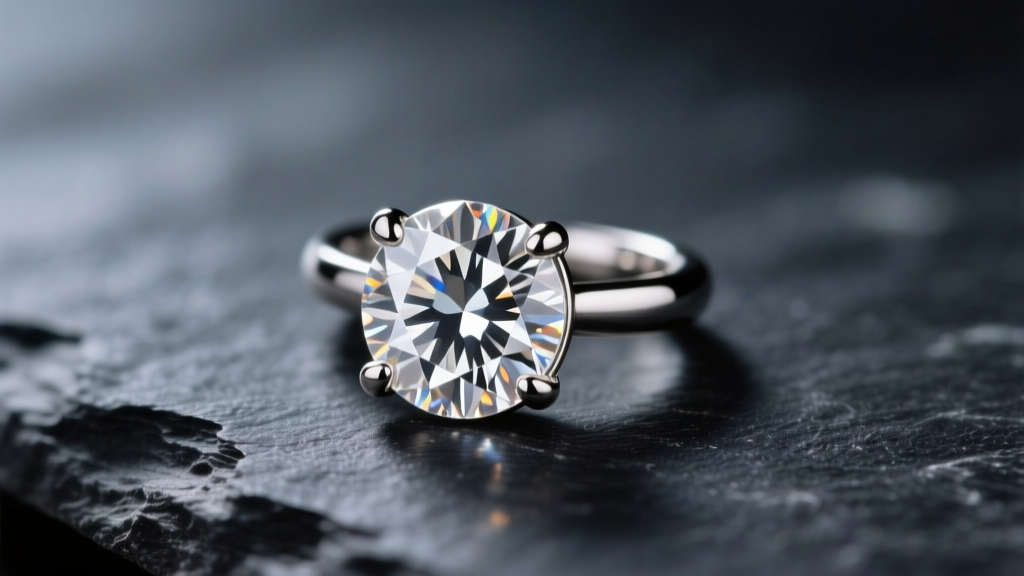
The Physics of Statement Jewelry: Why Material Matters
When investing in large diamond earrings, buyers often focus exclusively on the 4Cs of the gemstone. However, as the carat weight scales up, the physical properties of the setting metals and the structural engineering of the earring basket become just as critical as the stone itself. A standard 1.00-carat round brilliant diamond weighs approximately 0.20 grams. When you step into the realm of statement pieces—typically 2.50 to 5.00 carats per ear—the weight increases exponentially, creating immense leverage on the earlobe piercing.
The leverage exerted by large diamond earrings can cause standard friction posts to bend, earlobes to droop, and inferior prongs to wear away, leading to catastrophic stone loss. Understanding the metallurgical and gemological properties of your materials is the only way to ensure your investment remains secure and comfortable for daily wear.
Precious Metal Showdown: Platinum vs. White Gold
The basket and post of your earring dictate its longevity. While yellow and rose gold are popular for fashion jewelry, high-value large-format diamonds are traditionally set in white metals to maximize the stone's colorless brilliance. But not all white metals behave the same way under stress.
Platinum (950 Grade): The Heavyweight Champion
Platinum is the undisputed king of high-carat diamond settings. Most fine jewelry uses 950 Platinum (95% pure platinum, alloyed with 5% ruthenium or iridium for workability). According to the GIA Platinum Buying Guide, platinum possesses a unique property called "malleability without memory." When a platinum prong is struck or bent, the metal displaces rather than flakes away. This means a platinum prong securing a 4-carat stone will simply push metal around the girdle, maintaining its structural integrity for decades.
18k vs. 14k White Gold: The Alloy Compromise
White gold is an alloy of pure yellow gold mixed with white metals like nickel, palladium, or silver, and plated with rhodium.
- 18k White Gold (75% Gold): Softer and more malleable. It offers a premium feel but requires rhodium replating every 1-2 years. Prongs can wear thin over a decade of heavy use.
- 14k White Gold (58.5% Gold): Stiffer and more durable due to higher alloy content. It is highly resistant to bending, making it a practical choice for heavy earring posts, though it lacks the prestige and hypoallergenic properties of palladium-alloyed 18k gold.
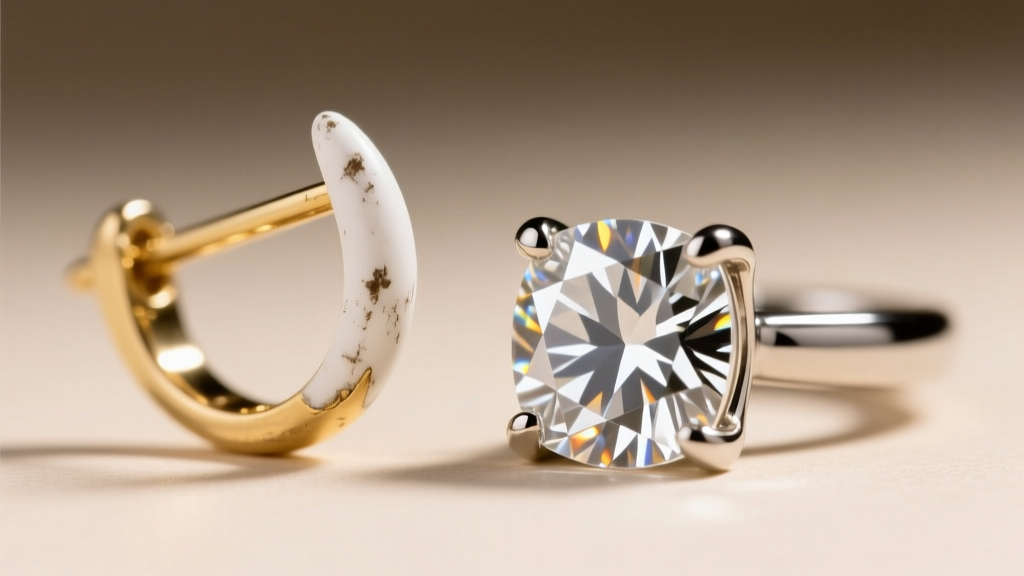
Comparing Core Materials: Natural, Lab-Grown, and Simulants
When selecting stones for large diamond earrings, the sheer size makes the choice between natural, lab-grown, and simulants a massive factor in both budget and physical wearability. The Gemological Institute of America (GIA) notes that lab-grown diamonds share the exact physical and chemical properties of mined diamonds, but simulants differ wildly.
| Stone Material | Density (g/cm³) | Hardness (Mohs) | Optical Property | Best Use Case |
|---|---|---|---|---|
| Natural Diamond | 3.52 | 10 | Single Refractive | Heirloom investments, daily wear |
| Lab-Grown (CVD/HPHT) | 3.52 | 10 | Single Refractive | Large-format luxury on a budget |
| Moissanite | 3.21 | 9.25 | Double Refractive | High-brilliance travel alternatives |
| Cubic Zirconia (CZ) | 5.60 - 6.00 | 8.0 - 8.5 | Single Refractive | Short-term costume jewelry only |
The Hidden Danger of Cubic Zirconia in Large Formats
Many buyers opt for Cubic Zirconia (CZ) as a diamond substitute for large statement earrings to save money. However, CZ is significantly denser than diamond (up to 70% heavier for the same volume). A 5-carat CZ earring will pull on the earlobe far more aggressively than a 5-carat natural or lab-grown diamond, leading to rapid earlobe stretching and post bending. Furthermore, CZ attracts oils and dirt, causing large stones to look cloudy and dull within weeks of wear.
Structural Engineering: Posts, Prongs, and Backings
Securing large diamond earrings requires specialized engineering that goes beyond standard jewelry manufacturing. If you are purchasing or commissioning earrings over 2.00 carats per ear, demand the following specifications:
Post Gauge and Threading
Standard earring posts are 20-gauge (0.81mm thick). For large, heavy diamonds, a 20-gauge post will eventually bend under the torque of daily movement. Insist on an 18-gauge (1.02mm) or even 16-gauge (1.29mm) solid post. Additionally, avoid hollow-core posts, which can crush under the pressure of a heavy friction back.
Prong Architecture
- Six-Prong vs. Four-Prong: For round brilliants over 2 carats, a six-prong setting is mandatory. If one prong fails, the stone remains caught by the remaining five.
- V-Prongs: If your large earrings feature Princess, Pear, or Marquise cuts, the sharp corners must be protected by V-prongs to prevent chipping upon impact.
- Double Gallery Wires: The basket should feature an upper and lower gallery wire to distribute the stone's weight evenly across the base of the post.
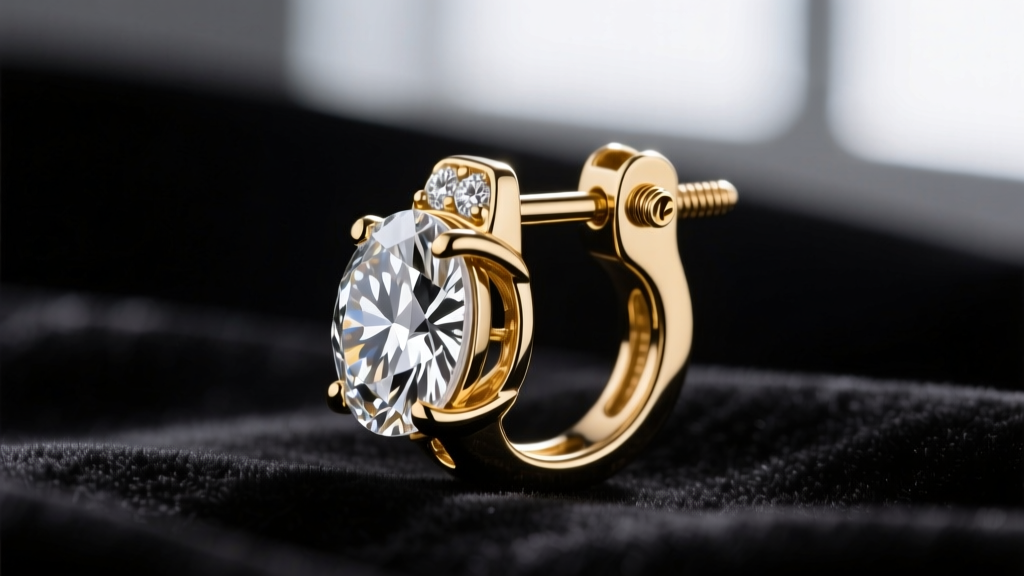
Counterbalancing with Advanced Backings
Standard butterfly friction backs are entirely insufficient for heavy earrings; they slip down the post, causing the diamond to tilt forward. Master jewelers recommend two alternatives:
- Screw-Backs: The post is threaded, and the backing screws on, making it impossible to slip or fall off.
- Omega or La Pousette Clips: These feature a hinged, spring-loaded mechanism that locks onto a grooved post, providing a secondary layer of security and distributing the weight across a wider surface area of the earlobe.
"When a client requests a 3-carat pear-shape drop earring, my first conversation isn't about the diamond's clarity—it's about the earlobe's tensile strength and the necessity of an articulated omega-back hinge to allow the earring to move with the head without snapping the post." — Senior Bench Jeweler, AJDC Member
Maintenance and Long-Term Wear Protocols
Large diamond earrings require meticulous maintenance. Because they sit close to the hair and neck, they are constantly exposed to lotions, perfumes, and natural oils.
- Ultrasonic Cleaning: Safe for natural and lab-grown diamonds in platinum or gold settings. Never use ultrasonic cleaners on fracture-filled diamonds or simulants like Moissanite and CZ, as the high-frequency vibrations can cause internal shattering or clouding.
- Prong Inspections: According to Jewelers of America, heavy earrings should undergo professional prong inspections every six months. The constant micro-movements of heavy stones can slowly stretch the metal seat (the bearing) inside the basket.
Expert Verdict: Building Your Perfect Pair
Creating the perfect pair of large diamond earrings is an exercise in balancing gemological beauty with structural physics. For stones exceeding 2.50 carats, 950 Platinum remains the only logical choice for the basket and prongs due to its displacement properties and sheer tensile strength. Pair this with a Lab-Grown or Natural Diamond to avoid the excessive density pitfalls of simulants, and ensure the piece is finished with an 18-gauge threaded post and screw-back. By prioritizing material integrity alongside visual brilliance, your statement earrings will remain secure, comfortable, and breathtaking for a lifetime.


