Material Guide to Large Gold Earrings for Women: Karats & Alloys
Discover how to choose large gold earrings for women based on karat, alloy weight, and hypoallergenic properties to protect your lobes and ensure longevity.

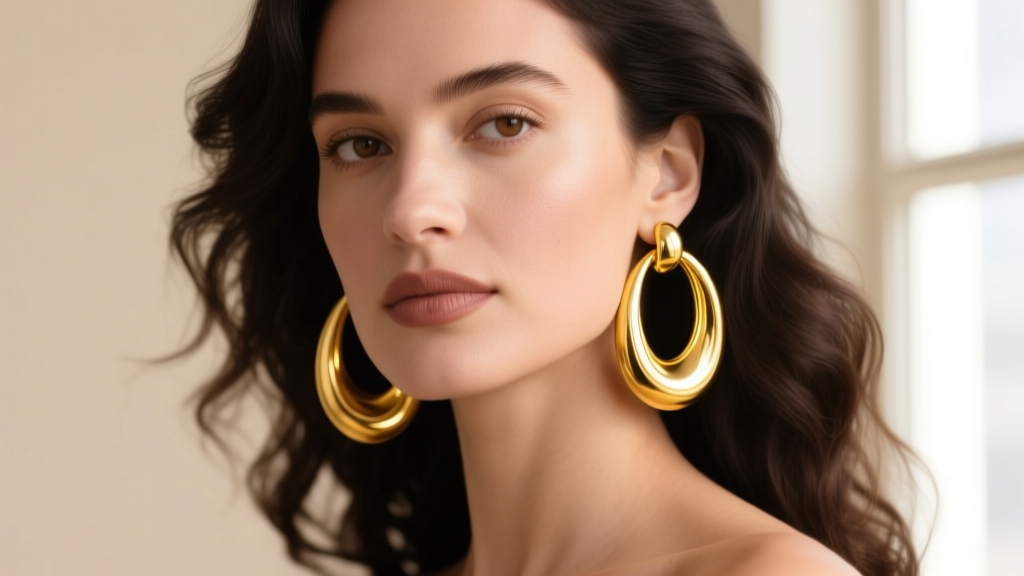
As architectural silhouettes and bold, oversized proportions dominate 2026 jewelry trends, the demand for large gold earrings for women has reached new heights. However, scaling up earring size introduces significant physical and dermatological challenges. A statement piece that measures three inches in diameter behaves entirely differently on the earlobe than a delicate 5mm stud. The success, comfort, and longevity of these heavy pieces depend entirely on their material composition.
Pure gold is exceptionally dense and inherently soft. When designing or purchasing oversized earrings, understanding the metallurgy of gold alloys, structural gauge requirements, and hypoallergenic thresholds is not just a matter of preference—it is essential for lobe health and garment safety. This guide decodes the material properties you must evaluate before investing in large-scale gold earwear.
The Physics of Statement Pieces: Why Karat Matters for Weight
The specific gravity of pure 24k gold is 19.3 g/cm³, making it nearly twice as dense as silver or copper. While this density gives gold its satisfying heft, it becomes a liability in large formats. A solid 24k gold hoop measuring 50mm in diameter with a 3mm thickness can easily exceed 18 grams per earring. Over a standard 20-gauge (0.81mm) piercing hole, this concentrated weight acts as a pendulum, gradually stretching the earlobe tissue and causing irreversible micro-tears.
To mitigate this, jewelers alloy pure gold with lighter, stronger metals like copper, silver, and zinc. Lowering the karat not only increases the tensile strength of the earring—preventing the post from snapping under the lever-action stress of a heavy drop—but it also marginally reduces the overall density of the piece. For large gold earrings for women, 14k and 18k represent the optimal intersection of rich color, structural integrity, and manageable weight.
Decoding Gold Alloys: 10k, 14k, 18k, and 22k Compared
The karat system dictates the ratio of pure gold to alloy metals. According to the Gemological Institute of America (GIA), the specific alloy mix determines the earring's color, hardness, and oxidation resistance. Below is a technical breakdown of how different karats perform in large-scale applications.
| Karat | Gold % | Common Alloy Metals | Tensile Strength | Best Use in Large Earrings | Price Tier |
|---|---|---|---|---|---|
| 10k | 41.7% | Copper, Zinc, Nickel | Very High | Intricate, heavy chandelier styles requiring rigid wirework. | $ |
| 14k | 58.3% | Silver, Copper, Zinc | High | Everyday oversized hoops and heavy geometric drops. | $$ |
| 18k | 75.0% | Copper, Silver, Palladium | Moderate | Luxury statement pieces, sculptural cuffs, and solid cast drops. | $$$ |
| 22k | 91.6% | Copper, Silver | Low | Lightweight, hollow-formed traditional designs (e.g., Jhumkas). | $$$$ |
Hypoallergenic Properties and Lobe Health
When wearing large gold earrings for women, the surface area in contact with the skin increases dramatically. This expanded contact zone traps heat and perspiration, creating an ideal environment for contact dermatitis if the alloy contains reactive metals. Nickel is the most common culprit, but copper-heavy alloys (often used in rose gold) can also cause greenish oxidation stains and irritation when exposed to acidic sweat.
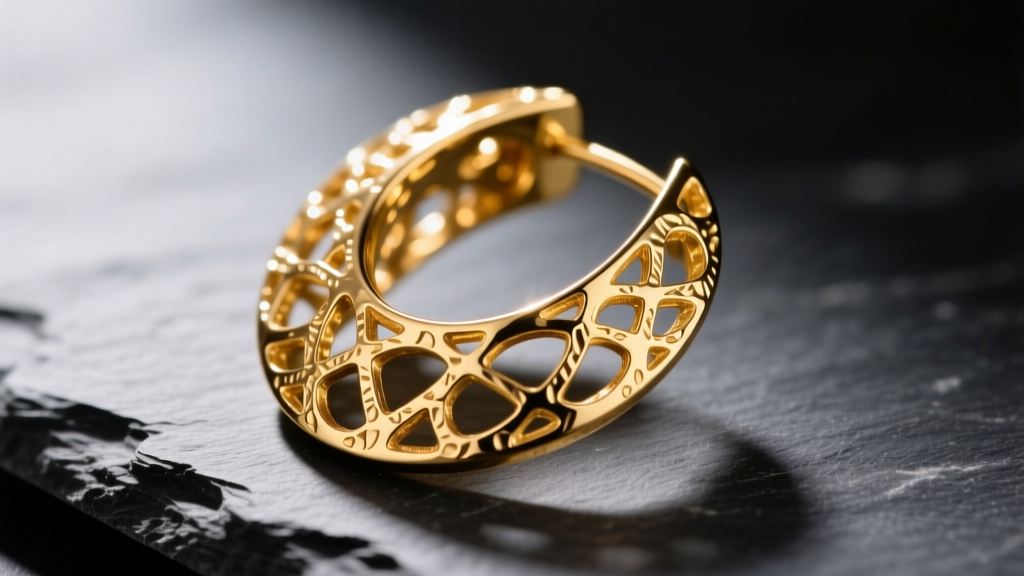
The American Academy of Dermatology notes that nickel allergies affect a significant portion of the population, often developing or worsening over time. For large pieces that sit flush against the neck or jawline, always demand 14k or 18k gold that is explicitly certified nickel-free. Palladium-white gold is an excellent alternative to traditional nickel-white gold for large structural elements, offering a bright, silvery finish without the allergic risk.
Expert Tip: If you are purchasing vintage or antique large gold earrings, have them X-ray fluorescence (XRF) tested. Prior to modern regulations, high-karat gold solders and white gold alloys frequently contained unlisted nickel or cadmium.
Solid Gold vs. Hollow, Vermeil, and Gold-Filled
To achieve massive scale without the prohibitive cost and weight of solid gold, manufacturers utilize alternative construction methods. Understanding the limitations of each is critical for managing expectations regarding durability.
Hollow and Electroformed Gold
Hollow tubing is standard for large 14k gold hoops. It reduces weight by up to 70% compared to solid wire. However, hollow gold is highly susceptible to crushing. If a hollow hoop is dropped on a hard surface or slept in, it will dent irreparably. Electroforming creates lightweight, solid-looking 14k or 18k gold shells, but the walls are paper-thin (often under 0.2mm), making them strictly for occasional, careful wear.
Gold Vermeil and Gold-Filled
For budget-conscious buyers seeking the look of large gold earrings, vermeil and gold-filled are the only acceptable alternatives to solid gold. By FTC guidelines, true vermeil requires a sterling silver base plated with at least 2.5 microns of 10k+ gold. Large drop earrings experience high friction at the earlobe and clasp; anything less than 2.5 microns will wear through to the base metal within months. Gold-filled pieces, which feature a mechanically bonded layer of gold comprising at least 5% of the total weight, offer vastly superior longevity for large, high-friction statement pieces.
Structural Integrity: Post Gauges and Backings
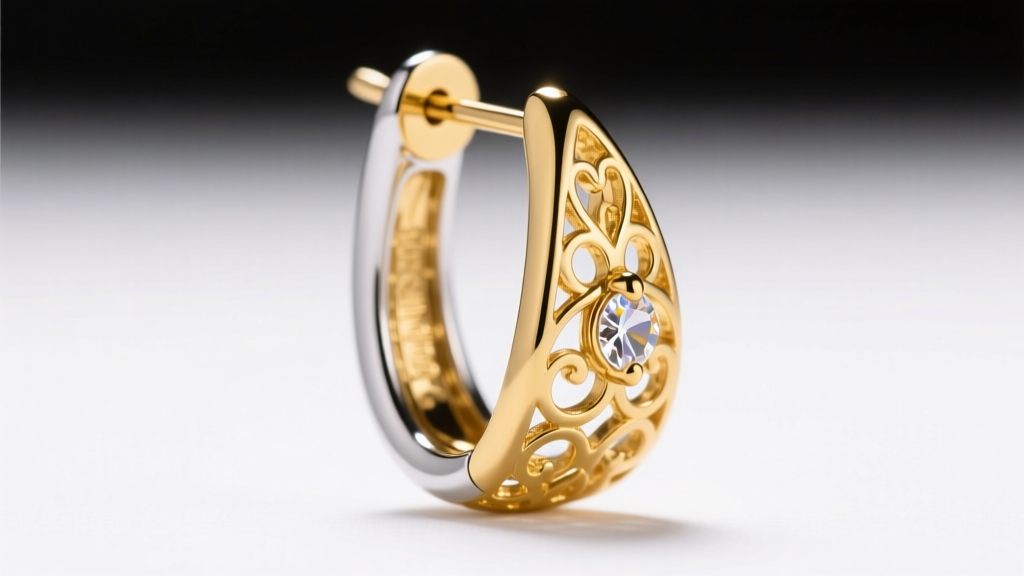
The most common point of catastrophic failure in large gold earrings is the post. A standard earring post is 20-gauge (0.81mm thick). When supporting a 12-gram statement drop, a 20-gauge 14k gold post will bend under its own weight, altering the drape of the earring and stressing the piercing channel.
- 18-Gauge (1.02mm) Posts: The minimum acceptable thickness for large gold drops and heavy chandelier earrings. Provides adequate rigidity for pieces weighing up to 15 grams.
- 16-Gauge (1.29mm) Posts: Required for massive, oversized solid gold hoops or architectural pieces exceeding 18 grams. Note that 16g posts may require gently stretching a standard piercing hole.
- Omega and Clip-Backs: For extremely large, heavy earrings, bypass the lobe piercing entirely. Omega backs distribute the weight across a wider surface area of the lower earlobe, preventing the "cheese-cutter" effect that elongates piercings.
- Screw-Backs: Essential for heavy 18k gold studs or medium-large drops to prevent the earring from slipping out due to the downward pull of gravity.
Practical Framework: Matching Material to Earring Style
Use this decision matrix to select the correct material based on the specific silhouette of the large gold earrings for women you intend to wear:
- Oversized Continuous Hoops (50mm+): Opt for 14k hollow tubing or 18k solid wire (if under 3mm thickness). Ensure the hinge mechanism is reinforced with a steel pin, as gold hinges warp under heavy rotational stress.
- Architectural Drop Earrings: Choose 14k or 18k solid cast gold with an 18-gauge post. The rigidity of 14k is preferred if the design features sharp angles or cantilevered elements that could bend.
- Chandelier & Tassel Styles: 14k gold wire is mandatory. The high tensile strength prevents the delicate wirework from tangling or snapping when caught on clothing. Avoid 18k for intricate wire wrapping.
- Sculptural Ear Cuffs (Non-Pierced): 18k or 22k gold is ideal here. Because cuffs do not bear weight on a piercing, the softness of higher-karat gold allows the wearer to gently mold and adjust the tension of the cuff to their specific cartilage anatomy without the metal snapping back.
Care and Maintenance for Heavy Gold Pieces
Large gold earrings require specialized storage and maintenance. Due to their size, they should never be tossed into a communal jewelry box where heavy clasps can scratch the polished surfaces of the drops. Store each pair individually in anti-tarnish flannel pouches. For cleaning, avoid ultrasonic cleaners if the large earrings feature tension-set stones or hollow components, as the high-frequency vibrations can shatter gemstones or crack thin electroformed shells. Instead, use a soft-bristled brush with a mild, phosphate-free dish soap and warm water, paying special attention to the post and backing where skin oils and cosmetic residues accumulate and accelerate alloy oxidation.


