Lavender Jade Earrings: Material Properties & Buyer Guide
Discover the material properties of lavender jade earrings. Compare jadeite vs nephrite, understand ABC treatments, and learn setting durability.

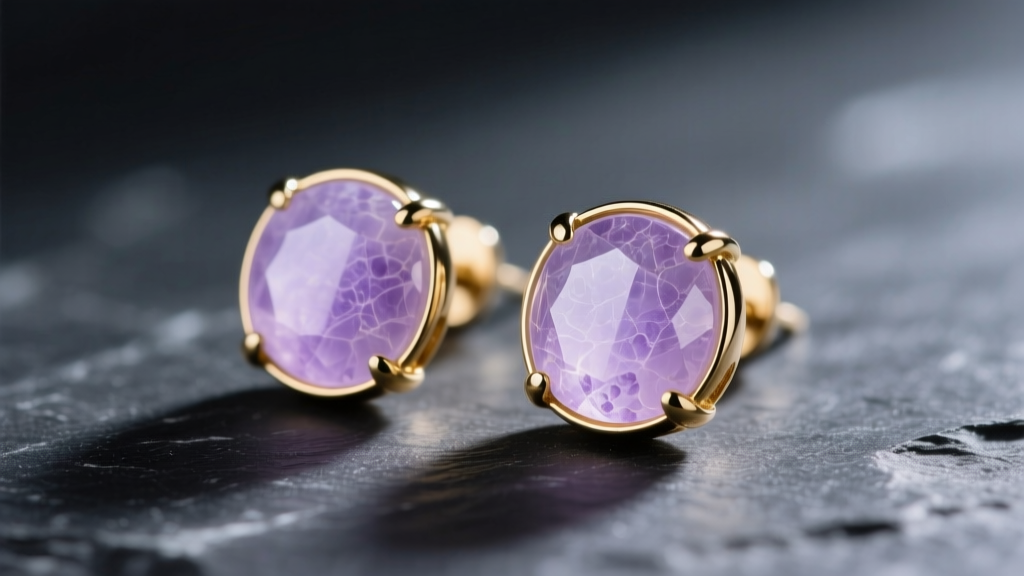
The allure of lavender jade earrings lies in their delicate, ethereal coloration and deep cultural significance. However, from a gemological and material science perspective, 'jade' is not a single mineral but a complex aggregate. For jewelry designers and informed buyers, understanding the distinct physical properties, treatment vulnerabilities, and structural limitations of lavender jade is critical. Whether you are evaluating a pair of heavy carved dangles or minimalist cabochon studs, the material dictates the setting, the wearability, and the long-term investment value.
The Mineralogy of Lavender Jade: Jadeite vs. Nephrite
In the gem trade, the term jade encompasses two distinct metamorphic rocks: jadeite (a pyroxene mineral) and nephrite (an amphibole mineral). While both can exhibit lavender hues, their chemical compositions and structural behaviors differ vastly.
- Lavender Jadeite: The lilac and lavender colors in jadeite are primarily caused by trace amounts of manganese, iron, and occasionally titanium substituting into the crystal lattice. Jadeite forms under high-pressure, low-temperature conditions. It possesses a granular, interlocking crystal structure that gives it a vitreous (glassy) luster when polished.
- Lavender Nephrite: Nephrite’s lavender tones are rarer and usually result from specific iron and manganese inclusions. Nephrite features a fibrous, felt-like microstructure, which makes it exceptionally tough—arguably the toughest of all natural gemstones—but it yields a more greasy or matte luster compared to jadeite.
According to mineralogical data from Mindat.org, jadeite has a Mohs hardness of 6.5 to 7 and a specific gravity (SG) of 3.30–3.36. Nephrite is slightly softer (Mohs 6–6.5) but significantly less dense (SG 2.90–3.03). This difference in specific gravity directly impacts earring design; a 20mm lavender jadeite teardrop will be noticeably heavier and exert more downward force on the earlobe than an identically sized nephrite piece.
The ABCs of Jade Treatments: What You Are Actually Buying
The most critical material property to evaluate in lavender jade earrings is not hardness, but structural integrity post-treatment. The vast majority of commercial lavender jade on the market has been chemically altered. The Gemological Institute of America (GIA) classifies jade treatments into distinct categories that drastically alter the stone's durability.
Type A: Untreated (The Benchmark)
Type A jadeite is completely natural, subjected only to traditional surface waxing to enhance luster. The polymer structure of the stone is intact. Type A lavender jade earrings are highly stable, resistant to household chemicals, and retain their structural integrity for generations.
Type B: Bleached and Polymer-Impregnated
To remove brown or yellow matrix inclusions, lower-grade jadeite is soaked in hydrochloric acid. This process severely damages the internal crystal structure, leaving it porous and brittle. The stone is then vacuum-impregnated with a polymer resin to restore translucency. Failure Mode: Over time, exposure to UV light and heat causes the resin to yellow and degrade. In earring settings, Type B jade is prone to catastrophic cracking if subjected to minor impacts or temperature fluctuations.
Type C: Dyed
Lavender is a highly sought-after color, prompting manufacturers to dye pale or grayish jadeite using organic or inorganic lilac dyes. Type C stones lack color stability. Prolonged exposure to sunlight, sweat, and cosmetics will cause the lavender hue to fade unevenly, often leaving a mottled, grayish appearance.
Lavender Jade vs. Look-Alikes: A Material Comparison
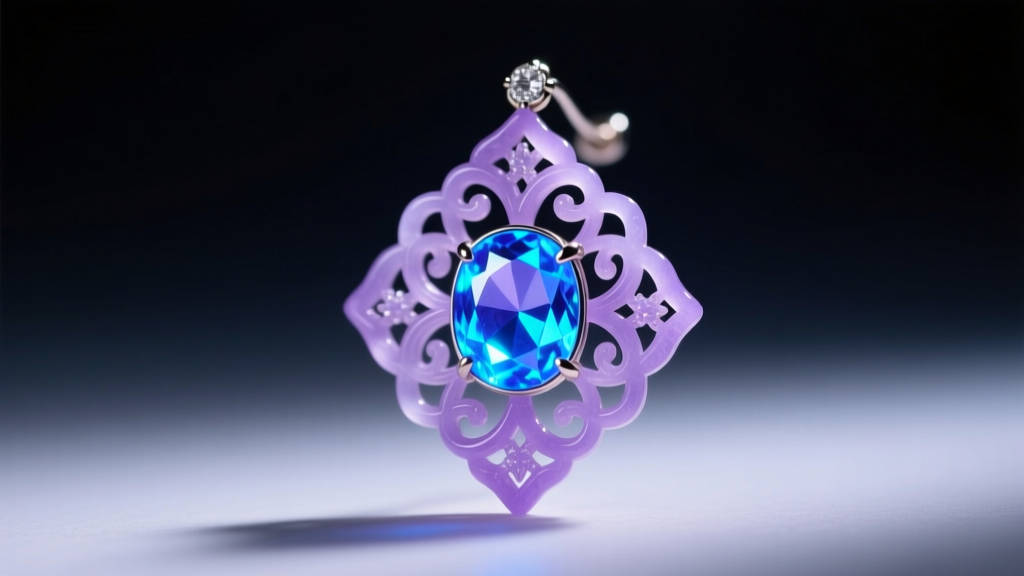
Because high-quality, untreated lavender jadeite commands premium prices, it is frequently imitated. Below is a material comparison matrix to help identify lavender jade against common visual substitutes used in earring manufacturing.
| Material | Mohs Hardness | Specific Gravity | Refractive Index | Cleavage / Fracture |
|---|---|---|---|---|
| Lavender Jadeite | 6.5 - 7.0 | 3.30 - 3.36 | 1.66 (approx) | None / Splintery |
| Lavender Nephrite | 6.0 - 6.5 | 2.90 - 3.03 | 1.62 (approx) | None / Splintery |
| Lavender Chalcedony | 6.5 - 7.0 | 2.60 - 2.66 | 1.53 - 1.54 | None / Conchoidal |
| Mauve Spinel | 8.0 | 3.58 - 3.61 | 1.718 | None / Conchoidal |
Expert Insight: The specific gravity test is the most reliable non-destructive method for separating jadeite from chalcedony. A jeweler can use heavy liquids; jadeite will sink in a liquid with an SG of 3.00, while chalcedony will float. Furthermore, chalcedony exhibits a conchoidal (shell-like) fracture, whereas jade's interlocking grains prevent clean fractures, resulting in a splintery break pattern.
Setting Mechanics: How to Mount Jade in Earrings Safely
Jade lacks true cleavage, meaning it does not split along defined crystallographic planes like diamonds or topaz. However, its granular structure makes the edges—particularly the girdle of a cabochon or the points of a carved teardrop—highly susceptible to chipping.
Bezel vs. Prong Settings
For lavender jade earrings, full bezel settings are the industry standard for protecting the girdle. A bezel wraps a continuous rim of metal (usually 14k or 18k gold) around the stone's perimeter. Prong settings, while allowing more light to enter the stone, leave the edges exposed. If a prong-set jade earring is dropped on a hard surface, the point of impact is likely to chip or fracture.
Hardware and Earlobe Ergonomics
Because jadeite is exceptionally dense (SG ~3.33), large lavender jade dangles can easily exceed 15 grams per earring. This weight will stretch the earlobe piercing over time. To mitigate this:
- Use 18-gauge or 16-gauge earring wires for heavy drops, as thicker wire distributes the load across a wider surface area of the piercing.
- Incorporate silicone earring supports or o-rings behind the earlobe to provide structural backing.
- For studs exceeding 12mm in diameter, utilize an omega-back or screw-back clutch rather than a standard friction post to prevent the earring from drooping forward.
Pricing Tiers and Investment Value
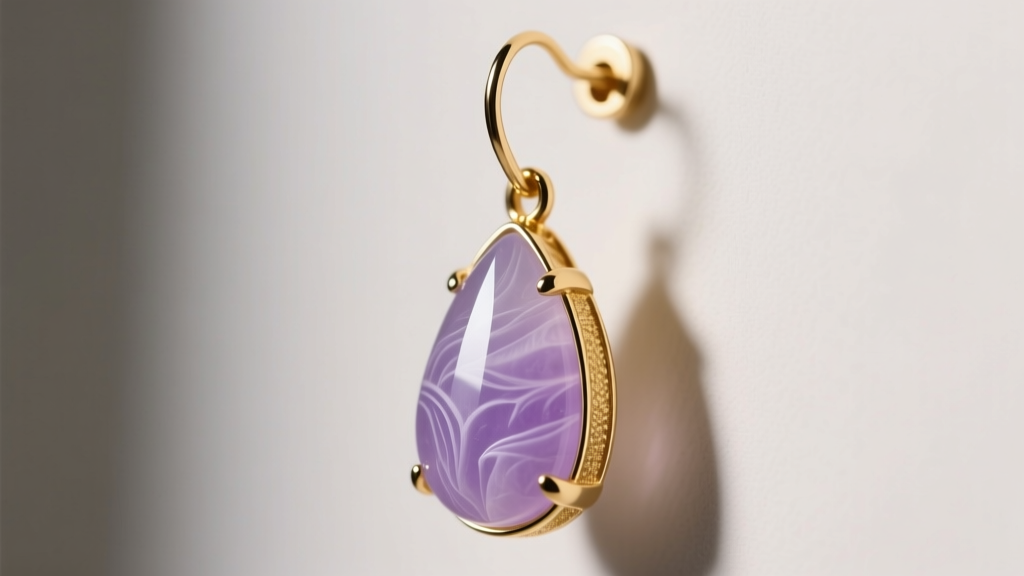
The pricing of lavender jade earrings is inextricably linked to the material's treatment status and color saturation. 'Royal Lavender'—a deep, saturated, and evenly distributed purple hue in Type A jadeite—is exceedingly rare.
"When evaluating lavender jadeite, color evenness is paramount. Mottled or grayish lilac tones indicate lower commercial grade, whereas a pure, glowing lavender with high translucency commands auction-level premiums."
- Commercial Grade (Type B/C or heavily included): $30 to $150 per pair. These are fashion pieces with zero investment value and a limited lifespan before the resin degrades or dye fades.
- Medium Grade (Type A, opaque to semi-translucent): $200 to $800 per pair. Excellent for everyday wear, featuring natural color but lacking the 'glassy' translucency of top-tier jade.
- Fine/Investment Grade (Type A, highly translucent 'icy' lavender): $1,500 to $10,000+ per pair. These pieces are certified by laboratories like GIA or SSEF and are considered tangible assets.
Care and Maintenance for Porous Stones
Proper maintenance is dictated by the material's porosity. Never place lavender jade earrings in an ultrasonic cleaner. The high-frequency vibrations can shatter Type B polymer bonds, causing the stone to literally crumble. Furthermore, the heat and chemicals in jewelry cleaning solutions will strip the natural surface wax from Type A jade, leaving it dull and dry.
To clean your earrings, use a solution of lukewarm water and a few drops of pH-neutral dish soap. Gently agitate with a soft-bristled baby toothbrush, focusing on the back of the setting where skin oils and cosmetics accumulate. Rinse thoroughly and pat dry with a microfiber cloth. Store your jade earrings in a soft pouch, separate from harder gemstones like diamonds or sapphires, which can easily scratch the jade's polished surface during transit.


