Left Earring Meaning: Material Guide for Healing & Style
Explore the left earring meaning through a material science lens. Discover the best metals for Ayurvedic healing, cartilage health, and daily wear.

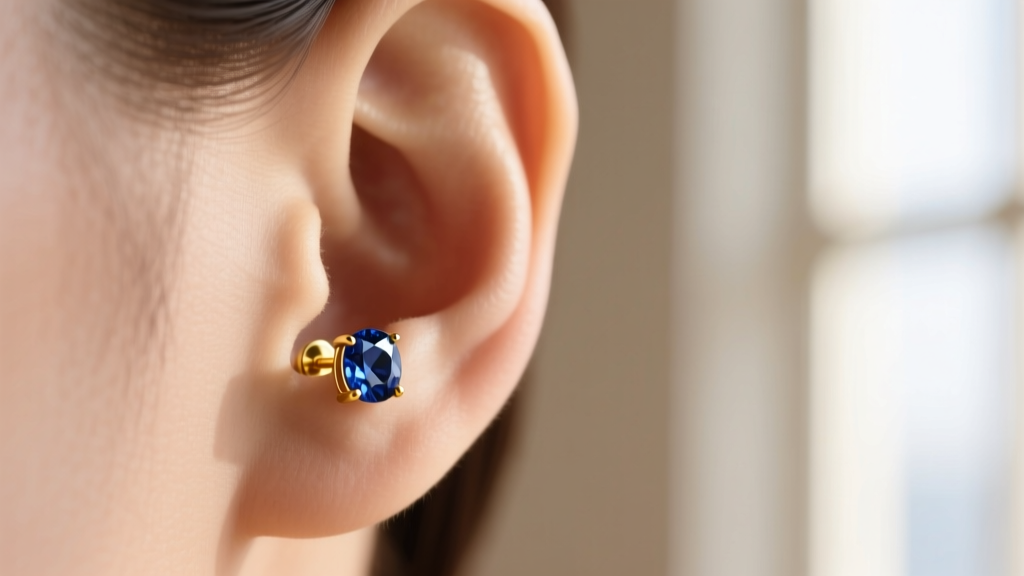
When researching the left earring meaning, most searchers are met with outdated cultural tropes or vague spiritual generalizations. However, from a metallurgical and anatomical perspective, the decision to adorn the left ear carries specific material requirements that are often ignored. Whether your motivation is rooted in Ayurvedic acupressure traditions, modern self-expression, or simply balancing asymmetrical facial features, the metal you choose dictates the health of your piercing.
In this comprehensive guide, we bridge the gap between cultural significance and material science. We will break down exactly which alloys, gauges, and finishes are required to honor the historical and spiritual intent of the left ear, while maintaining strict biocompatibility standards in 2026.
Decoding the Left Earring Meaning in Modern Culture
Historically, the left earring meaning was heavily codified. In the 1970s and 1980s, Western pop culture adopted a covert signaling system where a left-ear piercing on men indicated homosexuality, while the right ear indicated heterosexuality. Today, that binary code is entirely obsolete. Modern jewelry wearers and piercers view the left earring meaning through two primary lenses: spiritual wellness and curated asymmetry.
In contemporary styling, the left ear is often designated as the "anchor" ear for heavier or more intricate curations, requiring metals that can withstand higher tensile stress without warping or causing contact dermatitis.
Because the left ear is frequently chosen for foundational piercings—both in lobe and cartilage—the material properties of your jewelry must be flawless. A compromised alloy can lead to galvanic reactions, especially when interacting with the skin’s natural pH and external environmental factors.
Ayurvedic Traditions and Conductive Metals
In traditional Indian medicine, the practice of ear piercing is known as Karnavedha. The left earring meaning in Ayurveda is deeply tied to the female reproductive system and the left hemisphere of the brain. The specific acupressure point on the left earlobe is believed to regulate menstrual cycles and promote neural health. To maximize this conductive benefits, traditional texts prescribe specific elemental metals.
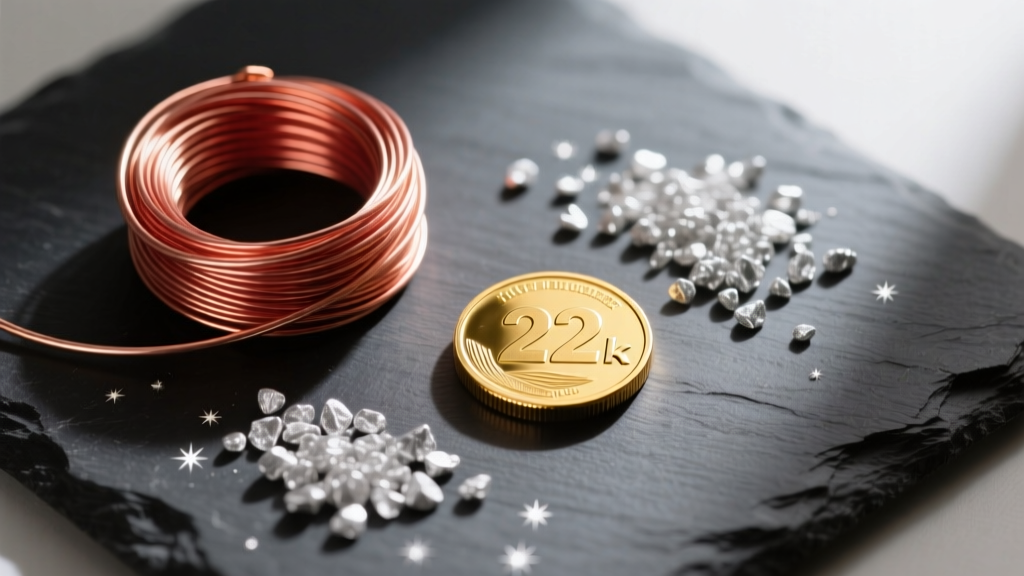
Gold (Surya) vs. Silver (Chandra)
According to Ayurvedic principles, gold is a heating metal that stimulates energy flow, while silver is a cooling metal that calms inflammation. However, applying these ancient concepts to modern jewelry requires an understanding of metallurgy:
- 24k Gold (99.9% Pure): While spiritually ideal, pure gold has a Vickers hardness of roughly 25 HV. It is far too malleable for a structural earring post and will bend under the pressure of daily wear, trapping bacteria in the deformation.
- 22k Gold (91.6% Pure): The optimal compromise. Alloyed with small amounts of copper or silver, 22k gold retains high conductivity and spiritual significance while achieving a hardness of ~90 HV, making it viable for left lobe studs.
- Fine Silver (99.9% Pure): Used for cooling properties, but highly prone to oxidation. When fine silver oxidizes in a healing piercing, it can cause argyria—a permanent gray-blue staining of the tissue.
Actionable Advice: If you are wearing a left earring for Ayurvedic healing, opt for a 22k yellow gold bezel stud with a titanium post backing. This gives you the conductive gold face on the acupressure point, with the biocompatibility of titanium inside the fistula.
Material Comparison for Left Ear Cartilage vs. Lobe
If your left earring meaning leans toward modern edge—such as a curated helix, conch, or daith setup—cartilage biology becomes your primary constraint. Cartilage is avascular (lacking direct blood supply), meaning it relies on diffusion for healing and is highly susceptible to irritation bumps from heavy or reactive metals.
| Material Grade | Biocompatibility | Best Piercing Type | Avg. Price Range (2026) |
|---|---|---|---|
| ASTM F136 Titanium | Exceptional (Passivated) | Fresh Cartilage / Daith | $45 - $120 |
| Niobium (99.9%) | Excellent (Highly Malleable) | Seamless Hoops / Conch | $35 - $90 |
| 14k Solid Gold (Nickel-Free) | Very Good | Healed Lobes / Rook | $150 - $400+ |
| Surgical Steel (316L) | Poor (Contains 8-10% Nickel) | Not Recommended | $10 - $30 |
The Association of Professional Piercers (APP) strictly recommends ASTM F136 implant-grade titanium for any fresh cartilage piercing. Titanium’s surface naturally forms a passive titanium dioxide (TiO2) layer upon exposure to oxygen, which prevents the metal from leaching ions into the surrounding tissue.
The "Sleeping Side" Factor: Friction and Metal Choice
An often-overlooked variable in the left earring meaning is your sleep anatomy. Studies on sleep ergonomics show that the majority of side-sleepers have a dominant side they favor. If you sleep on your left side, your left ear is subjected to hours of compressive friction, elevated heat, and trapped moisture against your pillowcase.
Why Finish Matters as Much as Alloy
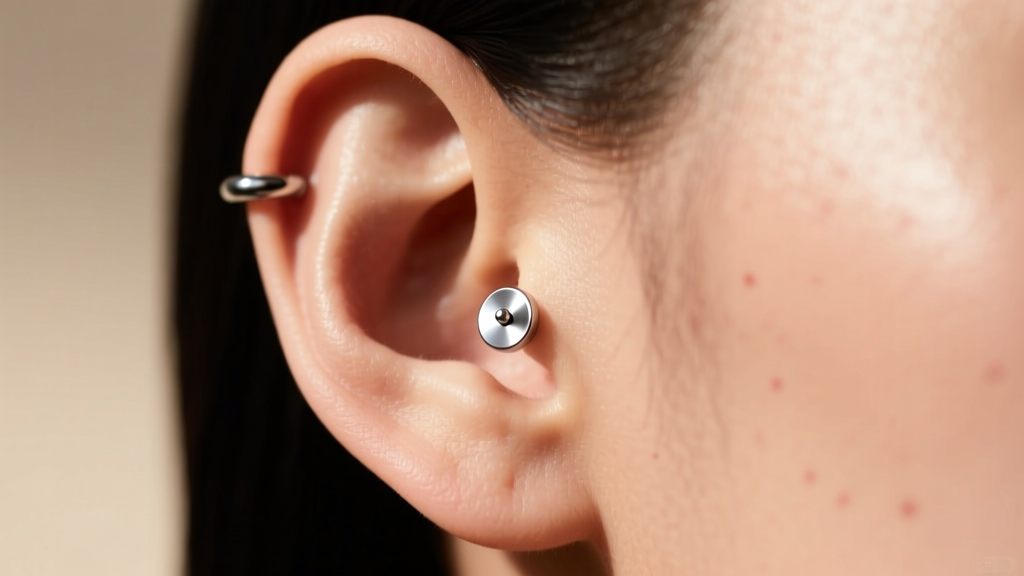
If your left ear is your sleeping ear, the surface finish of your earring is just as critical as the material. A mirror-polished finish (achieved through progressive tumbling and polishing down to 0.02-micron abrasives) creates a non-porous surface.
Conversely, matte or sandblasted finishes feature microscopic peaks and valleys. When pressed against a pillow on your left side, these microscopic valleys trap dead skin cells, sebum, and laundry detergent residue, leading to localized contact dermatitis that is frequently misdiagnosed as a metal allergy.
Hypoallergenic Requirements and Nickel Traps
When exploring the spiritual or aesthetic left earring meaning, many consumers accidentally sabotage their piercings by purchasing "hypoallergenic" jewelry that is secretly laced with nickel. According to the Gemological Institute of America (GIA), white gold is frequently alloyed with nickel to achieve its silvery-white color before being rhodium-plated.
As the rhodium plating wears off on the back of the earring post—where it experiences the most friction against the neck and hair—the nickel is exposed. This results in a localized, itchy, weeping rash on the left earlobe.
The Fix: Always verify that your white gold is alloyed with palladium rather than nickel. Palladium white gold is more expensive and slightly grayer in tone, but it is entirely nickel-free and safe for long-term, 24/7 wear in the left ear.
Troubleshooting Material Reactions on the Left Ear
If your left ear is consistently rejecting jewelry or developing hypertrophic scarring while your right ear remains perfectly healthy, the issue is likely environmental rather than systemic. Follow this troubleshooting framework:
- Audit Your Hair Products: Left-side partings mean your hair rests against your left ear. Sulfates and heavy silicones in conditioners can degrade lower-quality metal finishes over time.
- Check the Post Gauge: Standard lobe earrings are 20g (0.81mm) or 18g (1.02mm). If you are wearing heavy dangles on the left ear, the thin wire acts like a cheese-cutter, causing micro-tears. Upgrade to a 16g (1.29mm) or 14g (1.60mm) post to distribute the weight load.
- Switch to Flat-Backs: Traditional butterfly backs harbor bacteria and press into the mastoid bone when sleeping on the left side. Replace all left-ear studs with internally threaded, flat-back labrets.
Final Verdict: Matching Metal to Your Motivation
The left earring meaning is no longer confined to outdated societal codes; it is a deeply personal choice that intersects with wellness, anatomy, and material science. If your intent is Ayurvedic healing, prioritize high-karat 22k gold faces paired with biocompatible posts. If your goal is a bold, modern cartilage curation, rely exclusively on mirror-polished ASTM F136 titanium to withstand the rigors of your sleeping habits. By aligning the metallurgical properties of your jewelry with the physical reality of your left ear, you ensure that your piercing remains as meaningful as it is healthy.


