Threaders Earrings in 2026: Trend Analysis & Ear Curation Guide
Discover the 2026 threaders earrings trend analysis. Explore structural chain designs, multi-piercing curation maps, and expert material guides.

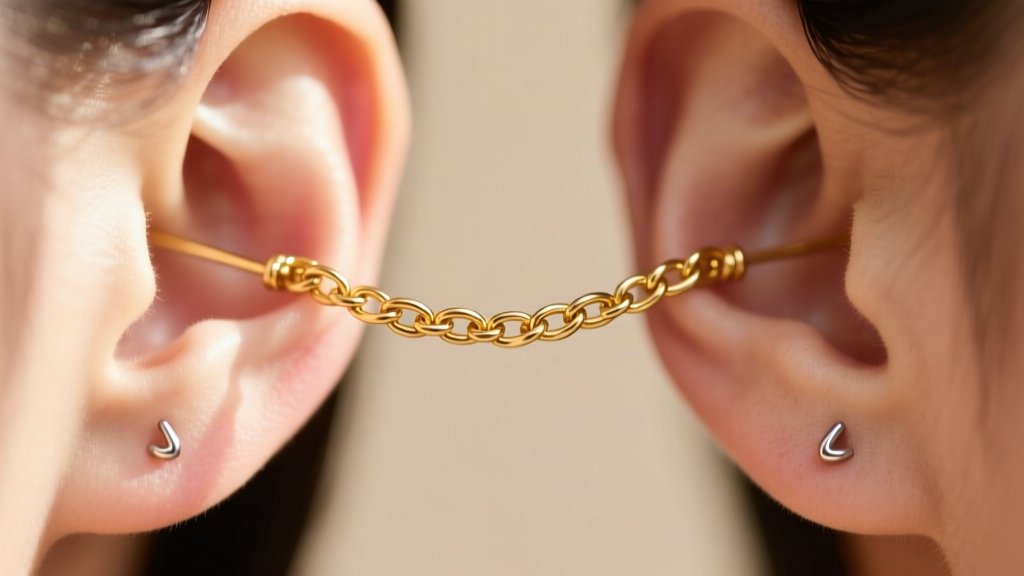
The landscape of ear styling has undergone a radical transformation as we navigate 2026. Once relegated to the realm of ultra-delicate, easily tangled minimalist jewelry, threaders earrings have evolved into structural, architectural statements. No longer just a subtle chain that slips through a single lobe piercing, the modern threader is a dynamic tool for ear curation, bridging the gap between multiple piercings and creating a "liquid metal" aesthetic that dominates current trend forecasts. Whether you are a jewelry collector, a professional piercer, or simply looking to elevate your daily rotation, understanding the technical and stylistic nuances of threaders earrings is essential for mastering the 2026 ear curation.
The 2026 Shift: From Delicate to Structural Threaders
Between 2018 and 2023, the market was saturated with micro-thin, 24-gauge cable chain threaders. While dainty, they suffered from high failure rates: they kinked easily, snapped under the weight of minor charms, and frequently slipped out of the ear during sleep. The 2026 trend cycle has aggressively pivoted toward structural threaders. Designers are now utilizing flat-link chains, box chains, and rigid hinged segments that offer the fluid drape of a threader but with the tensile strength of a standard hoop.
This shift is heavily influenced by the "liquid metal" and "molten gold" aesthetics seen on recent runways, where jewelry appears to melt organically around the ear's cartilage. Threaders earrings are the perfect vehicle for this look, as their adjustable nature allows the wearer to customize the exact drape and tension against their unique ear anatomy.
Material & Gauge Specifications: What to Look For
To evaluate the quality of threaders earrings, you must deconstruct their anatomy. A standard threader consists of three parts: the rigid post (the "needle" that initiates the piercing), the flexible chain (the "thread"), and the decorative element or counter-weight. According to the Association of Professional Piercers (APP), any jewelry passing through the body must meet strict biocompatibility standards, especially for fresh or sensitive piercings.
| Component | 2020-2023 Standard | 2026 Trend Standard | Why It Matters |
|---|---|---|---|
| Rigid Post | 22g (0.64mm) Brass/Silver | 20g (0.81mm) to 18g (1.02mm) ASTM F136 Titanium | Thicker, implant-grade posts prevent bending and reduce the "cheese-cutter" effect in fine lobes. |
| Chain Link | 0.4mm Cable Chain | 0.8mm to 1.2mm Flat-Link or Box Chain | Flat links prevent hair snagging and provide a modern, high-polish light reflection. |
| Gold Purity | 10k or Gold Vermeil | 14k or 18k Recycled Solid Gold | As noted by the Gemological Institute of America (GIA), higher karat recycled alloys offer superior tarnish resistance and skin safety for 24/7 wear. |
Ear Curation Mapping: How to Style Threaders in 2026
The most significant innovation in threaders earrings is their use in multi-piercing mapping. Rather than treating each piercing as an isolated canvas, 2026 styling treats the ear as a continuous topographical map. Threaders are used to physically connect distinct piercings, creating geometric lines and cascading drapes.
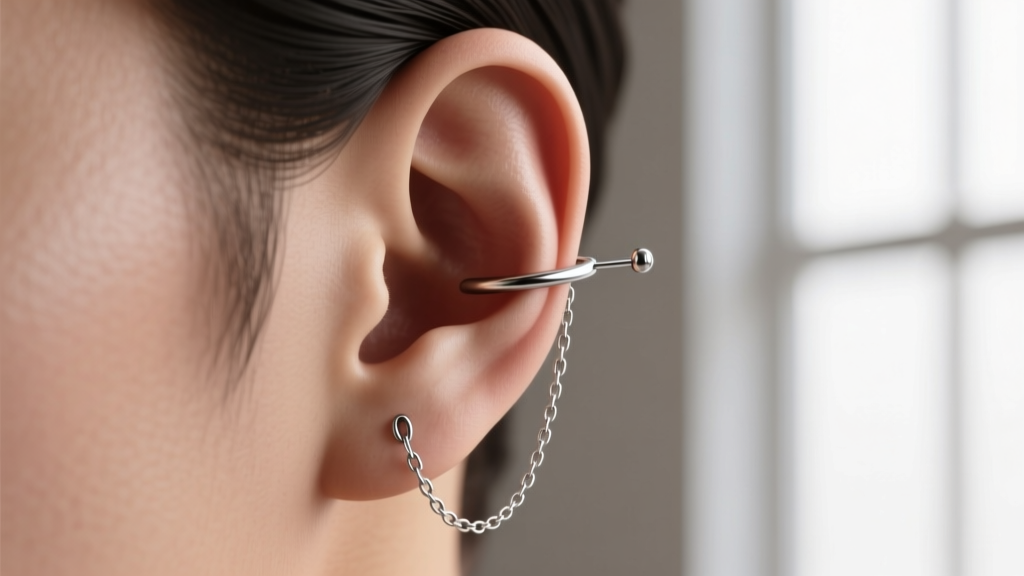
The Lobe-to-Helix Cascade
This advanced styling technique requires a standard earlobe piercing and a mid-to-lower helix piercing. A long-form threader (typically 45mm to 60mm in total chain length) is passed through the helix, draped behind the ear, and then threaded down through the lobe. The result is a continuous line of metal that frames the outer edge of the ear. Pro-Tip: Ensure your piercer places the helix piercing at a slightly forward angle to allow the chain to lay flush against the skin without bowing outward.
The Constellation Cluster
For those with multiple standard lobe piercings (e.g., a primary lobe, a second lobe, and an upper lobe), "constellation threading" involves weaving a single, extra-long threader through all three holes in a zig-zag pattern. This requires precise piercing distances—ideally 6mm to 8mm apart—to prevent the chain from pulling too tightly against the tissue, which can cause migration or irritation.
"The modern threader is no longer just a delicate afterthought; it is the structural anchor of a multi-piercing curation, dictating the visual flow of the entire ear."
Troubleshooting: Tension, Slippage, and Snagging
Despite their aesthetic brilliance, threaders earrings present unique mechanical challenges. The most common complaint is slippage—where the weight of the front decorative element pulls the chain entirely through the piercing. Conversely, excessive friction can cause the chain to bind, making removal painful.
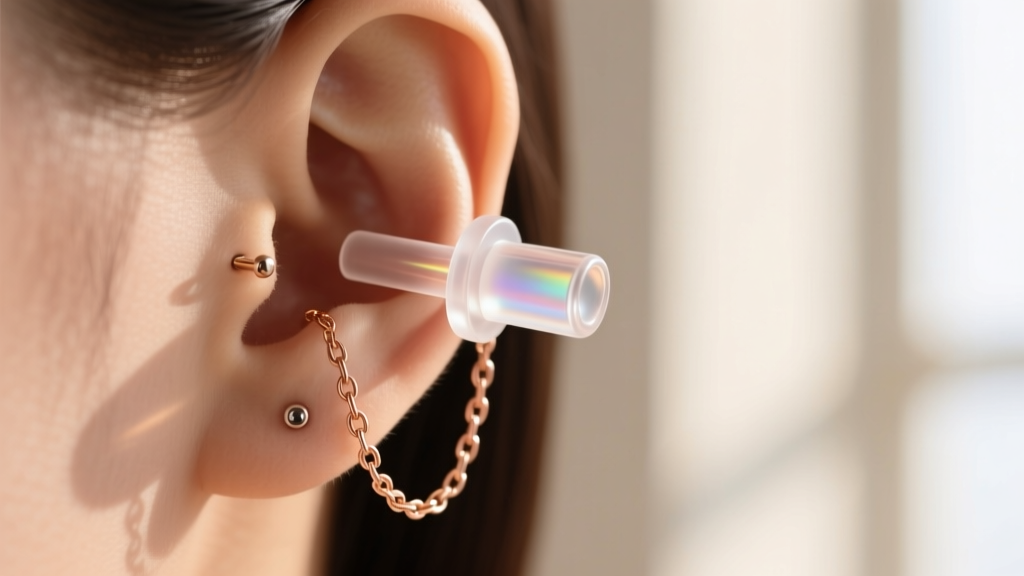
Mastering the Tension Stopper
In 2026, relying solely on the friction of the chain links is considered amateur styling. The industry standard is now the micro-silicone O-ring stopper. These tiny, hypoallergenic discs (typically 1mm inner diameter and 0.5mm thickness) slide onto the back of the chain to lock the threader in place. For a seamless look, many high-end brands now offer "invisible" matte-finish silicone stoppers that blend into the skin tone, or custom-machined 14k gold friction beads that snap onto specific link intervals.
Preventing the Pendulum Effect
When threaders feature heavy gemstone drops at the bottom, they create a "pendulum effect," swinging and pulling on the delicate fistula (the piercing tunnel). To counteract this, look for threaders with a counter-weighted back. This design features a small, heavy gold bead or geometric shape at the trailing end of the chain, balancing the weight distribution and keeping the earring perfectly centered in the piercing.
Price Tiers & Brand Benchmarks
Investing in threaders earrings requires navigating a fragmented market. Here is a breakdown of what to expect across different price tiers in 2026:
- Entry-Level ($40 - $120): Typically gold vermeil over a brass or sterling silver core. Chains are usually standard cable links. Expect a lifespan of 1-2 years before the gold plating wears off the high-friction chain links. Best for occasional wear and trend-testing.
- Mid-Tier ($250 - $600): Solid 14k recycled gold with upgraded flat-link chains and integrated silicone stoppers. Brands in this tier often offer modular designs, allowing you to swap out the front-facing charm while keeping the chain. Ideal for daily wear and sensitive ears.
- Haute & Fine ($800 - $2,500+): 18k gold or platinum, featuring internally threaded rigid posts, VVS diamond accents, and proprietary tension-back mechanisms. These pieces are engineered for lifetime durability and are often custom-fitted to the exact millimeter distances of your specific ear curation.
Conclusion
Threaders earrings in 2026 have transcended their fragile origins to become a cornerstone of advanced ear styling. By prioritizing structural integrity, understanding gauge specifications, and utilizing multi-piercing mapping techniques, you can transform a simple chain into a breathtaking, architectural display. Whether you are opting for a minimalist lobe-to-helix cascade or a diamond-encrusted constellation cluster, the modern threader offers unparalleled versatility for the contemporary jewelry collector.


