Lightning Bolt Stud Earrings: A Beginner's Guide to Edgy Styles
Discover everything about lightning bolt stud earrings. Learn about gauge sizes, hypoallergenic metals, and placement tips for beginners.

The Enduring Appeal of the Lightning Bolt
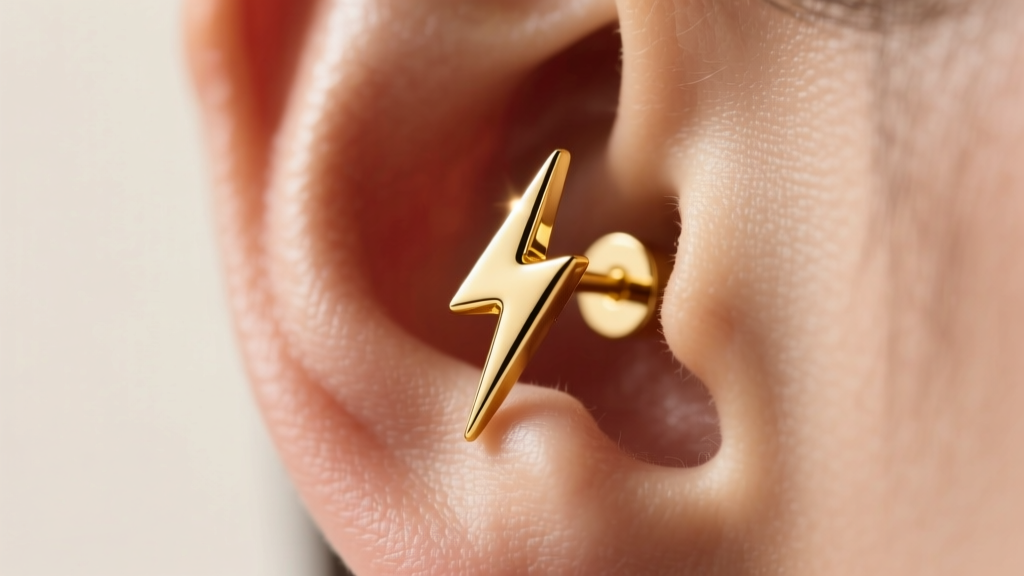
When it comes to building a curated ear or adding a subtle edge to your everyday jewelry rotation, lightning bolt stud earrings occupy a unique sweet spot. They bridge the gap between classic minimalist geometry and rebellious punk-rock heritage. For beginners stepping into the world of alternative or statement stud earrings, the lightning bolt offers a versatile silhouette that works across multiple piercings, from standard lobes to upper cartilage placements. However, not all lightning bolts are created equal. The sharp angles, top-heavy designs, and varying metal qualities mean that choosing the wrong pair can lead to snagging, drooping posts, or severe allergic reactions. This comprehensive guide will walk you through the exact specifications, material grades, and structural nuances you need to know before purchasing your first pair of lightning bolt studs.
Material Science: What Touches Your Skin
The most critical decision you will make when buying lightning bolt stud earrings is the metal composition. Because the lightning bolt shape features acute angles that can trap moisture and bacteria, using a highly biocompatible, non-porous metal is non-negotiable. According to the Association of Professional Piercers (APP), only specific grades of metal should be worn in piercings, especially if they are newly healed or prone to irritation.
The Best Metals for Lightning Bolt Studs
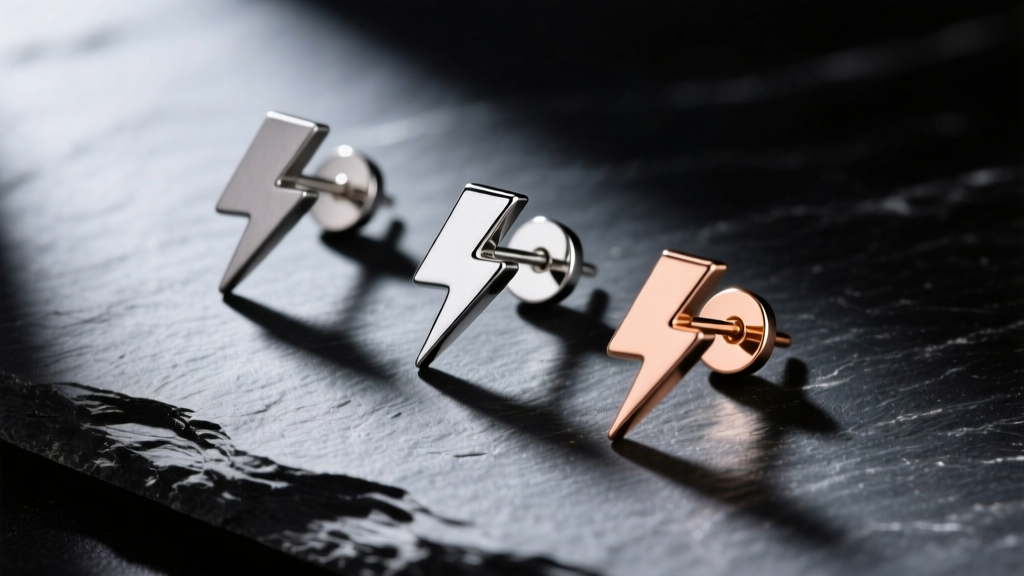
- ASTM F136 Implant-Grade Titanium: This is the gold standard for sensitive ears and fresh piercings. It contains zero nickel, is highly polished to a mirror finish (reducing bacterial adhesion), and is incredibly lightweight. Because lightning bolts can be top-heavy, titanium’s low density prevents the earring from pulling down on the piercing fistula.
- 14k or 18k Solid Gold: For a premium, luxury aesthetic, solid gold is an excellent choice. The Gemological Institute of America (GIA) notes that 14k and 18k gold offer the best balance of purity and structural durability. Avoid gold-plated or gold-vermeil lightning bolts, as the sharp corners of the design will cause the plating to wear off quickly, exposing the base metal beneath.
- Niobium: A highly reactive metal that can be anodized into vibrant colors (like deep purples or electric blues) without using dyes or coatings. It is a fantastic, budget-friendly alternative to titanium for those wanting a pop of color in their lightning bolt design.
Metals to Avoid
Steer clear of 316L surgical stainless steel if you have a known nickel allergy or are wearing the earrings in a healing piercing. While often marketed as "hypoallergenic," 316L steel contains up to 10.5% nickel, which can leach out when exposed to the body's natural pH and sweat, causing contact dermatitis. Similarly, avoid sterling silver (925) for everyday wear; it contains copper, which oxidizes and can cause permanent dark staining in the piercing channel, a condition known as argyria.
Structural Integrity: Casting vs. CAD Milling
Here is an industry secret that most beginner jewelry guides overlook: the manufacturing method of a lightning bolt stud dictates its lifespan. The zig-zag anatomy of a lightning bolt creates natural "stress points" at the inner angles of the design.
Cheap, mass-produced lightning bolts are typically created using rubber mold casting. This process often leaves microscopic porosity in the metal and results in weak inner corners that are highly susceptible to snapping if the earring is snagged on a sweater or hairbrush. Conversely, high-end body jewelry brands use Computer-Aided Design (CAD) milling or precision die-striking. These methods compress the metal or carve it from a solid billet, ensuring that the inner angles of the bolt are reinforced and structurally sound. When shopping, look for brands that advertise "hand-polished edges" or "CAD-designed" to ensure your lightning bolt won't snap at the middle zig-zag.
Solving the Snagging Dilemma
The inherent drawback of the lightning bolt silhouette is its sharp, acute points. For beginners, this can lead to frustrating snags on hair, towels, and clothing. To mitigate this, look for "bezel-set" lightning bolts where the metal edge is wrapped around a gemstone, softening the outer perimeter. Alternatively, seek out designs that feature "micro-chamfered" or rounded edges. A well-designed lightning bolt stud will look sharp from a distance but feel completely smooth to the touch, allowing your fingers to glide over the points without catching.
Gauge Sizes, Post Lengths, and Backings
A beautiful lightning bolt face is useless if the post is the wrong size for your anatomy. Wearing a post that is too thin or too short will cause the earring to tilt, making the bolt look crooked and putting uneven pressure on the piercing.
Understanding Gauge (Thickness)
The gauge refers to the thickness of the post that goes through your ear. Standard lobe piercings are usually done at 20G (0.8mm) or 18G (1.0mm). Cartilage piercings (like the helix or flat) are typically pierced at 16G (1.2mm). Wearing a 20G lightning bolt in a 16G cartilage piercing will cause the "cheese-cutter effect," where the thin wire slowly migrates through the tissue.
The Importance of Flat-Back Labrets
Because lightning bolts are asymmetrical and slightly top-heavy, traditional butterfly push-backs are a poor choice. Butterfly backs allow the post to wobble, causing the bolt to constantly rotate and droop. Instead, opt for flat-back labret posts (either internally threaded or threadless/push-pin). The flat disc sits flush against the back of the ear, providing a wide, stable base that forces the lightning bolt to sit perfectly upright and secure.
Strategic Placement Guide
Where you place your lightning bolt stud drastically changes its visual impact and the required jewelry dimensions. Below is a beginner-friendly framework for matching the jewelry specifications to the piercing placement.
| Piercing Placement | Recommended Gauge | Ideal Post Length | Optimal Bolt Size | Styling Notes |
|---|---|---|---|---|
| Standard Lobe | 18G or 16G | 6mm - 8mm | 8mm - 12mm | Use a larger bolt for a bold, standalone statement piece. |
| Upper Lobe / Mid Lobe | 18G | 5mm - 6mm | 5mm - 8mm | Keep the design compact to avoid overlapping with adjacent studs. |
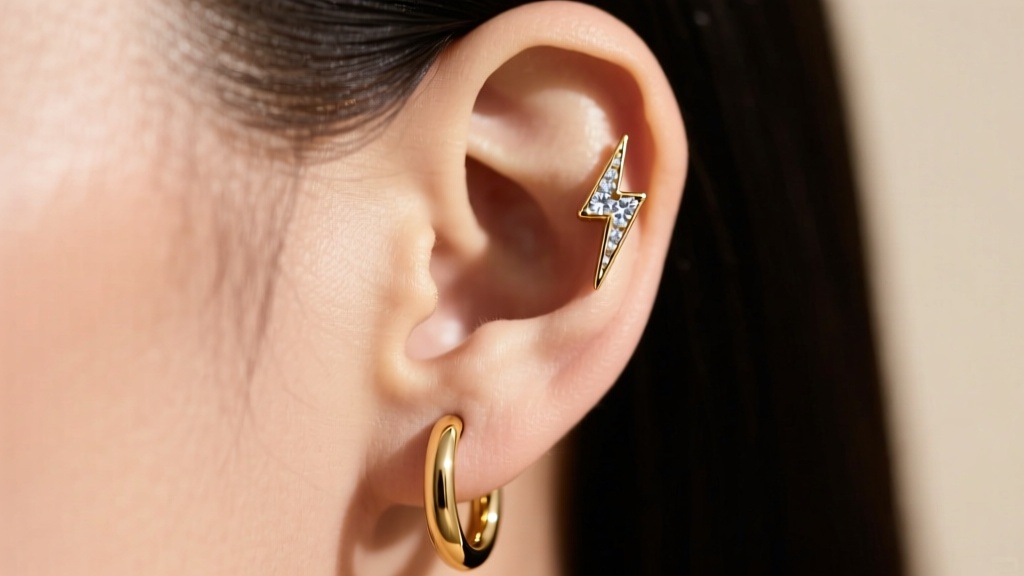
| Helix / Flat Helix | 16G | 6mm | 4mm - 7mm | A tiny, diamond-encrusted bolt looks incredibly delicate here. |
| Tragus | 16G or 18G | 5mm - 6mm | 3mm - 5mm | Requires a micro-bolt; ensure the points don't catch on earbuds. |
Aftercare and Daily Maintenance
Maintaining the sharp, reflective edges of your lightning bolt studs requires a simple but consistent cleaning routine. The inner angles of the bolt are prime real estate for accumulating sebum, dead skin cells, and hair product residue.
Once a week, remove your earrings (if fully healed) and soak them in a small bowl of warm water mixed with a few drops of mild, fragrance-free liquid soap. Use an ultra-soft baby toothbrush to gently agitate the inner corners of the bolt. Rinse thoroughly with distilled water to prevent hard water spots from dulling the metal or gemstones, and dry completely with a lint-free microfiber cloth. Never use harsh chemicals, alcohol, or ultrasonic cleaners on lightning bolts that feature glued-in gemstones, as the vibrations and solvents will dissolve the adhesive and cause the stones to fall out.
Final Thoughts for Beginners
Lightning bolt stud earrings are a phenomenal entry point into expressive, curated ear styling. By prioritizing implant-grade materials, opting for flat-back labret posts, and paying close attention to the structural manufacturing of the bolt itself, you can avoid the common pitfalls that plague beginner jewelry buyers. Whether you are rocking a single, bold gold bolt in your lobe or a constellation of micro-diamond bolts across your helix, understanding the mechanics of your jewelry ensures your style remains as sharp and resilient as the lightning bolt itself.


