Long Crystal Earrings: Material Properties & Care Guide
Discover the best metals and settings for long crystal earrings. Compare material properties, weights, and hypoallergenic grades for comfortable wear.

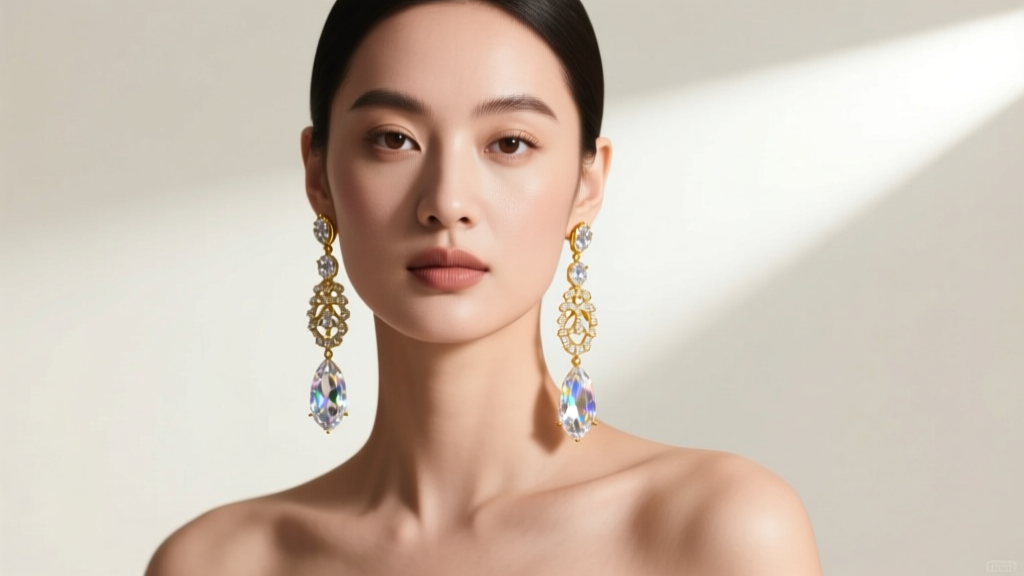
The Anatomy of Long Crystal Earrings: Why Material Matters
When selecting long crystal earrings, most buyers focus entirely on the visual impact—the sparkle, the length, and the silhouette. However, as a structural accessory that hangs from a delicate cartilage and tissue piercing, the material properties of both the crystals and the metal settings dictate the longevity, comfort, and safety of the piece. Long crystal earrings act as pendulums, creating kinetic torque on the earlobe with every turn of the head. If the materials are too heavy, poorly graded, or chemically reactive, they can lead to lobe tearing, contact dermatitis, or premature degradation of the jewelry.
Understanding the intersection of gemology and metallurgy is essential for building a high-quality collection. This guide breaks down the exact physical properties, gauge requirements, and material grades you need to know before investing in statement drop earrings.
Crystal Types and Their Physical Properties
The term "crystal" in the jewelry industry is often used loosely, encompassing everything from high-end optical glass to natural earth-mined minerals. The refractive index (RI) and Mohs hardness scale are the two most critical metrics for evaluating the quality and durability of the stones used in long crystal earrings.
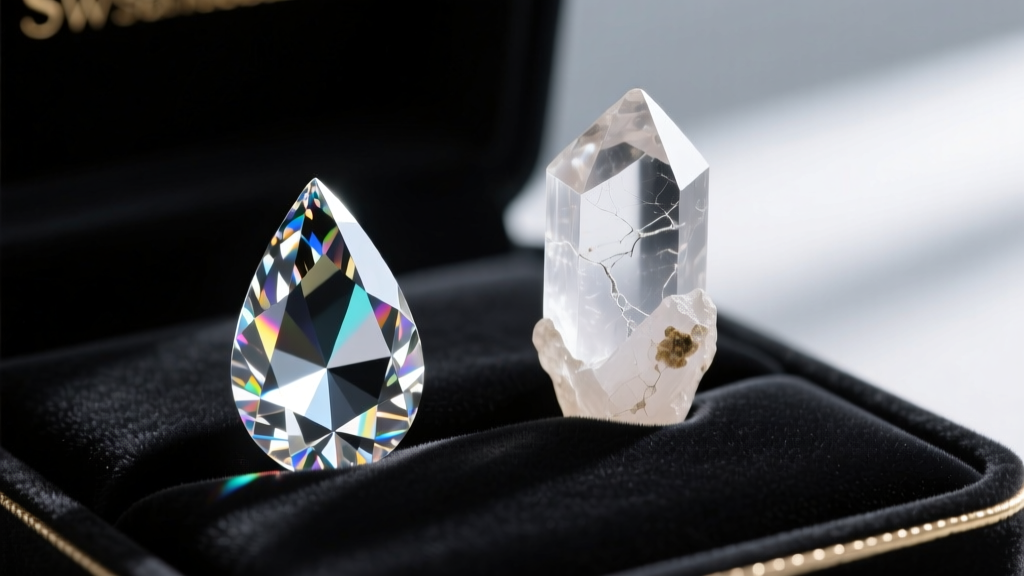
Swarovski vs. Preciosa vs. Natural Quartz
- Swarovski & Preciosa (Manufactured Crystal): Historically made with lead oxide to increase the refractive index (RI of ~1.7), modern iterations from both brands now utilize advanced lead-free compounds (often barium or zinc oxide) to comply with global safety directives. They offer exceptional brilliance and precise machine-cut faceting, but they rank around 6 to 7 on the Mohs hardness scale. They are highly susceptible to scratching if stored improperly.
- Natural Clear Quartz: According to the Gemological Institute of America (GIA), natural quartz has a Mohs hardness of 7 and an RI of 1.54–1.55. While it lacks the explosive rainbow scintillation of manufactured lead-free crystal, it is significantly more scratch-resistant and offers a unique, organic aesthetic with natural inclusions.
- Standard Glass/Rhinestones: Often found in fast-fashion long crystal earrings, standard glass has a Mohs hardness of just 5.5 and an RI below 1.52. These will cloud quickly from skin oils and micro-scratches, making them a poor long-term investment.
Metal Settings: Weight, Durability, and Allergies
The metal framework holding the crystals must balance structural integrity with low density. Because long crystal earrings already carry substantial weight from the stones, using dense metals like tungsten or thick brass can push the total weight past the earlobe's comfort threshold. Furthermore, nickel sensitization is a primary concern for dangling jewelry, as the constant swinging motion causes micro-friction against the piercing fistula.
The Association of Professional Piercers (APP) strictly recommends implant-grade materials for any jewelry that interacts with the skin. Below is a comparison of common metals used in crystal earring settings.
| Metal Type | Grade / Standard | Density (g/cm³) | Hypoallergenic Rating | Avg. Price Range (Settings) |
|---|---|---|---|---|
| Implant-Grade Titanium | ASTM F136 (Ti-6Al-4V) | 4.43 | Excellent (Nickel-Free) | $25 – $80 |
| Surgical Steel | 316L / 316LVM | 8.00 | Poor to Fair (Contains Nickel) | $15 – $45 |
| Solid Gold | 14k or 18k (Nickel-Free Alloy) | 12.9 - 15.6 | Excellent | $150 – $500+ |
| Sterling Silver | 925 (Copper Alloy) | 10.36 | Fair (Tarnishes, Copper Allergies) | $40 – $120 |
Expert Note: While 14k gold is the premium choice for luxury long crystal earrings, its high density means the metal itself adds significant weight. For oversized chandelier styles, ASTM F136 Titanium is the superior choice, offering aerospace-level strength at a fraction of the weight.
The Physics of Dangle: Gauge Thickness and Earlobe Stress
The most common failure mode for long crystal earrings is not the breaking of the crystal, but the tearing of the earlobe. This is driven by the "cheese cutter effect." When a heavy earring swings, the thin wire of the earring hook concentrates kinetic force onto a microscopic surface area of the piercing hole.
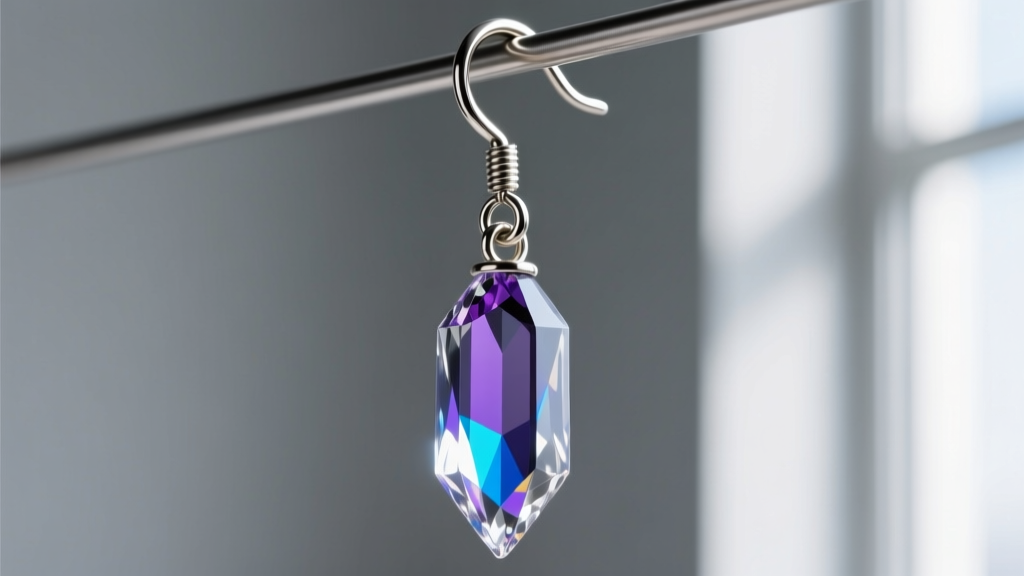
Preventing Lobe Tearing with Heavy Crystals
Standard ear piercings are typically done at 20-gauge (0.81mm) or 18-gauge (1.02mm). However, a pair of long crystal earrings exceeding 12 grams per ear will slowly migrate downward through a 20-gauge hole over time. To mitigate this structural risk, apply the following framework:
- Upgrade the Wire Gauge: For any crystal drop earring longer than 2 inches (5cm), insist on a 16-gauge (1.29mm) or 14-gauge (1.63mm) French wire or leverback hook. The thicker wire distributes the pendulum's torque across a wider band of tissue.
- Utilize Support Patches: Products like Lobe Wonder ear support patches are essential for heavy crystal chandeliers. These adhesive pads feature a reinforced backing that transfers the weight of the earring from the piercing hole to the broader surface area of the earlobe.
- Check the Jump Rings: The weakest structural link in long crystal earrings is often the jump ring connecting the hook to the crystal bail. Ensure these are soldered closed or made of heavy-gauge wire; unsoldered jump rings will easily pull apart under the swinging weight of crystals.
Maintenance and Chemical Resistance
The material composition of your earrings dictates how they must be cleaned. Manufactured crystals (Swarovski/Preciosa) are frequently backed with a metallic foil or specialized coating to enhance light return. Submerging these in harsh chemicals or using ultrasonic jewelry cleaners will cause the foil to oxidize, peel, or cloud permanently.
Furthermore, if your long crystal earrings utilize adhesive rather than prong settings, exposure to alcohol-based cleaners, chlorine, or even heavy aerosol hairsprays will degrade the epoxy resin, leading to catastrophic stone loss. Always clean manufactured crystal drops using a lint-free microfiber cloth lightly dampened with distilled water and a pH-neutral soap. Natural quartz, conversely, can withstand ultrasonic cleaning and mild chemical baths, provided the metal setting is equally resilient.
Expert Verdict: Building Your Collection
Investing in long crystal earrings requires looking past the initial sparkle to evaluate the engineering of the piece. For everyday wear or sensitive ears, prioritize ASTM F136 titanium settings paired with bezel-set stones to prevent snagging. For high-end evening wear, 14k gold with prong-set natural quartz or precision-cut Preciosa crystals offers the perfect balance of luxury, brilliance, and structural integrity. Always verify the wire gauge and total gram weight before purchasing to ensure your earlobes can comfortably support the art you wear.


