LV Stud Earrings: 2026 Authentication & Material Deep Dive
An expert technical breakdown of LV stud earrings, covering 18k gold alloys, diamond grading, hallmark authentication, and 2026 market pricing.

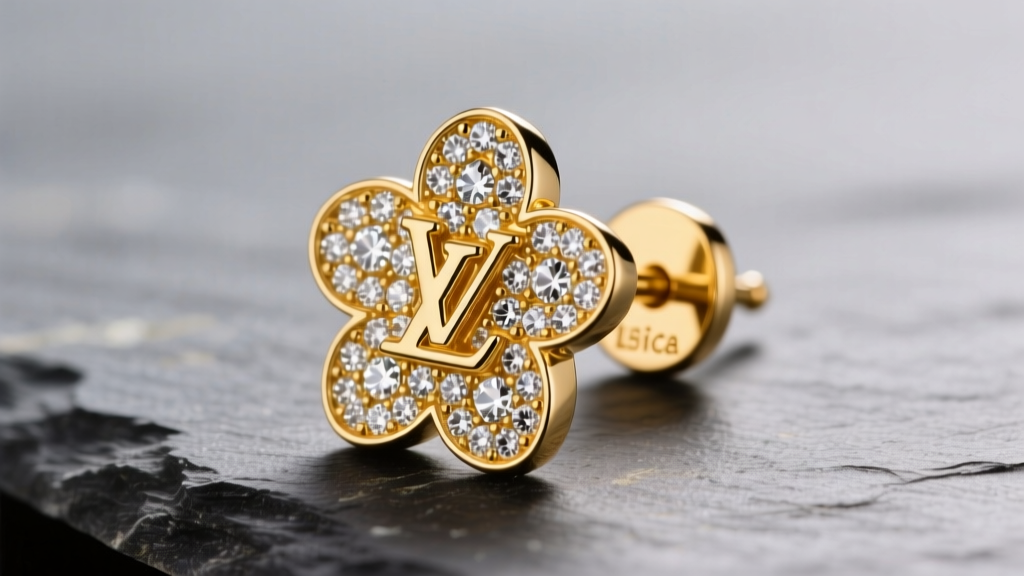
When evaluating luxury fine jewelry, the conversation often drifts toward brand heritage and aesthetic appeal. However, for serious collectors, gemologists, and authentication experts, the true value of LV stud earrings lies in their metallurgical composition, gemological grading, and precise manufacturing tolerances. As we navigate the 2026 luxury market, where sophisticated counterfeits frequently mimic superficial design elements, understanding the technical deep dive of Louis Vuitton’s ear jewelry is no longer optional—it is essential. This guide bypasses the marketing fluff to examine the exact material grades, hallmark protocols, and structural specifications that define authentic LV studs.
The Metallurgy of LV Stud Earrings: Beyond the Monogram
Louis Vuitton’s fine jewelry division strictly utilizes 18-karat gold for its core stud collections, including the iconic Monogram Flower, Empreinte, and B Blossom lines. In the luxury sector, 18k gold (stamped '750') consists of 75% pure gold and 25% alloy metals. However, the specific alloy ratios dictate the color, durability, and tarnish resistance of the piece.
According to GIA's standards on gold alloys, the balance of copper, silver, and zinc is critical. For LV’s signature yellow gold, the house employs a meticulously balanced silver-to-copper ratio (often hovering near 1:1) to achieve a rich, warm hue without the reddish tint common in some European goldsmithing traditions. This specific alloy mix ensures the metal maintains its structural integrity when cast into the intricate, multi-layered petals of the Monogram Flower stud.
The white gold variants present a different technical profile. To comply with modern hypoallergenic standards, LV utilizes palladium-based white gold alloys rather than nickel-heavy mixes. Because palladium-white gold still retains a slight yellowish-gray undertone, the studs undergo a galvanic rhodium plating process. In 2026, authentic LV white gold studs feature a hard rhodium flash typically measuring between 0.15 and 0.25 microns in thickness. This provides a brilliant, mirror-like finish that resists micro-scratches, though it will eventually require professional re-plating after years of friction against the earlobe.
Gemological Sorting: What Diamonds Does Louis Vuitton Actually Use?
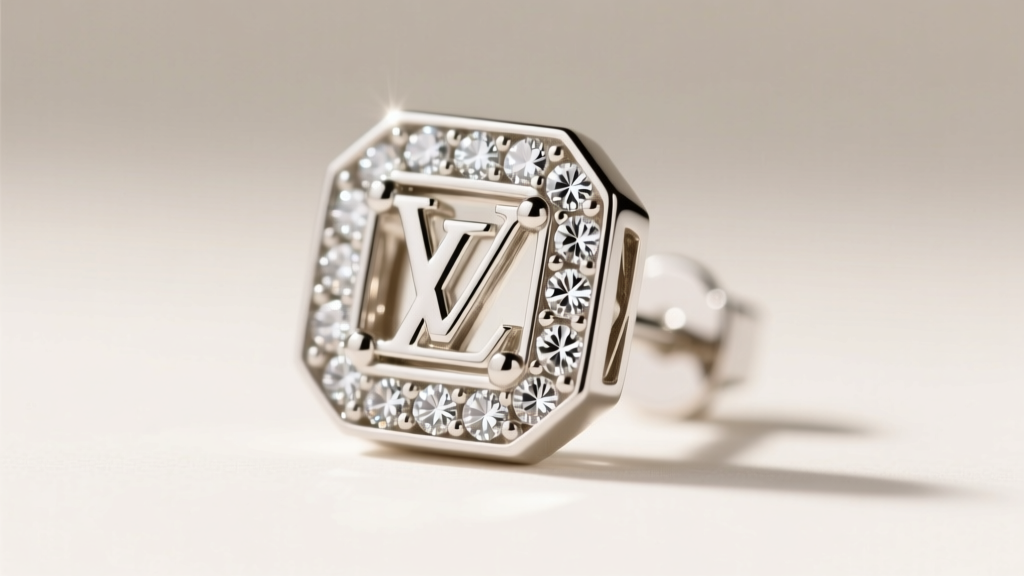
A common misconception in the secondary market is that luxury fashion houses use commercial-grade melee diamonds for their pavé settings. Louis Vuitton’s fine jewelry ateliers operate under much stricter gemological parameters. Whether examining the micro-pavé on a B Blossom Sun stud or the central bezel-set stone on an Empreinte motif, the diamonds are rigorously sorted.
Based on the GIA Diamond 4Cs framework, LV typically mandates a minimum color grade of Top Wesselton (F-G on the GIA scale) and a clarity grade of VS (Very Slightly Included) or better. This ensures that even the smallest 0.005-carat melee stones exhibit optimal light return and lack visible carbon inclusions under 10x magnification. The cut quality is equally paramount; LV utilizes stones with excellent to very good symmetry, ensuring the pavé fields create a continuous, uniform sparkle rather than a chaotic scatter of light.
Furthermore, the setting technique itself is a hallmark of authenticity. Authentic LV pavé studs feature perfectly rounded, low-profile prongs (often referred to as 'beads') that are raised from the surrounding metal using a graver. Counterfeit pieces frequently exhibit 'cast prongs'—blurry, uneven metal blobs that fail to secure the stones properly and lack the crisp, polished edges found on genuine LV jewelry.
Technical Specifications & 2026 Pricing Matrix
Understanding the physical dimensions and market valuation of specific models is crucial for both authentication and investment purposes. The table below outlines the technical specifications for three of the most highly traded LV stud earring models in the 2026 market.
| Model | Metal & Motif Size | Diamond CTW (Approx) | Post Gauge | 2026 Retail Price Range (USD) |
|---|---|---|---|---|
| Monogram Flower (Small) | 18k Gold / 7mm | 0.06 ct (Pavé) | 0.85mm - 0.90mm | $2,450 - $2,700 |
| Empreinte Sun | 18k Rose Gold / 9mm | 0.10 ct (Center Bezel) | 0.90mm - 0.95mm | $3,100 - $3,400 |
| B Blossom Sun | 18k White Gold / 11mm | 0.15 ct (Pavé + Center) | 0.90mm - 0.95mm | $4,800 - $5,200 |
| Color Blossom BB | 18k Gold + Malachite / 9mm | N/A (Hardstone) | 0.85mm - 0.90mm | $2,900 - $3,150 |
Authentication Protocol: Hallmarks, Serials, and Post Gauges
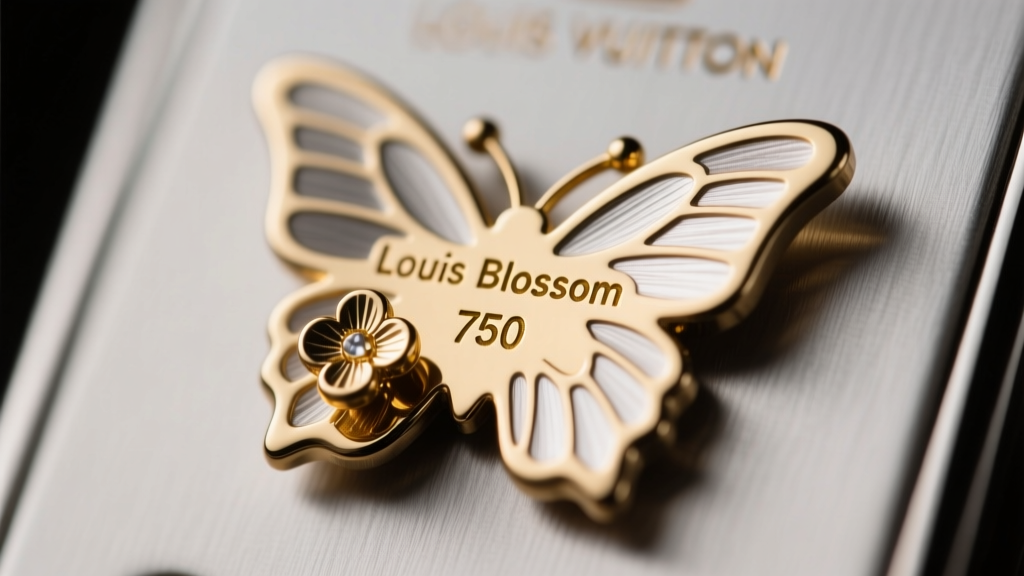
As counterfeit manufacturing has evolved to replicate visual designs, authentication in 2026 relies heavily on micro-structural analysis. When verifying LV stud earrings, experts examine three critical zones: the post gauge, the hallmark stamps, and the friction mechanics of the backing.
1. Post Gauge and Friction Backs
Standard commercial earrings often utilize thin, 0.6mm to 0.7mm wire posts to save on gold weight. Authentic LV studs feature substantially thicker posts, typically measuring between 0.85mm and 0.95mm. This thickness is necessary to support the weight of solid 18k gold motifs without bending during insertion. Furthermore, the accompanying butterfly backs (friction nuts) are engineered with high-tension springs. The internal mechanism provides a secure, tactile 'click' when pushed past the post's groove, and the flat exterior of the backing is frequently stamped with a microscopic '© LV' logo.
2. Hallmark Stamps and Font Kerning
The stamping on the post or the interior of the motif must be laser-sharp. Authentic stamps include the '750' purity mark, the '© LV' copyright logo, and occasionally the French Eagle Head (Tête d'Aigle) if the piece was manufactured for the domestic French market. The typography of the LV stamp is a primary failure point for fakes: on genuine pieces, the 'O' is a perfect circle (never an oval), the 'L' has a distinctly short bottom serif, and the kerning between the letters is mathematically precise.
3. Serial Numbers and SKU Engravings
Unlike Louis Vuitton handbags, which historically used date codes, fine jewelry pieces are typically engraved with a unique serial number or SKU. This is often laser-etched onto the flat edge of the butterfly back or microscopically inscribed along the post itself. In 2026, advanced authentication relies on matching this engraved alphanumeric sequence against Louis Vuitton’s internal database via an authorized boutique or certified third-party appraisal service.
Care, Maintenance, and Structural Vulnerabilities
Despite their robust metallurgy, LV stud earrings require specific maintenance protocols to preserve their structural and aesthetic integrity. According to Louis Vuitton's official fine jewelry care guidelines, owners must avoid exposing the pieces to harsh chemicals, including chlorine and aerosolized cosmetics, which can degrade the rhodium plating on white gold and dull the diamond facets.
Expert Warning: Never place pavé diamond LV studs in an ultrasonic cleaner. The high-frequency vibrations can loosen the microscopic graver-raised prongs, leading to catastrophic stone loss. Always clean pavé settings using a soft-bristled brush, warm water, and a pH-neutral degreasing soap.
Additionally, the hardstone variants (such as Malachite or Onyx in the Color Blossom line) are highly susceptible to thermal shock and chemical etching. These stones are set using specialized bezel walls that apply exact, calibrated pressure; attempting to resize or repair the backing at a non-certified jeweler can easily fracture the stone due to improper torque.
The 2026 Secondary Market Outlook
The secondary market for authentic LV stud earrings remains remarkably resilient. While retail prices have seen annual adjustments to account for precious metal fluctuations and inflation, the resale value of iconic models like the Monogram Flower and Empreinte lines consistently hovers between 55% and 70% of their original retail price, provided the pieces include their original certificates, boxes, and unpolished hallmarks. Collectors and investors in 2026 are increasingly prioritizing pieces with verifiable micro-laser serials, as the proliferation of 'super-fakes' has made provenance and physical authentication more critical than ever. Understanding the precise gauge, alloy composition, and gemological standards of these earrings is the ultimate defense in the modern luxury market.


