How Do You Make Clip On Earrings Last? Ultimate Care Guide
Discover how do you make clip on earrings last longer. Expert care, tension adjustment, and metal-specific cleaning tips for non-pierced ears.

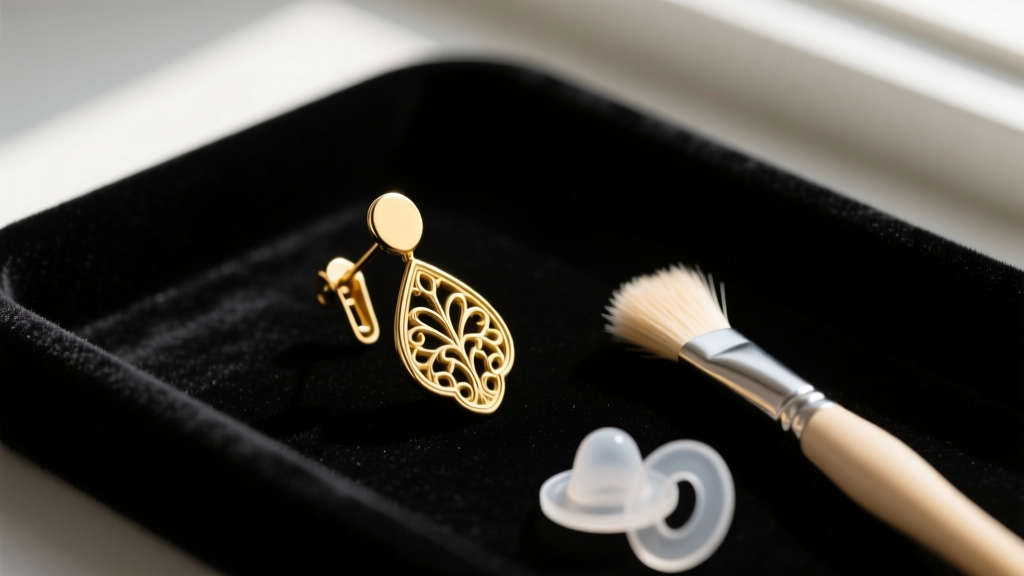
The 2026 Clip-On Renaissance: Why Maintenance Matters
In 2026, the jewelry landscape has fully embraced the non-pierced aesthetic. From high-fashion runways to everyday ear curation, clip-on earrings are no longer just a vintage relic; they are a mainstream staple. However, because they rely on mechanical tension rather than a post and friction back, they require a distinctly different maintenance regimen. Many collectors and new enthusiasts frequently ask: how do you make clip on earrings maintain their original grip without snapping the hinge or degrading the metal? The secret lies in understanding the mechanical stress points, performing precise tension adjustments, and utilizing metal-specific cleaning protocols that prevent galvanic corrosion and finish stripping.
Understanding the Mechanics: What Actually Breaks?
Before diving into cleaning, you must understand the anatomy of the clip-on mechanism. The two most common types are the paddle-back (which uses a hinged, spring-loaded metal paddle) and the screw-back (which uses a threaded screw to adjust pressure). The primary failure modes for these earrings are not usually the decorative elements, but rather the hinge pins, the tension springs, and the degradation of the ear cushions. According to the V&A Museum's jewelry conservation guidelines, mechanical stress combined with the acidic oils from human skin creates a highly corrosive environment for the base metals often used in vintage and modern clip-on findings.
How Do You Make Clip On Earrings Comfortable? Tension & Pads
When learning how do you make clip on earrings comfortable for all-day wear, adjusting the tension and replacing the pads is step one. Over time, paddle-backs lose their grip, while screw-backs can become stripped or overly tight.
Adjusting Paddle-Back Tension Safely
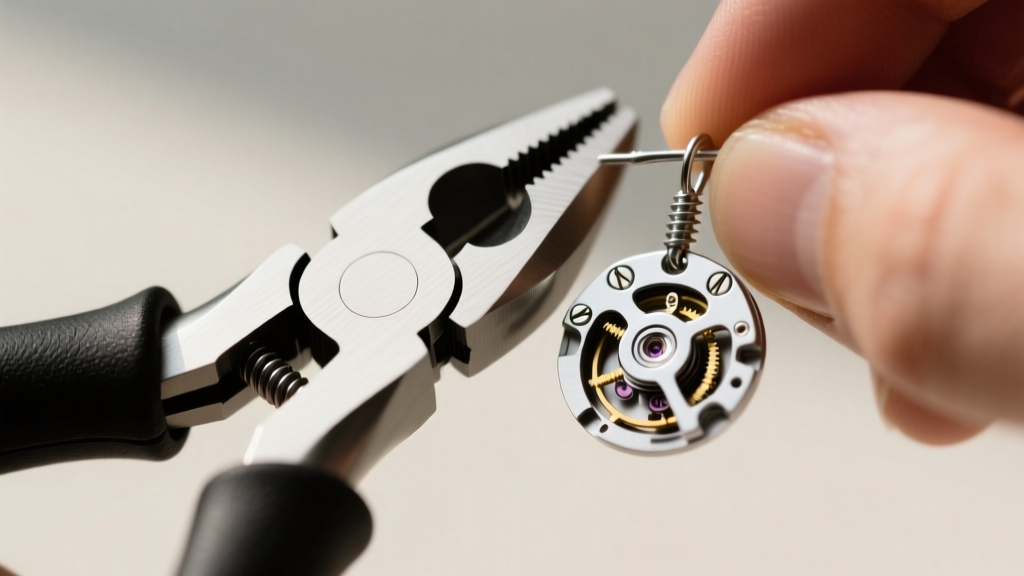
Never use standard steel jewelry pliers to bend the paddle of a clip-on earring. Steel will instantly mar the gold vermeil or rhodium plating. Instead, use nylon-jaw pliers. Gently grip the paddle near the hinge and apply micro-millimeter bends outward to increase tension, or inward to decrease it. Test the pressure on your thumb before applying it to your earlobe.
Maintaining Screw-Back Threads
Screw-backs rely on a tiny brass or steel core threading into a metal cap. If the screw feels gritty or gets stuck, do not force it, as you will strip the threads. Apply a microscopic drop of synthetic watchmaker's oil (such as Moebius 9010) to the threads using a fine needle. Wipe away any excess immediately to prevent oil from transferring to the earlobe or degrading the adhesive on the ear cushion.
Replacing and Sanitizing Ear Cushions
Vintage and even modern clip-ons often ship with PVC or cheap rubber pads that turn yellow, harden, and crack within a year. To upgrade your earrings, carefully peel off the old pads and clean the metal base with 70% isopropyl alcohol. Replace them with medical-grade silicone pads rated at Shore 30A hardness. This specific durometer provides enough grip to prevent slipping while offering the plush compression needed for heavy dangle or chandelier clip-ons.
Metal-Specific Cleaning Protocols
The Gemological Institute of America (GIA) emphasizes that cleaning solutions must be matched to the specific metal alloy. Using the wrong chemical can strip plating or accelerate tarnishing. Below is a decision matrix for cleaning the findings and bodies of your clip-on earrings.
| Metal Type | Recommended Cleaning Agent | Tool | Ultrasonic Safe? |
|---|---|---|---|
| Sterling Silver | Aluminum foil + baking soda + hot water (ion exchange) | Microfiber cloth | Yes (if no soft stones) |
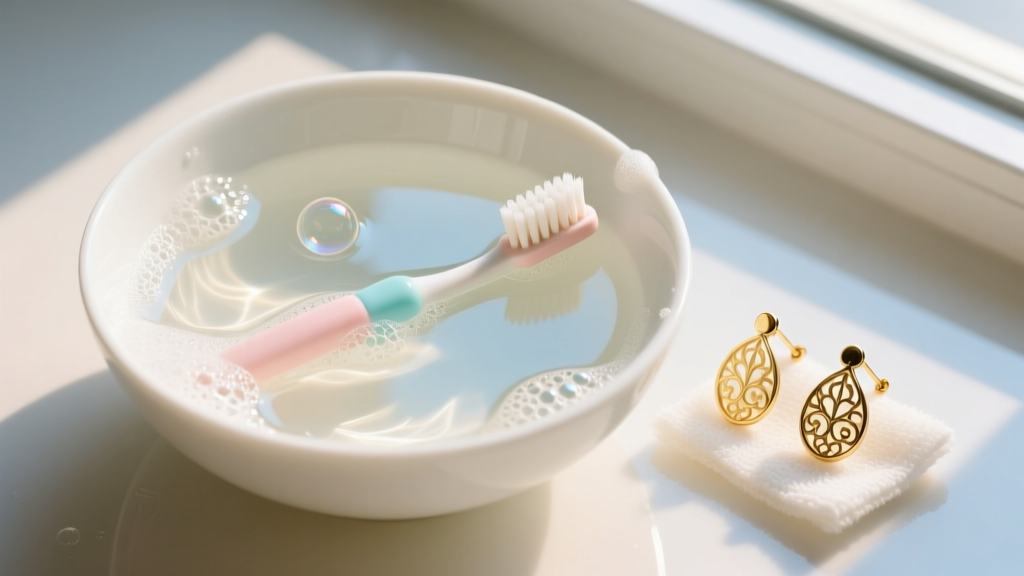
| Gold Vermeil / Filled | Mild dish soap (e.g., Dawn) + lukewarm water | Baby toothbrush (extra soft) | No (strips gold layer) |
| Zamak / Pot Metal | Dry microfiber only | Soft cotton swab | No (causes rapid corrosion) |
| Surgical Steel | 70% Isopropyl Alcohol | Cotton pad | Yes |
The Danger of Ultrasonic Cleaners for Clip-Ons
While ultrasonic cleaners are fantastic for solid gold post earrings, they are incredibly dangerous for clip-ons. The high-frequency vibrations can loosen the tiny hinge pins, shatter the tension springs, and completely strip the 2-to-3-micron gold layer off vermeil findings. Always hand-clean clip-on mechanisms.
Preventing Tarnish and Galvanic Corrosion
The area where the clip-on mechanism touches the skin is a hotspot for moisture, sebum, and cosmetic residue. If left uncleaned, this mixture causes galvanic corrosion, especially in base metals like brass or zamak. To prevent this:
- The Post-Wear Wipe: Always wipe the paddle or screw mechanism with a dry, lint-free cloth immediately after taking them off. Do not put them directly into a jewelry box while still holding skin oils.
- Anti-Tarnish Storage: Store clip-ons in individual ziplock bags with activated charcoal or Pacific Silvercloth strips. This absorbs ambient sulfur and moisture that cause silver and copper alloys to blacken.
- Cosmetic Sequencing: Put your clip-on earrings on after applying hairspray, perfumes, and lotions. The alcohol and volatile organic compounds (VOCs) in these products can cloud resin elements and degrade the adhesive holding the silicone pads in place.
Troubleshooting Common Clip-On Issues
Problem: The Earrings Slip Down the Earlobe
Solution: This is rarely a metal issue and almost always a friction issue. If the metal paddle is clean and tight, the problem is the pad. Lightly scuff the surface of the silicone pad with a fine-grit emery board to create micro-texture, which dramatically increases grip against the skin without adding painful pressure.
Problem: The Hinge Feels 'Crunchy' or Stiff
Solution: Microscopic debris (dead skin cells, powder makeup) has become impacted in the hinge barrel. Use a wooden toothpick—never metal—to gently pick out the barrel crevices, then flush the hinge with a quick spray of compressed air. Follow up with a microscopic application of dry PTFE lubricant, which won't attract dust like wet oils do.
Final Thoughts on Clip-On Longevity
Mastering how do you make clip on earrings last requires a shift in mindset. You are not just caring for a decorative object; you are maintaining a micro-mechanical device that interacts directly with your body's chemistry. By investing in nylon-jaw pliers, upgrading to Shore 30A silicone pads, and strictly adhering to metal-specific cleaning matrices, your clip-on collection will remain comfortable, secure, and visually pristine for decades to come.


