Male Skull Earrings: 2026 Budget & Value Assessment
Discover the true value of male skull earrings in 2026. Compare materials, gauge sizes, and pricing tiers to avoid cheap alloys and find lasting quality.

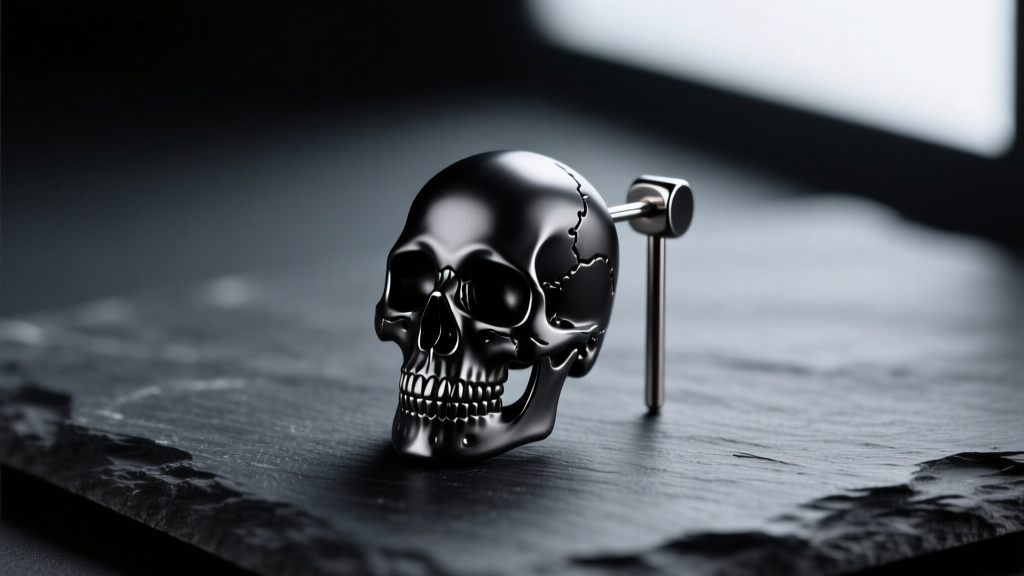
Skull earrings for men have evolved far beyond the crude, heavy biker stereotypes of the early 2000s. Today, the market offers refined, anatomically correct, and highly stylized art pieces ranging from minimalist geometric skulls to intricate, diamond-encrusted memento mori designs. However, as the popularity of edgy, alternative menswear jewelry surges in 2026, the market has been flooded with $12 mystery-metal studs that turn earlobes green and trigger severe contact dermatitis. Assessing the true value of male skull earrings requires looking past the aggressive aesthetics and diving deep into metallurgy, gauge tolerances, and manufacturing methods. This guide breaks down exactly where to spend your money, where to save, and how to avoid the hidden costs of bargain-bin boneheads.
The Hidden Costs of Bargain-Bin Alloys
When browsing fast-fashion retailers or unverified online marketplaces, you will frequently encounter male skull earrings priced between $5 and $15. These are almost exclusively cast from Zamak (a zinc alloy), brass, or low-grade stainless steel. While the upfront cost is low, the biological and financial failure rates are exceptionally high.
Zamak and brass are highly porous at a microscopic level. This porosity harbors bacteria and dead skin cells, making them a nightmare for hygiene, particularly in cartilage piercings. More critically, these alloys often contain high levels of nickel to achieve a bright, silver-like polish. According to the American Academy of Dermatology, nickel is the leading cause of allergic contact dermatitis. Once you develop a nickel allergy, your body will react to it for life, turning a simple lobe piercing into an itchy, weeping wound.
Furthermore, cheap casting methods result in poor structural integrity. The tiny cranial sutures and teeth details on a $10 skull earring are often brittle. A minor snag on a hoodie or towel can easily snap the post from the decorative head, rendering the piece entirely useless. True value in body jewelry is measured by cost-per-wear and biocompatibility, not just the initial checkout price.
The 2026 Material & Pricing Matrix
To make an informed budget assessment, you must understand the baseline pricing for safe, durable materials. Below is the current market matrix for high-quality male skull earrings, categorized by metal grade and manufacturing origin.
| Material Grade | Average Price Range | Pros & Best Use | Cons & Limitations |
|---|---|---|---|
| 316L Surgical Steel | $18 - $35 | Highly polished, durable, affordable. Best for fully healed standard lobe piercings. | Contains trace nickel; not recommended for fresh piercings or known allergy sufferers. |
| ASTM F136 Titanium | $40 - $85 | 100% nickel-free, lightweight, anodizable. The gold standard for fresh and sensitive piercings. | Higher cost; limited color options unless anodized by a professional. |
| Niobium | $35 - $65 | Hypoallergenic, excellent for intricate casting, takes a beautiful dark oxidized finish. | Softer metal; threading can strip if cross-threaded during insertion. |
| Solid 14k/18k Gold | $150 - $450+ | Prestige, heirloom quality, holds intricate detail perfectly. Best for luxury collectors. | Extremely expensive; soft (especially 18k), making thin posts prone to bending. |
Gauge Sizing: Matching the Post to the Anatomy
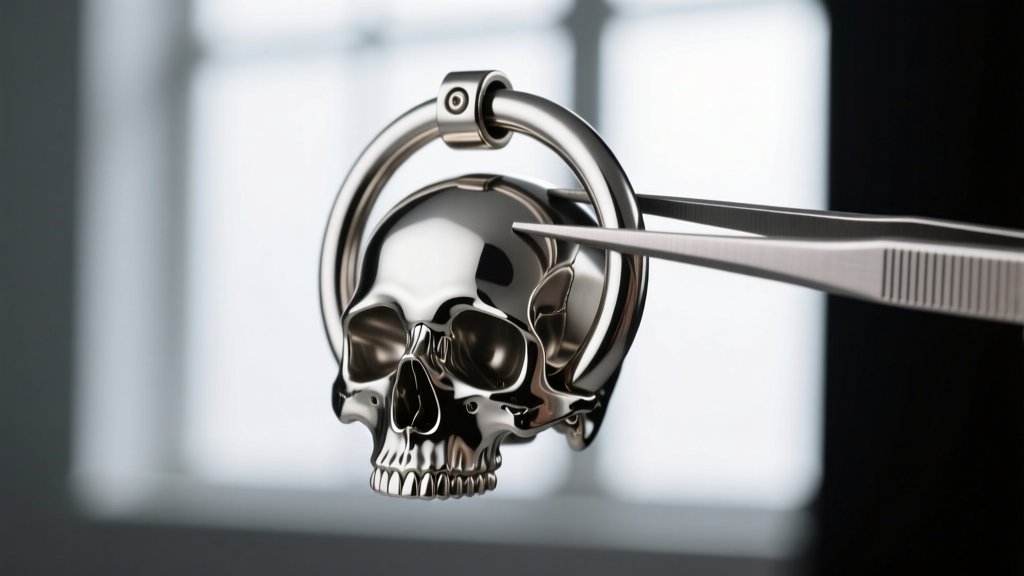
A common budget mistake is buying a skull earring based solely on the design, ignoring the post thickness (gauge). Piercing gauges operate on an inverse scale: the higher the number, the thinner the metal. Wearing the wrong gauge doesn't just look disproportionate; it causes physical trauma to the fistula (the piercing channel).
- 20G (0.8mm) & 18G (1.0mm): The standard for traditional earlobe piercings. Most mass-produced 316L steel skull studs and lightweight dangles are manufactured in these sizes. If you are buying a heavy, ornate skull dangle for a standard lobe, ensure the post is at least 18G to prevent the "cheese-cutter effect," where a thin wire slowly slices through the earlobe tissue under the weight of the jewelry.
- 16G (1.2mm) & 14G (1.6mm): The standard for cartilage piercings (helix, tragus, conch) and thicker male lobe piercings. If you are placing a skull stud in an upper helix, you must buy a 16G or 14G piece. The Association of Professional Piercers strongly advises against wearing thin, high-polish jewelry in cartilage, as it can cause migration and rejection due to uneven pressure distribution.
Always verify the gauge of the earring post before purchasing. Many budget retailers sell 20G skull studs that are entirely unsuitable for the 16G cartilage piercings many men sport today.
Brand Value Breakdown: Who Actually Delivers?
Not all manufacturers price their male skull earrings fairly. Here is a breakdown of the market landscape to help you identify where the real value lies in 2026.
The Budget Tier: Urban Body Jewelry & BodyArt
For $15 to $30, brands like BodyArt and various storefronts under the Urban Body Jewelry umbrella offer reliable 316L surgical steel. The value here is in the consistency of the threading and the polish. While the designs may be slightly less detailed than high-end castings, the steel is properly passivated, meaning it won't rust or immediately turn your skin green. This is the best entry point for men wanting to test the skull aesthetic in healed lobes without a massive investment.
The Mid-Tier: Independent Silversmiths & Niobium Casters
The $40 to $90 range is dominated by independent artisans on platforms like Etsy and specialized body jewelry boutiques. This is where you find incredible value in 925 Sterling Silver and Niobium. A skilled silversmith can cast a highly detailed, anatomically accurate skull that rivals luxury brands for a fraction of the cost. Warning: Sterling silver contains copper and will oxidize (tarnish) when exposed to sweat and moisture. Only wear silver skull earrings in fully healed, dry lobe piercings, and commit to regular polishing with a jeweler's cloth.
The Luxury Tier: BVLA & Maria Tash
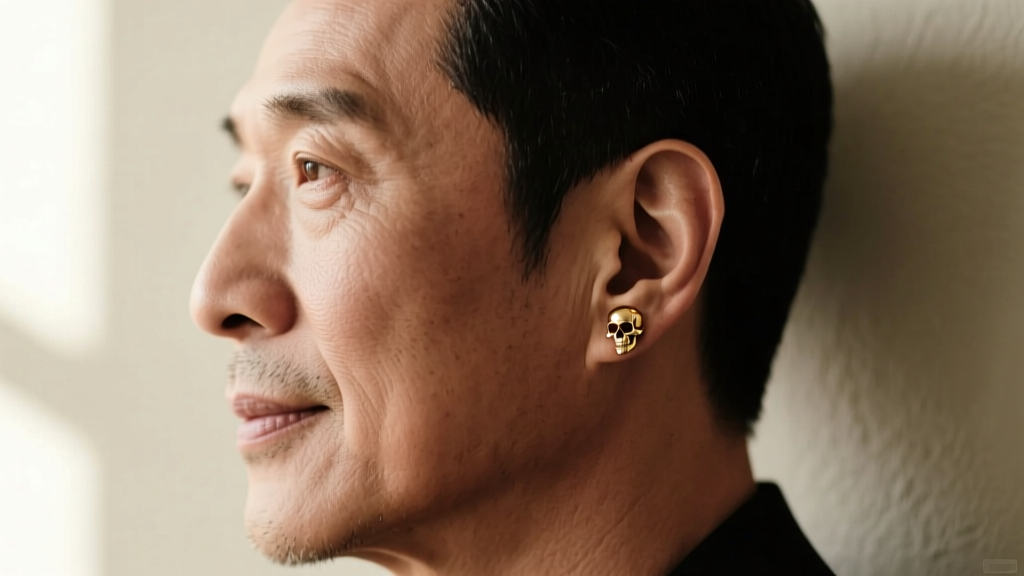
When budgets exceed $150, you enter the realm of BVLA (Body Vision Los Angeles) and Maria Tash. These brands utilize solid 14k and 18k gold, often setting the eye sockets of the skulls with VS-clarity black or white diamonds. The value proposition here shifts from mere biocompatibility to heirloom craftsmanship, precision-set gemstones, and proprietary threading systems (like BVLA's pin-and-socket) that ensure the decorative skull head will never accidentally unscrew and fall out in your sleep.
The Verdict: A Framework for Buying Skull Earrings
Assessing the budget and value of male skull earrings ultimately comes down to matching the material to your specific anatomy and lifestyle. If you are buying for a fresh cartilage piercing or have sensitive skin, bypass the $20 steel options entirely; the $45 investment in an ASTM F136 titanium piece is a non-negotiable medical necessity, not just an aesthetic upgrade.
For fully healed lobes, 316L surgical steel remains the undisputed king of budget value, offering excellent durability and shine for under $30. However, if you want a statement piece that bridges the gap between alternative edge and fine jewelry, seek out independent casters working in solid Niobium or heavily oxidized Sterling Silver. By prioritizing verified metal grades and correct gauge sizing over flashy, unverified marketplace listings, you ensure that your skull earrings remain a sharp, comfortable, and permanent fixture in your wardrobe for years to come.


