Manatee Earrings in 2026: The Ultimate Budget & Value Guide
Discover the true value of manatee earrings in 2026. Compare materials, enamel types, and pricing tiers to avoid overpriced novelty jewelry traps.

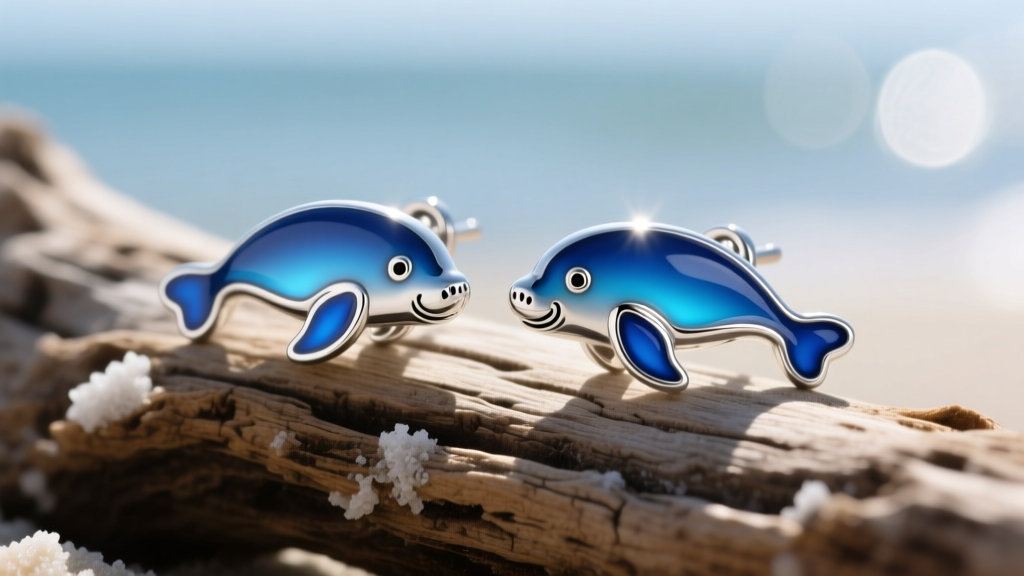
The surge in niche, nature-inspired novelty jewelry has firmly established the manatee as a beloved motif in 2026. From delicate stud earrings to intricate cartilage cuffs, the 'sea cow' aesthetic is everywhere. However, the popularity of manatee earrings has also attracted a flood of low-quality, mass-produced dropshipped items disguised as artisan crafts. As a savvy jewelry buyer, how do you separate genuine craftsmanship from overpriced base metals?
In this comprehensive budget and value assessment, we break down the metallurgy, enamel techniques, and hardware anatomy of manatee earrings. Whether you are looking for a $20 pair of everyday studs or a $150 set of kiln-fired enamel dangles, this guide will ensure you get exactly what you pay for.
The Material Breakdown: What Are You Actually Paying For?
The single biggest factor determining the value and longevity of your manatee earrings is the base metal. Novelty jewelry is notorious for utilizing cheap alloys that cause contact dermatitis and tarnish within weeks.
Zinc Alloy (Zamak) vs. 925 Sterling Silver
Budget manatee earrings are almost exclusively cast from Zamak, a zinc alloy containing aluminum, magnesium, and copper. While Zamak allows for highly detailed, inexpensive casting, it is inherently brittle and porous. To make it look appealing, manufacturers plate it with a microscopic flash of silver or gold. Once this plating wears off—often within a month of daily wear—the exposed zinc reacts with your skin's natural oils, turning your earlobes green and potentially triggering severe nickel or cadmium allergies.
True value begins at 925 Sterling Silver. Composed of 92.5% pure silver and 7.5% copper, sterling silver is hypoallergenic for the vast majority of wearers and possesses the structural integrity required to hold intricate manatee detailing without snapping. According to the Jewelers of America, authentic sterling silver must bear a quality stamp (like '925' or 'Sterling'). If your manatee earrings lack this stamp, you are likely paying premium prices for pot metal.
The Gold Vermeil Standard
If you prefer the look of gold, you must understand the difference between 'gold plated' and 'gold vermeil'. Gold-plated brass or silver can feature a gold layer as thin as 0.1 microns. Gold vermeil, however, is a strictly regulated term. The Federal Trade Commission (FTC) requires vermeil to consist of a 925 sterling silver base coated with at least 2.5 microns of 10k, 14k, or 18k gold. When evaluating 14k gold vermeil manatee huggies, always check the product specifications for the micron count; anything less is a poor long-term investment.
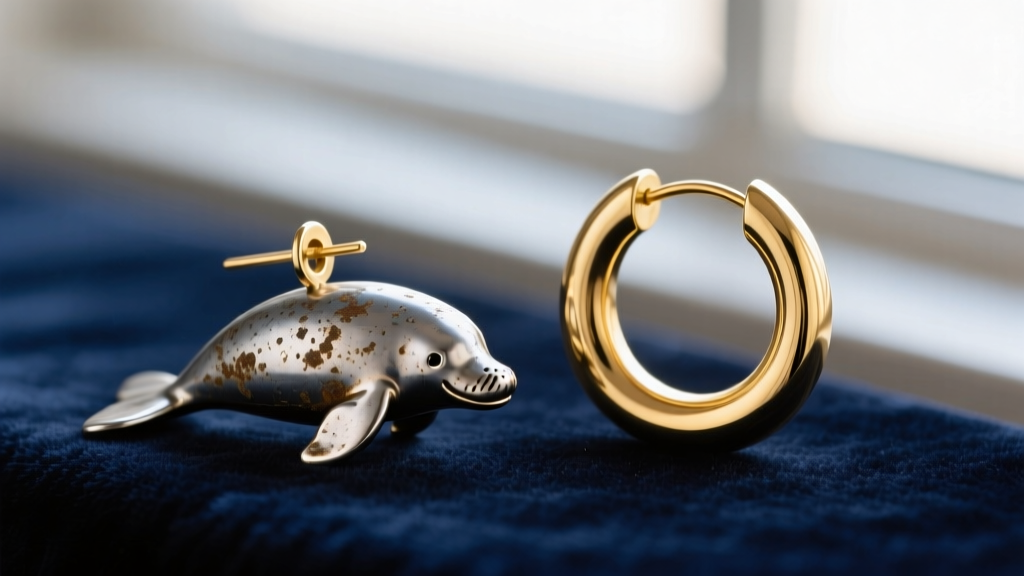
Enamel Techniques: Cold Epoxy vs. Vitreous Glass
Manatee earrings rely heavily on color to bring the gentle giants to life, typically utilizing blue, grey, or seafoam green tones. The method used to apply this color drastically alters the price point and durability.
- Cold Enamel (Epoxy Resin): This is essentially colored glue painted into the recesses of the metal. It is cured at room temperature. While vibrant initially, cold enamel is prone to chipping, scratching, and yellowing when exposed to UV light and cosmetics. It is standard in the $10–$25 price bracket.
- Vitreous Enamel (Kiln-Fired Glass): True artisan manatee earrings use vitreous enamel, which involves fusing finely ground glass powder to the metal surface in a kiln at temperatures exceeding 1400°F (760°C). As noted by the Gemological Institute of America (GIA), vitreous enamel is incredibly durable, scratch-resistant, and will never fade or yellow. This technique requires master craftsmanship and justifies price tags of $80 to $150+.
2026 Pricing Tiers for Manatee Earrings
To help you benchmark the market, we have categorized the current landscape of manatee earrings into three distinct value tiers. Use this table to assess whether a retailer's pricing aligns with their materials.
| Tier | Price Range | Base Metal | Color Technique | Hardware & Posts | Value Rating |
|---|---|---|---|---|---|
| Budget / Fast Fashion | $5 - $18 | Zinc Alloy / Brass | Cold Epoxy Resin | 22g Plated Wire, Butterfly Backs | Poor (High allergy risk) |
| Mid-Tier / Indie Maker | $25 - $55 | 925 Sterling Silver | Cold Enamel or Rhodium Plating | 20g Solid Silver, Secure Friction Backs | Good (Best everyday value) |
| Artisan / Investment | $85 - $180+ | 925 Silver / 14k Solid Gold | Kiln-Fired Vitreous Enamel | 18g Wire, Screw Backs or Clickers | Excellent (Heirloom quality) |
Assessing the Hardware: Posts, Gauges, and Anatomy
A beautifully cast manatee charm is useless if the hardware fails. The structural integrity of the earring post and the mechanics of the closure are critical, especially for novelty designs that tend to be slightly heavier than standard geometric studs.
Gauge Thickness and Lobe Health
Standard earlobe piercings are typically done at 20 gauge (0.81mm) or 18 gauge (1.02mm). Many budget manufacturers use ultra-thin 22 gauge (0.64mm) wire for their posts to save on silver costs. If you are buying manatee dangle earrings, the pendulum effect of a swinging charm will cause a thin 22g wire to act like a cheese wire, slowly migrating through your fistula and causing the 'cheese-cutter effect' (lobe tearing). Always verify that dangles and heavy studs utilize a minimum of 20g, preferably 18g, wire.
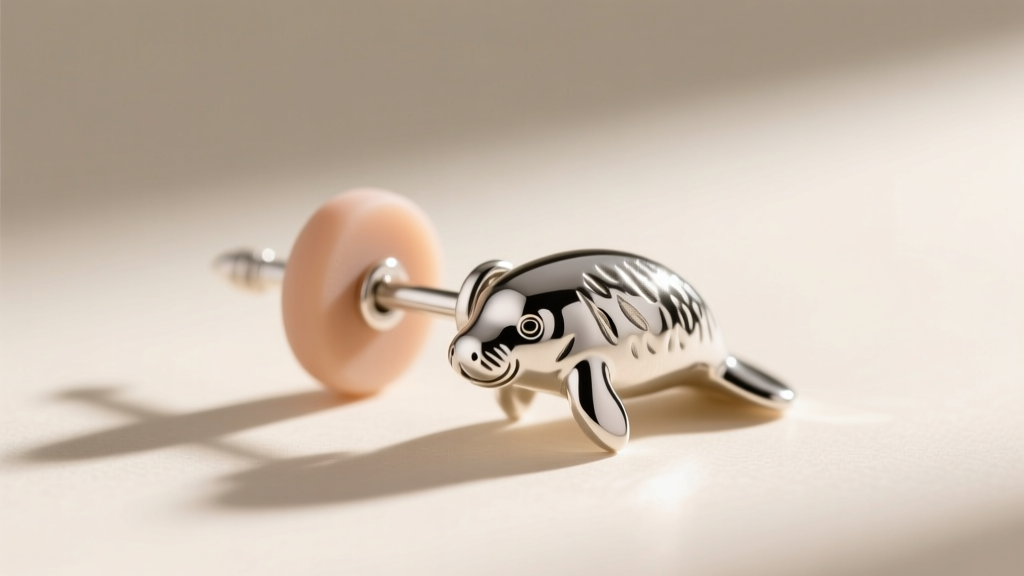
Clasp Mechanics for Cartilage and Hoops
If you are opting for manatee-themed huggies or cartilage cuffs, the hinge mechanism is paramount. Avoid basic 'snap' closures on thin hoops, as the tension weakens over time, leading to lost earrings. Instead, look for segment rings with a clicker closure or hinged hoops with a secure latch and safety catch. For cartilage piercings (like the helix or tragus), where swelling and movement are common, internally threaded or threadless (push-pin) manatee ends are the gold standard for both security and tissue health.
Red Flags: How to Spot Overpriced Dropshipped Jewelry
When shopping on social media marketplaces or independent craft sites, be vigilant against deceptive marketing tactics. Here is a quick checklist to protect your wallet:
- The 'Tibetan Silver' Myth: If a listing describes the material as 'Tibetan Silver' or 'Antique Silver,' run. These are trade terms for base metal alloys containing zero actual silver, often laced with harmful levels of lead and nickel.
- Glued Posts: Inspect close-up photos. If the earring post appears to be soldered with a messy blob of adhesive rather than cleanly laser-welded or cast as a single piece, it will snap under minimal pressure.
- Stolen Artisan Photography: Reverse-image search the product photos. Many dropshippers steal photos of high-end vitreous enamel pieces from actual artisans, then ship the buyer a $3 cold-epoxy Zamak replica.
Final Verdict: Where is the Sweet Spot for Value?
For the vast majority of buyers, the Mid-Tier Indie Maker ($25–$55) offers the ultimate sweet spot for manatee earrings. By insisting on 925 sterling silver and 20-gauge posts, you eliminate the risk of allergic reactions and structural failure. While you may sacrifice the heirloom permanence of kiln-fired glass enamel, modern high-quality cold enamels applied by reputable independent jewelers offer vibrant, chip-resistant color that easily lasts for years with proper care.
Ultimately, the value of novelty jewelry lies not just in its whimsical design, but in its wearability. A manatee earring should be a joyful, comfortable expression of your love for marine life—not a source of earlobe irritation or buyer's remorse. Demand transparent material listings, verify your gauge sizes, and invest in metals that respect your skin.


