1 to 2 Carat Diamond Earrings: 2026 Material Guide
Compare metals, diamond origins, and setting security for 1 to 2 carat diamond earrings. Expert 2026 guide on platinum, gold alloys, and lab-grown specs.

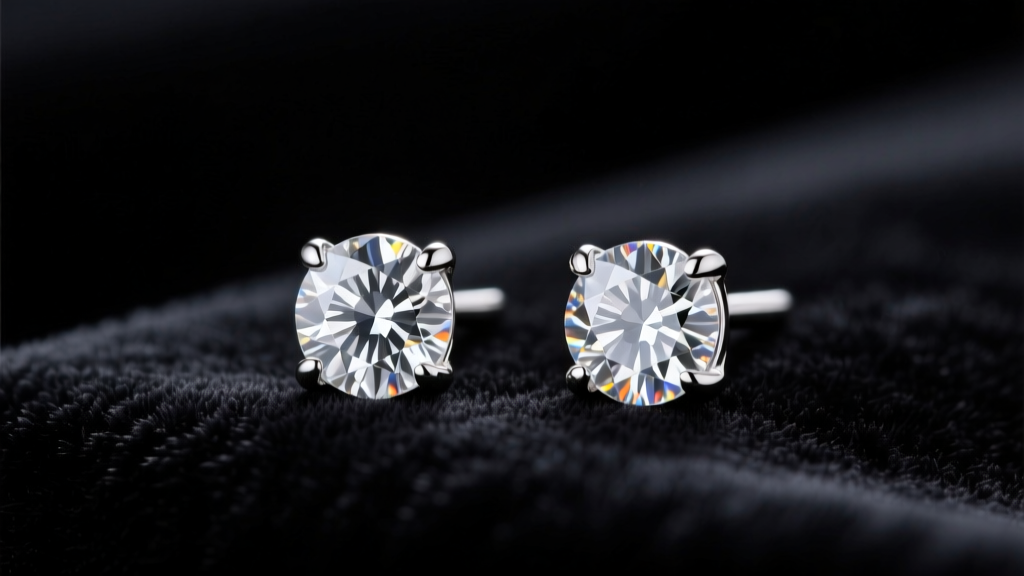
When navigating the luxury market for 1 2 carat diamond earrings (often stylized in search queries as 1 to 2 carats, or 1.00–2.00 ct TW), buyers are entering a tier of fine jewelry where material science directly dictates longevity, comfort, and visual impact. A 1.00 to 2.00 carat total weight (CTW) pair of studs is substantial enough to command attention from across a room, yet this added physical mass introduces unique structural challenges regarding prong tension, post thickness, and lobe drooping.
In 2026, the conversation around these earrings extends far beyond the traditional 4Cs. Today’s informed collectors are scrutinizing the metallurgical properties of the setting alloys, the specific growth methods of lab-grown diamonds, and the microscopic engineering of earring backings. This comprehensive guide dissects the material properties and structural mechanics you must evaluate before investing in this highly coveted weight class.
The Anatomy and Spread of 1.00 to 2.00 CTW Diamonds
Understanding the physical dimensions of your stones is the first step in selecting the appropriate metal setting. Diamond weight is measured in carats, but the visual spread (diameter in millimeters) is what actually interacts with your setting's prongs.
- 1.00 ct TW (0.50ct per ear): Typically measures 5.0mm to 5.2mm in diameter. This is the quintessential 'everyday luxury' size, lightweight enough for standard 0.8mm friction posts.
- 1.50 ct TW (0.75ct per ear): Measures approximately 5.7mm to 5.9mm. At this weight, the center of gravity shifts outward, requiring a wider martini base or a transition to a 4-prong crown setting.
- 2.00 ct TW (1.00ct per ear): Measures 6.3mm to 6.5mm. A 1-carat stone per ear carries significant physical mass. Standard push-backs will fail here; screw-backs or specialized high-tension friction backs are mandatory to prevent the earring from tilting forward on the lobe.
Diamond Material Properties: CVD vs. HPHT Lab-Grown
The market share for lab-grown diamonds in the 1 to 2 carat diamond earrings category has surged, driven by advancements in crystal growth technology. However, not all lab diamonds possess identical material properties. The two primary growth methods—Chemical Vapor Deposition (CVD) and High Pressure High Temperature (HPHT)—yield stones with different internal strain patterns and color characteristics.
According to the Gemological Institute of America (GIA), HPHT diamonds are grown in a molten metal flux, which can occasionally trap microscopic metallic inclusions. These inclusions are entirely invisible to the naked eye but can make the diamond slightly magnetic. CVD diamonds, grown from a hydrocarbon gas mixture in a vacuum chamber, are free of metallic inclusions but often exhibit brownish undertones straight out of the reactor.
To correct CVD color, manufacturers frequently employ post-growth HPHT annealing. While this achieves the coveted D-F color grades, aggressive post-growth treatment can sometimes result in a faint 'milky' or hazy fluorescence under UV-rich daylight. When purchasing 1.50ct or 2.00ct TW lab studs, always request high-resolution video under natural daylight equivalents and consult IGI or GIA grading reports to check for comments regarding post-growth treatment.
Metallurgy of the Setting: Platinum, Gold, and Titanium
The metal alloy you choose must possess adequate tensile strength to secure a 0.50ct to 1.00ct stone while resisting deformation from daily wear. The prongs on a martini setting act as microscopic cantilever beams; if the metal is too soft, a snag on a sweater can pull the prong away from the diamond's girdle.
| Metal Alloy | Composition | Vickers Hardness (HV) | Best Application |
|---|---|---|---|
| Platinum 950 | 95% Pt, 5% Ru/Co | 130-150 HV | Heavy 2.00ct TW studs, sensitive ears |
| 14k White Gold | 58.5% Au, Pd/Ni/Zn | 120-140 HV | Budget-friendly, bright white reflectivity |
| 18k Yellow Gold | 75% Au, Ag/Cu | 110-125 HV | Warm contrast, vintage crown settings |
| Grade 5 Titanium | Ti-6Al-4V | 334 HV | Ultra-lightweight, modern bezel designs |
The Rhodium Plating Factor in White Gold
14k and 18k white gold are naturally yellowish-grey due to the underlying gold content. To achieve a brilliant white finish that matches the colorless diamonds, jewelers electroplate the settings with rhodium, a platinum-group metal. In 2026, high-end manufacturers apply a rhodium layer between 0.75 and 1.5 microns thick. However, the friction of hair, skin oils, and cleaning chemicals will inevitably wear this plating down over 12 to 24 months, revealing the warmer alloy beneath. Platinum 950, conversely, is naturally white throughout its entire cross-section and will never require re-plating, though it will develop a soft, matte patina over time.
Hypoallergenic Considerations
For buyers with contact dermatitis, the specific alloying metals in white gold are critical. Many commercial 14k white gold alloys utilize nickel as a bleaching agent. Approximately 10% of the population suffers from nickel allergies, which can cause severe localized reactions on the earlobe. If you opt for white gold, explicitly request a palladium-based white gold alloy, which is entirely nickel-free and hypoallergenic, mimicking the biocompatibility of pure platinum.
Setting Mechanics and Prong Security
The geometry of the setting is just as vital as the material it is cast from. For 1 to 2 carat diamond earrings, the two dominant setting styles are the 3-prong martini and the 4-prong crown or basket.
The Martini Setting: Pros and Cons
The martini setting uses three prongs, minimizing metal visibility and maximizing the diamond's light return. Because it has a narrow base and a high center of gravity, it is best suited for the 1.00 ct TW to 1.50 ct TW range. When cast in Platinum 950, the martini's slender stem provides enough flex to absorb impacts without snapping. However, if cast in 18k yellow gold (which is softer), the narrow stem can bend if the earring is dropped or slept in, potentially loosening the stones.
The Crown / Basket Setting: Structural Superiority
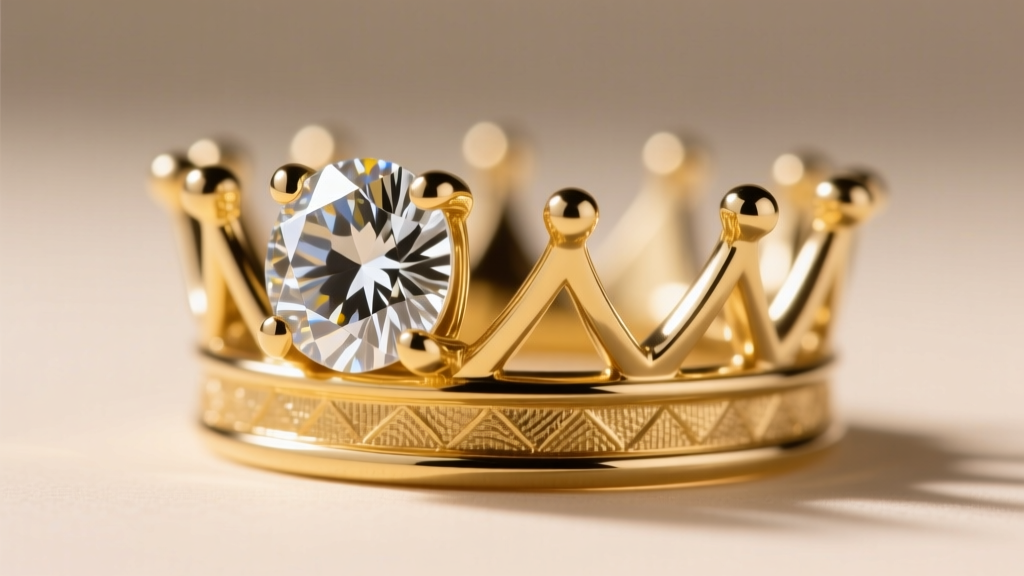
For a full 2.00 ct TW (1.00ct per ear), the crown or basket setting is the metallurgically sound choice. The 4-prong design features a wider, reinforced base that sits closer to the earlobe, drastically lowering the center of gravity. This prevents the 'droop' effect common with heavy studs. Furthermore, the horizontal gallery wire connecting the prongs adds immense lateral rigidity, ensuring the prongs cannot be squeezed inward or pulled outward by accidental impacts.
Post Thickness and Backing Engineering
The earring post is the structural anchor of the entire piece. Standard earring posts are 0.8mm in diameter. While this is perfectly adequate for 1.00 ct TW studs, a 2.00 ct TW diamond exerts enough rotational torque to slowly bend a 0.8mm 14k gold post over years of wear. For earrings in the 1.50 to 2.00 carat range, insist on a heavy-duty 1.0mm or 1.2mm post.
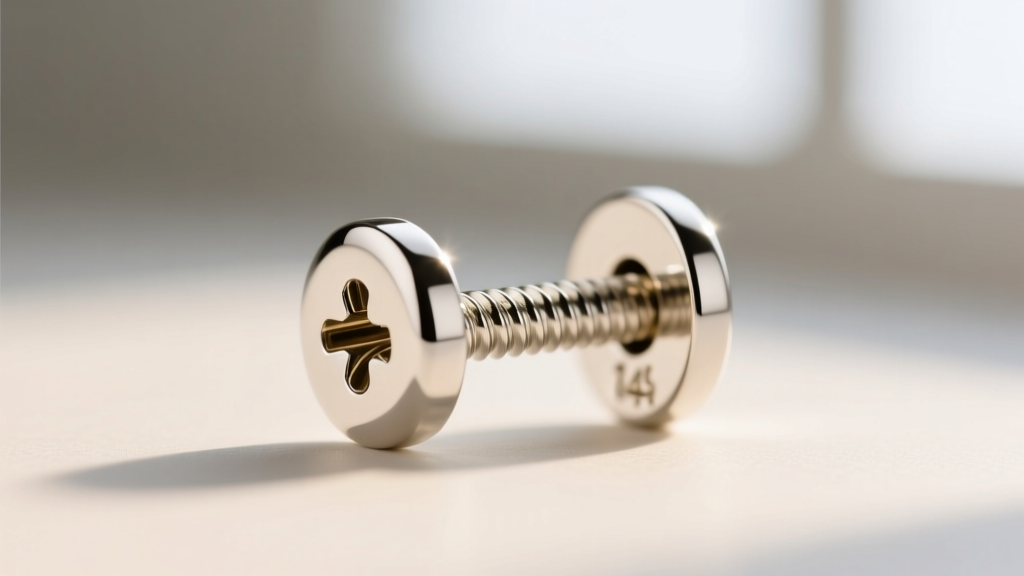
Equally important is the backing mechanism. Standard butterfly friction backs rely on a tiny groove on the post, which is easily overcome by the weight of a 1-carat stone pulling against gravity. For secure retention, utilize screw-backs with a precision 0.9mm thread pitch, or specialized high-tension silicone disc backs (like the La Poussante system) that feature an internal metal spring clutch to grip the post with uniform radial pressure.
Actionable Buying Framework for 2026
When evaluating 1 to 2 carat diamond earrings, use this material-focused checklist to ensure you are acquiring a piece of heirloom-quality jewelry:
- Cut Quality Over Clarity: In the 1.00–2.00ct range, prioritize 'Ideal' or 'Excellent' cut grades. A well-cut 0.75ct stone will face up larger and brighter than a poorly cut 1.00ct stone. Accept VS1/VS2 clarity to allocate more budget toward cut precision.
- Verify the Alloy: If buying white gold, confirm it is palladium-alloyed (nickel-free). If buying platinum, ensure it is stamped 'PT950' and not a lower-grade PT900 blend.
- Demand Proper Backings: Refuse standard push-backs for anything over 1.25 ct TW. The vendor must supply screw-backs or heavy-duty silicone clutches.
- Check the Gallery: Inspect the underside of the setting. A hollowed-out martini base will collect skin oils and lotions, dulling the diamond's brilliance. Look for settings with open, polished galleries that allow for easy cleaning with a soft brush and ultrasonic-safe solutions.
By prioritizing the structural integrity of the metal alloys and the precise engineering of the setting mechanics, your 1 to 2 carat diamond earrings will remain secure, comfortable, and visually breathtaking for decades to come.


