Debunking the Men Earring Gay Myth: 2026 Style Guide
Explore the history of the men earring gay stereotype and discover 2026's top earring trends, gauge sizes, and styling tips for modern men.

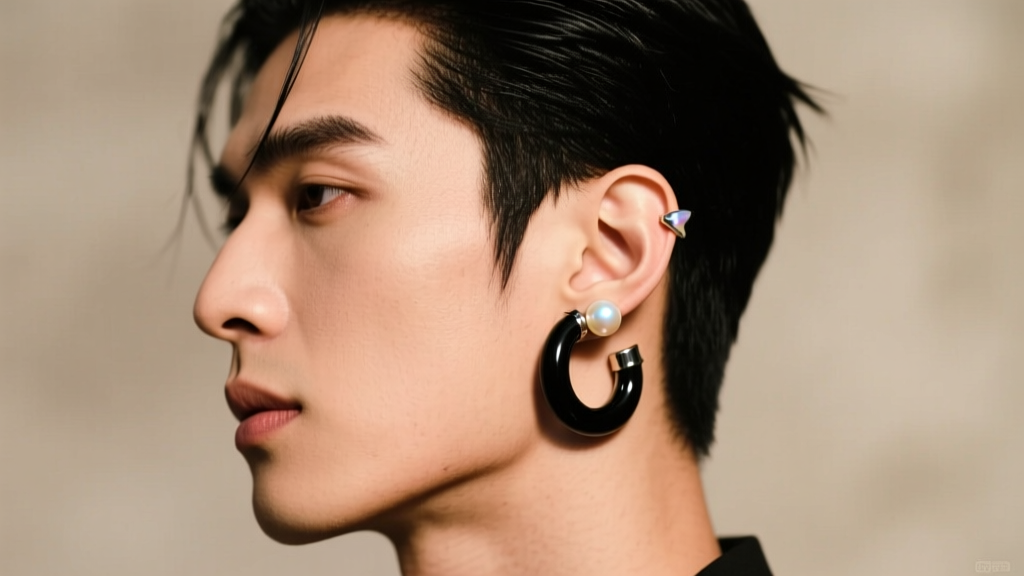
The Origins of the 'Men Earring Gay' Code
The landscape of men's jewelry has undergone a seismic shift over the last decade. Once relegated to simple silver studs or thick rope chains, the modern man's jewelry box in 2026 is a canvas for radical self-expression. Yet, if you search the internet's historical archives or dig through vintage fashion forums, you will inevitably stumble upon the outdated 'men earring gay' stereotype—a rigid, binary code that once dictated which earlobe could be pierced without inviting assumptions about one's sexual orientation. Today, we are dismantling this archaic myth. This comprehensive style and trend analysis explores how men's earrings evolved from covert signaling to mainstream high fashion, providing you with the technical specifications, material grades, and styling frameworks needed to curate a modern ear stack.
To understand where we are going, we must examine where we have been. The origins of the so-called 'gay ear' (typically the right ear in Western cultures during the 1970s and 1980s) stem from a time when queer individuals needed covert methods to identify one another in hostile environments. Much like the hanky code or the subtle placement of a carabiner, a single right-ear piercing served as a quiet nod to the LGBTQ+ community. However, as the 1990s bled into the 2000s, pop culture icons, punk rockers, and hip-hop artists began sporting bilateral piercings, effectively diluting the code. By the early 2020s, the 'men earring gay' rule was not just dead; it was entirely reversed by a generation that views gender-fluid fashion as the ultimate standard of cool. According to cultural analysts at Vogue, the modern man's approach to jewelry is entirely untethered from historical sexual signaling, focusing instead on silhouette, material quality, and personal aesthetic.
2026 Men's Earring Trends: Beyond the Stereotype
With the old codes firmly in the rearview mirror, 2026's earring trends for men are defined by architectural precision, material integrity, and deliberate styling. Here are the dominant movements shaping the modern curated ear.
1. The Curated Asymmetrical Stack
Forget the bilateral symmetry of the early 2000s boy-band era. In 2026, the most stylish men are embracing deliberate asymmetry. A typical curated setup involves a standard lobe piercing paired with a helix or flat piercing on one side, while the other ear remains bare or features a subtle, non-pierced ear cuff. This approach draws the eye and creates a dynamic, editorial profile. The key to mastering the asymmetrical stack is balancing visual weight. If your left ear features a heavy, 14-gauge conch hoop, anchor the right lobe with a simple, flush-set diamond or black onyx stud. High-end piercing studios and luxury brands like Maria Tash have popularized the 'curated ear' concept, proving that strategic placement is far more impactful than sheer volume.
2. Heavy-Gauge Huggies and Architectural Hoops
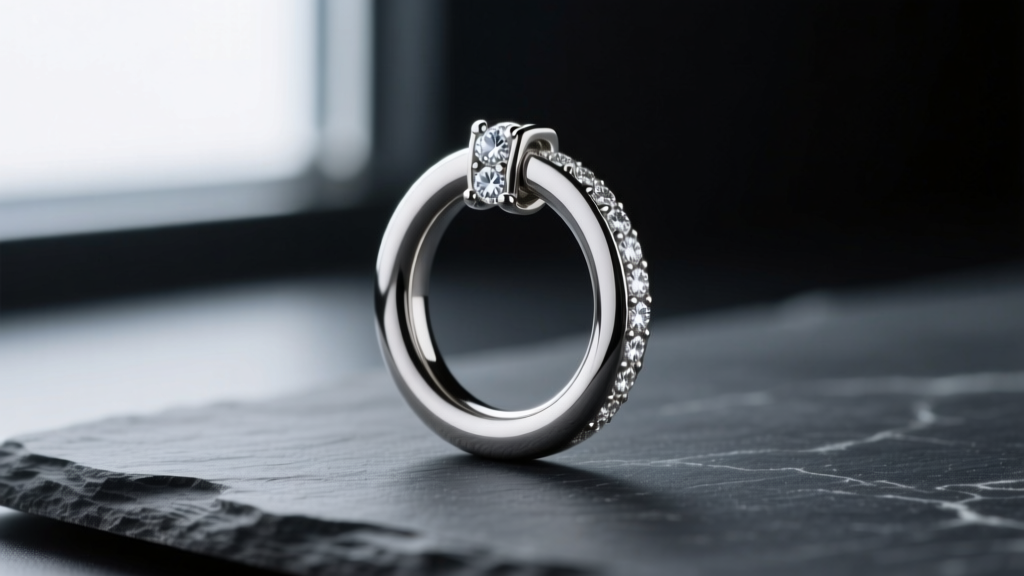
Thin, flimsy wire hoops are being rapidly replaced by substantial, heavy-gauge huggies. Brands like Tom Wood and All Blues are releasing 14k gold and oxidized silver huggies that sit flush against the lobe, offering a masculine, architectural silhouette. A 16-gauge or 14-gauge huggie provides a satisfying weight and presence that thinner 20-gauge wires simply cannot achieve. These pieces often feature hidden clicker hinges or seamless continuous designs that eliminate the risk of snagging on clothing. For those seeking an edge, matte-finished titanium or blackened rhodium-plated silver offers a moody, industrial alternative to traditional high-polish gold.
3. The Pearl and Gemstone Renaissance
Thanks to pioneers like A$AP Rocky, Bad Bunny, and Harry Styles, pearls are no longer exclusively feminine. In 2026, a single, imperfect baroque pearl on an 18-gauge gold wire is a staple of the modern avant-garde wardrobe. The trend has evolved from simple pearl studs to more intricate designs, such as pearl drops suspended from industrial barbells or helix chains. As noted by GQ, the integration of organic gems into men's styling represents a broader cultural rejection of rigid masculinity. When styling pearls, the contrast is key: pair the soft, iridescent luster of a pearl with rugged textures like distressed denim, heavy knits, or structured leather jackets to maintain a grounded, contemporary edge.
Technical Guide: Sizing, Gauges, and Placements
A common mistake men make when transitioning from basic lobe studs to a curated ear stack is ignoring gauge sizing. Standard mall-kiosk piercings are often done at 20-gauge or 18-gauge, which is too thin to support the weight of luxury huggies or threadless gemstone ends. If you are serious about building a high-quality collection, you must understand the structural requirements of different ear placements. Below is a definitive guide to standard gauges, healing timelines, and optimal jewelry styles for the modern man.
| Piercing Placement | Standard Gauge | Healing Time | Optimal 2026 Jewelry Style |
|---|---|---|---|
| Standard Lobe | 18g - 16g | 6 - 8 Weeks | Heavy Huggies, Baroque Pearl Drops |
| Helix (Upper Cartilage) | 16g | 4 - 8 Months | Threadless Labrets, Clicker Hoops |
| Conch (Inner Cartilage) | 14g - 12g | 6 - 12 Months | Large Seamless Hoops, Cluster Studs |
| Industrial (Scaffold) | 14g | 9 - 12 Months | Chain-linked Barbells, Matte Titanium |
Material Matters: Avoiding Contact Dermatitis
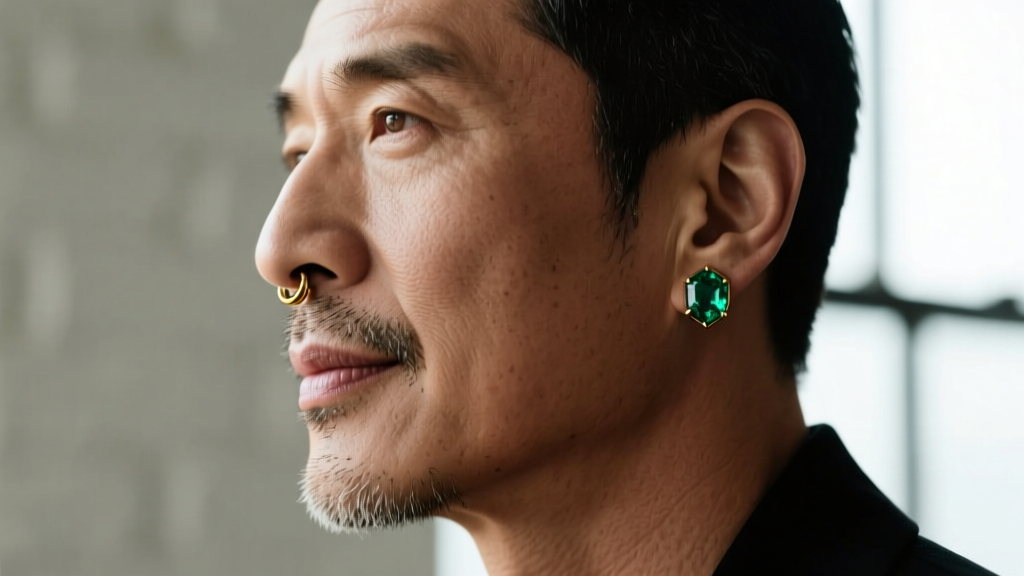
The fastest way to ruin a new piercing or irritate an established one is by wearing the wrong metal. Many men unknowingly purchase 'surgical steel' earrings, assuming the medical-sounding name implies safety. In reality, surgical stainless steel (often 316L) contains nickel, a common allergen that causes contact dermatitis, itching, and localized swelling. For initial piercings and long-term wear, the Association of Professional Piercers strictly recommends implant-grade titanium (ASTM F136) or niobium. These metals are entirely nickel-free, highly biocompatible, and lightweight.
Furthermore, the 2026 standard for high-end body jewelry is the threadless (or press-fit) system, pioneered by brands like Neometal and BVLA. Unlike traditional threaded jewelry, which can harbor bacteria in its microscopic grooves and easily cross-thread, threadless jewelry uses a slightly bent pin that creates tension inside the hollow post. This results in a secure, seamless fit that will never unscrew itself in your sleep. Investing in 14k or 18k solid gold threadless ends allows you to swap out gemstones and designs without ever removing the post from your ear, protecting the delicate fistula (the piercing channel) from unnecessary trauma.
Final Verdict: Wear What You Want
The 'men earring gay' stereotype is a relic of a bygone era, a historical footnote that no longer applies to the vibrant, boundary-pushing landscape of 2026 men's fashion. Whether you are drawn to the architectural minimalism of a titanium huggie, the organic elegance of a baroque pearl, or the bold statement of a 14-gauge conch hoop, the only rule that matters today is quality and personal resonance. Invest in proper gauge sizes, demand implant-grade materials, and curate a stack that reflects your individual narrative. Your ears are your canvas; the outdated codes of the past have no place in your future.


